Showing posts with label War: WWII. Show all posts

Monday, 18 November 2024

Towles, Amor "Rules of Civility"

Towles, Amor "Rules of Civility" - 2011

After reading "A Gentleman in Moscow", I definitely wanted to read more of this author and when one of my book club members offered to lend me her copy of this one, I happily said yes.

It is not the same as the aforementioned novel but it is also a good one. A completely different area, a different situation, but you get a similar feeling. This one takes place in New York around the life of a young girl who comes to New York.

We don't hear much about the parents who immigrated from Russia but it is her background that get her into her jobs, as she is able to speak Russian.

We get to know her friends, the circles she moves in. A well-written account of life in the first half of the last century. Amor Towles is certainly an author who knows how to capture an audience.

In the epilogue we find what is probably one of the most important lines from the whole book:

"The thing of it is - 1939 may have brought the beginning of the war in Europe, but in America it brought the end of the Depression. While they were annexing and appeasing, we were stoking the steel plants, reassembling the assembly lines, and readying ourselves to meet a world-wide demand for arms and ammunition. In December 1940, with France already fallen and the Luftwaffe bombarding London, back in America Irving Berlin was observing how the treetops glistened and children listened to hear those sleigh bells in the snow. That's how far we were from the Second World War."

The title is based on George Washington's "Rules of Civility" and you can find them here.

From the back cover:

"In a New York City jazz bar on the last night of 1937, watching a quartet because she couldn't afford to see the whole ensemble, there were certain things Katey Kontent knew:

· like how to sneak into the cinema, and steal silk stockings from Bendel's

· how to type eighty words a minute, five thousand an hour, and nine million a year

· that if you can still lose yourself in a Dickens novel then everything is going to be fine

By the end of the year she'll have learned:

· how to live like a redhead and insist upon the very best

· that chance encounters can be fated, and the word 'yes' can be a poison

· that riches can turn to rags in the trip of a heartbeat ..."

Wednesday, 5 June 2024

Krall, Hanna "Chasing the King of Hearts"

Krall, Hanna "Chasing the King of Hearts" (Polish: Król kier znów na wylocie) - 2006

This was our international online book club book for May 2024.

The life story of a Jewish woman who loses all her family in the Holocaust. Except for her husband. She is sure he is still alive and she looks for him everywhere.

In the description it says this is a beautiful love story. And it is. In a way. Just not what you would usually expect from a love story. And the style is completely different. It reads like diary. But it's more than that. Quite interesting.

It's amazing what a human being can do in order to save their loved ones.

A good book about a strong woman.

Comments from members:

For me the topic of the WWII in books is very unwelcome as I have a great imagination and empathy, but in this book I really liked how the author scaled back on the emotions in the writing, not wallowing in the horrors, yet still showing very skillfully the realities of the war.

The story was interesting historically and serendipitously.

Smart choices and having a clear purpose helped make hard things easier for the lead character, while others turned the difficulties and how to survive mentally into blaming others.

From the back cover:

"An extraordinary love story, spanning 60 years, from 1939 to 2000, from the Warsaw Ghetto to Israel.

'This is the last leg of my journey. It would be silly to lose my mind now.' After the deportation of her husband to Auschwitz, Izolda Regenberg, alias Maria Pawlicka, has only one aim: to free her husband. Her race to beat fate might appear absurd to others, but not to her. In times of war and destruction she learns to trust herself.

Why Peirene chose to publish this book:


'This is a beautiful love story. A story which makes one weep for mankind. While Hanna Krall's terse prose is designed to convey the utter desperation of war, her deft touch evokes hope and a sense of homecoming.' Meike Ziervogel"

Monday, 18 March 2024

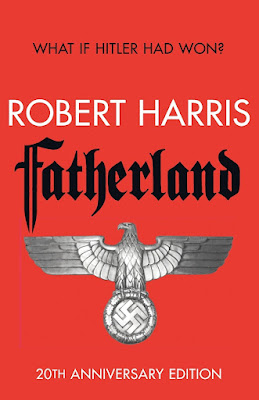
Harris, Robert "Fatherland"

Harris, Robert "Fatherland" - 1992

What an awful thought. Hitler resp. the Nazis had won the war. I always say, the Germans didn't lose the war, that were the Nazis. The Germans effectively won the war. In this book (and in various others, like my favourite "The Children's War") we can all see why.

The story itself concentrates on one particular case. A policemen who is not a fan of the Nazis but still has to wear their uniform for his job, tries to find the secret behind a murder. And with that, he could transform the whole world.

We need people like that everywhere, people who don't just blindly follow some dicatators, even if it is an advantage for them.

I think, right now is the right time to read this book again. Right now, where the Right is on the rise in many, many countries. Too many, if you ask me. How can people forget what it was? Even if you haven't lived during the war, most of us haven't, lets be honest. My parents would have been ninety had they still lived. And they were five when the Nazis were elected, so anyone responsible for the regime must be about a hundred. Not many of them alive anymore. But we have to remember what our parents or grandparents told us and see where we are heading if we elect those idiots that tell us the foreigners are our enemies. Nope, those who want to abolish our hard-earned democracy are.

We should all be happy that the war ended the way it did, this book shows us what could have been had it been different.

From the back cover:

"April 1964.

The naked body of an old man floats in a lake on the outskirts of Berlin. In one week it will be Adolf Hitler’s 75th birthday. A terrible conspiracy is starting to unravel…

What if Hitler had won?
"

Wednesday, 28 June 2023

Brooks, Geraldine "People of the Book"

Brooks, Geraldine "People of the Book" - 2008

This is going to be one of my favourite books this year. Such a wonderful story about a book and its history. I have once read a similar story, well, not a similar story, just a book that tries to follow a piece of art, a painting from today into past until it was created. That was by Susan Vreeland and it was called "Girl in Hyacinth Blue". I loved that one and this was just as interesting.

The main "character" is the Sarajevo Haggada, a Jewish religious book that really exists (see here on Wikipedia or here on The National Museum of Bosnia and Herzegovina website) The word "haggada" is Hebrew for telling, story or account, the book "Haggadah" is a text that describes the order of the Passover Seder.

There are books, even ancient ones, where you know exactly where they come from and who made them. This is not one. The author has put down some ideas and made a wonderful story about it that travels around the whole world. From the Australian conservationist who tries to find some clues that sound just like a crime story we travel back from Bosnia-Herzegovina to Italy, Austria, Spain and to the shores of Ifriqiya (modern day Tunisia, parts of Algeria and Libya). In between, we visit the Untied States and the United Kingdom where the protagonist does not only find out more about the book but also about her family.

I absolutely loved the whole story, how we get to know the different kinds of people who contributed first to the creation of the book and then to the saving of it. Some of the ideas might even be true. Well, we can always dream.

Remarks from the book club:
I partly felt the book was really interesting and wanted to know more about the old stories from history.
The parts about WWII always feel a little too close for comfort anyway.
The author's experience as a journalist shone through the story. But the present day frame-story felt slightly "puff-piece" kind of full with story gaps.
Overall still give it 4/5 or maybe even 4,5/5.

We read this in our international online book club in October 2023.

From the back cover:

"During World War II a Bosnian Muslim risks his life to save the book from the Nazis; it gets caught up in the intrigues of hedonistic 19th-century Vienna; a Catholic priest saves it from burning in the fires of Inquisition. These stories and more make up the secret history of the priceless Sarajevo Haggadah - a medieval Jewish prayer book recovered from the smouldering ruins of the war-torn city.
Now it is in the skilled hands of rare-book restorer Hanna Heath. And while the content of the book interests her, it is the hidden history which captures her imagination. Because to her the tiny clues - salt crystals, a hair, wine stains - that she discovers in the pages and bindings are keys to unlock its mysteries.
"

Wednesday, 21 June 2023

Handke, Peter "Storm Still"

Handke, Peter "Storm Still" (German: Immer noch Sturm) - 2010

A book about the Slovenian minority in Carinthia. We all know that there are areas everywhere with immigrants from all kinds of other countries, but my knowledge of Austria and its foreigners is quite limited. This novel is described as a play, which I can not quite understand. Admittedly, the story is told by different family members, but there is hardly any exchange.

Either way, this is not an easy book to just follow and then get the hang of.
You have to strain your gray brain cells to be able to follow the author at all. Handke is a very controversial author, and not everyone welcomed his award of the Nobel Prize for Literature. But he has a certain something. You just want to keep reading. And in the decade that has passed since the book was published, not much has changed, in Austria or elsewhere, it rather got rather worse.


From the back cover:

"Peter Handke, a giant of Austrian literature, has produced decades of fiction, poetry, and drama informed by some of the most tumultuous events in modern history. But even as these events shaped his work, the presence of his mother - a woman whose life spanned the Weimar Republic, both world wars, and the postwar consumer economy - loomed even larger.

In Storm Still, Handke’s most recent work, he returns to the land of his birth, the Austrian province of Carinthia. There on the Jaunfeld, the plain at the center of Austria’s Slovenian settlement, the dead and the living of a family meet and talk. Composed as a series of monologues, Storm Still chronicles both the battle of the Slovene minority against Nazism and their love of the land. Presenting a panorama that extends back to the author’s bitter roots in the region, Storm Still blends penetrating prose and poetic drama to explore Handke’s personal history, taking up themes from his earlier books and revisiting some of their characters. In this book, the times of conflict and peace, war and prewar, and even the seasons themselves shift and overlap. And the fate of an orchard comes to stand for the fate of a people."

Peter Handke received the Nobel Prize for Literature in 2019 "for an influential work that with linguistic ingenuity has explored the periphery and the specificity of human experience".

I contribute to this page: Read the Nobels and you can find all my blogs about Nobel Prize winning authors and their books here.

Monday, 19 June 2023

Dumbach, Annette E. "Sophie Scholl and the White Rose"

Dumbach, Annette E.; Newborn, Jud; Gierlichs, Annerose "Sophie Scholl and the White Rose" (German: Die Geschichte der weißen Rose) - 2002

As I already wrote in my description of "The White Rose" by Inge Aicher-Scholl: If there are any books that everyone should read, the story of the White Rose is definitely one of them.

This is another book on the subject.
While Inge Aicher-Scholl was the sister of siblings Hans and Sophie, the authors of this book were journalists who researched the life of the group.
Another point of view that brings us even more information about the life and work of these young people. You just have to admire them and ask yourself: What would I have done in their place?

A few quotes from Sophie Scholl that we should all take to heart:


Stand up for what you believe in even if it means you stand alone.

Offer passive resistance – resistance – wherever you may be, forestall the spread of this atheistic war machine before it is too late ... (from the first leaflet; 1942)

I still believe I did the best I could for my people right now.
Therefore, I do not regret my actions and I want to accept the consequences that arise from my actions.

I am, now as before, of the opinion that I did the best that I could do for my nation. I therefore do not regret my conduct and will bear the consequences that result from my conduct.


And from Hans:
Long live freedom!

From the back cover:

"In the spring and summer of 1942, five young German students and one professor at the University of Munich crossed the threshold of toleration to enter the realms of resistance, danger and death. Protesting in the name of principles Hitler thought he had killed forever, Sophie Scholl and other members of the White Rose realized that the 'Germanization' Hitler sought to enforce was cruel and inhuman, and that they could not be content to remain silent in its midst."

In addition to the Scholl siblings, we should not forget the other members who were also executed:
Alexander Schmorell, Christoph Probst, Willi Graf and the university professor Kurt Huber.

Monday, 20 February 2023

Gray, Martin "For those I loved"

Gray, Martin "For those I loved" (French: Au nom de tous les miens) - 1971

I read this book many years ago, but it is one that has never left me. The life that Martin Gray led, no, that he had to experience, was so hard. One loss after another. I don't know how he got through it. First the Warsaw ghetto, then Treblinka and later, when he found a family, a fire destroyed his whole life again.

Apparently, not everything happened exactly as described in the book. But the key data of the author's life is correct, and that's bad enough.

An impressive work.

From the back cover:

"Martin Gray was in his fourteenth year when the Nazis marched into Poland ; on his nineteenth birthday he entered Berlin with the Red Army. In the intervening years - in the Warsaw Ghetto, in the death camp at Treblinka, with the partisans and the NKVD - Martin Gray grew up in a hell on earth.

For Those I Loved is a classic account of survival against incredible and horrific odds.

Martin has come full circle since his boyhood world was turned upside down by the German invasion of Poland in 1939. Overnight, the teenage Martin and his family were immersed in the horrors of the Holocaust and held captive in the Warsaw Ghetto. It was a nightmare of brutality, starvation, and death. Martin became a clever smuggler to help his family survive - until the 'butchers' of Treblinka took his mother and brothers. Against impossible odds, Martin survived and returned to fight in the Warsaw Ghetto Uprising. As the Nazis incinerated the ghetto, he escaped to fight with the partisans, and then the Red Army.

After the war, Martin made his way to New York. The cunning and skills he developed during the war enabled him to learn the language and create a successful business. At 35, he retired to France with a fortune and a beautiful Dutch wife, starting a family and living in happiness and peace. But his world was shattered once again by a forest fire that engulfed his fleeing family. In a tragic repeat of history, Martin alone survived.

Martin Gray's past could be our future if we don't heed his call to be the change. In this 35th anniversary expanded edition of
For Those I Loved, a book beloved by millions of readers worldwide, Martin reminds us that the past is connected to the present. Only we can ensure that history is not repeated.

Martin Gray still lives in the South of France (*) and has devoted his life to his family, writing, human rights, and environmental and cultural causes. He received the United Nations Dag Hammar-skjold Award and the Gold Medal of European Merit.
"

* He died in 2016, after the book was published.

Wednesday, 8 February 2023

Petrowskaja, Katja "Maybe Esther"

Petrowskaja, Katja "Maybe Esther" (German: Vielleicht Esther) - 2014

A great tale of a Jewish family's history. One critic wrote that Katja Petrowskaja could have written a great novel, but only reproduced fragments. I think it is precisely these fragments that show more of what this family - representative of all other Jewish families - went through, all the little details that you don't often hear about.

A wonderful book.

From the back cover:

"An inventive, unique, and extraordinarily moving literary debut that pieces together the fascinating story of one woman’s family across twentieth-century Russia, Ukraine, Poland, and Germany.

Katja Petrowskaja wanted to create a kind of family tree, charting relatives who had scattered across multiple countries and continents. Her idea blossomed into this striking and highly original work of narrative nonfiction, an account of her search for meaning within the stories of her ancestors.

In a series of short meditations, Petrowskaja delves into family legends, introducing a remarkable cast of characters: Judas Stern, her great-uncle, who shot a German diplomatic attaché in 1932 and was sentenced to death; her grandfather Semyon, who went underground with a new name during the Bolshevik Revolution in Russia, forever splitting their branch of the family from the rest; her grandmother Rosa, who ran an orphanage in the Urals for deaf-mute Jewish children; her Ukrainian grandfather Vasily, who disappeared during World War II and reappeared without explanation forty-one years later - and settled back into the family as if he’d never been gone; and her great-grandmother, whose name may have been Esther, who alone remained in Kiev and was killed by the Nazis.

How do you talk about what you can’t know, how do you bring the past to life? To answer this complex question, Petrowskaja visits the scenes of these events, reflecting on a fragmented and traumatized century and bringing to light family figures who threaten to drift into obscurity. A true search for the past reminiscent of Jonathan Safran Foer’s
Everything Is Illuminated, Daniel Mendelsohn’s The Lost, and Michael Chabon’s Moonglow, Maybe Esther is a poignant, haunting investigation of the effects of history on one family."

In 2013, Katja Petrowskaja received the Ingeborg Bachmann Prize, one of the most important awards for literature in the German language.

Wednesday, 25 January 2023

Ondaatje, Michael "The English Patient"

Ondaatje, Michael "The English Patient" - 1992

I have read "Anil's Ghost" and "Warlight" by Michael Ondaatje both of which I really liked. I had been looking forward to reading this one for ages, so when I came across the book lately, I decided it was finally time to read it.

There might have been a reason why I didn't tackle it before. I was not as happy with it as I had been with the others. Maybe I should have stayed away from it because it received the Booker Prize, I rarely like those, and I have no idea why.

It was quite confusing at times. Who is the author talking about? At what time is he talking? Before the war? During the war? After the war? Are they in Italy or in Egypt, in Canada or India? And why is that English couple in the story? I know, I know, they met the English patient before but it still is weird, somehow it doesn't fit.

I saw a review where someone said the people in the book were not speaking like people in the 1940s. That might be one of the reasons, as well.

But what really bothered me was that you didn't really get to know the people very well, they remain shallow, trivial, superficial.

I might have enjoyed this more, had I not read and loved his other books and therefore expected a brilliant novel. This is an okay novel but that's all. So, I might wait a while until I read the next book by this author.

From the back cover:

"With unsettling beauty and intelligence, Michael Ondaatje's Booker Prize-winning novel traces the intersection of four damaged lives in an abandoned Italian villa at the end of World War II. The nurse Hana, exhausted by death, obsessively tends to her last surviving patient. Caravaggio, the thief, tries to reimagine who he is, now that his hands are hopelessly maimed. The Indian sapper Kip searches for hidden bombs in a landscape where nothing is safe but himself. And at the center of his labyrinth lies the English patient, nameless and hideously burned, a man who is both a riddle and a provocation to his companions - and whose memories of suffering, rescue, and betrayal illuminate this book like flashes of heat lightning."

Wednesday, 23 November 2022

Aicher-Scholl, Inge "The White Rose"

Aicher-Scholl, Inge "The White Rose: Munich, 1942-1943" (German: Die weiße Rose) - 1952

Inge Scholl was the sister of Hans and Sophie Scholl and is writing this book about her siblings and the Munich resistance group.

If there are any books that everyone should read, the story of the White Rose is definitely one of them. It shows that even in deepest Nazi Germany there were people who resisted, who paid for it with their lives, but who should be a great role model for all of us.

As the book description says, this book is not only based on Inge Scholl's memories, but also on documents that have been secured.

Similar to the book "The Wave", the author describes how the young people were first carried away by the Nazi movement. Fortunately, there were also some who eventually became skeptical.

A sad book, but also one that encourages.


From the back cover:

"The White Rose tells the story of Hans Scholl and Sophie Scholl, who in 1942 led a small underground organization of German students and professors to oppose the atrocities committed by Hitler and the Nazi Party. They named their group the White Rose, and they distributed leaflets denouncing the Nazi regime. Sophie, Hans, and a third student were caught and executed.

Written by Inge Scholl (Hans and Sophie's sister),
The White Rose features letters, diary excerpts, photographs of Hans and Sophie, transcriptions of the leaflets, and accounts of the trial and execution. This is a gripping account of courage and morality."

Tuesday, 18 October 2022

Bruckner, Karl "The Day of the Bomb"

Bruckner, Karl "The Day of the Bomb" (German: Sadako will leben) - 1961

I read this story as a child and it made a big impression on me. I learned a lot about the war from my parents, but this is definitely one of the books that contributed to me being anti-war and anti-nuclear power throughout my life.

The book should be on every school reading list. We get to know Sadako and her life and her will to live so well, we can put ourselves in her shoes and experience her drama up close.

No wonder the author received the Austrian Children's and Youth Book Prize for it.


From the back cover:

"First published in 1961 under the German title Sadako Will Leben (meaning Sadako Wants to Live), this non-fiction book by renowned Austrian children’s writer Karl Bruckner is considered his most famous work.

Telling the vivid story about a Japanese girl named Sadako Sasaki, who lived in Hiroshima and died of illnesses caused by radiation exposure following the horrific atomic bombing of the city in August 1945, the book has been translated into most major languages and has been used as material for peace education in schools around the world.
"

"The day of the bomb was a day which was to change the lives of all mankind, not just Sadako.

Sadako is a little girl who lives with he parents and elder brother in wartime Hiroshima. She is a thin little girl because she doesn't get enough to eat, but she has a chubby face because she is still very young.

On August 6th, 1945, Sadako and her brother go to join the queue for food outside the Ministry. But Sadako is too weak to wait for their ration and her brother decides to carry her home. On the way he stops to bathe while Sadako sleeps on the lakeside.

Just as he dives into the lake the atom-bomb explodes over the town.

Sadako and her family survive the dropping of the bomb and the subsequent rigours of life in a post-war world - the black market, the shortages, the bitter competition. The pleasures and the tragedy of life in Japan at this time are seen here through the eyes of the young girl who wins local fame for her prowess in a bicycle relay race, only to find that even she cannot cycle fast to escape the events of the past.

Her story - and through it the story of mankind - is told with the vivid detail of a colour film and the sensitivity of a human documentary. It is an account without bitterness and without horror of an event that changed the course of history.
"

There is also another children's book about Sadako and her ordeal:
Coerr, Eleanor "Sadako and the Thousand Paper Cranes" - 1977

Monday, 15 August 2022

Fallada, Hans "Every Man Dies Alone"

Fallada, Hans "Every Man Dies Alone" aka "Alone in Berlin" (German: Jeder stirbt für sich allein) - 1947

A remarkable tome. A remarkable story. A remarkable narrator.

Hans Fallada learned about the life and death of the married couple Elise and Otto Hampel and retold their life story. He immortalized them as Anna and Otto Quangel and thus created a monument not only to them but also to all the other little resistance fighters. All those who didn't want to just watch society go to the dogs. Who didn't want to be accused later of not having done anything.

Yes, they did exist, the Annas or Elises and Ottos. They tried desperately to wake up those close to them, perhaps to persuade one or the other not to just accept everything or - even worse - to think it was good.

To this day I still can't really understand how people could just watch. My parents told me different stories, about their parents trying not to get carried away and still offer their children a future. Today I see how many things are repeated. How people believe any story just because they hear it often enough.

Get Hans Fallada and other writers like him back into schools. Let children share in all the things that can go wrong. Otherwise we'll be back very quickly where we've been before and where we never, ever wanted to go again.


From the back cover:

"This never-before-translated masterpiece - by a heroic best-selling writer who saw his life crumble when he wouldn’t join the Nazi Party - is based on a true story.

It presents a richly detailed portrait of life in Berlin under the Nazis and tells the sweeping saga of one working-class couple who decides to take a stand when their only son is killed at the front. With nothing but their grief and each other against the awesome power of the Reich, they launch a simple, clandestine resistance campaign that soon has an enraged Gestapo on their trail, and a world of terrified neighbours and cynical snitches ready to turn them in.

In the end, it’s more than an edge-of-your-seat thriller, more than a moving romance, even more than literature of the highest order - it’s a deeply stirring story of two people standing up for what’s right, and for each other.
"

Wednesday, 11 May 2022

Sampedro, José Luis "The Etruscan Smile"

Sampedro, José Luis "The Etruscan Smile" (Spanisch: La sonrisa etrusca) - 1985

The Etruscan Smile is set in Italy but written in Spanish by a Spaniard. It is about an old farmer in Calabria who was a resistance fighter in his youth. Now he is ill and has to go to his son in Milan. From the South to the North. The transition is pretty tough.

But this way he also gets to know and love his grandson.
Through him he finds the meaning of life. He mixes the little boy's problems with his experiences from the war. He learns many new emotions, especially to forgive his enemies, but also to see the good in people.

An excellent book, very touching and heartwarming.

Book Description:

"A tough old farmer from southern Italy takes pride in his time served as a partisan during World War II. Due to a serious medical condition, he must move in with his son and daughter-in-law in Milan. While disliking life in the northern city, the relations between the old man and his tender grandson evolve, transforming his life during his final days."

I took the picture from the movie they made where they have changed the location but you can find the English text of the book here.

Wednesday, 4 May 2022

Agus, Milena "From the Land of the Moon"

Agus, Milena "From the Land of the Moon" or: The House in Via Manno (Italian: Mal di pietre) - 2006

An interesting tale about the life of a woman who cannot break out of the prescribed path. One would like to leave immediately for Sardinia. Or at least to Milan. Definitely to Italy. 

This is a short but very powerful story about family history, told by the granddaughter of the woman in question.

The original title is "Kidney Stones". The unnamed married woman is sent away to treat her kidney stones and then she meets the love of her life. They even turned it into a film in the meantime, see here.

From the back cover:

"But what do we really know about other people? In this international bestselling novel, a young unnamed Sardinian woman explores the life of her grandmother, a romantic, bewitching, eccentric figure, and a memorable literary creation. Her life has been characterized by honor and fierce passion, and above all by an abiding search for perfect love that has spanned much of the twentieth century. Ever in the background of this remarkable woman's story is the stunning Sardinian landscape, the deep blues of the Mediterranean, the rugged mountains of the Sardinian back-country dotted with charming villages lost in time.

With warmth, great humor, and deep insight Milena Agus writes about the customs and the beauty of her native Sardinia, about love, family, immigration, war, and peace.
From the Land of the Moon is the moving English debut of one of Italy s most important new literary talents."

Wednesday, 27 April 2022

Boschwitz, Ulrich Alexander "The Passenger"

Boschwitz, Ulrich Alexander "The Passenger" aka "The Fugitive" (German: Der Reisende) - 1939
This is my eighth Classic Spin and we were given #11.

I had never heard of this author when I found the book in a bookshop. But the description sounded interesting, a book one had to read. So I bought it. Apparently, this novel was first published as a translation in English as "The man who took trains" in the UK and "The Fugitive" in the US under the pseudonym John Grane. Posthumously. Because his destiny would make an interesting story, as well. As so many Jews, he couldn't get away, he was a Jew in Germany and a Nazi in other countries. So, the British interned him as "enemy alien" and sent him to Australia. When he returned to Europe, his ship was torpedoed and sank, and with it the author and his last manuscript. Let us think about people like him when we don't welcome refugees.

You can see how the protagonist changes with the circumstances he is in. How he first believes that his Arian friends will help him, how he then thinks with the money he has left he can get away, how he tries again and again to leave Germany and a certain destiny of death.

Ulrich Alexander Boschwitz was only 23 when he wrote this book but I think you can tell that he was wise beyond his age, probably for all the events he had seen and had to live through.

The book "disappeared" for several decades. I am glad it was found again.

From the back cover:

"Hailed as a remarkable literary discovery, a lost novel of heart-stopping intensity and harrowing absurdity about flight and persecution in 1930s Germany

Berlin, November 1938. Jewish shops have been ransacked and looted, synagogues destroyed. As storm troopers pound on his door, Otto Silbermann, a respected businessman who fought for Germany in the Great War, is forced to sneak out the back of his own home. Turned away from establishments he had long patronized, and fearful of being exposed as a Jew despite his Aryan looks, he boards a train.

And then another. And another . . . until his flight becomes a frantic odyssey across Germany, as he searches first for information, then for help, and finally for escape. His travels bring him face-to-face with waiters and conductors, officials and fellow outcasts, seductive women and vicious thieves, a few of whom disapprove of the regime while the rest embrace it wholeheartedly.

Clinging to his existence as it was just days before, Silbermann refuses to believe what is happening even as he is beset by opportunists, betrayed by associates, and bereft of family, friends, and fortune. As his world collapses around him, he is forced to concede that his nightmare is all too real.

Twenty-three-year-old Ulrich Boschwitz wrote
The Passenger at breakneck speed in 1938, fresh in the wake of the Kristallnacht pogroms, and his prose flies at the same pace. Taut, immediate, infused with acerbic Kafkaesque humor, The Passenger is an indelible portrait of a man and a society careening out of control."

If you want to see what others were reading, have a look here.

Wednesday, 6 April 2022

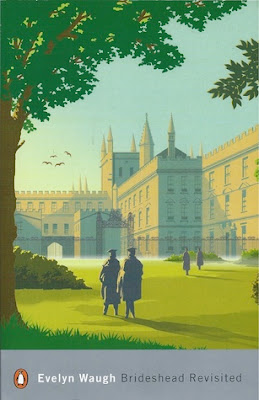
Waugh, Evelyn "Brideshead Revisited"

Waugh, Evelyn "Brideshead Revisited: The Sacred and Profane Memories of Captain Charles Ryder" - 1945

This was our international online book club novel for March 2022.

I don't know for how long I wanted to read this book. I never watched the TV series with Jeremy Irons and Anthony Andrews, either, even though I like most of the actors that play in it.

So, I wasn't unhappy that our book club chose it for this month.

The story reminds a little bit of the life of "The Great Gatsby", people with nothing to do than spending money. So, I couldn't say that I warmed to any of the characters, they were just spoiled brats.

However, the novel itself is beautifully written, it accentuates all the facts of life for a generation long gone and a lifestyle so out of fashion that whoever lives like that nowadays can only be ashamed. Well, with some exceptions who populate the social media, of course, and I can't warm to them, either. The names, however, could have been picked from a Dickens novel, Ryder, Flyte, Marchmain, they only had "regular" first names.

I especially like the portrayal of the change in society. Some people get there slowly but those that are kicked from their high horse have a rather hard landing to deal with.

A good modern classic that will become a good mirror of the times.

Comment from a book club member:
"The book really surprised me, in a positive way. The story was much more entertaining and interesting than I expected. I agree it really brought out the old culture and country vs. the new generation. Like you said like the Great Gatsby. I was fascinated by the difference in attitude between the upbringing styles of Charles and the aristocratic Brideshead and how the characters developed along with the story, but I also didnt get so attached to the main characters either."

From the back cover:

"The most nostalgic and reflective of Evelyn Waugh's novels, Brideshead Revisited looks back to the golden age before the Second World War. It tells the story of Charles Ryder's infatuation with the Marchmains and the rapidly-disappearing world of privilege they inhabit. Enchanted first by Sebastian at Oxford, then by his doomed Catholic family, in particular his remote sister, Julia, Charles comes finally to recognize only his spiritual and social distance from them."