Showing posts with label Expats. Show all posts

Tuesday, 11 March 2025

Top Ten Tuesday ~ Expats


"Top Ten Tuesday" is an original feature/weekly meme created on the blog "The Broke and the Bookish". It was created because they are particularly fond of lists. It is now hosted by Jana from That Artsy Reader Girl.

Since I am just as fond of them as they are, I jump at the chance to share my lists with them! Have a look at their page, there are lots of other bloggers who share their lists here.

This week's topic is Books that Include/Feature [insert your favorite theme or plot device here] (for example: unreliable narrators, coming of age, darkness vs. light, time travel, metafiction, a specific romantic trope, good vs. evil. cliffhangers, flashbacks, plot twists, red herrings, loose ends, stories within stories, meet cutes, symbolism, etc.) Since I lived half of my life abroad, I picked books about expats.

Alexievich, Svetlana "Second Hand Time. The Last of the Sovjets" (Russian: Время секонд хэнд = Vremja sekond khend) - 2013 
Russian-Soviets abroad

An Australian in Switzerland

Brontë, Charlotte "Villette" - 1853
An Brit in Belgium

A US American in China

Drinkwater, Carol "The Olive Series" - 2001-2010
A Brit in France

Clarke, Stephen "A Year in the Merde" - 2004
Another Brit in France

McLain, Paula "The Paris Wife" - 2012
A US American in France

A Brit in Denmark

A US American in China (written by a German)

A German in Kenya

It seems like there are a lot of British people living abroad but that could also be because I just happened to read many books by Brits.

Monday, 6 February 2023

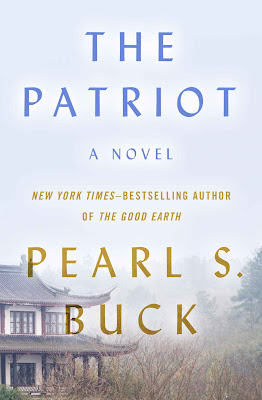
Buck, Pearl S. "The Patriot"

Buck, Pearl S. "The Patriot" - 1939

Pearl S. Buck was always a great writer of historical fiction. Here, she talks about the problems between China and Japan during Chiang Kai-Chek's time and the Sino-Japanese war.

A mixed marriage brings two families together, and nobody can tell the story of two cultures clashing better than the Nobel Prize winning author.

The history intermingles with the lives of the protagonists - it would, of course, and we can see how politics influence the family and how their reactions influence their lives.

As all books by Pearl S. Buck, a great tale of different cultures.

From the back cover:

"A Chinese dissident is torn between love and country in this novel from the New York Times–bestselling author of The Good Earth.

When Wu I-wan starts taking an interest in revolution, trouble follows: Winding up in prison, he becomes friends with fellow dissident En-lan. Later, his name is put on a death list and he’s shipped off to Japan. Thankfully, his father, a wealthy Shanghai banker, has made arrangements for his exile, putting him in touch with a business associate named Mr. Muraki. Absorbed in his new life, I-wan falls in love with Mr. Muraki’s daughter, and must prove he is worthy of her hand. As news spreads of what the Japanese army is doing back in China, I-wan realizes he must go back and fight for the country that banished him.
"

Find other books by Pearl S. Book that I read here.

Pearl S. Buck received the Nobel Prize for Literature in 1938 "for her rich and truly epic descriptions of peasant life in China and for her biographical masterpieces".

I contribute to this page: Read the Nobels and you can find all my blogs about Nobel Prize winning authors and their books here.

Tuesday, 13 December 2022

Buck, Pearl S. "Kinfolk"

Buck, Pearl S. "Kinfolk" - 1949

A story that tells us about the question everyone who has lived in a different country asks themselves, especially those that are born in another world than their parents or who moved there when they were little. Do I belong to the country where I live or to the country that my passport shows.

This is a story about a Chinese family in New York who moves "back" to China. My children have lived in different countries all their lives, the youngest wasn't even born in Germany. And while the difference between several European countries is probably not as large as that between countries from different continents, I know they don't exactly feel as belonging to a certain country, they are simply "European".

This is not so easy for the chldren of Dr. Liang, they are American but their ancestors are Asian, and they have to discover the difference between those two countries.

As any of Pearl S. Buck's books, this is a highly interesting book about a culture that is quite foreign to us. But she has depicted it so well, as always. The characters are so alive and every single one of them shows us their life.

From the back cover:

"Kinfolk is the story of a Chinese family. Dr. Liang moves to America in search of a better life, but his children long to return to China. Each responds to their new life in China differently, providing rich insight into the struggles between Eastern and Western culture, and the differences between generations.

A tale of four Chinese-American siblings in New York, and their bewildering return to their roots
In Kinfolk, a sharp dissection of the expatriate experience, Pearl S. Buck unfurls the story of a Chinese family living in New York. Dr. Liang is a comfortably well-off professor of Confucian philosophy, who spreads the notion of a pure and unchanging homeland. Under his influence, his four grown children decide to move to China, despite having spent their whole lives in America. As the siblings try in various ways to adjust to a new place and culture, they learn that the definition of home is far different from what they expected.
"

Find other books by Pearl S. Book that I read here.

Pearl S. Buck received the Nobel Prize for Literature in 1938 "for her rich and truly epic descriptions of peasant life in China and for her biographical masterpieces".

I contribute to this page: Read the Nobels and you can find all my blogs about Nobel Prize winning authors and their books here.

Wednesday, 30 November 2022

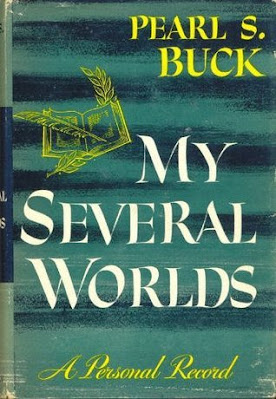
Buck, Pearl S. "My several worlds"

Buck, Pearl S. "My several worlds: A Personal Exile" - 1954

I read this book ages ago and don't know why I never reviewed it. It left a vivid memory about Pearl S. Buck and her life. She belongs to my list of favourite authors, she was actually the first grown-up author I read and therefore occupies a special place in my heart.

In her autobiography, she writes just as well as in her novels where she manages to show us Chinese life as if we lived there ourselves. And here she becomes a close acquaintance of us, if not even a friend.

I know there was a controversy about her award of the Nobel Prize for Literature but that might have been because many men couldn't see a woman getting the award. So they had to find a reason why this was wrong. But her biographies are truly masterpieces and her descriptions of peasant life in China truly epic and rich. There certainly have been laureates who didn't deserve the prize, Pearl S. Buck isn't one of them.

She was a remarkable woman and writer.

From the back cover:

"Autobiography of Pearl S Buck. A memoir of the life of the first female Nobel Laureate for Literature, who was also a world citizen and a major humanitarian, Pearl (Sydenstricker) Buck (1892-1973) three quarters of the way through her life. Published by the John Day Company to whose president, Richard John Walsh (1886-1960), she was then married, the book was successful and temporarily revived her waning reputation. The China oriented writer Helen Foster Snow described her partnership with John Day and Walsh as 'the most successful writing and publishing partnership in the history of American letters.' The firm had published everything she'd written since their marriage in 1935. Her biographer, Professor Peter Conn, describes the book as 'a thickly textured representation of the Chinese and American societies in which she had lived.' Friend of Eleanor Roosevelt, cultural ambassador between China and America, tireless advocate for racial democracy and women's rights and founder of the first international adoption agency, this is a book by and about a special American citizen of the twentieth century."

Pearl S. Buck received the Nobel Prize for Literature in 1938 "for her rich and truly epic descriptions of peasant life in China and for her biographical masterpieces."

I contribute to this page: Read the Nobels and you can find all my blogs about Nobel Prize winning authors and their books here.

Monday, 28 November 2022

Sendker, Jan-Philipp "A Well-Tempered Heart"

Sendker, Jan-Philipp "A Well-Tempered Heart" (Burma Trilogy #2) (German: Herzenstimmen) - 2012

After reading "The Art of Hearing Heartbeats" (Das Herzenhören), the first part of the Burma Trilogy, I naturally had to know how the story continues.

Julia Win, whom we already know from the first book, suddenly hears a voice inside her. She is advised to go back to Burma to find out what the voice is trying to tell her. I don't believe in such mystical experiences, but Julia's story on her return visit is very interesting. She learns the history of Burma, meets new people, finds a new love, sees her life with different eyes. And the reader learns a lot about the differences between East and West.

As always, Jan-Philipp Sendker has written a wonderful story about Asia. His language is captivating and this is a very good sequel to a wonderful book.

From the back cover:

"Almost ten years have passed since Julia Win came back from Burma, her father’s native country. Though she is a successful Manhattan lawyer, her private life is at a crossroads; her boyfriend recently left her, she has suffered a miscarriage, and she is, despite her wealth, unhappy with her professional life. Julia is lost and exhausted.

One day, in the middle of an important business meeting, she hears a stranger’s voice in her head that causes her to leave the office without explanation. In the following days, her crisis only deepens. Not only does the female voice refuse to disappear, but it starts to ask questions Julia has been trying to avoid. Why do you live alone? To whom do you feel close? What do you want in life?

Interwoven with Julia’s story is that of a Burmese woman named Nu Nu who finds her world turned upside down when Burma goes to war and calls on her two young sons to be child soldiers. This spirited sequel, like The Art of Hearing Heartbeats, explores the most inspiring and passionate terrain: the human heart."

Wednesday, 19 January 2022

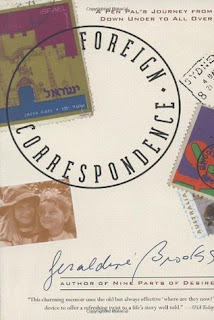
Brooks, Geraldine "Foreign Correspondence"

Brooks, Geraldine "Foreign Correspondence: A Pen Pal's Journey from Down Under to All Over" - 1997

Geraldine Brooks describes how she started writing to many different people from all over the world because she felt so far away from everything. That was the same for me, even though I lived in the middle of Europe. But at the time, the little village in Northern Germany might as well have been on the moon.

Other than that, there wasn't a huge difference in her upbringing and mine. We are about the same age and grew up in similar circumstances, though my parents were purely working class, no former singer or anything, and they were from the same area where they lived and died.

So, I really liked this story because it was also mine. When I was fourteen, I had my first penfriend. She was from Romania, and I met her once even though we are not in touch anymore. But I have two very good penfriends who started writing to me shortly afterwards, from France and the USA, and we are still in touch. The French friend has visited me several times (first alone, then with husband and family) and I have visited her, as well, same thing, first alone, later with husband, then with children.

I have lived abroad for more than half of my life. I think wanting to meet people from other countries stems from my first friendships by letters. I started to learn Esperanto when I got the opportunity and went abroad as soon as I was able to. Having penfriends certainly encouraged me to explore the world further.

But even if you don't belong to the keen letter writers, Geraldine Brooks has a fantastic way of describing her life as well as that of others, totally interesting.

So far, I have only read this book and "March" by Geraldine Brooks. Must change that.

From the back cover:

"As a young girl in a working-class neighborhood of Sydney, Australia, Geraldine Brooks longed to discover the places where history happens and culture comes from, so she enlisted pen pals who offered her a window on adolescence in the Middle East, Europe, and America. Twenty years later Brooks, an award-winning foreign correspondent, embarked on a human treasure hunt to find her pen friends. She found men and women whose lives had been shaped by war and hatred, by fame and notoriety, and by the ravages of mental illness. Intimate, moving, and often humorous, Foreign Correspondence speaks to the unquiet heart of every girl who has ever yearned to become a woman of the world."

Monday, 18 October 2021

Sendker, Jan-Philipp "Dragon Games"

Sendker, Jan-Philipp "Dragon Games" aka "The Language of Solitude" (The Rising Dragon #2) (German: Drachenspiele) - 2009

If you liked "Whispering Shadows", you already know Paul and his family and will want to know how their story goes on. If you like books about China, expats, crime stories, you will love this series which already has a third book (The Far Side of the Night).

This is an interesting book about the life not just of foreigners in China but also about the lives of people both in urban and rural China. Paul and Christine visit her ancestor's village after receiving some disturbing news. Here they find the clash between the people in the village and the greed of a large company, the corruption of politicians. Yes, we all know those plots but Jan-Philipp Sendker has a great talent to describe it.

Like in all his other books, the author is able to tell both the story as well as describing the background. He has a wonderful way with words, you can tell he is a journalist.

I could well imagine that one day someone will make a film out of this.

I am definitely looking forward to reading his next books which will probably be the sequels to his Burma story, "The Art of Hearing Heartbeats" (German: Das Herzenhören).

From the back cover:

"Paul Leibovitz is 53, living in Hong Kong, deeply in love with the city, its culture, and most of all, Christine. When a fortune teller predicts the death of someone she loves, however, the pair are once again thrust into the murky criminal world of Hong Kong and forced to fight for their lives. We learn the details of Christine's dark family history which is mired in the horrors and iniquities of Mao's cultural revolution and now her brother and his family who are living in rural China are victims of a very modern ecological scandal that is every bit as terrifying as past atrocities."

These are the books in the Rising Dragon (China) trilogy:
"Whispering Shadows" (German: Das Flüstern der Schatten) (The Rising Dragon #1) - 2007
"Dragon Games" aka "The Language of Solitude" (German: Drachenspiele) (The Rising Dragon #2) - 2009
"The Far Side of the Night" (German: Am anderen Ende der Nacht) (The Rising Dragon #3) - 2016

Friday, 30 July 2021

Clarke, Stephen "Merde actually"

Clarke, Stephen "Merde actually" (aka In the Merde for Love) - 2005

After reading "A Year in the Merde", I was sure I'd want to read more of his books (as mentioned in my review).

So, this one made it onto my TBR pile and since it sas "Paris in July" month, I had to read it now.

Paul West, the author's alter ego, I suppose, is still in Paris and has opened a British tea room. He struggles with the French authorities who don't accept anything not precisely written in French and with French girls, their families and the French in general. He picks on everyone, though, his English compatriots as well as any kind of tourists he comes across in his tearoom. Still quite funny, not as hilarious as the first one but a good sequel.

Again, a nice book to read as an expat but also for those who love to travel or France. The Times said he is "edgier than Bryson, hits harder than Mayle". While I agree with the latter, nobody can beat Bill Bryson, he is the best travel writer there is.

From the back cover:

"A year after arriving in France, Englishman Paul West is still struggling with some fundamental questions:

What is the best way to scare a gendarme? Why do French job applicants put sexually transmitted diseases on their CVs? Why are there no public health warnings on French nudist beaches? And how do you cope with a plague of courgettes?

Paul also mutates (temporarily) into a Parisian waiter, samples the pleasures of typically French hotel-room afternoons, and on a return visit to the United Kingdom, sees the full horror of a British office party through Parisian eyes. Meanwhile, he continues his search for the perfect French mademoiselle. But will Paul find l'amour eternel, or will it all end in merde?
"

Stephen Clarke has written more sequels to this story in the meantime (in addition to the ones I mentioned in my other review):

"The Merde Factor" - 2012
"Merde in Europe" - 2016

And some non-fiction:
"Dirtily Bertie: An English King Made in France" - 2014
"How the French Won Waterloo (or think they did) - 2016
"The French Revolution and What Went Wrong"- 2018

I think I will have to get at least one of them for next year's "Paris in July".

Thursday, 29 July 2021

McLain, Paula "The Paris Wife"

McLain, Paula "The Paris Wife" - 2012

A couple of years ago, everybody seemed to be reading "The Paris Wife". But I had read "The Time Traveler’s Wife" which I hated and I neither was too happy with "The Railwayman's Wife". So, I thought maybe I should keep away from "wife" books, as well. But at some point, I bought a copy. It still stayed on my TBR pile for a couple of years.

Then, one of my blogger friends introduced me to "Paris in July" and I thought it was time to read it. First of all, it has the word "Paris" in its title and it takes place in Paris. Also, I have read a few books by Ernest Hemingway (The Old Man and the Sea, For Whom the Bell Tolls) and have a few more on my wishlist. So, why not give it a go?

I was positively surprised about the book. Written from the perspective of the first of his four wives, we learn a lot about Hadley as well as Ernest and his second wife, Pauline.

The author remarks: "Although Hadley Richardson, Ernest Hemingway and other people who actually lived appear in this book as fictional characters, it was important for me to render the particulars of their lives as accurately as possible, and to follow the very well documented historical record."

I was aware throughout the whole book that this is a novel written in the form of a memoir, not a biography. That didn't change the fact that it was highly interesting to read about the lives of some extraordinary people. Hemingway was in an interesting circle of authors and artists and they all appear in the book.

I have lived in four different countries and I came from a small village into a big foreign town in my early twenties but life was different in our time. We didn't have the internet but there were books, there was the television and people had moved around, not many and often not far but nothing compared to the difference between Hadley's sheltered, very remote life before she met Ernest Hemingway and life in Paris. It must have been really, really hard for her.

There are also some small parts where Ernest tells us his side of the story. Of course, he has already been through and survived one war which always changes a man. But you also can tell there that they were two completely different personalities not just with different ideas but also with different goals. It's probably a miracle the marriage survived as long as it did.

The book is not just interesting concerning the life of the Hemingways but also the other characters are interesting as is the life in Paris in the twenties. We hear so much about it. This book helps us understanding it a little better. Definitely brilliantly written.

I'd love to read more of Paula McLain's books but definitely her memoir: "Like Family. Growing Up In Other People's Houses".

One quote by Ernest Hemingway: "I want to write one true sentence", he said. "If I can write one sentence, simple and true every day, I'll be satisfied". I think his writing shows that this was his goal and he achieved it.

At the end of the book, Paula McLain adds a list of her sources, all of them would be interesting to read if you like the subjects:

About the Hemingways:
Alice Hunt Sokoloff, Alice " Hadley: The First Mrs. Hemingway"
Diliberto, Gioia "Hadley"
Kert, Bernice "The Hemingway Women"
Baker, Carlos "Ernest Hemingway: A Life Story and Ernest Hemingway: Selected Letters 1917-1961"
Reynolds, Michael "Hemingway: The Paris Years and Hemingway: The American Homecoming"
Brian, Denis "The True Gen"

About Paris in the twenties
Wiser, Willam "The Crazy Years"
Flanner, Janet "Paris Was Yesterday"
Tomkins, Calvin "Living Well Is the Best Revenge"
Milford, Nancy "Zelda"
Fussell, Paul "The Great War and Modern Memory"

Other books by Ernest Hemingway:
"A Moveable Feast"
"In Our Time"
"The Sun Also Rises"
"The Garden of Eden"
"Death in the Afternoon"
"The Complete Short Stories"

From the back cover:

"Chicago, 1920: Hadley Richardson is a shy twenty-eight-year-old who has all but given up on love and happiness when she meets Ernest Hemingway and is captivated by his energy, intensity and burning ambition to write. After a whirlwind courtship and wedding, the pair set sail for France. But glamorous Jazz Age Paris, full of artists and writers, fuelled by alcohol and gossip, is no place for family life and fidelity. Ernest and Hadley's marriage begins to founder and the birth of a beloved son serves only to drive them further apart. Then, at last, Ernest's ferocious literary endeavours begin to bring him recognition - not least from a woman intent on making him her own."

Ernest Hemingway received the Nobel Prize for Literature in 1954 "for his mastery of the art of narrative, most recently demonstrated in 'The Old Man and the Sea' and for the influence that he has exerted on contemporary style" and the Pulitzer Prize for "The Old Man and the Sea" in 1953.

I contribute to this page: Read the Nobels and you can find all my blogs about Nobel Prize winning authors and their books here.
Thursday, 30 July 2020

Russell, Helen "The Year of Living Danishly"

Russell, Helen "The Year of Living Danishly: My Twelve Months Unearthing the Secrets of the World's Happiest Country" - 2015

When I started reading the book, I thought, oh, no, not another one of those travel books where some naïve foreigner starts living abroad and gets everything wrong. Because that's what it looked like over the first couple of chapters. But - Helen Russell finds a way out of it and describes in a very humorous way how lovely the little country in Scandinavia really is.

While she settles in her little house in "Sticksville-on-Sea" with "Lego Man" with some outings into "The Big Town", she tries to find out what makes Danish people so happy. Especially looking at the kind of taxes they pay. But the secret might just be that, the Scandinavians have found a way to make people more equal, to give everyone a safe and secure life. They don't have to worry about health insurance, education for their children, retirement, the state and the taxes they pay take care of that. A happy socialism, if you want.

She befriends some neighbours - which can be difficult sometimes and is made more complicated for her because they arrive in January when everyone has gone into hibernation and learns about Danish life through interviews with specialists and the "little man in the street". And she notices, how much calmer life in rural Denmark is as opposed to busy London. Something I could have told her before. LOL

While she tries to not give any big hints about her whereabouts, like not naming the names of towns but referring to them with nicknames, one can easily guess though what she is talking about, especially if you've been to Denmark and included a trip to Legoland. You probably have been there, as well.

I have Scandinavian friends and while a lot of them tend to be a little quieter, like explained by the author, most of them seem very content and happy to me. So, I think there might be something to the hygge feeling described. I did like this book and will try to read more by her. Because, even though she had only planned to stay for a year, she is still there after almost a decade. That speaks for itself.

Oh, and there is one more funny note when she celebrates Christmas with her neighbours:
They are assured that "most Christmas celebrations tend to be restricted to 'jumping off the sofa at midnight, then going outside to look at the fireworks, then watching a black-and-white film of an old lady being brought food by her butler." Apparently, nobody knows about the film but I can explain that. The film is only 18 minutes long and is based on a play written by Lauri Wylie. It's called "Dinner for One". There are only two characters, Miss Sophie and her butler, portrayed by British comedians May Warden and Freddie Frinton. In 1962, German entertainer Peter Frankenfeld watched the sketch in Blackpool and persuaded the two of them to come to Germany and film it there. It has been on German TV every New Year's Eve since then. From there, it made its way into Scandinavia and many other European countries, though not into the United Kingdom. And, as her neighbours pointed out so eagerly: It's tradition!

If you are interested in a funny little story, watch it here:

And if you haven't been to Denmark, put it on your bucket list.

From the back cover:

"Given the opportunity of a new life in rural Jutland, Helen Russell discovered a startling statistic: Denmark, often thought of as a land of long dark winters, cured herring, Lego and pastries, is the happiest place on earth.

What is the secret? Helen decides there is only one way to find out: she will give herself a year, trying to uncover the formula for Danish happiness.

From childcare, education, food and interior design to SAD and taxes, The Year of Living Danishly records a funny, poignant journey, showing us where the Danes get it right, what they get wrong, and how we might all live a little more Danishly ourselves."

Thursday, 7 May 2020

Mayle, Peter "A Year in Provence"

Mayle, Peter "A Year in Provence" - 1989

I have read several books of people who left their country (mainly England) in order to settle elsewhere (mainly Southern Europe, France, Spain, Italy).

My favourites there: The Olive Series by Carol Drinkwater and "Driving Over Lemons" by Chris Stewart.

But I had also read some not so good ones and over time, they get a little repetitive. But a friend told me she had read all of Peter Mayle's books about his settling in Provence and they were hilarious, so I decided I'll give it a try.

I liked that book but not as much as the ones mentioned above. The author has a nice sense of humour, his stories about his French neighbours, the handymen, the food, everything is quite interesting. If you like this type of book, read it. He has written more about his life in Provence but, as I've already read so many, I won't accompany him and his wife on their journey.

From the back cover:

"Peter Mayle and his wife did what most of us only imagine doing when they made their long-cherished dream of a life abroad a reality: throwing caution to the wind, they bought a glorious two hundred year-old farmhouse in the Lubéron Valley and began a new life.

In a year that begins with a marathon lunch and continues with a host of gastronomic delights, they also survive the unexpected and often hilarious curiosities of rural life. From mastering the local accent and enduring invasion by bumbling builders, to discovering the finer points of boules and goat-racing, all the earthy pleasures of Provençal life are conjured up in this enchanting portrait."

Friday, 18 January 2019

Sendker, Jan-Philipp "The Far Side of the Night"

Sendker, Jan-Philipp "The Far Side of the Night" (German: Am anderen Ende der Nacht) (The Rising Dragon #3) - 2016

Jan-Philipp Sendker is a German journalist who has been a correspondent for China for several years. He has written several great books in the meantime. His first one, the non-fiction book "Risse in der großen Mauer" [Cracks in the Great Wall] by Jan-Philipp Sendker is just fantastic.

In the meantime, he is also a renowned fiction writer. I have read most of his books, some of them a series) but not all of them have been translated into English. Yet, I hope.

Whether you want to read "The Art of Hearing Heartbeats" (German: Das Herzenhören) or "Whispering Shadows"or any of the other books that have been translated in the meantime, they are all great.

In this novel, we meet Paul and Christine again, the American-Chinese couple living in Hongkong with their little son. Another crime story that takes them through large parts of China where we can learn about the system people over there live in. Captivating.

We meet people who live in a town and people who live in a village, far away from any larger settlement but still not too far to be caught in the grip of the party.

Brilliant story, very emotional. I can honestly say that Jan-Philipp Sendker belongs to my favourite German authors at the moment.

From the back cover:

"During a trip to China, Paul and Christine experience the nightmare of every parent: their four year old son is kidnapped. They are reunited after a few hours but the kidnappers, very powerful people in today’s China with close contacts to the police, dearly want the child back. The only safe place for the family is the US embassy in Beijing, but they are two thousand miles away, with the police searching frantically for them, and all airports, train stations and major roads under surveillance. They’ll have no chance without help from strangers, but who will be willing to risk their lives for them?

Whom can they trust?

The Far Side of the Night is a powerful, transporting novel about the struggle to maintain humanity in an impossible situation."

These are the books in the Rising Dragon (China) trilogy:
"Whispering Shadows" (German: Das Flüstern der Schatten) (The Rising Dragon #1) - 2007
"Dragon Games" aka "The Language of Solitude" (German: Drachenspiele) (The Rising Dragon #2) - 2009
"The Far Side of the Night" (German: Am anderen Ende der Nacht) (The Rising Dragon #3) - 2016

Friday, 9 November 2018

Drinkwater, Carol "The Olive Harvest"


Drinkwater, Carol "The Olive Harvest" - 2006

Years ago, I read the first two books of the "Olive Series", "The Olive Farm" and "The Olive Season". Now I read the third one in the trilogy, "Olive Harvest". Another intriguing story about a couple who decides to buy an olive farm in the South of France and not just use it as a holiday home - that as well - but also grow olives and other vegetables there.

This is not just a place to go and relax, this is hard work. One really has to love this kind of work in order to do it. Carol Drinkwater does and so does her husband. Even though they have to go through many struggles, they carry on and survive yet another difficult season.

I am not a farmer, not even a great gardener but my father was, so I have quite a bit of passive knowledge. I did enjoy her description of the work and their life in Provence. I have been to their neighbouring province, Languedoc-Roussillon decades ago and I remember it to be absolutely beautiful. The author has revived those memories in a fantastic way, I really like her way of writing.

From the back cover:

"Carol and her husband Michel, home after long and separate absences, look forward to spending the summer together on their beloved olive farm Apassionata. But a shocking blow leaves Carol alone, and the future uncertain.

Feeling isolated and with no olives to harvest, Carol ventures beyond the farm to explore other aspects of Provencal life - from hunting to bee-keeping, the gypsies of the Camargue to the shepherds of the southern Alps, the ancient language to the ever-present demands of family and friends. And ultimately, Provence's generous diversity - and Carol's own persistence in sharing it with those she loves - pave a path to joy."

Friday, 12 August 2016

Alexievich, Svetlana "Second Hand Time. The Last of the Sovjets"

Alexievich, Svetlana "Second Hand Time. The Last of the Sovjets" (Russian: Время секонд хэнд = Vremja sekond khend) - 2013

"Born in the USSR - that's a diagnosis." This is what one of the people interviewed by the author said and it would have been a great title for this book, as well.

I discovered Svetlana Alexievich three years ago when she received the Peace Prize of the German Book Trade (Friedenspreis) and then decided to read "Voices from Chernobyl: The Oral History of a Nuclear Disaster". After she received the Nobel Prize for Literature last year, I found many more of her books and "Second Hand Time" sounded like a great read. The author wrote down her interviews with former citizens of the Soviet Union, people who liked the new system, people who disliked it, people who loved it, people who hated it. She wrote down their life stories and you can understand every single one of them. This is what makes politics so hard, trying to please everyone is not possible, there is always someone who disagrees with a certain decision.

I love how understanding she is with everyone, how she manages to report their feelings, their stories as if we are there with the storytellers. I also could relate to many of the stories. Having grown up during a different time, we probably went through a lot that the former Soviets had to go through after their state broke apart. Not exactly the same but our lives were still closer to that than to our children's nowadays. Maybe that is one of the reasons why I always loved Russian literature.

And then there are the stories she tells that get you closer to her interviewees. I liked how they said "For us, the kitchen is not just where we cook, it's a dining room, a guest room, an office, a soapbox." and "We like to have a chat in the kitchen, read a book. 'Reader' is our primary occupation." Or the way they joke about politics, the best jokes always are from oppressed people. "How do you tell a communist? It's someone who reads Marx. And how do you tell an anti-Communist? It's someone who understands him." But one of my favourites is: "In five years, everything can change in Russia, but in two hundred - nothing."

With her work, the author has put together a vivid history of the USSR, of its failures and its positive sides. Yes, there were a lot of people who saw something positive in their oppression and partly, I even understand them. The above joke aside, communism is a good idea, if only it was invented for other species than men. Because men are greedy, they will never want to share and Karl Marx had a dream that this might be possible. He shared that dream with so many people, same as many people still believe in the American Dream and that they might be millionaires one day.

Svetlana Alexievich gets us to think like a Russian, to follow their tragic lives and imagine it might have been us. I read somewhere that her subject is the "history of the Russian-Soviet soul". Not a bad description. I have never read such a good and concise description of other people's lives. She asked her fellow citizens what they thought "freedom" meant and got different answers from those who remembered the USSR and those who didn't. They did grow up in different countries. I can relate to that in that way that our country was divided into East and West probably the same way the USSR/Russians are divided into Before and After. We speak the same language but have many different memories.

The author does what Tolstoy and Dostoevsky did one and a half centuries ago, she puts Russia on the literature map again.

This book makes quite an impression. The tragedies these people went through and are still going through should be known to the whole world. Reading this book is the first step.

And if I hadn't known it already, the Russians are a people of readers. The amount of authors and books mentioned is enormous. Here are just some of them:

Authors:
Belov, Vasily Ivanovich (Васи́лий Ива́нович Бело́в)
Berdyaev, Nikolai Alexandrovich (Никола́й Алекса́ндрович Бердя́ев
Chernyshevsky, Nikolay Gavrilovich (Никола́й Гаври́лович Черныше́вский)
Dobrolyubov, Nikolay Alexandrovich (Никола́й Алекса́ндрович Добролю́бов)
Dovlatov-Mechik, Sergei Donatovich (Серге́й Дона́тович Довла́тов)
Fyodorov, Nikolai Fyodorovich (икола́й Фёдорович Фёдоров)
Galaktionovich, Vladimir (Влади́мир Галактио́нович Короле́нк)
Grinevsky, Aleksandr Stepanovich (better known by his pen name, Aleksandr Grin, Александр Грин)
Grossman, Vasily Semyonovich (Васи́лий Семёнович Гро́ссман)
Herzen, Aleksandr Ivanovich (Алекса́ндр Ива́нович Ге́рцен)
Iskander, Fazil Abdulovich (Фази́ль Абду́лович Исканде́р)
Kollontai, Alexandra Mikhailovna (Алекса́ндра Миха́йловна Коллонта́й - née Korolenko, Domontovich, Домонто́вич)
Lermontov, Mikhail Yuryevich (Михаи́л Ю́рьевич Ле́рмонтов)
Nekrassow, Nikolai Alexejewitsch (Николай Алексеевич Некрасов)
Ogarev, Nikolay Platonovich (Никола́й Плато́нович Огарёв)
Okudzhava, Bulat Shalvovich (Була́т Ша́лвович Окуджа́ва)
Platonov, Andrei (Андре́й Плато́нов)
Pushkin, Alexander Sergeyevich (Алекса́ндр Серге́евич Пу́шкин)
Rasputin, Grigori Jefimowitsch (Григорий Ефимович Распутин)
Saltykov-Shchedrin, Mikhail Yevgrafovich (Михаи́л Евгра́фович Салтыко́в-Щедри́н)
Shalamov, Varlam Tikhonovich (Варла́м Ти́хонович Шала́мов)
Uspensky, Gleb Ivanovich (Глеб Ива́нович Успе́нский)

Books:
Belyaev, Alexander Romanovich (Беляев, Александр Романович) "Человек-амфибия=Chelovek-Amfibiya" (Amphibian Man/Der Amphibienmensch) - 1927
Brezhnev, Leonid Ilyich (Бре́жнев, Леони́д Ильи́) "Малая земля=Malaja semlja" (Little Land/Das kleine Land) - 1978
Brezhnev, Leonid Ilyich (Бре́жнев, Леони́д Ильи́) "Возрождение=Vozrozhdenie" (Rebirth/Wiedergeburt) - 1978
Brezhnev, Leonid Ilyich (Бре́жнев, Леони́д Ильи́) "Целина=Celina" (The Virgin Lands/Neuland) - 1979
Bulgakov, Mikhail (Булгаков, Михаил Афанасьевич) "Ма́стер и Маргари́та=Master i Margarita"  (The Master and Margarita/Der Meister und Margarita) - 1967
Bunin, Ivan Alekseyevich (Бунин, Иван Алексеевич) "Okajannyje dni=Окаянные дни" (Cursed Days/Verfluchte Tage) (Nobel) - 1926
Chekhov, Anton Pavlovich (Чехов, Антон Павлович) "Сапожник и нечистая сила= Sapozhnik i nechistaja sila" (The Cobbler and the Devil aka The Shoemaker and the Devil/Der Schuster und das Böse) - 1888
Chernyshevsky, Nikolay Gavrilovich (Чернышевский, Николай Гаврилович) "Что делать?=Chto delat?" (What is to be done?/Was tun?) - 1863
Dostoevsky, Fyodor Mikhailovich (Фёдор Миха́йлович Достое́вский) "Братья Карамазовы/Brat'ya Karamazovy" (The Brothers Karamazov/Die Brüder Karamasow) - 1879-80
Fadejew, Alexander Alexandrowitsch (Александр Александрович Фадеев) "Molodaia gvardia=Молодая гвардия" (The Young Guard/Die junge Garde) - 1946
Gogol, Nikolai Vasilievich (Никола́й Васи́льевич Го́голь) "Шинель=Shinel" (The Overcoat/Der Mantel) - 1842
Marx, Karl "Das Kapital" (Capital: Critique of Political Economy) - 1867
Ostrovsky, Nikolai Alexeevich (Николай Алексеевич Островский) "Как закалялась сталь=Kak zakalyalas' sta" (How the Steel Was Temperered/Wie der Stahl gehärtet wurde) - 1832-34
Pasternak, Boris Leonidovich (Пастернак, Борис Леонидович) "Доктор Живаго=Doktor Živago" (Doctor Zhivago/ Doktor Schiwago) - 1957
Polevoy, Boris Nikolaewich (Борис Николаевич Полевой) "Повесть о настоящем человеке= Povest' o nastojashhem cheloveke" (The Story of a Real Man/Der wahre Mensch) - 1947
Rybakov, Anatoly Naumovich (Рыбаков, Анатолий Наумович) "Дети Арбата=Deti Arbata" (Children of the Arbat/Kinder des Arbat) - 1987
Sholokhov, Mikhail Aleksandrovich (Шолохов, Михаил Александрович) "Они сражались за Родину=Oni srazhalis' za Rodinu" (They Fought for Their Country/Sie kämpften für ihre Heimat) - 1959 Nobel Prize
Solzhenitsyn, Aleksandr Aleksandr Isayevich (Солженицын, Александр Исаевич) "Архипелаг ГУЛАГ=Archipelag GULAG" (The Gulag Archipelago/Der Archipel Gulag) - 1973
Solzhenitsyn, Aleksandr Isayevich (Солженицын, Александр Исаевич) дин день Ивана Денисовича=Odin den' Ivana Denisovicha" (One Day in the Life of Ivan Denisovich/Ein Tag im Leben des Iwan Denissowitsch) - 1962
Tolstoy, Lew Nikolajewitsch (Толстой, Лев Николаевич) "Война и мир=Woina I Mir" (War and Peace/Krieg und Frieden) - 1868/69
Turgenev, Ivan Sergeyevich (Тургенев, Иван Сергеевич) "Zapiski Okhotnika=Записки охотника" (A Sportsman's Sketches aka The Hunting Sketches/Aufzeichnungen eines Jägers) - 1852

See more comments on my ThrowbackThursday post in 2026.

From the back cover:

"From the 2015 winner of the Nobel Prize in Literature, Svetlana Alexievich, comes the first English translation of her latest work, an oral history of the disintegration of the Soviet Union and the emergence of a new Russia.

Bringing together dozens of voices in her distinctive documentary style, Secondhand Time is a monument to the collapse of the USSR, charting the decline of Soviet culture and speculating on what will rise from the ashes of Communism.


As in all her books, Alexievich gives voice to women and men whose stories are lost in the official narratives of nation-states, creating a powerful alternative history from the personal and private stories of individuals.


Svetlana Alexievich was born in the Ukraine in 1948 and grew up in Belarus. As a newspaper journalist, she spent her early career in Minsk compiling first-hand accounts of World War II, the Soviet-Afghan War, the fall of the Berlin Wall and the Chernobyl meltdown. Her unflinching work - 'the whole of our history…is a huge common grave and a bloodbath' - earned her persecution from the Lukashenko regime and she was forced to emigrate. She lived in Paris, Gothenburg and Berlin before returning to Minsk in 2011. She has won a number of prizes, including the National Book Critics Circle Award, the Prix Médicis, and the Oxfam Novib/PEN Award. In 2015, she was awarded the Nobel Prize for Literature.
"

The Russians/USSR/former USSR states had quite a few winners for the Nobel Prize for Literature. Svetlana Alexievich is the latest.

Nobel Prize Winners for Literature:
Ivan Bunin - 1933
Boris Pasternak - 1958
Michail Sholokhov - 1965
Aleksandr Solzhenitsyn - 1970
Joseph Brodsky - 1987
Alexievich, Svetlana - 2015 (Belarus but born in the USSR)

Svetlana Alexievich received the Nobel Prize for Literature in 2015 "for her polyphonic writings, a monument to suffering and courage in our time" and the Peace Prize of the German Book Trade (Friedenspreis) in 2013.

I contribute to this page: Read the Nobels and you can find all my blogs about Nobel Prize winning authors and their books here.

Thursday, 31 March 2016

Zweig, Stefanie "Somewhere in Germany"

Zweig, Stefanie "Somewhere in Germany" (German: Irgendwo in Deutschland) - 1996

Since I reread "Nowhere in Africa" last year, I wanted to carry on and read the sequel again. I would like to add a little more than a general description, so there might be spoilers. If you have not read the book before, I refer you to my review here.

The Redlich family has returned to Germany since Walter can only work in his country. Regina finds it very hard to adjust and it's not easy to return to a country that is torn by the war and where there are still a lot of people who would rather not have them there. This is something I really don't understand. How could people, after all this time, still dislike the Jews? Shouldn't they all have felt shame, at least those that supported the Nazis? Regina meets a lot of people and they all swear they didn't know about the Holocaust and/or told her how they helped the Jews. Awful.

Regina (well, this is an almost-biography by the author, so Regina really is Stephanie Zweig herself) grows up and becomes a journalist. It is really interesting to see the story unfold, see how Regina and Max grow up and their parents grow older. I will read this book again in a couple of years, of that I am sure.

Stephanie Zweig has written many other good books, none of them translated into English, unfortunately.

From the back cover:

"Somewhere in Germany is the sequel to the acclaimed Nowhere in Africa, which was turned into the Oscar-winning film of the same name. This novel traces the return of the Redlich family to Germany after their nine-year exile in Kenya during World War II. In Africa, Walter had longed for his homeland and dreamed of rebuilding his life as a lawyer, yet ultimately he and his family - wife Jettel, daughter Regina, and baby Max - realize that Germany seems as exotic and unwelcoming to them in 1947 as Kenya had seemed in 1938. Hunger and desperation are omnipresent in bombed-out Frankfurt, and this Jewish family - especially Regina, who misses Africa the most - has a hard time adjusting to their new circumstances. Yet slowly the family adapts to their new home amidst the ruins.

In Frankfurt, Regina matures into a woman and, though her parents want her to marry an upstanding Jewish man, her love life progresses in its own idiosyncratic fashion. She develops a passion for art and journalism and begins her professional career at a Frankfurt newspaper. Walter at last finds professional success as a lawyer, but never quite adjusts to life in Frankfurt, recalling with nostalgia his childhood in Upper Silesia and his years in Africa. Only his son Max truly finds what Walter had hoped for: a new homeland in Germany.

Although the Redlichs receive kindness from strangers, they also learn anti-Semitism still prevails in post-Nazi Germany. They partake in the West German “economic miracle” with their own home, a second-hand car, and the discovery of television, but young Max’s discovery of the Holocaust revives long-buried memories. Rich in memorable moments and characters, this novel portrays the reality of postwar German society in vivid and candid detail."

See more comments on my ThrowbackThursday post in 2021 and in 2025.

Tuesday, 29 September 2015

Lawson, Mary "Road Ends"

Lawson, Mary "Road Ends" - 2013

After reading "Crow Lake" and "The Other Side of the Bridge", I was really looking forward to another Mary Lawson book. I like the author for her realistic description of the characters and their actions. Even though her former books were situated in Canada only (where I've never been), I could always connect to them. Now, this one takes place partly in London, England, as well, a place I do know quite well. So, it made it even more exciting to compare.

What an interesting story, not just about young Megan who leaves Canada for England but also and especially about the family she leaves behind, her father, brother, but mostly her mother. A story about mental illness in a time where that was such a taboo, people wouldn't acknowledge it anywhere.

I always love novels narrated by several different characters and this is just one like this. And I also love Mary Lawson's style. Can't wait for her next one again.

And, of course, what I do like about the book, as well, there are a few readers in the novel, they mention the following books:
Alcott, Louisa May "Little Women"
Hardy, Thomas "Jude the Obscure"
Melville, Herman "Moby Dick"
Mitchell, Margaret "Gone with the Wind"
Salinger, J.D. "The Catcher in the Rye"
Service, Robert "The Cremation of Sam McGee"
Steinbeck, John "The Grapes of Wrath"

See more comments on my ThrowbackThursday post in 2025.

From the back cover:

"Twenty-one-year-old Megan Cartwright has never been outside the small town she was born in but one winter’s day in 1966 she leaves everything behind and sets out for London. Ahead of her is a glittering new life, just waiting for her to claim it. But left behind, her family begins to unravel. Disturbing letters from home begin to arrive and torn between her independence and family ties, Megan must make an impossible choice."

Wednesday, 12 August 2015

Zweig, Stefanie "Nowhere in Africa"

Zweig, Stefanie "Nowhere in Africa" (German: Nirgendwo in Afrika) - 1995

I reread "Nowhere in Africa" by Stephanie Zweig with an online book group, created by a friend for some of her friends on Facebook. Everybody suggested a book and then would "lead" through the discussion with some questions.

If you have not read the book before, I refer you to my review here.

If you have read it, you might want to go through my questions and maybe add a thought or two to it. Here they are:

1.    What do you think of Jettel, the mother? Do you think there were many people in Germany who didn't see what was coming?

2.    What about Regina? How do you think she will be feeling when she is being transplanted to Germany after the war?

3.    Walter, the father, is mostly described as a caring father who just wants to bring his family through the war. In retrospect, this was the right decision. What do you think he would have thought if the war hadn't been like it was, if he'd transplanted his family for nothing?

4.    Did you know that "Nowhere in Africa" is almost a memoir of the author Stefanie Zweig, that all this happened to her family, that she does have a younger brother called Max who was born in Africa, for example? If you did, how did that make you feel during the read. If not, do you think differently about the novel now?

5.    Do you have the feeling that growing up in Africa has influenced the author's style? Did you feel her storytelling had a specific flow?

6.    What do you think about the other characters, mainly Walter Süßkind and Lilly and Oskar Hahn but, even more important, Owuor? How do you think Walter and Owuor influence each other and change the other's life?

7.    This book was made into a film and received the prize at the 75th Academy Awards in 2003 for Best Foreign Language Film. If you saw the film, how do you think it compared to the book? What would you have done differently if you'd been the director?

8.    I like to learn something with every book I read. Whether you belong to those readers or not, what did you learn from the book?

9.    Any other subjects I haven't touched that you would like to discuss?

See more comments on my ThrowbackThursday post in 2021 and in 2025.

Wednesday, 22 July 2015

Sendker, Jan-Philipp "Whispering Shadows"

Sendker, Jan-Philipp "Whispering Shadows" (German: Das Flüstern der Schatten) - 2007
 
So far, I had only read the non-fiction book "Risse in der großen Mauer" [Cracks in the Great Wall] by Jan-Philipp Sendker and liked it very much.

Then I found this novel in a bookstore and the description spoke to me. I usually don't read detective stories, most of them are not "deep" enough for me.

But this novel is so much more than a crime story, it gives an insight into today's China of which we still know far too little. The author reports about the grief of a man who has lost his son. And he talks about the slow healing after a heavy blow.

The book is both philosophic and informative. An excellent story. The author has previously worked as a correspondent in Asia. You can tell that he has a lot of insight and background information. I have read the next part of the trilogy "Drachenspiele" (Dragon Games) and hope they will translate that one soon, as well.

See more comments on my ThrowbackThursday post in 2025.

From the back cover:

"The first in a suspenseful new trilogy by the internationally bestselling author of The Art of Hearing Heartbeats {German: Das Herzenhören}, this gripping story follows a retired expat journalist in contemporary China who tries to crack a murder case as he battles his own personal demons.

American expat Paul Leibovitz was once an ambitious advisor, dedicated father, and loving husband. But after living for nearly thirty years in Hong Kong, personal tragedy strikes and Paul's marriage unravels in the fallout.

Now Paul is living as a recluse on an outlying island of Hong Kong. When he makes a fleeting connection with Elizabeth, a distressed American woman on the verge of collapse, his life is thrown into turmoil. Less than twenty-four hours later, Elizabeth's son is found dead in Shenzhen, and Paul, invigorated by a newfound purpose, sets out to investigate the murder on his own.

As Paul, Elizabeth, and a detective friend descend deeper into the Shenzhen underworld;against the wishes of a woman with whom Paul has had a flirtation;they discover dark secrets hidden beneath China's booming new wealth. In a country where rich businessmen with expensive degrees can corrupt the judicial system, the potential for evil abounds.

Part love story, part crime thriller, The Whisper of the Shadow is the captivating tale of one man's desperate search for redemption within the vice of a world superpower, a place where secrets from the past threaten to upend the country's unchecked drive towards modernization."

These are the books in the Rising Dragon (China) trilogy:
"Whispering Shadows" (German: Das Flüstern der Schatten) (The Rising Dragon #1) - 2007
"Dragon Games" aka "The Language of Solitude" (German: Drachenspiele) (The Rising Dragon #2) - 2009
"The Far Side of the Night" (German: Am anderen Ende der Nacht) (The Rising Dragon #3) - 2016

Wednesday, 17 June 2015

Brontë, Charlotte "Villette"

Brontë, Charlotte "Villette" - 1853

I really loved this novel. As a fan of Jane Austen and someone who read all her novels and pamphlets, I am always on the lookout for more literature like hers. I think the Brontë sisters belong to the next best thing. I had not read "Villette" before and might not have come across it if I hadn't read "Becoming Jane Eyre" by Sheila Kohler.

It might be a little hard if you don't speak French because a lot of the conversations are held in French but there is a translation in the back of the book (at least in my edition but I would hope it's in all of them) and it's totally worth going through it anyway.

The novel is not just about a young girl who lost her family and has to look after herself, not easy at a time where the only decent way for women to keep alive is to get married. But Lucy is not someone who gives up easily, who gives in to her despair. She goes abroad and hopes to find something. And she gets rewarded for her courage. Her life still isn't easy but at least she knows she will not starve. And she finds some wonderful friends who stand by her.

The writing is very well done, the characters described perfectly. Apparently, Charlotte Brontë used a lot of material from her own life, so this can be seen as an autobiographical rendering of her own life in Brussels. This makes the story even more interesting.

There is only one question that gets no answer. Why is Lucy not telling anything about her family, her background? We don't learn anything about her before she turns up and is already in position where she needs to fend for herself.

There is not a lot more I can say about the book without spoiling the story for new readers. If you have read Villette and would like to talk about it, please, let me know.

If you liked "Jane Eyre", you will like this novel, as well. I will certainly read Charlotte Brontë's other novels.

See more comments on my ThrowbackThursday post in 2025.

From the back cover:

"Based on Charlotte Brontë's personal experience as a teacher in Brussels, Villette is a moving tale of repressed feelings and subjection to cruel circumstance and position, borne with heroic fortitude.

Rising above the frustrations of confinement within a rigid social order, it is also a story of a woman's right to love and be loved."

Or: "With neither friends nor family, Lucy Snowe sets sail from England to find employment in a girls' boarding school in the small town of Villette.

There she struggles to retain her self-possession in the face of unruly pupils, an initially suspicious headmaster and her own complex feelings, first for the school's English doctor and then for the dictatorial professor Paul Emmanuel. Drawing on her own deeply unhappy experiences as a governess in Brussels, Charlotte Brontë's last and most autobiographical novel is a powerfully moving study of isolation and the pain of unrequited love, narrated by a heroine determined to preserve an independent spirit in the face of adverse circumstances.
"

Monday, 2 February 2015

Shields, Carol "The Stone Diaries"

Shields, Carol "The Stone Diaries" - 1993

An interesting book about an interesting life.  So far, I had only read Carol Shield's book about Jane Austen but somehow, this fiction book of hers has escaped me.

I like books with a map or a family tree in the back. This is one. I love being able to go back and forth and see who is connected to whom, where they come from, what is going to come next, even though sometimes I am annoyed that it spoils part of the book for me because I already know that someone is going to die soon or getting married etc.

Having said that, "The Stone Diaries" would be comprehensible even without that family tree. Daisy Stone Goodwill goes through many hardships in her life, being born an orphan under weird circumstances, she manages her life quite well. She is a smart woman and gets an education at a time where that is far from the norm for any woman let alone one in her circumstances.

While reading this, I often wondered how much of Carol Shields is in this fictional autobiography of Daisy Goodfellow. There is everything about life in this book, birth and death, marriage and divorce, education and work, problems with parents and children, just anything a normal life encounters.

A good read.

See more comments on my ThrowbackThursday post in 2025.

From the back cover:

"The Stone Diaries is one ordinary woman's story of her journey through life. Born in 1905, Daisy Stone Goodwill drifts through the roles of child, wife, widow, and mother, and finally into her old age. Bewildered by her inability to understand her place in her own life, Daisy attempts to find a way to tell her story within a novel that is itself about the limitations of autobiography. Her life is vivid with incident, and yet she feels a sense of powerlessness. She listens, she observes, and through sheer force of imagination she becomes a witness of her own life: her birth, her death, and the troubling misconnections she discovers between. Daisy's struggle to find a place for herself in her own life is a paradigm of the unsettled decades of our era. A witty and compassionate anatomist of the human heart, Carol Shields has made distinctively her own that place where the domestic collides with the elemental. With irony and humor she weaves the strands of The Stone Diaries together in this, her richest and most poignant novel to date."

Carol Shields received the Pulitzer Prize for "The Stone Diaries" in 1995.

This is also a book about reading, a lot of books are mentioned in the novel:

Books Clarentine read:
Libby, Laura Jean "Struggle for a Heart"
Alexander, Mrs. "What Gold Cannot Buy"
Warden, Florence "At the World's Mercy"
Brontë, Charlotte "Jane Eyre"
Other books mentioned: (see below in alphabetical order, at least those that I could find)
Black Beauty, Anne of Green Gables, Freckles, Twice Told Tales, Beautiful Joe, Mill on the Floss, Pocahontas, Elizabeth and Her German Garden, Jane Eyre, The Unification of Italy, Beowulf, the Romantic Poets, In His Steps, Wild Geese, Gone With the Wind, Claudia, The First Six Years, The Grapes of Wrath, Forever Amber, The Egg and I, Cheaper by the Dozen, Lust for Life, The Web and the Rock, The Skutari Babies, Our Mutual Friend, Nellie's Memories, Helen's Saga, A Brief History of the Orkney Isles, Chekhov's Daughter, The Edible Woman, The Good Earth, Murder in the Meantime.

Alphabetical list:
Arnim, Elizabeth von "Elizabeth and Her German Garden"
Atwood, Margaret "The Edible Woman"
Brontë, Charlotte "Jane Eyre"
Buck, Pearl S. "The Good Earth"
Carey, Rosa Nouchette "Nellie's Memories"
Dickens, Charles "Our Mutual Friend"
Donnell, Susan "Pocahontas"
Eliot, George "The Mill on the Floss"
Franken, Rose "The Claudia Novels"
Gilbreth, Frank + Gilbreth Carey, Elizabeth "Cheaper by the Dozen"
Hawthorne, Nathaniel "Twice Told Tales"
MacDonald, Betty "The Egg and I"
Mitchell, Margaret "Gone With the Wind"
Montgomeray, Lucy Maud "Anne of Green Gables"
Saunders, Margaret Marshall "Beautiful Joe"
Sewell, Anna "Black Beauty"
Sheldon, Charles "In His Steps"
Steinbeck, John "The Grapes of Wrath"
Stone, Irving "Lust for Life"
Stratton-Porter, Gene "Freckles"
Winsor, Kathleen "Forever Amber"
Wolfe, Thomas "The Web and the Rock"