Showing posts with label Africa. Show all posts

Monday, 27 October 2025

Andrew, Sally "Recipes for Love & Murder"

Andrew, Sally "Recipes for Love & Murder. A Tannie Maria Mystery" - 2015

I don't really read many crime stories but we love watching them. Hubby found this gem on TV, a newspaper columnist in South Africa who loves to cook and shares all her recipes in order to help people. Her recipes sound so great and there is even a cookbook. Unfortunately, it's only availabe in South Africa and they don't ship abroad. If one of my readers lives there or has connections, please, let me know. I'd love that book.

Anyway, Tannie Maria is a very active woman who can stand up for herself. And she has to prove that as her town is chased by an evil killer. Together with her two (female) colleagues, she hunts the hunter.

A lovely gripping murder mystery.

On page 250, there is an important comment for which I am very grateful. "… most doctors … don't even bother to test for lactose allergy. The truth is many people can't digest lactose properly and in some this develops into a severy allergy. It may worsen with age, ..." There is more but I think this is enough to show of the severity of lactose intolerance. I suffer from it heavily and often peole just laugh about it. I always say, if you ever had Gastroenteritis, imagine you get that every time you only have food with a little lactose. You would avoid it like the plague. Unfortunately, many restaurants and especially cafés don't cater for that at all. I am always happy if they at least offer vegan food, that is alright for me.

From the back cover:

"Meet Tannie Maria: A woman who likes to cook a lot and write a little. Tannie Maria writes recipes for a column in her local paper, the Klein Karoo Gazette.

One Sunday morning, as Maria savours the breeze through the kitchen window whilst making apricot jam, she hears the screech and bump that announces the arrival of her good friend and editor Harriet. What Maria doesn't realise is that Harriet is about to deliver the first ingredient in two new recipes (recipes for love and murder) and a whole basketful of challenges.

A delicious blend of intrigue, milk tart and friendship, join Tannie Maria in her first investigation. Consider your appetite whetted for a whole new series of mysteries ..."

Monday, 28 July 2025

Gappah, Petina "Out of Darkness, Shining Light"

Gappah, Petina "Out of Darkness, Shining Light" - 2019

Of course, we all know about David Livingstone's search for the source of the river Nile. It is also widely known that his heart was buried in Africa and his body in Europe. This is the story, told by two slaves, how the body got from the middle of Africa to the sea so that he could be transferred to Great Britain.

Two different people tell the story, a women who is employed as a cook. Her story is pretty African, she uses far too many words that the average Europen will not understand. Granted, there is a small annex with explanations but you have to use that far too often and it destroys the enjoyment of any story. Then there is a guy who wants to become a priest. He is preaching already. All the time. Almost every second sentence starts or ends with "dear Lord" or something similar. He comes across as a religious fanatic. Reading the Bible is more wordly.

Have you guessed it already? I didn't like the book.

There was only about one sentence that made me smile. When someone told the other slaves about the meeting between Henry Morton Stanley and David Livingstone, he translated the first sentence (Dr. Livingstone, I presume?) into: "It can only be that you are Bwana Daudi."

We discussed this in our international online book club in July 2025.

Comments from the members:

The start of the book felt slow, and didn't feel pulled into it for the story so much until the murder plot unwound. It was a really nice read though in terms or history and culture. The discussion we had resulted into talking and thinking about African history, slavery, imperialist influences, death rites... The characters in the story were also really distinct. I feel a bit smarter about African history for having read it.

Many in the book club agreed that the language, particularly the religious tone and African dialects, made the beginning difficult to follow. However, as the story progresses, the plot becomes more engaging, especially with the focus on the African slaves who carried Livingstone’s body. Their journey is central to the book, and the contrast between their lives and Livingstone’s European legacy opens up important discussions about colonialism and the erasure of African voices in history. Some felt the religious elements were repetitive, but they were seen as integral to understanding the mindset of the time. Despite the slow start and challenging style, many found the novel’s exploration of historical and cultural themes thought-provoking.

Overall it was a really good discussion book, because we have read some books about African history and by African authors before, it always becomes an interesting part, looking at the books we have read, and how the new books align in with those. In that sense this felt like quite a good book to add to the list.

From the back cover:

"This is the story of the body of Bwana Daudi, the Doctor, the explorer David Livingstone - and the sixty-nine men and women who carried his remains for 1,500 miles so that he could be borne across the sea and buried in his own country.

This is the story of those in the shadows of history: the  dark companions who saved a white man's bones on an epic funeral march - little knowing his corps carried the maps that sowed the seeds of their continent's colonisation and enslavement.

This is the story of how human bravery, loyalty and love can triumph over darkness - and the result is Petina Gappah's radical masterpiece."

Tuesday, 27 February 2024

Lessing, Doris "The Grass is Singing"


Lessing, Doris "The Grass is Singing" - 1950

This was our international online book club book for February 2024.

Doris Lessing's first novel. It received a lot of praise and she was an author of whom much was excepted. She fulfilled it all, her Nobel Prize is a great testimony.

The story takes place in Zimbabwe when it was still called Rhodesia. I guess it could have been any other colony where the white rulers made the black natives their subservients. As we all know, that didn't last forever, it couldn't last forever.

We can see the trouble by looking at some settlers and their problems. Not only did they not know the land and its very own specifics, they were not meant for a climate and a country like this. It had to lead to disaster, one way or another.

Doris Lessing describes the problems very well by looking at Mary, married to a poor farmer, unhappy with her life, not knowing how to improve it. You can tell that she lived in the country herself.

Comments by other members:
We had a really good discussion about this book and it was scored 4/5 or 5/5 by all.
The writing was excellent in making one see and feel the location and climate. We discussed many topics: the main characters, their psychology and motivations, the time and history and societal pressure for marriage and being the "right kind of white" and pressure to conform to the status quo. Gender roles. Mental health. The different ways of farming the land in the story. The slow gradual changes from outright slavery but not yet really an equal society. And obviously the obsessive and very inappropriate thoughts and behaviour that led to the gruesome end.
I probably forget a lot of aspects, but very interesting.
I again feel older and wiser for having read this book. I might even add some other of her works to my TBR pile.

Read also the excellent review of another book club member here.

I have read "The Golden Notebook" years ago. It was a completely different book but just as great. I think I should read more by this remarkable author.

Book Description:

"Set in South Africa under white rule, Doris Lessing's first novel is both a riveting chronicle of human disintegration and a beautifully understated social critique. Mary Turner is a self-confident, independent young woman who becomes the depressed, frustrated wife of an ineffectual, unsuccessful farmer. Little by little the ennui of years on the farm work their slow poison, and Mary's despair progresses until the fateful arrival of an enigmatic and virile black servant, Moses. Locked in anguish, Mary and Moses - master and slave - are trapped in a web of mounting attraction and repulsion. Their psychic tension explodes in an electrifying scene that ends this disturbing tale of racial strife in colonial South Africa.

'The Grass Is Singing' blends Lessing's imaginative vision with her own vividly remembered early childhood to recreate the quiet horror of a woman's struggle against a ruthless fate."

Doris Lessing "that epicist of the female experience, who with scepticism, fire and visionary power has subjected a divided civilisation to scrutiny" received the Nobel Prize for Literature in 2007.

I contribute to this page: Read the Nobels and you can find all my blogs about Nobel Prize winning authors and their books here.

Tuesday, 20 June 2023

Africa’s 100 Best Books of the 20th Century


James Wiseman @ Unsplash

I just read a book that was awarded a prize by the BBC as one of the best 100 African books of the last century. And since I have read a few of those who received the prize and think that we should all be reading more about Africa, I thought I'd share the list with you and add links to the books I read.

Children's Books

Asare, Meshack "Sosu's Call" - 1997 - Ghana
Al-Homi, Hayam Abbas "Adventures of a Breath" - Egypt
Mungoshi, Charles Zimbabwe Stories from a Shona Childhood" - 1989 - Zimbabwe
Tadjo, Véronique "Mamy Wata et le monstre" (Mamy Wata and the Monster) - 1993 - Côte d'Ivoire

Creative Writing
Abnudi, Abd ar-Rahman "Death on the Asphalt" - Egypt
Achebe, Chinua  "Arrow of God" - 1964 - Nigeria 
Achebe, Chinua "Things Fall Apart" - 1958 - Nigeria
Aidoo, Christina Ama Ata "Anowa" - 1969 - Ghana
Almeida, Germano "O testamento do Sr. Napumoceno da Silva Araújo" (The Last Will and Testament of Senhor da Silva Araújo) - 1989 Cape Verde
Armah, Ayi Kwei "The Beautiful Ones Are Not Yet Born" - 1968 - Ghana
Amadou Hampâté Bâ "L'étrange destin de Wangrin" (The Strange Destiny of Wangrin) - 1973 -  Mali
Bâ, Mariama "Une si longue lettre" (So Long a Letter) - 1979 - Senegal
Ben Jelloun, Tahar "La nuit sacrée" (The Sacred Night) - 1987 - Marokko
Beti, Mongo "Le pauvre Christ de Bomba" (The Poor Christ of Bomba) - 1956  - Cameroon
Brink, André "A Dry White Season" - 1979 - South Africa
Bugul, Ken "Riwan, ou le chemin de sable" (Riwan; or, the Sandy Track) - 1999 Senegal
Cheney-Coker, Syl "The Last Harmattan of Alusine Dunbar" - 1990 - Sierra Leone
Chraibi, Driss "Le passé simple" (The Simple Past) - 1954 - Marocco
Coetzee, J.M. "Life and Times of Michael K." - 1983 - South Africa - Nobel Prize for Literature 2003
Couto, Mia "Terra sonâmbula" (Sleepwalking Land) - 1992 - Mozambique
Craveirinha, José "Karingana ua Karingana" - 1974 - Mozambique
Credo Mutwa, Vusamazulu "Indaba, My Children" - 1964 - South Africa
Dadié, Bernard "Climbié" - 1956 - Côte d'Ivoire
Dangarembga, Tsitisi "Nervous Conditions" - 1988 - Zimbabwe
Dib, Mohammed "Algérie, La grande maison, L'incendie, Le métier à tisser" - 1952/54/57 - Algeria
Diop, Birago "Les contes d'Amadou Koumba" (Tales of Amadou Koumba) - 1947 - Senegal 
Diop, Boubacar "Murambi ou le livre des ossements" (Murambi, the Book of Bones) - 2000 - Senegal
Djebar, Assia "L'amour, la fantasia"(Fantasia: An Algerian Cavalcade)  - 1985 - Algeria
Emecheta, Florence Onyebuchi "Buchi" "The Joys of Motherhood" - 1979 - Nigeria
Fagunwa, Daniel O. "Ògbójú Ọdẹ nínú Igbó Irúnmọlẹ̀" (Forest of a Thousand Daemons: A Hunter's Saga) - 1938 - Niger
Farah, Nuruddin "Maps" - 1986 - Somalia
Fugard, Athol "The Blood Knot" - 1961 - South Africa
al-Ghitani, Jamal "Al-Zaynī Barakāt/الزيني بركات"  (Zayni Barakat) - 1974 - Egypt
Gordimer, Nadine "Burger's Daughter" - 1979 - South Africa - Nobel Prize for Literature 1991
Head, Bessie "A Question of Power" - 1973 - South Africa
Honwana, Bernardo "Nos matamos o cão tinhoso" (We Killed Mangy Dog and Other Stories) - 1964 - Mozambique
Hove, Chenjerai "Bones" - 1989 - Zimbabwe
Isegawa, Moses Abessijnse Kronieken" (Abyssinian Chronicles) - 1998 - Uganda
Jordan, Archibald Campbell Mzolisa "Ingqumbo yeminyanya" (The Wrath of the Ancestors) - 1940 - South Africa
Joubert, Elsa "Die Swerfjare van Poppie" (The Long Journey of Poppie Nongena) - 1978 - South Africa
Kane, Cheikh Hamidou "L'aventure ambiguë" (Ambiguous Adventure) - 1961 - Senegal
Ka Khosa, Ungulani Ba "Ualalapi" (Ualalapi) - 1987 - Mozambique
Kourouma, Ahmadou " Les soleils des indépendances" (The Suns of Independence) - 1968 - Côte d'Ivoire
Laye, Camara "L'enfant noir" (The African Child) - 1953 - Guinea
Magona, Sindiwe "Living, Loving and Lying Awake at Night" - 1991 - South Africa
Mahfouz, Naguib "Bayn al-qasrayn/بين القصرين" (Palace Walk) (Cairo Trilogy #1) - 1956 - Nobel Prize for Literature 1988
- "Qasr el-Shōq/قصر الشوق" (Palace of Desire) (Cairo Trilogy #2) - 1957 
- "Al-Sukkariyya/السكرية" (Sugar Street) (Cairo Trilogy #3) - 1957 -  Egypt
Marechera, Dambudzo "House of Hunger" - 1978 - Zimbabwe
Mofolo, Thomas "Chaka" (Chaka) - 1925 - Lesotho
Monénembo, Tierno "Un attieké pour Elgass" - 1993 - Guinea
Ngugi wa Thiong'o "Caitaani mũtharaba-Inĩ" (Devil on the Cross) - 1980 - Kenya
Ngugi wa Thiong'o "A Grain of Wheat" - 1967 - Kenya
Niane, Djibril Tamsir "Soundjata ou l'épopée mandingue" (Sundiata: An Epic of Old Mali) - 1960 - Guinea/Senegal
Nyembezi, Sibusiso "Inkinsela yase Mgungundlovu" - 1961 - South Africa
Okigbo, Christopher "Labyrinths" - 1971 - Nigeria
Okri, Ben "The Famished Road" 1991 - Nigeria
Oyono, Ferdinand "Le vieux nègre et la médaille" (The Old Man and the Medal) - 1956 - Cameroon
P'Bitek, Okot "Song of Lawino" - 1966 - Uganda
Pepetela "A Geração da Utopia" - 1992 - Angola
Saadawi, Nawal El "Woman at Point Zero" - 1975 - Egypt
Salih at-Tayyib "Season of Migration to the North" - 1966 - Sudan
Sassine, Williams "Le jeune homme de sable" 1979 - Guinea
Sembene, Ousmane "Les bouts de bois de Dieu" (God's Bits of Wood) - 1960 - Senegal
Sédar, Léopold Senghor "Œuvre poétique" - 1990 - Senegal
Serote, Mongane " Third World Express David" - 1993 - South Africa
Shabaan, Robert Bin "Utenzi wa vita vya uhuru, 1939 hata 1945" - 1967 - Tanzania
Sow, Aminata Fall "La grève des battus" - 1979 - Senegal
Soyinka, Wole "Death and the King's Horsemen" - 1975 - Nigeria - Nobel Prize for Literature 1986
Tchicaya, U Tam’si "Le mauvais sang - feu de brousse - à trisse-coeur" - 1955 - Congo
Tansi, Sony Labou "La vie et demie" (Life and a Half) - 1979 - Congo
Tutuola, Amos "The Palm-Wine Drinkard"- 1955  - Nigeria
Vera, Yvonne "Butterfly Burning" - 1998 - Zimbabwe
Vieira, José Luandino "Nós os do Makulusu" (Our Gang from Makulusu) - 1967 - Angola
Vilakazi, B. W. "Amal'eZulu" - 1956 - South Africa
Yacine, Kateb "Nedjma" - 1956 - Algeria

Non-fiction

Amin, Samir "L'accumulation à l'échelle mondiale" (Accumulation on a world scale) - 1970 - Egypt
Amadiume, Ifi "Male Daughters, Female Husbands" - 1987 - Nigeria
Andrade, Mário de "Os nacionalismos africanos" - 1998 - Angola
Appiah, Anthony "In My Father's House" - 1992 - Ghana
Cabral, Amilcar "Unity and Struggle" - 1979 - Guinea-Bissau
Chimera, Rocha "Kiswahili, Past, Present and Future Horizons" - 1997 - Kenya
Diop, Cheikh Anta "Antériorité des civilisations nègres" - 1967 - Senegal
Doorkenoo, Efua "Cutting the Rose: Female Genital Mutilation" - 1994 - Ghana
Hayford, J. E. Casely "Ethiopia Unbound" - 1911 - Ghana
Hountondji, Paulin "Sur la philosophie africaine" (African Philosophy: Myth and Reality) - 1976 - Benin
Johnson, Samuel "The History of the Yorubas" - 1921 - Nigeria
Kenyatta, Jomo "Facing Mount Kenya" - 1938 - Kenya
Ki-Zerbo, Joseph "Histoire de l'Afrique noire" (History of Black Africa) - 1972 - Burkina Faso
Krog, Antjie "Country of My Skull" - 1998 - South Africa
Mama, Amina "Beyond the Mask, Race, Gender and Identity" - 1995 - Nigeria
Mamdani, Mahmood "Citizen and Subject: Contemporary Africa and the Legacy of Colonialism" - 1996 - Uganda
Mandela, Nelson "Long Walk to Freedom" - 1994 - South Africa - Nobel Peace Prize 1993
Marais, Eugène "Die Siel van die Mier" (Soul of the White Ant) - 1925 - South Africa
Memmi, Albert "Portrait du colonisé suivi de portrait du colonisateur" (The Colonizer and the Colonized) - 1957 - Tunisia
Mondlane, Eduardo "The Struggle for Mozambique" - 1969 - Mozambique
Mphahlele, Ezekiel "Down Second Avenue" - 1959 - South Africa
Mudimbe, V. Y. "The Invention of Africa" - 1988 - Democratic Republic of the Congo
Nkrumah, Kwame "Ghana: The Autobiography of Kwame" - 1957 - Ghana
Plaatje, Sol "Native Life in South Africa" - 1924 - South Africa
Soyinka, Wole "Ake: The Years of Childhood" - 1981 - Nigeria - Nobel Prize for Literature 1986
van Onselen, Charles "The Seed is Mine: The Life of Kas Maine, a South African Sharecropper 1894-1985" - 1996 - South Africa

(If a book has been translated into English, I have put the translated title in brackets.)

Wednesday, 17 May 2023

Dangarembga, Tsitsi "Nervous Conditions"


Dangarembga, Tsitsi "Nervous Conditions" - 1988

The first line "I was not sorry when my brother died" should be included in the best first lines list.

This story gives us a glimpse into the life of 13-year-old Tambudzei, a girl from Zimbabwe, then called Rhodesia, in the 1960s. One rarely reads books by African women. The author was born in 1945 and can report on the traditional structures in which only men count. The novel is semi-autobiographical. The protagonist is clever and wishes to use her intelligence elsewhere than in the kitchen and in the nursery. Her cousin, who spent part of her childhood in England, further contributes to Tambu's hunger for education.

A fantastic book that describes the situation of women in almost every society. Yes, here too, unfortunately, there is still a difference whether you are born a man or a woman and in a rich or poor household.

I definitely want to read the other two books in this trilogy: The Book of Not and This Mournable Body.

From the back cover:

"Two decades before Zimbabwe would win independence and ended white minority rule, thirteen-year-old Tambudzai Sigauke embarks on her education. On her shoulders rest the economic hopes of her parents, siblings, and extended family, and within her burns the desire for independence. A timeless coming-of-age tale, and a powerful exploration of cultural imperialism, Nervous Conditions charts Tambu's journey to personhood in a nation that is also emerging."

"the story I have told here is my own story, the story of four women I have loved and the story of our husbands; it is the story of how it all began." Tsitsi Dangarembga

"This novel is an excellent portrayal and interpretation of an African society whose younger generation of women is struggling, with varying degrees of success (to the point of near defeat), to free society from being dominated by patriarchy and colonialism. There has never been a convincing account of anorexia in African literature." Gesellschaft zur Förderung der Literatur aus Afrika, Asien und Lateinamerika e.V. (Society for the Promotion of Literature from Africa, Asia and Latin America e.V.)

The German translation is by Ilja Trojanow, a really good author, so it should be a good one.

"Nervous Conditions" was named one of the 100 best books that shaped the world by the BBC in 2021.

The book received the 1989 Commonwealth Writers Prize for best first work for the African region.

Tsitsi Dangarembga received the Peace Prize of the German Book Trade (Friedenspreis) in 2021.
The jury's explanation read: "In her trilogy of novels, Tsitsi Dangarembga uses the example of an adolescent woman to describe the struggle for the right to a decent life and female self-determination in Zimbabwe. In doing so, she shows social and moral conflicts that go far beyond the regional context go out and open up resonance spaces for global questions of justice. In her films, she addresses problems that arise from the clash of tradition and modernity. Her messages are successfully aimed at a broad audience both in Zimbabwe and in neighboring countries."

Another African writer whose books I read and can happily recommend is:

Chimamanda Ngozi Adichie
"Half of a Yellow Sun" - Die Hälfte der Sonne - 2006
"Americanah" - Americanah - 2013
"We Should All Be Feminists" (Mehr Feminismus! Ein Manifest und vier Stories) - 2014

Monday, 24 April 2023

Mahfouz, Naguib "Midaq Alley"

Mahfouz, Naguib "Midaq Alley" (Arabic: زقاق المدق/Zuqaq El Midaq) - 1947

This is my fifth book by Nobel Prize winning Egyptian author Naguib Mahfouz. And every one of them seems to be even better than the last one. But that's probably just because it's the most recent one. They are all brilliant. He was just such a fantastic writer. You get to know the people living in Midaq Alley as if you've lived among them for most of your life.

A war rages in Europe and makes its waves into Egypt, as well, though not the way we might think.

The alley lies in the poorer part of Cairo with its inhabitants belonging to the poorer population, the lower end of the middle class probably. They all have their dreams of a better life, getting out of the street even though most of them know that this is where they belong and that they might not be able to live anywhere else.

It's almost like living in a village. If someone coughs at one end of the street, people on the other side have you dead within five minutes. Everyone knows everyone else's business. That has its advantages and disadvantages, of course.

So, this story could have taken place elsewhere, maybe even on your doorstep but the author tells us the lives of his compatriots. If you haven't read anything by this author, try him.

From the back cover:

"Never has Nobel Prize-winner Naguib Mahfouz's talent for rich and luxurious storytelling been more evident than in Midaq Alley, in his portrait of one small street as a microcosm of the world on the threshold of modernity. It centers around the residents of one of the hustling, teeming back alleys of Cairo. From Zaita the cripple-maker to Kirsha the café owner with a taste for young boys and drugs, to Abbas the barber who mistakes greed for love, to Hamida who sells her soul to escape the alley, from waiters and widows to politicians, pimps, and poets, the inhabitants of Midaq Alley vividly evoke the sights, sounds and smells of Cairo, Egypt's largest city as it teeters on the brink of change. Long after one finishes reading, the smell of fresh bread lingers, as does the image of the men gathering at the café for their nightly ritual. The universality and timelessness of this book cannot be denied."

Naguib Mahfouz "who, through works rich in nuance - now clear-sightedly realistic, now evocatively ambiguous - has formed an Arabian narrative art that applies to all mankind" received the Nobel Prize for Literature in 1988.

I contribute to this page: Read the Nobels and you can find all my blogs about Nobel Prize winning authors and their books here.

Tuesday, 31 January 2023

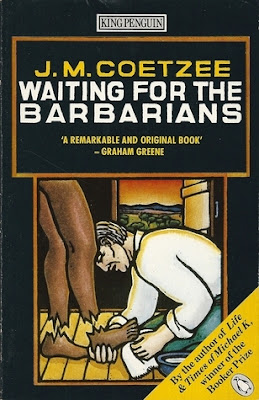
Coetzee, J.M. "Waiting for the Barbarians"

Coetzee, J.M. "Waiting for the Barbarians" - 1980

We read this in our international online book club in January 2023.

No names or places are mentioned in this novel. So, the story could take place in any corrupt country, in any dictatorship. Since the author is South African, I suppose that's where it takes place.

The description of the protagonist, the magistrate in a small post on the border of "the Empire" is very good. We see how he goes from thinking he is a loyal servant of a fair government to the discovery that the so-called barbarians are oppressed by the regime and those who think they are better than others for whatever reason.

As with so many novels that tell us about these situations, it is quite frightening to think how it is living in such a situation, where already your thoughts are a sin and nobody is supposed to know about it. And beware of helping others, especially if they are on the list of "enemies", "terrorists", "barbarians", whatever they are called in the respective countries.

This book might be more than fifty years old, but it's still as contemporary as ever. I can think of a few countries that are still in a similar situation, and I bet you can, as well.

Comments by other members:

I thought a lot about the namelessness of them/it all. I found it brutal, and abit difficult to read, as there was so much content in every word. I was not at all fond of the main character either, for being quite self-centered and lazy, (and a bit whiny) thinking one right corrects all wrongs and times he was the enabler.

I was left with questions such as "Why must empires expand?" "Why do empires such as this one pave the way for cruel and ambitious people into places of leadership?" "Where does suspicion come from?" I mean, attack first or else "the others" will attack us" or "cause pain to gain the real truth" or is it a calculated power-move, propaganda, guiding the narrative of the empire to keep expanding and keeping power central. "Who were really the barbarians?".

I enjoyed our discussion about the book a lot.

From the back cover:

"For decades the Magistrate has been a loyal servant of the Empire, running the affairs of a tiny frontier settlement and ignoring the impending war with the barbarians. When interrogation experts arrive, however, he witnesses the Empire's cruel and unjust treatment of prisoners of war. Jolted into sympathy for their victims, he commits a quixotic act of rebellion that brands him an enemy of the state. J. M. Coetzee's prize-winning novel is a startling allegory of the war between opressor and opressed. The Magistrate is not simply a man living through a crisis of conscience in an obscure place in remote times; his situation is that of all men living in unbearable complicity with regimes that ignore justice and decency."

J.M. Coetzee "who in innumerable guises portrays the surprising involvement of the outsider" received the Nobel Prize in 2003 and the Booker Prize for this novel in 1999.

I contribute to this page: Read the Nobels and you can find all my blogs about Nobel Prize winning authors and their books here.

Tuesday, 17 January 2023

Adichie, Chimamanda Ngozi "We Should All Be Feminists"

Adichie, Chimamanda Ngozi "We Should All Be Feminists" - 2014

A small book, a short book. But a very meaningful book. If you only read one non-fiction book this year, let it be this one.

The author has written a few very important books already, "Half of a Yellow Sun" probably being the most important one.

This booklet is short, yet very powerful, very important. Chimamanda Ngozi Adichie tells us about her life as a woman, a story that can probably be told by many women all over the world. We have fewer chances to get anywhere in the world, we earn less money, our voices are not heard as well.

Therefore, we should all listen to this and try to be more assertive when it comes to our battle for more recognition.

From the back cover:

"A personal and powerful essay from Chimamanda Ngozi Adichie, the bestselling author of 'Americanah' and 'Half of a Yellow Sun', based on her 2013 TEDx Talk of the same name.

What does 'feminism' mean today? That is the question at the heart of We Should All Be Feminists, a personal, eloquently-argued essay - adapted from her much-viewed Tedx talk of the same name - by Chimamanda Ngozi Adichie, the award-winning author of '
Americanah' and 'Half of a Yellow Sun'. With humour and levity, here Adichie offers readers a unique definition of feminism for the twenty-first century  one rooted in inclusion and awareness. She shines a light not only on blatant discrimination, but also the more insidious, institutional behaviours that marginalise women around the world, in order to help readers of all walks of life better understand the often masked realities of sexual politics.

Throughout, she draws extensively on her own experiences - in the U.S., in her native Nigeria - offering an artfully nuanced explanation of why the gender divide is harmful for women and men, alike. Argued in the same observant, witty and clever prose that has made Adichie a best-selling novelist, here is one remarkable author’s exploration of what it means to be a woman today - and an of-the-moment rallying cry for why we should all be feminists.
"

Tuesday, 10 January 2023

Illies, Florian "1913: The Year before the Storm"

Illies, Florian "1913: The Year before the Storm" (German: 1913: Der Sommer des Jahrhunderts) - 2012

How did the First World War come about? This question is asked frequently and attempts are made to answer it just as frequently. But that is not the purpose of this book. The author brings a contemporary testimony here. How was life the year before? When people still lived peacefully and thought of no evil. We hear about writers like Thomas Mann, Franz Kafka, James Joyce, Marcel Proust and others, painters like Ernst Macke, Ernst Ludwig Kirchner, Marcel Duchamp, musicians like Igor Stravinsky, psychologists Sigmund Freud and C.G. Young, that Stalin and Hitler were in Vienna at the same time (if only they had met and smashed each other's heads!), how the Austrian Emperor Franz Joseph I and his heir to the throne Franz-Ferdinand were doing.

Many, many people are portrayed here, month after month we follow their lives and society in general and know that everyone's lives will be completely different in the next, never quite the same.

A good history book.

From the back cover:


"The year 1913 heralds a new age of unlimited possibility. Louis Armstrong learns to play the trumpet. Kafka is in love and writes endlessly long, endlessly beautiful letters to Felice Bauer. Charlie Chaplin signs his first movie contract.

Yet everywhere there is the premonition of ruin - the number thirteen is omnipresent, and in London, Paris, Vienna, Berlin and Trieste, artists begin to act as if there were no tomorrow. In a hotel lobby, Rilke and Freud discuss beauty and transience; Proust sets out in search of lost time; and while Stravinsky celebrates The Rite of Spring with industrial cacophony, in Munich an Austrian postcard painter by the name of Adolf Hitler sells his conventional cityscapes.

Monday, 14 November 2022

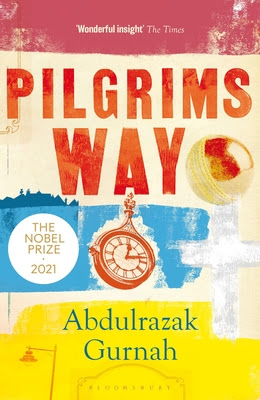
Gurnah, Abdulrazak "Pilgrims Way"

Gurnah, Abdulrazak "Pilgrims Way" - 1988

Daud is a Muslim from Tanzania who goes to England in the 70s. He works as an orderly in a hospital, does what thousands of immigrants do, cleans up after the white people. He meets prejudice and racism, the promised land is not what he expected it to be but a return into his home country is impossible.

In this situation he shares his thoughts, his fears, his hopes with us. And that of other immigrants but also the "hosts" which are not always that hospitable, so we better call them the natives.

The author describes an England shortly after the colonial period when they still had to get used to not being the "master race" anymore. I don't just speak about the British Isles, there are people all over the world who still don't understand that.

But, even more, he describes the problems of an immigrant. If you really want to know, read this books.

Oh, one thing he talks about a lot is cricket. I still don't understand it any better.

Book description:

"By the winner of the 2021 Nobel Prize in Literature An extraordinary depiction of the life of an immigrant, as he struggles to come to terms with the horror of his past and the meaning of his pilgrimage to England. Dear Catherine, he began. Here I sit, making a meal out of asking you to dinner. I don't really know how to do it. To have cultural integrity, I would have to send my aunt to speak, discreetly, to your aunt, who would then speak to your mother, who would speak to my mother, who would speak to my father, who would speak to me and then approach your mother, who would then approach you. Demoralised by small persecutions and the squalor and poverty of his life, Daud takes refuge in his imagination. He composes wry, sardonic letters hectoring friends and enemies, and invents a lurid colonial past for every old man he encounters. His greatest solace is cricket and the symbolic defeat of the empire at the hands of the mighty West Indies.Although subject to attacks of bitterness and remorse, his captivating sense of humour never deserts him as he struggles to come to terms with the horror of his past and the meaning of his pilgrimage to England."

Abdulrazak Gurnah received the Nobel Prize for Literature in 2021 "for his uncompromising and compassionate penetration of the effects of colonialism and the fate of the refugee in the gulf between cultures and continents".

I contribute to this page: Read the Nobels and you can find all my blogs about Nobel Prize winning authors and their books here.

Friday, 8 October 2021

Nobel Prize for Literature 2021 goes to Abdulrazak Gurnah from Tanzania

Image credit: James Wiseman via unsplash.com

My husband asked me yesterday morning whether I had heard anything about nominations for the Nobel Prize for Literature since he knew I was waiting for the announcement of this year's winner. I hadn't (and I know the official ones will not be published for another 50 years but there are always speculations) so I googled and found lots of names, mostly unknown to me. I had read Ismail Kadaré (The Fall of the Stone City, The Pyramid), Lyudmila Ulitskaya, (Imago or The Big Green Tent), Yu Hua (China in Ten Words) and heard of Milan Kundera, Edna O'Brian but had never heard of Can Xue, Annie Ernaux, Ngũgĩ wa Thiong’o, Maryse Condé, Nuruddin Farah, Yan Lianke, Scholastique Mukasonga, Xi Xi, Jon Fosse, Javier Marias, Hélène Cixous, Dubravka Ugrešić, Botho Strauss, Ivan Klíma, Mircea Cărtărescu, László Krasznahorkai, Péter Nádas.

So, I was quite surprised to find the name of the new Laureate (who hadn't been on any of the lists).

He is a fellow of the Royal Society of Literature and after winning the Booker and the Whitbread Prize and being shortlisted for the the Los Angeles Ties Book Award, Abdulrazak Gurnah was awarded the Nobel Prize for Literature yesterday.

Officially, he is only the sixth African winner after Wole Soyinka (Nigeria) in 1984, Naguib Mahfouz (Egypt) in 1988, Nadine Gordimer (South Africa) in 1991, J.M. Coetzee (South Africa) in 2003, Doris Lessing (UK and Zimbabwe) in 2007. Having said that, if you include Doris Lessing who was born in Iran and then spent 24 years in Zimbabwe, you should technically also include Albert Camus (1957) who was not just born in Algeria but lived there for 27 years and Jean-Marie Gustave Le Clézio (2008) who lived in Nigeria and Mauritius and also has the Mauritian nationality. But who am I to decide this? And it won't make a huge difference if you consider that the Prize has been awarded 118 times until now.

Needless to say, since I never heard of this author, I haven't read any of his books - yet.

In the meantime, I have read "Pilgrim's Way".

Abdulrazak Gurnah received the Nobel Prize for Literature in 2021 "for his uncompromising and compassionate penetration of the effects of colonialism and the fates of the refugee in the gulf between cultures and continents".

I contribute to this page: Read the Nobels and you can find all my blogs about Nobel Prize winning authors and their books here.

Monday, 27 September 2021

McCall Smith, Alexander "The No. 1 Ladies’ Detective Agency" Series # 11-17


McCall Smith, Alexander "The No. 1 Ladies’ Detective Agency" Series # 11-17

See my previous reviews of the other books in this series by Alexander McCall Smith:

McCall Smith, Alexander "The No. 1 Ladies’ Detective Agency" Series # 1-9
McCall Smith, Alexander "Tea Time for the Traditionally Built" - 2009
McCall Smith, Alexander "The No. 1 Ladies’ Detective Agency" (1) - 1999
- "Tears of the Giraffe" (2) - 2000
- "Morality for Beautiful Girls" (3) - 2001
- "The Kalahari Typing School for Men" (4) - 2002
- "The Full Cupboard of Life" (5) - 2004
- "In the Company of Cheerful Ladies" (6) - 2004
- "Blue Shoes and Happiness" (7) - 2006
- "The Good Husband of Zebra Drive" (8) - 2007
- "The Miracle at Speedy Motors" (9) - 2008
- "Tea Time for the Traditionally Built" (10) - 2009
- "The Double Comfort Safari Club" (11) - 2010
- "The Saturday Big Tent Wedding Party" (12) - 2011
- "The Limpopo Academy of Private Detection" (13) - 2012
- "The Minor Adjustment Beauty Salon" (14) - 2013
- "The Handsome Man's De Luxe Café" (15) - 2014
- "The Woman Who Walked in Sunshine" (16) - 2015
- "Precious and Grace" (17) - 2016
- "The House of Unexpected Sisters" (18) - 2017
- "The Colours of All the Cattle" (19) -2018
- "To the Land of Long Lost Friends" (20) - 2019
- "How to Raise an Elephant" (21) - 2020
Extra: 2013: The Slice of No. 1 Celebration Storybook (ebook only)

After having described the first ten novels (see links above), I have carried on readin the next books in the series.

They are all as delightful to read as the first ones were, especially in between more serious and challenging reads.

Whether Mma Ramotswe is chasing some criminals or tries to make everyone around her feel good, she is always a lovely person to read about.

McCall Smith, Alexander "The Double Comfort Safari Club" (11) - 2010

As I said in my first blog about The No. 1 Ladies' Detective Agency, I have enjoyed reading the series about Mma Ramotswe and her family and business a lot. They are easy going reads where you learn a little about Botswana, try to follow the lady detective in her pursuit of wayward husbands, "loose women", petty criminals but mainly in her special way to protect those she loves.

The author's writing style is warm and gentle. His way about describing about Botswana and its inhabitants makes you want to go and visit.

From the back cover:

"The delightful new installment in Alexander McCall Smith's beloved and bestselling series finds Mma Ramotswe and Mma Makutsi travelling to the north of Botswana, to the stunning Okavango Delta, to visit a safari lodge where there have been several unexplained and troubling events - including the demise of one of the guests.

When the two ladies of the
No. 1 Ladies' Detective Agency arrive at the Okavango Delta, their eyes are opened, as if for the first time, to the natural beauty and wildlife of their homeland. With teeming wildlife, endless grasslands, and sparkling rivulets of water running in every direction, it is breathtaking. But they can't help being drawn into a world filled with other wildlife: rival safari operators, discontented guides, grumpy hippopotamuses. On top of that, the date has still not been set for Mma Makutsi and Phuti Radiphuti's wedding, and it's safe to say that Mma Makutsi is beginning to grow a bit impatient.

And to top it all off, the impossible has happened: one of Mr. J.L.B. Matekoni's apprentices has gotten married.... Of course none of this defeats the indomitable Precious Ramotswe. Good sense, kindness, and copious quantities of red bush tea carry the day &- as they always do.
"

McCall Smith, Alexander "The Saturday Big Tent Wedding Party" (12) - 2011

I preferred this one to the last book. Not only does Mma Makutsi get married to her Mr. Phuti Radiphuti, we also have an interesting crime story within the novel. Mma Ramotswe has to find a cattle killer, something as criminal in Botswana as if you killed your neighbour.

And then there is the story of Mma Makutsi and her love of beautiful, even if unpractical, shoes.

From the back cover:

"As the countdown to Mma Makutsi's wedding begins, all is not as it should be at the No.1 Ladies' Detective Agency. While investigating unpleasant occurrences on a southern cattle-post, Mma Ramotswe, always on the side of the weak against the strong, has reason to reflect on Rule No.3 of The Principles of Private Detection: never lie to the client. Apprentice mechanic Charlie seems to be avoiding certain important responsibilities. And as Mma Makutsi's big day approaches, her nemesis Violet Sephotho is casting her net wider: by standing for election which could spell trouble for the entire nation. But as friends and family gather under starry African night skies, it turns out that even the most perplexing of apparitions - and the most shocking of crimes - may yield to rational explanation. And, of course, to Mma Ramotswe's inimitable way with love, intuition and redbush tea."

McCall Smith, Alexander "The Limpopo Academy of Private Detection" (13) - 2012

Mma Ramotswe and Mma Makutsi meet their hero, the author of their detective book, Clovis Anderson.

How lovely to meet the guy they quote almost daily. He helps them with some of their cases. As always, life in Botswana is calm and quiet, except for some troublemakers. This is my "in-between" reading.

From the back cover:

"Mma Ramotswe, normally a peaceful sleeper, finds her slumbers disturbed by dreams of a tall stranger, but she is not quite ready to learn what this vision portends. Soon even Mma Makutsi has to admit that untoward things are occurring around the No. 1 Ladies' Detective Agency, not least with the construction of her marital home. At Speedy Motors Fanwell finds himself in trouble with the law, and the indomitable Mma Potokwani flees the orphan farm. Armed with courage, kindness and an instinct for the truth, Mma Ramotswe sets out to restore order."

McCall Smith, Alexander "The Minor Adjustment Beauty Salon" (14) - 2013

And the story goes on. There is an addition to the No. 1 Ladies' Detective Agency, not 97% but 100%. Mma Makutsi has a baby whom she calls Itumelang Clovis Rhadiputhi. Meanwhile, Mma Ramotswe carries on solving her small but still disturbing crime scenes in her usual, cheerful manner. You just have to like her.

From the back cover:

"There are joyful tidings at the No. 1 Ladies' Detective Agency with the arrival of Mma Makutsi's baby. However, while her assistant is busy with motherhood, Mma Ramotswe must tackle tea-making and detective work alone. Well-known troublemaker Violet Sephotho may or may not be behind a smear campaign against the Minor Adjustment Beauty Salon, and a dispute over the will of a local dignitary points to a shocking family secret. But the agency is resilient, adaptable and open to useful lessons - on particular, that our enemies and allies are not always obvious."

McCall Smith, Alexander "The Handsome Man's De Luxe Café" (No. 1 Ladies' Detective Agency #15) - 2014

Mma Ramotswe and her No. 1 Ladies' Detective Agency will always have a special place in my heart. I love her kindness and cleverness, she is the type of person you would like to have as a friend. And there are not twenty murders in every book, there are hardly any. Just other everyday problems anyone of us could have.

Mma Makutsi on the other hand is getting too full of herself often and I know I would not have the patience of her employer. Shows again what a great lady she is.

From the back cover:

"The No. 1 Ladies’ Detective Agency often helps people find things they have lost. But they have never had to help a client find herself - until now, in this latest installment of Alexander McCall Smith’s best-selling and beloved series.

A kindhearted brother and sister have taken in a woman known only as 'Mrs.' - a woman with no memory of her name or of how she came to Botswana. And so it’s up to Precious Ramotswe and her new co-director, Grace Makutsi, to discover the woman’s identity.

Meanwhile, motherhood proves to be no obstacle to Mma Makutsi’s professional success. As she settles into her role as partner at the agency, she also launches a new enterprise of her own:
the Handsome Man’s De Luxe Café, a restaurant for Gaborone’s most fashionable diners. But even Miss 97 Per Cent isn’t fully prepared for the temperamental chefs, drunken waiters, and other challenges that come with running one’s own business. Help may come from an unexpected source, if only Mma Makutsi can swallow her pride and ask.

And next door to the
No. 1 Ladies’ Detective Agency, Mr. J.L.B. Matekoni is all too familiar with the difficult decisions of business owners. He is finally forced to make a tough choice, one that will bring major changes to both Tlokweng Road Speedy Motors and the No. 1 Ladies’ Detective Agency - and that will require all of Mma Ramotswe’s finesse and patience to sort out.

With sympathy and indefatigable good humor, Mma Ramotswe and her friends see one another through these major changes and discover along the way what true friendship really means.
"

McCall Smith, Alexander "The Woman Who Walked in Sunshine" (16) - 2015

Another story about Mma Ramotswe, the 1st lady detective in Botswana and her assistant. When I read the last book (The Handsome Man's De Luxe Café), I said that Mma Makutsi was getting too full of herself and in this one she even gets to run the detective agency by herself. She didn't get more bonus points from me but this story was a little more interesting and fun than the last one. I might go back and read some more.

From the back cover:

"Mma Ramotswe is taking a break, leaving important tasks in the capable hands of Mma Makutsi, co-director of the No. 1 Ladies' Detective Agency. But Mma Ramotswe soon finds herself interfering in cases (secretly, or so she intends). While 'on holiday', she delves into the past of a man whose reputation is brought into question, she is called upon to rescue a small boy - and discovees Violet Sephotho's latest underhand business endeavour: the No. 1 Ladies' Secretarial College. Meanwhile, Mma Makutsi hires a part-time science teacher as an assistant, and suspects that her authority is being undermined. Will Mma Ramotswe be caught out?"

McCall Smith, Alexander "Precious and Grace" (No. 1 Ladies' Detective Agency #17) - 2016

So, I started (and finished) another Mma Ramotswe book. I must say, I enjoyed this one more than the last one, maybe because it concentrated a little more on Mma Ramotswe again. And on some of the other people working for either Mma Ramotswe or Mr. J.L.B. Matekoni, all of them lovely in their own way. I wonder whether we will learn more about the young clerk whom Mma Ramotswe promised to find a bride.

I usually look for the blurb on the book and was quite shocked to find in one of the descriptions (presumably) from the book that a lady was coming from Australia to get help from Precious and Grace. No, no, no. She came from Canada. Is it too much to expect them to get that right?

From the back cover:

"The one with the woman who lost her past.

Precious Ramotswe and Grace Makutsi's friendship is tested by a curious case: a client who left Botswana thirty years ago and remembers little of her past. The quest for the truth takes the detectives in very different directions - but what if they are both wrong? Meanwhile, Fanwell adopts a stray dog, Mr Polopetsi becomes entangled in a tricky business deal and Violet Sephotho could be running for a prestigious award. Can Mma Ramotswe and Mma Makutsi move beyond their differing views to solve the case and bring harmony to the agency?
"

See more comments on my ThrowbackThursday post in 2022.

Monday, 8 June 2020

Higham, John "360 Degrees Longitude"

Higham, John "360 Degrees Longitude" - 2009

A family takes a trip around the world. On their bikes. And with a tent. Well, at least that was the plan.

The couple September and David planned it even before they had kids. Now the children are eight and eleven, so it's time to go. They visit the USA, Iceland, England, UK, France, Switzerland, Czechia, Poland, Sweden, Denmark, Germany, Switzerland, Italy, Greece, Turkey, UAE, Tanzania, Mauritius, Japan, China, Thailand, Cambodia, Costa Rica, Panama, Bolivia, Chile, Argentina, Peru, Belize in that order (although they do return to a couple of the countries in between). Quite a challenge.

Even with the utmost planning, there is always something that comes along that way that is not as easy as envisaged.

Spoiler:


The kids love reading, so that's a plus, especially when they have to spend some time a little less active. They grow together as a family and they all love that.

I greatly admire the family for what they have achieved.

Quite an interesting book, especially for people, I would think, who never travel themselves. We never took a trip like that around the world but we lived in four different countries and travelled a lot with our kids. And they always read half a library during the journey, just as Katrina and Jordan, the Higham kids. So, sometimes I found it a little tedious, a tad lengthy and slightly naïve at times, but still a nice read.

Quote:
"... 'What makes us different?' is a question that lately keeps me up at night. Why are the street kids in Cambodia such whizzes at arithmetic and the clerks behind the cash registers in Costa Rica so abysmal? Why are stores in France open 30 hours a week while the stores in Turkey are open 18-plus hours a day? Why are Germans so fanatical about punctuality, and the Italians so ... late all the time? And last, but not least, why does the entire world, other than the United States, speak more than one language and Americans just expect that one of those is English?"

He then goes on saying that we are all the same, want to raise our kids and have some comforts in life. I think if we concentrate on that, we see that we have a lot more in common with anyone from another country than what separates us.

From the back cover:

"Much more than a travel narrative 360 Degrees Longitude: One Family’s Journey Around the World is a glimpse at what it means to be a 'global citizen' - a progressively changing view of the world as seen through the eyes of an American family of four.

After more than a decade of planning, John Higham and his wife September bid their high-tech jobs and suburban lives good-bye, packed up their home and set out with two children, ages eight and eleven, to travel around the world. In the course of the next 52 weeks they crossed 24 time zones, visited 28 countries and experienced a lifetime of adventures.

Making their way across the world, the Highams discovered more than just different foods and cultures; they also learned such diverse things as a Chilean mall isn’t the best place to get your ears pierced, and that elephants appreciate flowers just as much as the next person. But most importantly, they learned about each other, and just how much a family can weather if they do it together.

360 Degrees Longitude employs Google’s wildly popular Google Earth as a compliment to the narrative. Using your computer you can spin the digital globe to join the adventure cycling through Europe, feeling the cold stare of a pride of lions in Africa, and breaking down in the Andes. Packed with photos, video and text, the online Google Earth companion adds a dimension not possible with mere paper and ink. Fly over the terrain of the Inca Trail or drill down to see the majesty of the Swiss Alps - without leaving the comfort of your chair.

John Higham is an aerospace engineer with an expertise in satellites. He is also an avid traveler, frequently writing and lecturing on his own experience traversing the globe. The Highams live in the San Francisco Bay Area. Visit him online at www.360DegreesLongitude.com.

The Voyages of Tim Vetter interviews 360 author John Higham about what it is like to travel with children, his bucket list and what he and his family have been up to since traveling around the world. Available at http://bit.ly/podcast360 or on search for "360 Degrees Longitude" on your favorite podcast store."

Wednesday, 24 July 2019

Kadaré, Ismail "The Pyramid"

Kadaré, Ismail "The Pyramid (Albanian: Piramida) - 1992

After Finnish author Mika Waltari's novel "The Egyptian", this is already the second novel I read about Ancient Egypt that really means something entirely different. Whilst "The Egyptian" was written straight after WWII, this one is about the totalitarian system in Albania.

"The Pyramid" tells us of the life under dicator Enver Hoxha and his crazy obsession for unnecessary and huge statues to show his power and strength. You can find a double meaning in almost every sentence, the ultimate motive of the pharaoh Cheops was to make his people so weak through building his gigantic pyramid so they have no power left to rebel.

The author is known as one of Europe's greatest writers, his voice against totalitarianism is second to none. He won the first Booker International Prize because he is "a universal writer in the tradition of storytelling that goes back to Homer." His followers were such illustrious authors like Chinua Achebe, Alice Muro and Philip Roth. Who knows, he might receive the Nobel Prize for Literature one day.

Brilliant novel. You can tell the author has experienced this himself.

From the back cover:

"From the Albanian writer who has been short-listed for the Nobel Prize comes a hypnotic narrative of ancient Egypt, a work that is at once a historical novel and an exploration of the horror of untrammeled state power. It is 2600 BC. The Pharaoh Cheops is inclined to forgo the construction of a pyramid in his honor, but his court sages hasten to persuade him otherwise. The pyramid, they tell him, is not a tomb but a paradox: it keeps the Egyptian people content by oppressing them utterly. The pyramid is the pillar that holds power aloft. If it wavers, everything collapses.

And so the greatest pyramid ever begins to rise. It is a monument that crushes dozens of men with the placing of each of its tens of thousands of stones. It is the subject of real and imaginary conspiracies that necessitate ruthless purges and fantastic tortures. It is a monster that will consume all Egypt before it swallows the body of Cheops himself. As told by Ismail Kadare, 'The Pyramid' is a tour de force of Kafkaesque paranoia and Orwellian political prophecy."

After "The Fall of the Stone City", this is my second book by Ismail Kadaré but certainly not my last.

Ismail Kadaré received the Booker International Prize in 2005 for being "a universal writer in the tradition of storytelling that goes back to Homer."

Monday, 15 July 2019

Gordimer, Nadine "Burger's Daughter" - 1979

Gordimer, Nadine "Burger's Daughter" - 1979

I wanted to read a book by Nadine Gordimer for a long time. She is a prolific author, she's from South Africa, she writes about politics, she's a woman and she received the Nobel Prize for Literature, a lot of reasons why she should be on my list.

I certainly wouldn't call this an "easy read". The author's style is not very inviting, the flow … well, there is not really a flow. The conversations are not very clear, one often gets the impression that we're not supposed to know who is talking at the moment, whose thoughts we are following. The story jumps from one person to the next.

However, the topic of the novel is very good. The story is loosely based on the life of Bram Fischer and his family, especially his daughter. Bram Fischer was a South African lawyer, known for his anti-apartheid activism. He became most popular as Nelson Mandela's defence lawyer.

I did enjoy reading about the story even if I didn't enjoy reading the story very much. The book teaches us about South Africa, their history, the apartheid system and that there have been people fighting against it, even if there could have been more.

From the back cover:

"After the death of legendary anti-apartheid activist, Lionel Burger, his daughter Rosa finds herself adrift in a South Africa she no longer knows. Previously her life had been surrounded, created by politics. Now, confronting the left-wing legacy her father represented, as well as the rise of a militant Black Consciousness movement, she is involved in a 'children's revolt' of her own. But where and how will she find her own identity?

Emerging front the darkest days of apartheid, in its moods of elegy, homage and compassion, Burger's Daughter is a great political novel not only of South Africa but of the twentieth century."

We discussed this book in our international online book club in June 2019.

Nadine Gordimer "who through her magnificent epic writing has - in the words of Alfred Nobel - been of very great benefit to humanity" received the Nobel Prize for Literature in 1991.

I contribute to this page: Read the Nobels and you can find all my blogs about Nobel Prize winning authors and their books here.

Thursday, 21 March 2019

Achebe, Chinua "Things Fall Apart"

Achebe, Chinua "Things Fall Apart" (The African Trilogy #1) - 1958

A story about Nigeria just after the arrival of the first European colonists in the late nineteenth century.

I haven't read many African novels but this is by far the best one to portray African culture and what Europeans have done to them through their colonies. Okonkwo and his village live a perfectly good life with their tribes, tradition, religion, work and family life. And then the European missionaries arrive and tell them that everything they've done so far is wrong and force them into changes that none of them really wants.

What would we think if someone from another continent came and told us that our religion is wrong, the way we live is wrong, the way we work is wrong, that we are a failure altogether? They alienate our children, our partners, question our education system, the way we build our houses, organize our society.

We must not like Okonkwo in order to understand that colonialism was just wrong. This is no way to help another nation, another culture, it's just a way to destroy it and the lives of those that live it.

A great book that I would recommend to everyone who is interested in other cultures, even or especially if they don't exist like this anymore.

This is the first story of the author's "African Trilogy". "No longer at Ease" and "Arrow of God" are the follow-up novels.

From the back cover:

"Things Fall Apart tells two intertwining stories, both centering on Okonkwo, a 'strong man' of an Ibo village in Nigeria. The first, a powerful fable of the immemorial conflict between the individual and society, traces Okonkwo’s fall from grace with the tribal world. The second, as modern as the first is ancient, concerns the clash of cultures and the destruction of Okonkwo's world with the arrival of aggressive European missionaries.

These perfectly harmonized twin dramas are informed by an awareness capable of encompassing at once the life of nature, human history, and the mysterious compulsions of the soul."

Chinua Achebe received the Peace Prize of the German Book Trade (Friedenspreis) in 2002.

Chinua Achebe received the Booker International Prize in 2007 because he "illuminated the path for writers around the world seeking new words and forms for new realities and societies".

Tuesday, 29 January 2019

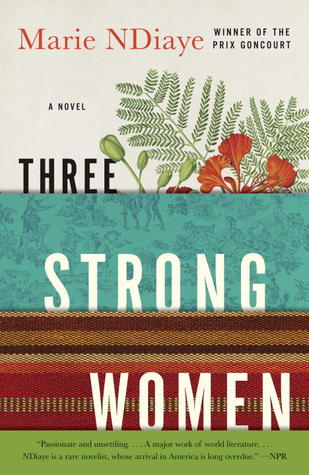
NDiaye, Marie "Three strong women"

NDiaye, Marie "Three strong women" (French: Trois femmes puissantes) - 2009

As I already mentioned in my review about the author's book "Rosie Carpe", I like reading a French book from time to time in order to use and improve my French. Unfortunately, I rarely enjoy them because they are always so weird. Not any different with this one.

I liked the description of the novel, or what I thought was the novel about three women who knew each other. But while reading it, I had to find out that these are three different stories with no relation to each other (other than one of them is a distant cousin of the other but the stories don't overlap). As I'm not a huge fan of short stories, I was quite disappointed when the first story ended in the middle of the book, and also in the middle of the story. None of the stories really has an end, well, the last one, sort of. None of the characters was really likeable, they all had some weird traits that I couldn't agree with.

The stories were unpleasant and ended abruptly. The characters didn't seem to even want to do anything to change their lives for the better. That is always the worst part of these kind of stories.

Nope, not my kind of book. I will have to remember not to fall into that trap again and read another book by this author.

From the back cover:

"In this new novel, the first by a black woman ever to win the coveted Prix Goncourt, Marie NDiaye creates a luminous narrative triptych as harrowing as it is beautiful.

This is the story of three women who say no: Norah, a French-born lawyer who finds herself in Senegal, summoned by her estranged, tyrannical father to save another victim of his paternity; Fanta, who leaves a modest but contented life as a teacher in Dakar to follow her white boyfriend back to France, where his delusional depression and sense of failure poison everything; and Khady, a penniless widow put out by her husband’s family with nothing but the name of a distant cousin (the aforementioned Fanta) who lives in France, a place Khady can scarcely conceive of but toward which she must now take desperate flight.

With lyrical intensity, Marie NDiaye masterfully evokes the relentless denial of dignity, to say nothing of happiness, in these lives caught between Africa and Europe. We see with stunning emotional exactitude how ordinary women discover unimagined reserves of strength, even as their humanity is chipped away. Three Strong Women admits us to an immigrant experience rarely if ever examined in fiction, but even more into the depths of the suffering heart."

Monday, 17 September 2018

Briley, John "Cry Freedom"

Briley, John "Cry Freedom: The Legendary True Story of Steve Biko and the Friendship that Defied Apartheid" - 1987

I have never seen the movie "Cry Freedom" but it has been on my wishlist for ages. Now, I put it right on top. This is a book that was written after the film - quite a rarity. An interesting story about a man who tried to claim freedom for his people, equal treatment, no matter the colour of your skin, the end of apartheid. He wanted all that peacefully and paid the ultimate price. I don't think this is a spoiler because Steve Biko has been dead for over forty years.

But it is also the story of another man, one born into privilege in a country where it makes a huge difference who your ancestors are, born with that kind of attitude that makes them think they deserve this privilege for whatever weird reason. When Donald Woods meets Steve Biko, a friendship develops. John Briley, the author, describes this in a very subtle way, you can just imagine how the friendship evolved slowly but surely.

The life of Donald Woods is probably just as interesting as Steve Biko's. The story about their friendship describes the story of South Africa, the story of Apartheid. I have read quite a few books about the people from this country and it shocks me again and again how something like this could even happen, how people could accept this. I doubt that I will ever understand but I urge everyone to read about it and make sure this doesn't happen again, in your own country or elsewhere.

Brilliant story.

From the back cover:

"They said Steve Biko was a man of violence; then why did he talk of peace? They said he wanted revolution; so why did he talk of friendship? They said he died of hunger; why was his body broken and bruised? This is the story of a man's fight with the government of South Africa. It is the story of all people who prefer truth to lies. It is the story of all people who cry 'Freedom', and who are not afraid to die."

Monday, 16 July 2018

Crwys-Williams, Jennifer (ed.) "In the Words of Nelson Mandela"


Crwys-Williams, Jennifer (ed.) "In the Words of Nelson Mandela: A Little Pocketbook" - 1998


A lovely little collection of quotes by Nelson Mandela who has received the Nobel Peace Prize and whose "Long Walk to Freedom" has given us so much inspiration. Here is a short version of what hes has said about all sorts of different subjects, about hope and freedom, racism and love, Africa and the world, shortly, about everything.

One of my favourite quotes:
"When we read we are able to travel to many places, meet many people and understand the world."

And another one which is especially interesting.
"There are men and women chosen to bring happiness into the hearts of others - those are the real heroes."
Nelson Mandela is definitely one of them.

From the back cover:

"Through his words and deeds Nelson Mandela has been embraced by the whole world as a symbol of courage, hope and reconciliation. Collected in In the words of Nelson Mandela, his comments on subjects as diverse as humanity, racism, friendship, oppression and freedom provide an insight into the man and all he stands for. By turns moving, generous, humorous and sad, this title eloquently conveys his warmth and dignity. It will be both an inspiration and a source of strength for all who read it."

Nelson Mandela received the Nobel Prize for Peace in 1993 "for ... work for the peaceful termination of the apartheid regime, and for laying the foundations for a new democratic South Africa".

Wednesday, 27 June 2018

Benali, Abdelkader "Wedding by the Sea"

Benali, Abdelkader "Wedding by the Sea" (Dutch: Bruiloft aan zee) - 1996

A weird book. I chose it because it's written by a Dutch author with Moroccan origin and I thought it might be interesting. He received the Best Literary Debut Prize in the Netherlands for this and was shortlisted for the Libris Literatuur Prijs which is like the Booker Prize.

Anyway, the story itself is interesting but the author swerves from one topic to another without any lines that you can follow. I thought it might be more a story of Moroccans in the Netherlands rather than what it was, someone growing up in the Netherlands seeing life in Morocco from the outside. Again, not a bad subject but the author didn't manage to capture me. A confusing story with an even more confusing end.

From the back cover:

"Twenty-year-old Lamarat Minar returns home from Holland to a deserted seaside village in Morocco for his sister Rebekka's wedding. During the festivities, he discovers that the groom has made his escape - to the local brothel, 'Lolita'.

Lamarat is given the task of retrieving Mosa, the reluctant husband-to-be, and returning him to his waiting bride. With the help of know-all taxi driver Chalid, and after many U-turns, detours and hairpin bends, Lamarat finds Mosa, and drags hm back to the village by the sea where Rebekka is waiting to administer a sweet and gruesome revenge …"