Showing posts with label Dutch book. Show all posts

Tuesday, 24 February 2026

Lanschot, Reinier van "We are Europe"

Lanschot, Reinier van "We are Europe" (Dutch: Wij zijn Europa: een nieuw Europees verhaal) - 2024

A Christmas present from one of my sons. One of his bosses had written a book about Europe. History. Present. Problems. Future.

I grew up in the middle of Europe with the European Economic Community. We had the same age. I saw a lot of controversy. Many people who were against it. Especially the farmers in our area though a lot of them benefitted from the butter mountain and other agricultural grants. I also lived in England while they were members of the EU and heard a lot of negativity there, they take away our measurements etc. The same moaning in both countries, we pay more into the community than we get out.

But do we really? I never believed that story because I know how much our market grew, I could see how we all participated in the prosperity.

Reinier van Lanschot observes this very well. He is the next generation and he gives us hope. As long as there are people like him who work toward a better future, who understand the problems and try to find solutions, so long we can have hope. The right wingers shout louder but I grew up with the conviction "He who shouts the loudest is in the wrong". And that's always right.

The EU is our biggest hope against nationalism, racism and all the other -isms who think they are better than others because … usually no reason at all, they just made one up.

There are a lot of facts in this book that tell us what has led to some events like Brexit but many stories that have to convince us that Europe is the only hope for the future.

I can only recommend this book to anyone who has the slightest interest in Europe and needs good points to convince others.

P.S. In his acknowledgements, the author also mentions Geert Mak, one of my favourite Dutch authors who has written a lot of great non-fiction books about our century, his country and Europe. And quite a few of his books have been translated into English. Try them, he is great.

Some quotes:

"When death and decline are all around and there appears to be no light left, this is frequently when the most brilliant plans emerge. And it is also when the strength to carry them out becomes possible." Mathieu Segers
The author says: "This was exactly the context in which European cooperation was born. After the devastation of the Second World War, Europe found itself in a precarious position."

On the Peace of Augsburg in 1555:
"This treaty introduced the principle of cuius regio, euius religion ('whose realm, his religion') granting rulters the authority to determine the official faith of their territories."

In German, we have a saying "Wes Brot ich ess, des Lied ich sing". (He whose bread I eat, his song I sing.) The Dutch say the same "Wiens brood men eet, diens woord men spreekt". That's about the same as "He who pays the piper calls the tune."

To explore how the EU affects your daily life, region, or interests, it is well worth visiting the webiste called What Europe Does For Me.
This is a good site that especially anyone who is against the EU should read.

From the back cover:

"We are living in a time of profound change. In Brussels, decisions are made every day that affect the lives of 450 million Europeans and shape the wider world. European cooperation is unique, far-reaching, and remarkably successful. Yet that story is rarely told in our national media or in everyday conversations.

In 'We Are Europe', Reinier van Lanschot takes readerson a journey across the continent. With historical perspective and vivid anecdotes, he reveals the real story behind European cooperation, its bold achievements and its serious shortcomings.

Van Lanschot does not shy away from Europe’s flaws. By examining today’s greatest challenges, he exposes the weaknesses of the current system and argues for the fundamental changes needed to safeguard our future. What emerges is a clear and hopeful vision for a renewed European project.

This book is both a wake-up call and an invitation: to recognise that Europe is not something distant, but something we all shape. Because the truth is simple – we are Europe."

Monday, 28 April 2025

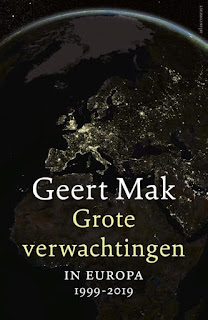
Mak, Geert "The Dream of Europe"

Mak, Geert "The Dream of Europe. Travels in a Troubled Continent" (Dutch: Grote verwachtingen. In Europa 1999-2019) - 2019

This book was a present by my son for Christmas. While I usually try to read Dutch books in Dutch, this was an English edition. In the end, I was not unhappy about that because now I can pass it on to my sons. They both speak Dutch but wouldn't read such a large book in that language.

I have read a few book by this fantastic journalist and author. All of them having to do with the changes of our continent in modern times. Totally interesting and very well examined and described.

He wrote this book six years ago and he predicted many events that are true today. That shows how well he observes. This can be seen as a follow-up to "In Europe. Travels through the Twentieth Century". A very-well deserved and very well executed follow-up. His observations about the first twenty years of our century are shocking and frightening. We should listen what he has to say about the future.

And here are some important quotes (from many):

"I wrote Enraged Citizens to show how it ought to be. The Capital (Die Hauptstadt)  is what it actually is." Robert Menasse

"But let all those idiots gather together in politics without sufficient resistance of any kind and you get a dictatorship of idiocy". Jacques de Kadt, Dutch essayist, in 1936

"He [one of the Republican candidates in 2015] lacked even the most basic respect for facts, institutions and democratic principles. To him, political opponents were enemies, a compromise was not a dignified agreement but a capitulation …" Doesn’t that apply to all of them???

From the back cover:

'Mak is the history teacher everyone should have had' Financial Times

How did the great European dream turn sour? And where do we go from here? From the author of the internationally acclaimed In Europe, a stunning history of our present,examining the first two decades of this most fragile and fraught new millennium. The great European project was built out of a common desire for peace, prosperity and freedom; a wish for a united Europe striving towards a common goal. The EU was to set an an arena for close cooperation, tackling crucial shared concerns from climate change to organized crime, promoting open borders and social security. But the first two turbulent decades of this century have been times of rapid and profound change. From the shores of Lampedusa to Putin's Moscow, the continent threatens to tear itself apart. What's happened to Europe's optimism and euphoria? How has it given way to nostalgia, frustration and fear, the fragile European dream in danger of turning into a nightmare?

In The Dream of Europe, Geert Mak, one of Europe's best-loved commentators, charts the seismic events that have shaped people's lives over the past twenty years. Mak's monumental book In Europe defined the continent on the verge of a new millennium. The Dream of Europe brings us up to the present day, through the rocky expansion of the EU, the aftermath of 9/11 and terrorist attacks across Europe, the 2008 financial crash and the euro crisis, the tragedy of the migrant crisis in the Mediterranean, the rise of right-wing populism and Brexit.

Like no other, Mak blends history, politics and culture with the stories and experiences of the many Europeans he meets on his travels. He brings this continent to life, and asks what role does Europe play now, and how might we face our challenges together, in the spirit of solidarity and connection.

'A powerful, humane and serious mind' Guardian

'Mak is a truly cosmopolitan chronicler' Independent"

Monday, 21 June 2021

't Hart, Maarten "The raging of the whole world"

't Hart, Maarten "The fury/rage/raging of the whole world" (Dutch: Het woeden der gehele wereld) - 1993

The title translates as "The fury/rage/raging of the whole world" and is derived from the text of the poem "Au bord de l'eau" by Sully Prudhomme (Nobel Prize 1901), set to music by Gabriel Fauré.

I don't often review books that have not been translated into English. Why this one wasn't? I have no idea! But I read it as part of the Xanadu Reading Challenge 2021: a book in a language with which you are familiar, but don’t read in very often, if at all. I dug through my TBR pile for Dutch books and there was this one, presenting itself: Read Me, Read Me, Read Me! So I did.

This is a very well written novel with a lot of humour in it but also a lot of understanding for the people of the time, the people that were hunted by the Nazis (including a lot of Dutch people who stood by) as well as those that were "on the wrong side" or just "wrong", as he calls them or as they are called in the Netherlands. Whilst the story doesn't take place during WWII, the events in this novel are sequences thereof. As a lot of the stories of the second half of the last century are. Especially the Dutch ones.

Alexander, the protagonist, tells his life story from the perspective of a 50-year-old. He tells about his youth in a small town as the son of a rag dealer whose main goal in life was saving. His big love is music and he manages, despite many obstacles, to make it his profession. When he is twelve, he witnesses a murder and the fear to be killed by the same person accompanies him for the rest of his life. Of course, he tries to find out who is behind all this and that's what this book is about, mainly. But it also is about music and life in a small town and growing up and and and.

I was more than positively surprised about this book because I read another book by the same author (The Sundial) and was totally bored. That's probably the reason I had this one on my TBR pile for so long because I didn't fancy reading another novel by the same author. My, was I wrong!

From the back cover (translated from Dutch):

"Het woeden der gehele wereld/The Rage of the Whole World focuses on the eventful youth of Alexander Goudveyl. The history of Alexander's youth in the fifties and sixties is also the history of a murder case that has never been resolved: in 1956, just before Christmas in Maassluis, a police officer was shot dead in broad daylight.

Het woeden der gehele wereld/The Rage of the Whole World is an exciting novel that grips the reader until the last page. An international bestseller that was awarded the Gouden Strop in 1994."

The Gouden Strop (i.e. 'Golden Noose') is a Dutch prize for the best crime novel, awarded annually.

Wednesday, 27 June 2018

Benali, Abdelkader "Wedding by the Sea"

Benali, Abdelkader "Wedding by the Sea" (Dutch: Bruiloft aan zee) - 1996

A weird book. I chose it because it's written by a Dutch author with Moroccan origin and I thought it might be interesting. He received the Best Literary Debut Prize in the Netherlands for this and was shortlisted for the Libris Literatuur Prijs which is like the Booker Prize.

Anyway, the story itself is interesting but the author swerves from one topic to another without any lines that you can follow. I thought it might be more a story of Moroccans in the Netherlands rather than what it was, someone growing up in the Netherlands seeing life in Morocco from the outside. Again, not a bad subject but the author didn't manage to capture me. A confusing story with an even more confusing end.

From the back cover:

"Twenty-year-old Lamarat Minar returns home from Holland to a deserted seaside village in Morocco for his sister Rebekka's wedding. During the festivities, he discovers that the groom has made his escape - to the local brothel, 'Lolita'.

Lamarat is given the task of retrieving Mosa, the reluctant husband-to-be, and returning him to his waiting bride. With the help of know-all taxi driver Chalid, and after many U-turns, detours and hairpin bends, Lamarat finds Mosa, and drags hm back to the village by the sea where Rebekka is waiting to administer a sweet and gruesome revenge …"

Thursday, 14 June 2018

Hertmans, Stefan "War and Turpentine"

Hertmans, Stefan "War and Turpentine" (Dutch/Flemish: Oorlog en terpentijn) - 2013

I had not heard about this author before even though he probably should be known in the Netherlands since there are not so many countries that write in Dutch. When it was suggested in our book club, I thought this would be a good choice to read another Belgian author.

And it was. Stefan Hertmans tells about his grandfather's life according to the memoirs the latter hat written. It is a heartwarming tale about a young man who was 23 when World War I started and had to go into a war nobody wanted. His father had been a painter and so was he. We hear a lot about that part of his life but even more about his life in the trenches in the fields of Flanders.

The story is us about the life of the protagonist as a child, a young man, a married man and later, an old man, partly through his own diary. But its also a story about the author and how he grew up with his grandfather.

A nice story, well told, very picturesque.

I read this in the original Dutch language.

From the back cover:

"Shortly before his death in 1981, Stefan Hertmans' grandfather gave him a couple of filled exercise books. Stories he’d heard as a child had led Hertmans to suspect that their contents might be disturbing, and for years he didn’t dare to open them.

When he finally did, he discovered unexpected secrets. His grandfather’s life was marked by years of childhood poverty in late-nineteenth-century Belgium, by horrific experiences on the frontlines during the First World War and by the loss of the young love of his life. He sublimated his grief in the silence of painting.

Drawing on these diary entries, his childhood memories and the stories told within Urbain’s paintings, Hertmans has produced a poetic novelisation of his grandfather’s story, brought to life with great imaginative power and vivid detail.

War and Turpentine is an enthralling search for a life that coincided with the tragedy of a century - and a posthumous, almost mythical attempt to give that life a voice at last."

We read this in our international book club in May 2018.

Monday, 4 June 2018

Boom, Corrie "The Hiding Place"

Boom, Corrie ten with Sherrill, John and Elizabeth "The Hiding Place. The Triumphant Story of Corrie Ten Boom" (De Schuilplaats) - 1972

If you have read Anne Frank's "Diary of a Young Girl", you should also read this book. It's the story of a family who was hiding people like the Frank family and what happened to them.

How someone can watch these atrocities - both on the side of the enemy and of those of your own people - and still stay so positive, believe there is a meaning to all this ... that's beyond me. I am grateful that these kind of people exist and would hope that I'd react the same way when I would have to make the decision.

In any case, the ten Boom family was part of the Dutch Underground. They hid anyone who needed help, mostly Jews, and helped them leaving the country.

I especially liked the father who was such a model for his family. Here is a quote that shows it all:
"Father held the baby close, his white beard brushed its cheek, looking into the little face with eyes as blue and innocent as the baby's own. At last he looked up at the pastor. 'You say we could lose our lives for this child. I would consider that the greatest honor that could come to my family.'"

Another quote I would like to talk about:
"Strangely enough, it was not the Germans or the Japanese that people had most trouble forgiving; it was their fellow Dutchmen who had sided with the enemy."
I do understand that. A lot of the Germans or Japanese had no choice but these people had betrayed their own. Mind you, after having lived in the Netherlands for almost nineteen years now, I disagree that they were all so forgiving of the Germans, there are plenty around who still haven't forgotten.

It was quite interesting to see how they built the hiding place, how they managed to put another room into a house without anyone noticing.

Granted, the book is quite religious, Corrie ten Boom and her family were Calvinists and belonged to the Dutch Reformed Church which was very strict and very conservative. But that was part of their reason for doing what they did. In any case, the book is totally worth reading.

From the back cover:

"Corrie ten Boom stood naked with her older sister Betsie, watching a concentration camp matron beating a prisoner.' Oh, the poor woman,' Corrie cried. 'Yes. May God forgive her,' Betsie replied. And, once again, Corrie realized that it was for the souls of the brutal Nazi guards that her sister prayed. Here is a book aglow with the glory of God and the courage of a quiet Christian spinster whose life was transformed by it. A story of Christ's message and the courageous woman who listened and lived to pass it along -- with joy and triumph!"

Tuesday, 27 February 2018

McLeod, Cynthia "The Cost of Sugar"

McLeod, Cynthia "The Cost of Sugar" (Dutch: Hoe duur was de suiker) - 1987

Cynthia McLeod is probably not much known internationally but her books have been translated into English. Being born in Paramaribo, Suriname, she writes in Dutch.

This story tells us all about life in that country in the 18th century. It starts with Elza and Sarith, two half-sisters who have grown up with all the comfort and convenience of slave holders from that time. But we don't just get to know the slave holders, we also get a good glimpse of the slaves and how they live together with their masters, some kind, others not so much. A lot of the plantation owners are Jewish and that is also causes problems. And then there are the Dutch who come to settle in the country.

The big question is not how much do people pay for the sugar in Europe, the question is how much did it cost to produce that sugar, how many lives are wasted in order for us to have sweet dishes. I think this is a question we still have to ask ourselves whenever we buy something cheap from other countries where workers are exploited so we can have a good life. And then there is the still existing question why some people think they are worth more or they are more intelligent because their skin is a little lighter than that of others. Those are the ones that are the less intelligent ones.

A lively, thrilling story, fascinating, sad and enthralling. I did enjoy reading this.

I read this book in the original Dutch language.

From the back cover:

"The Cost of Sugar is the historical story of Jewish family planters and their slaves in Suriname. Now a major motion picture, The Cost of Sugar gives an engrossing account of eighteenth century Suriname at the time when the country was ruled by the Dutch. The hypocrisies behind the veneer of a respectable colonial life are revealed through the eyes of two Jewish step sisters, Elza and Sarith, descendants of the settlers of New Jerusalem of the River' known today as Jodensavanne. Their pampered existences become intertwined with the fate of the plantations as the slaves decide to fight against the violent repression they have endured for too long... Cynthia McLeod presents a frank exposé of life in a Dutch colony when sugar was king and demanded the consummate allegiance of all - colonists and slaves - regardless of the tragic consequence."

Monday, 19 February 2018

Unigwe, Chika "On Black Sisters' Street"


Unigwe, Chika "On Black Sisters' Street" (Dutch: Fata Morgana) - 2007

4 African girls live in Antwerp, Belgium. A beautiful city. But the life of the girls is not that beautiful, they were brought to Europe to work as prostitutes, their Antwerp is the red light district. We often hear stories about these girls who are kept like slaves but never with many details.

Chika Unigwe described their world to us in a highly interesting manner, she is certainly an author worth watching for.

Sisi, Ama, Efe and Joyce all come from Nigeria (well, Joyce came to Belgium from Sudan via Nigeria) and we learn their stories bit by bit, how they ended up in this life, even think they chose this life themselves, how their old lives had crumbled slowly but surely. We don't just get to meet the girls but also their families, learn about their background.

A challenging, breathtaking story. And of course, this happens in any city in the Western world. Time to do something about it.

Like Mariama Bâ's "So Long a Letter" this book was mentioned in the article "The non-western books that every student should read". I think I need to write another blog about that.

From the back cover:

"On Black Sisters Street tells the haunting story of four very different women who have left their African homeland for the riches of Europe -and who are thrown together by bad luck and big dreams into a sisterhood that will change their lives. 

Each night, Sisi, Ama, Efe, and Joyce stand in the windows of Antwerp’s red-light district, promising to make men’s desires come true - if only for half an hour. Pledged to the fierce Madam and a mysterious pimp named Dele, the girls share an apartment but little else - they keep their heads down, knowing that one step out of line could cost them a week’s wages. They open their bodies to strangers but their hearts to no one, each focused on earning enough to get herself free, to send money home or save up for her own future.

Then, suddenly, a murder shatters the still surface of their lives. Drawn together by tragedy and the loss of one of their own, the women realize that they must choose between their secrets and their safety. As they begin to tell their stories, their confessions reveal the face in Efe’s hidden photograph, Ama’s lifelong search for a father, Joyce’s true name, and Sisi’s deepest secrets - and all their tales of fear, displacement, and love, concluding in a chance meeting with a powerful, sinister stranger.

On Black Sisters Street marks the U.S. publication debut of Chika Unigwe, a brilliant new writer and a standout voice among contemporary African authors. Raw, vivid, unforgettable, and inspired by a powerful oral storytelling tradition, this novel illuminates the dream of the West - and that dream’s illusion and annihilation - as seen through African eyes. It is a story of courage, unity, and hope, of women’s friendships and of bonds that, once forged, cannot be broken."

Wednesday, 15 November 2017

Koch, Herman "The Dinner"

Koch, Herman "The Dinner" (Dutch: Het Diner) - 2009

Our latest book club read, a story about two couples going for dinner but everything seems to go wrong.

While this is a good book to discuss, I didn't actually enjoy it a lot. I didn't like any of the characters, well, I felt a little sorry for the wives but no, I really didn't like any of them. They were not just shallow, they were calculating, only out for their own gain. Another member said she got so angry but we did agree that it was a good book to talk about.

I enjoyed the description of the waiter, of the whole "star restaurant". I have been to a few restaurants like that myself where you seem to pay for the whole plate and therefore don't get much on it ... but everything is somehow "special". I rather go to a nice little restaurant that still cooks everything from fresh ingredients but also makes sure their customers don't leave their place with a hollow stomach.

I found the characters racist or fascist or whatever you might call people who just dislike someone for having less money than they do, Just the type of people I would not want to call my friends. Whatever happens, I don't want to spoil it for anyone like this, I would not do "anything" for my children out of love, I would like to keep them out of trouble before something happens.

The question is, do we want to live in a society determined by these kind of people?

The book has been made into a movie. I'm not sure whether I want to watch it.

We discussed this in our international book club in November 2017 and in our international online book club in February 2026.

Here are the comments from the latest discussion:
  • The conversation was both intense and thought-provoking.
  • Overall, we agreed that the novel is fantastically written, with a strong narrative flow that made it hard to put down. The tension builds subtly but very intensely, and the author manages to break classical plot structure while smoothly changing the reader’s opinion of the characters as the story unfolds. Even though most of us loved the book, we also agreed that we did not actually like any of the characters, and it felt as if the author himself had no favorites.
  • Many readers rated the book highly (4/5 or 5/5), although a few gave it 3/5 because of how disturbing and morally bleak the story is. Koch was a new author for most of us, and we felt we likely would not have discovered this book without the group. Some members had also seen film adaptations of the story, including the 2017 film adaptation, the Dutch film Het Diner (2013), and the Italian adaptation I nostri ragazzi (2014). A few readers enjoyed the novel so much that they immediately added more of Koch’s works to their reading lists, especially "Summer House with Swimming Pool" (Zomerhuis met zwembad).
  • One of the main topics of discussion was morality and how the book challenges our moral perception. We talked about attitudes toward homeless people, minorities, and other disadvantaged groups, both in Finland and globally. The story made us question what justice really means: is justice only valid when it comes through formal punishment and trial? We also discussed how society assigns value to victims. When the victim is a homeless person with no family or close social circle, the public may be briefly horrified but quickly moves on to other news. If no one is left to mourn or demand accountability, we wondered whether punishment still truly feels like justice, or if it becomes more of a symbolic act for society’s conscience.
  • Another major theme was parenting: the tension between a parent’s protective instinct and the idea that love can also mean setting boundaries. The book raised difficult questions about how far a parent is willing to go to protect their child’s future and whether protection can become moral complicity.
  • We also discussed the setting of the restaurant as a kind of stage. The ritual of dining out, the polite structure of courses, and the presence of waiters and other diners create a façade of civility that contrasts sharply with the disturbing subject matter being discussed. This theatrical atmosphere influences how we perceive the characters and makes their reactions, manners, and treatment of others even more revealing as the evening progresses.
  • Character analysis sparked especially long discussions. At first, many of us were inclined to judge the well-known politician Serge based on the narrator’s framing. Babette came across as a socialite more concerned with maintaining appearances than with moral responsibility. Claire surprised many readers with her coldness and the extreme lengths she was willing to go to in order to protect her child’s future. Meanwhile, the narrator Paul gradually revealed himself to be unreliable, possibly suffering from a serious mental disorder he fears may have been passed on to his son, Michel. As the story progressed, we began to question his version of events: was he imagining certain horrific thoughts and actions, or was he in fact a psychopath? We also reflected on how his mindset may have shaped Michel’s worldview and actions.
  • We appreciated how the novel portrays multiple ways of perceiving and accepting the world through a single, subjective narrator, and how skillfully it shifts our sympathies without us even noticing at first.
  • The book also contains several literary and moral references. It alludes to works such as "Deliverance" by James Dickey (which we are reading next month) and echoes many famous biblical morality stories, especially themes of guilt, judgment, and moral responsibility, such as the story of Cain and Abel and broader biblical discussions of sin, hypocrisy, and justice.
  • Finally, we compared "The Dinner" to other books with similar moral dilemmas. Titles mentioned included Thomas Mann’s "Death in Venice", Albert Camus’ "The Stranger", and Chuck Palahniuk’s "Fight Club" (particularly in terms of unreliable narration and distorted moral reasoning) and American Psycho.
  • After discussing these themes, the conversation naturally shifted into a broader discussion about cults, the homeschooling of children, and Tara Westover’s memoir "Educated", and how its themes of upbringing, parental authority, and the shaping of a child’s worldview connect in interesting ways to the moral and familial dynamics explored in "The Dinner".
  • So overall we had a very multifaceted discussion. 
Another member added:
"Imagine a world where serious wrongdoing is met with impunity, enabled by privilege, deceit, and loyalty. This is the degraded world of the family at the centre of The Dinner. Rather than bonds of love, there are bonds of cowardice and complicity. This is a fascinating tale, very well told. I found this book selection to be a timely, worthwhile read. Kiitos!"

From the back cover:

"A summer's evening in Amsterdam and two couples meet at a fashionable restaurant. Between mouthfuls of food and over the delicate scraping of cutlery, the conversation remains a gentle hum of politeness - the banality of work, the triviality of holidays.

But the empty words hide a terrible conflict and, with every forced smile and every new course, the knives are being sharpened... Each couple has a fifteen-year-old son. Together, the boys have committed a horrifying act, caught on camera, and their grainy images have been beamed into living rooms across the nation; despite a police manhunt, the boys remain unidentified - by everyone except their parents.

As the dinner reaches its culinary climax, the conversation finally touches on their children and, as civility and friendship disintegrate, each couple shows just how far they are prepared to go to protect those they love."

Monday, 10 August 2015

Multatuli "Max Havelaar"

Multatuli (Eduard Douwes Dekker) "Max Havelaar, or the Coffee Auctions of the Dutch Trading Company" (Dutch: Max Havelaar of de koffiveilingen der Nederlandsche Handelmaatschappy) - 1859

Eduard Douwes Dekker aka Multatuli should probably be called the Dutch Charles Dickens. At least, he's from the same era and is just as popular in the Netherlands as Dickens is in the United Kingdom.

His book seemed to have opened the eyes of many Dutch people at the time as to what colonialism really meant. "Max Havelaar" is also called "the book that killed colonialism" and was chosen as the most important book in Dutch literature in 2002.

There are other lists around in the meantime where it is still number three, following "The Discovery of Heaven" by Harry Mulisch and "The House of the Mosque" by Kader Abdolah, two very influential and important works I highly recommend.

The book is translated (not just) into English but I read it in the original Dutch. In any case, I think it still has a message for us today, it is as important now as it was then. It's subtitle "Or the Coffee Auctions of a Dutch Trading Company," does not really say a lot more about the book than just the plain title because it is a lot more about the life in Indonesia both for the local people as well as the colonialists back then than about the trading itself. It is a work about the oppression of Europeans over other nations, you can compare it to what we have done in Africa or even to slavery. The natives had no rights whatsoever and only worked to keep their own lives so they could create more money for their "masters". All sounds very familiar.

The author got his contemporaries thinking about what colonialism really meant. And he still has a voice today. Well done. Definitely a book worth picking up.

See more comments on my ThrowbackThursday post in 2025.

From the back cover:

"When Max Havelaar was first published in Holland in 1860, it ignited a major political and social brouhaha. The novel, written by a former official of the Dutch East Indian Civil Service under the pen name Multatuli, exposed the massive corruption and cruelty rife in the Dutch colony of Java. Max Havelaar is an undeniably autobiographical novel; like his hero, Multatuli--the pseudonym for Eduard Douwes Dekker--was an Assistant Resident of Lebak in Java; like Havelaar in the novel, he resigned his position when his accusations of corruption and abuse were disregarded by higher authorities, resulting in years of poverty for both author and fictional hero. Max Havelaar is told from several different perspectives; the reader first meets an Amsterdam coffee dealer named Droogstoppel, a man so obsessed with coffee that his every thought and action is governed by it. Droogstoppel has come by a manuscript from an old schoolmate who, down on his luck, has asked him to get it published. The schoolmate is Havelaar, and the manuscript relates his experiences as an idealistic and generous young civil servant who tries to protect the poor and bring justice to the powerless.

The central part of the novel details conditions in Java, particularly Havelaar's efforts to correct injustices in the face of a corrupt government system. That his efforts will prove futile soon becomes apparent, and there is something almost Greek in the inevitability of Havelaar's declining fortunes. Despite its tragic themes, Max Havelaar is savagely funny, particularly the chapters narrated by Droogstoppel, a character unmatched for his veniality, narrow-mindedness, or singular lack of understanding or imagination. Though Multatuli's masterpiece is nearly 150 years old, it wears its age well, and Roy Edwards's excellent translation offers English-speaking readers a wonderful opportunity to experience one of the Netherlands's great literary classics."

Thursday, 4 June 2015

Mak, Geert "In Europe. Travels through the twentieth century"

Mak, Geert "In Europe. Travels through the twentieth century" (Dutch: In Europa: Reizen door de twintigste eeuw) - 2004

The 20th century. What a century it was. If we are older than 20 years, we might remember part of it. I remember the last half. The better half I would think, the peaceful half, the one where war only loomed around the corner but was never present. At least not in the part of the world where I lived.

Geert Mak is an excellent Dutch journalist who has written several non-fiction books about life in general and in particular in this part of the world (I reviewed "Jorwerd: The Death of the Village in late 20th Century" here.)

With this work he has excelled himself. He travels through Europe (not just in the book but also in real life) and describes every decade through the country he is just visiting. Some of them he has to visit several times, of course.

In any case, he gives a brilliant overview about the century that changed everyone's life (and not just that of the Europeans) forever. Let us learn from the mistakes made in the past. Reading a book like this one could help us all understanding those mistakes better and trying to avoid them for a better and more peaceful world.

See more comments on my ThrowbackThursday post in 2025.

From the back cover:

"From the First World War to the waning days of the Cold War, a poignant exploration on what it means to be European at the end of the twentieth-century. Geert Mak criss-crosses Europe from Verdun to Berlin, Saint Petersburg to Srebrenica in search of evidence and witnesses of the last hundred years of Europe. Using his skills as an acclaimed journalist, Mak locates the smaller, personal stories within the epic arc of history-talking to a former ticket-taker at the gates of the Birkenau concentration camp or noting the neat rows of tiny shoes in the abandoned nursery school in the shadow of Chernobyl. His unique approach makes the reader an eyewitness to a half-forgotten past, full of unknown peculiarities, sudden insights and touching encounters. Sweeping in scale, but intimate in detail 'In Europe' is a masterpiece."

In the meantime, the author has written a follow-up:
"The Dream of Europe" - 2019

Thursday, 30 April 2015

Photo ABC

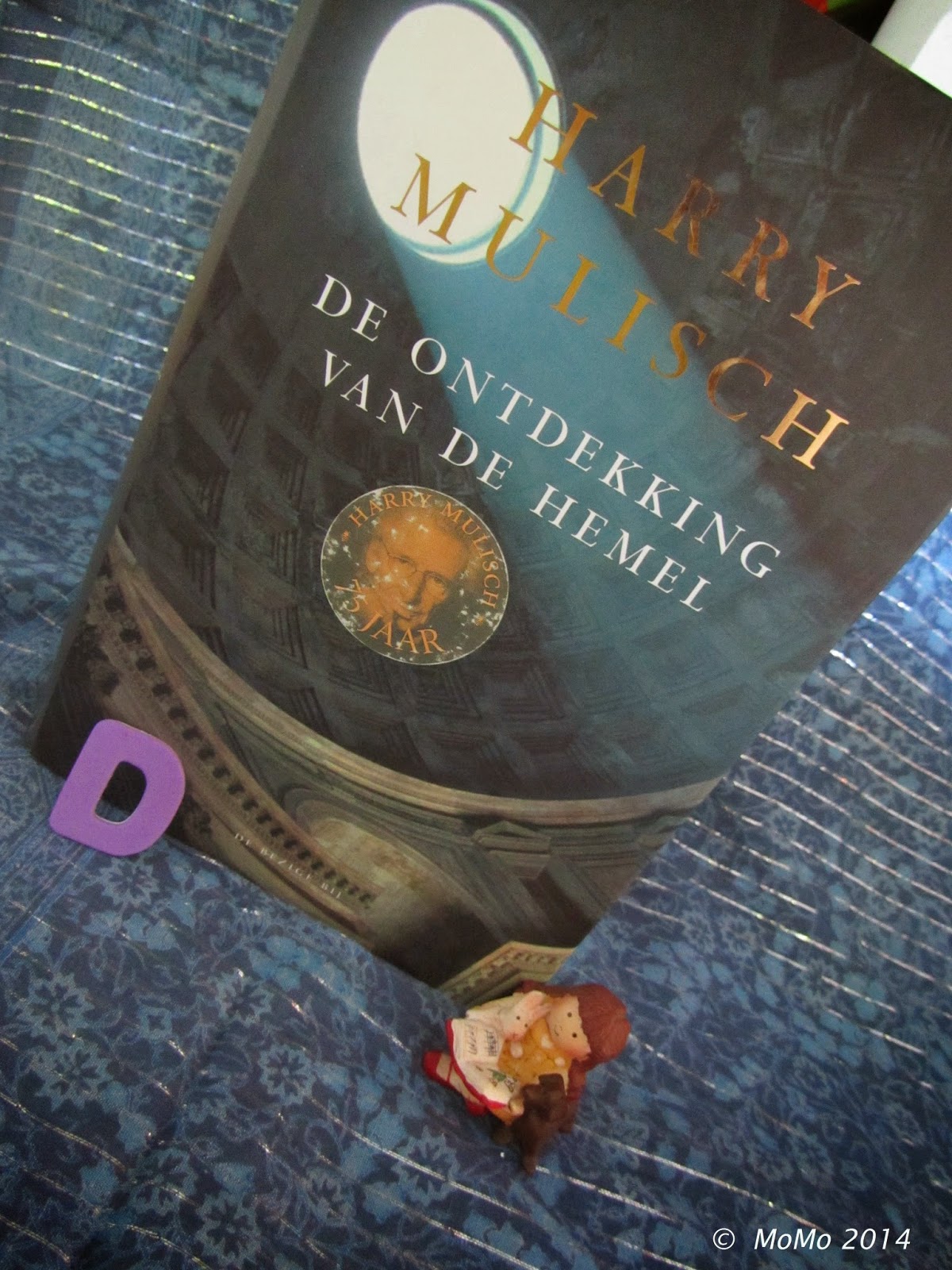
I am a member of a photo group where we get a prompt for every day and have to take an appropriate picture. Because we had the alphabet one month, I decided to do a book theme.

I always added either the link to my blog or to the books. I have decided to post a picture every week so my booky friends can enjoy them, as well.

D is for ... Dutch books. 


The Dutch have decided that this is their favourite book:
Harry Mulisch "De Ontdekking van de hemel" (The Discovery of Heaven)


All Dutch books I read and reviewed can be found here.

Thursday, 4 July 2013

Abdolah, Kader "My Father’s Notebook"

Abdolah, Kader (Hossein Sadjadi Ghaemmaghami Farahani) "My Father’s Notebook" (Dutch: Spijkerschrift) - 2000

In 2010, we read "The House of the Mosque" in our book club. It was by the same author and I wanted to read this book ever since. Well, I finally did and I am not disappointed. Same as in his other book, the author manages to transport us to the country of his birth, not just in place but also in time. He tells us about the changes during the decades that he lived there.

This novel is even more personal, it is almost an autobiography. Ishmael, the protagonist in this story, has a deaf-mute father who works as a carpet restaurateur, same as Kader Abdolah, whose pseudonym is the pen name of Hossein Sadjadi Ghaemmaghami Farahani. The name is an homage to two friends who were executed in Iran, one during the regime of the shah, the other one under the ayatollahs.

Ishmael ends up in the Netherlands as a writer, his wife follows him later ... well, I think I leave it at that, there are more similarities between the author and his protagonist.

Coming back to the book, it does go a bit back and forth, from Ismail's father Aga Akbar's youth to today, then back to Aga Akbar's youth, then Ishmael's youth, his studies ... But it is in no way confusing. A good report about the history of the situation in Iran.

I also quite liked the subject of the original Dutch title: "Spijkerschrift" meaning cuneiform script, the very first known system of writing. His father writes this way, since he can't hear and talk, he develops his own spelling. Quite interesting if you are into this kind of topic.

This novel is political as well as historical. A fascinating read.

See more comments on my ThrowbackThursday post in 2025.

From the back cover:

"On a holy mountain in the depths of Persia there is a cave with a mysterious cuneiform carving deep inside it. Aga Akbar, a deaf-mute boy from the mountain, develops his own private script from these symbols and writes passionately of his life, his family and his efforts to make sense of the changes the twentieth century brings to his country. Exiled in Holland a generation later, Akbar's son Ishmael struggles to decipher the notebook, reflecting how his own political activities have forced him to flee his country and abandon his family. As he gets closer to the heart of his father's story, he unravels the intricate tale of how the silent world of a village carpet-mender was forced to give way to one where the increasingly hostile environment of modern Iran has brought the family both love and sacrifice."

I read this book in the original Dutch.

Sunday, 16 December 2012

Brijs, Stefan "The Angel Maker"

Brijs, Stefan "The Angel Maker" (Dutch/Flemish: De engelenmaker) - 2005

A story about a doctor who clones lives a very private life with his children in a remote village in the German speaking part of Belgium. As the story unfolds, we get to know his secret.

We had chosen the book because there are only a few Dutch books translated into English. We had different feelings about the story. It was gripping, a thriller, thought-provoking.

We learned about Asperger syndrome, autism and how inmates of asylums used to be treated. And about cloning.

It was interesting to see the contrast between modern science and narrow-mindedness. The book was easy to read but had so many layers. There was a lot of symbolism, the trinity appeared again and again.

The author did a great research, a lot of information and facts seemed correct.

Some really enjoyed the book, others found it disturbing and depressing, even horrific, disgusting, took some of us way past our comfort zone. It is very gothic-like.

The small town mentality was disturbing. We found that they are the same everywhere.

There was nobody in the whole novel we could relate to, even the children were portrayed so inhuman, we could only feel empathy for the school teacher.

We like to say that "science is value free", that there can be no limits, it's discovery for the sake of discovery. What do we do with the discoveries, someone will use it who doesn't have the inhibitions. The quote "Medicine has allowed us to die more slowly." was mentioned.

You know from the first sentence, this is not going to end well. He leaves a lot of questions open.

I didn't care much for the title, in German, an angel maker is someone who performs an unsafe illegal abortion, However, as a subject, this was just as bad. I hadn't looked forward to the book and didn't care for it much. I also didn't like the (original) cover picture or the one of the artist. The former reminded me of a fried egg gone bad, the latter made me think the author was writing about himself.

Still, we had a very interesting discussion about a sensitive subject.

We discussed this in our international book club in November 2012.

From the back cover:

"A literary page-turner about one man’s macabre ambition to create life - and secure immortality

The village of Wolfheim is a quiet little place until the geneticist Dr. Victor Hoppe returns after an absence of nearly twenty years. The doctor brings with him his infant children - three identical boys all sharing a disturbing disfigurement. He keeps them hidden away until Charlotte, the woman who is hired to care for them, begins to suspect that the triplets - and the good doctor - aren’t quite what they seem. As the villagers become increasingly suspicious, the story of Dr. Hoppe’s past begins to unfold, and the shocking secrets that he has been keeping are revealed. A chilling story that explores the ethical limits of science and religion,
The Angel Maker is a haunting tale in the tradition of The Strange Case of Dr. Jekyll and Mr. Hyde and Frankenstein. Brought to life by internationally bestselling author Stefan Brijs, this eerie tale promises to get under readers’ skin."

Friday, 5 October 2012

de Winter, Leon "Zionoco"

de Winter, Leon "Zionoco" (Dutch: Zionoco) - 1995

If you didn't know Leon de Winter was Jewish, you would guess after reading a couple of his books. In most of them, the main character seems to search for his Jewish roots in one way or another, which makes me think whether this is the author himself.

I love reading about those sort of topics. Only, de Winter seems to digress a lot from his original purpose. Sex is always in the way. And so, this novel is a mixture between a porn novel including the description of alcoholics and the search for an identity, for a normal life. It's a mixture of a lot of subjects, a trial to bring them all together. But in the end, the search for the Zionoco, the mountain of Zion, is just as unsuccessful as this book. I found it flat and boring. This is my second and probably last book I have read by this author. I didn't care much for "De Hemel van Hollywood" either.

Book Descripition:

"De Winter describes movingly the tragicomic search for the unattainable father. Rabbi Sol Mayer sells absolute truths in New York, but he still doubts: about God, about his marriage, and about the miracle he had experienced, which had made the bon vivant and good-for-nothing to become rabbi like his father. When he falls in love with a young singer, it does not just mess up his hormones."

de Winter, Leon "The Hollywood Sign"

de Winter, Leon "The Hollywood Sign" (Dutch: De Hemel van Hollywood) -  1997

Three unsuccessful actors try to get back into "business" by planning the big coup, not entirely legal but with a chance of success. Apparently, the novel is supposed to be a satire about the American film business. I didn't really see that. I didn't like the plot (too far-fetched), the writing (neither funny nor intelligent), frankly, I don't understand the success of this author.

This was my first novel by de Winter. I gave him another chance and read "Zionoco" which did not change my opinion of his writing.

Book Description:

"When three great, has-been actors meet at the funeral of a legendary Hollywood agent, their alcoholic reunion leads them to visit the Hollywood Sign. There they find the body of a man – leading them to uncover an in-progress scam for stealing millions from a Las Vegas casino – which originated as a movie plot written by one of the actors' ex-girlfriends – who could not get her script produced. Desperate to make a comeback, the three risk their lives for production capital ... by writing themselves into the 'script."'

Sunday, 22 July 2012

Westerman, Frank "The Republic of Grain"

Westerman, Frank "The Republic of Grain" (Dutch: De graanrepubliek) - 1999

"The Republic of Grain" describes life in a Dutch region, in the North of the Netherlands during a tough time. The rise and fall of an area due to nature, politics, decisions made. Mainly, this is the story of a guy who lived during the biggest part of the 20th century who was the son of a big farmer, got into politics and ended up the agricultural commissioner at the EU in Brussels. But it is also the story of his country, his village, his home

Frank Westerman is a renowned journalist who has spent a lot of time in Eastern Europe as a correspondent for a Dutch newspaper. I am sure I will read more of his books.

See more comments on my ThrowbackThursday post in 2025.

Book description:

"From time immemorial, the Dutch have owed their survival to pushing back the sea. Now, at the end of the twentieth century, the dikes will be pierced and water let in once again. In the grain republic of Groningen where the clay is richest and the best grain harvested, the centuries-old polders will be flooded. The farming community, and with it a thousand-year-old tradition, will have to yield to environmental pressures and recreation.

Central in this amazing turnabout is the European agricultural technocrat Sicco Mansholt who worked his way up from farmer’s son in Groningen to Minister of Agriculture and subsequently Agricultural Commissioner of the EEC and Chairman of the European Commission. His controversial ‘Mansholt Plan’, formulated in the sixties to reform agriculture and manage it in a more industrial way, fundamentally changed European agriculture. By means of stable grain prices and import levies Mansholt was able to push grain production up sharply. But the initial success turned against him. From the seventies, ever larger surpluses of grain, milk, butter, and meat were created which then had to be dumped on the world market. Ultimately, Mansholt’s agriculture policy absorbed more than half of the eec budget and was permanently abandoned in the eighties.

Because of the enormous increase in scale, many farmers in Europe had already given up. Meanwhile Mansholt had also undergone a sea-change in his thinking. Under the influence of the Report of Rome and his remarkable relationship with the German Green politician Petra Kelly, he changed his mind about the idea of food self-sufficiency and became a champion of the idea of preferring the environment to agriculture.

De graanrepubliek ends with this apotheosis. The plan to flood fertile agricultural land will definitely mean the end of gentlemen farmers and farm workers. In a compelling way Frank Westerman shows how the history of the grain republic of Groningen is in fact the story of the destruction of all European farmers and of an old world that has disappeared."

Saturday, 14 April 2012

Mak, Geert "Jorwerd"

Mak, Geert "Jorwerd: The Death of the Village in late 20th Century" (Dutch: Hoe God verdween uit Jorwerd. Een Nederlands Dorp In De Twintigste Eeuw) - 1996

The original Dutch title is (translated) "How God disappeared from Jorwerd". The story is about a small village in Friesland and the changes it underwent in the first half of the 20th century, changing from farming to a commuting place, the influence of modern technology on a people that had lived off the land for centuries. But it is not just the story of Jorwerd, overall in Europe, the countryside changed. This little place with a population of just 700 became even smaller through the "Silent Revolution". After  more industrialization and mechanization of the farming, only about half of those people still live there, and they are getting older and older.

Geert Mak lived in the village for half a year to explore all the history and the changes. One remark I will never forget, life in a village in the Netherlands was closer to life in a village in Russia than to life in a town in the Netherlands. I think this was true overall, especially when comparing this book to that of Russian authors. "Anna Karenina" comes to mind where village and town life are described very well.

A very interesting book showing us what development and improvement has done to our lives. And the title, the more the people can rely on help from outside, the less they depend on changes of weather, etc., the fewer of them go to church and the believers attending the services are getting less and less.

This book is very interesting, no matter from which country you come, it’s a great account of the lives our grandparents still lived.

Geert Mak has carried on writing about the life of ordinary people in Europe. "My father’s century" and "In Europe. Travels through the twentieth century", both are on my reading list.

I read this in the original Dutch.

See more comments on my ThrowbackThursday post in 2025.

From the back cover:

"Born in Friesland himself, Geert Mak has returned to his roots to explore the silent revolution that took place in the small village of Jorwerd, Friesland, after World War II. He lived in Jorwerd for six months, gathering the personal stories of Jorwerters past and present, many of whom were born, lived and died there. By interweaving their colourful stories with the wider history of Europe, Mak provides an unsentimental portrayal of the pleasures and the hardships of living in the country, while illustrating at the same time how rural life everywhere is under threat from the modern world."

Friday, 23 March 2012

Durlacher, Jessica "The Conscience"

Durlacher, Jessica "The Conscience" (Dutch: Het Geweten]) - 1998

A university story. Edna meets Samuel. She likes him but he appears condescending. They become friends, meet wherever students meet, go to parties, go sailing. However, there is more to them, a common past. They are both Jews and both their fathers were deported to Auschwitz. A theme much liked by Dutch writers. A theme I usually like a lot but most Dutch writers usually overdo it. However, this takes the subject to the next generation, also very realistic, that's a big topic in the Netherlands. A lot of times, I don't like this kind of writing but Jessica Durlacher has a great way of putting it, talking about feelings rather than lingering too much on the history. I quite liked it. Certainly due to the fine penmanship of this author.

(I read this book in the original Dutch.)

Description (translated):

"The debut novel of Dutch author Jessica Durlacher, born in 1961, on a subject that is not unknown in literature: love and its difficulties. But she manages to add a new variant to the familiar.

Edna made the acquaintance of Samuel when she started university at the age of eighteen. She is immediately taken with him and knows: this one or no one. Samuel is extravagant, condescending and extremely serene. The two approach each other gropingly, meet at parties for freshmen or go sailing together. Just talking is not a common thing in their relationship. About what? 'The present is already complicated enough. And we don't talk so much because we feel so exactly what is going on in the other, actually.' It is precisely on this 'actually' that all difficulties depend.

Their friendship is underpinned, Edna calls it her 'Underlife' or 'the life beneath our everyday life', with the story of her fathers, who knew each other from the time of the war. Both are Jews and were deported from Germany to Auschwitz.

Edna and Samuel hang like marionettes by silk threads that their fathers with their fears of persecution have still not cut.

Edna finally separates from Samuel, has other men, and yet returns to him. It takes a long time before she finds herself and realizes what she wants for herself. Whereby the sad end of the story is clear from the start - Samuel dies. But why does their love have to end fatally?
"

Thursday, 1 December 2011

Dorrestein, Renate "A Heart of Stone"

Dorrestein, Renate "A Heart of Stone" (Dutch: Een hart van steen) - 1998

Ellen tells the story of her family, she grows up as one of five children and buys her parents' home when she is in her late thirties and pregnant herself. Through old family albums, she tries to understand the tragedy that happened to her family years ago.

Very interesting story about memory and understanding, a psychological thriller. Renate Dorrestein is quite well known in the Netherlands, this is one of her few books that have been translated into English. She received several nominations for prestigious Dutch literature prizes for it. I am not surprised.

I read this in the original Dutch.

See more comments on my ThrowbackThursday post in 2024.

From the back cover:

"Renate Dorrestein is that rare storyteller who dazzles critics and captivates readers. Provocative, stylish, and emotionally resonant, A Heart of Stone (her first book to be translated into English) is certain to cause a sensation on the international scene and Viking is proud to introduce her to the American public.This beautifully woven masterpiece, spare yet richly told, plumbs the undercurrents of family life and tragedy in a startling and wise story of love, fate, and survival. Ellen Van Bemmel lives with her parents, who run an American news-clipping service, and her three siblings in an old Dutch house in a suburb of Amsterdam. Ellen's idyllic childhood is suffused with Americana, both the frivolous fringes like potato chips and Coca-Cola as well as milestones like Neil Armstrong's first steps on the moon, until family disaster strikes on her twelfth birthday. From that moment on her world begins to unravel. Years later, Ellen plunges us into the past as she leafs through a faded photo album and confronts the literal and figurative ghosts of her child-hood. Seamlessly alternating the past and present, taut with Hitchcockian tension and warmed by a redemptive love story, A Heart of Stone tells a darkly humorous, yet ultimately compassionate tale."