Showing posts with label Prison. Show all posts

Monday, 18 March 2024

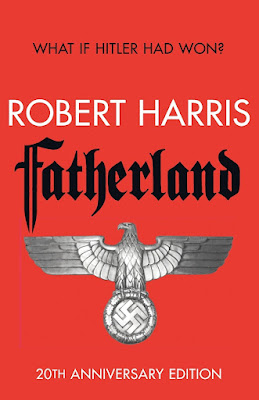
Harris, Robert "Fatherland"

Harris, Robert "Fatherland" - 1992

What an awful thought. Hitler resp. the Nazis had won the war. I always say, the Germans didn't lose the war, that were the Nazis. The Germans effectively won the war. In this book (and in various others, like my favourite "The Children's War") we can all see why.

The story itself concentrates on one particular case. A policemen who is not a fan of the Nazis but still has to wear their uniform for his job, tries to find the secret behind a murder. And with that, he could transform the whole world.

We need people like that everywhere, people who don't just blindly follow some dicatators, even if it is an advantage for them.

I think, right now is the right time to read this book again. Right now, where the Right is on the rise in many, many countries. Too many, if you ask me. How can people forget what it was? Even if you haven't lived during the war, most of us haven't, lets be honest. My parents would have been ninety had they still lived. And they were five when the Nazis were elected, so anyone responsible for the regime must be about a hundred. Not many of them alive anymore. But we have to remember what our parents or grandparents told us and see where we are heading if we elect those idiots that tell us the foreigners are our enemies. Nope, those who want to abolish our hard-earned democracy are.

We should all be happy that the war ended the way it did, this book shows us what could have been had it been different.

From the back cover:

"April 1964.

The naked body of an old man floats in a lake on the outskirts of Berlin. In one week it will be Adolf Hitler’s 75th birthday. A terrible conspiracy is starting to unravel…

What if Hitler had won?
"

Wednesday, 27 April 2022

Boschwitz, Ulrich Alexander "The Passenger"

Boschwitz, Ulrich Alexander "The Passenger" aka "The Fugitive" (German: Der Reisende) - 1939
This is my eighth Classic Spin and we were given #11.

I had never heard of this author when I found the book in a bookshop. But the description sounded interesting, a book one had to read. So I bought it. Apparently, this novel was first published as a translation in English as "The man who took trains" in the UK and "The Fugitive" in the US under the pseudonym John Grane. Posthumously. Because his destiny would make an interesting story, as well. As so many Jews, he couldn't get away, he was a Jew in Germany and a Nazi in other countries. So, the British interned him as "enemy alien" and sent him to Australia. When he returned to Europe, his ship was torpedoed and sank, and with it the author and his last manuscript. Let us think about people like him when we don't welcome refugees.

You can see how the protagonist changes with the circumstances he is in. How he first believes that his Arian friends will help him, how he then thinks with the money he has left he can get away, how he tries again and again to leave Germany and a certain destiny of death.

Ulrich Alexander Boschwitz was only 23 when he wrote this book but I think you can tell that he was wise beyond his age, probably for all the events he had seen and had to live through.

The book "disappeared" for several decades. I am glad it was found again.

From the back cover:

"Hailed as a remarkable literary discovery, a lost novel of heart-stopping intensity and harrowing absurdity about flight and persecution in 1930s Germany

Berlin, November 1938. Jewish shops have been ransacked and looted, synagogues destroyed. As storm troopers pound on his door, Otto Silbermann, a respected businessman who fought for Germany in the Great War, is forced to sneak out the back of his own home. Turned away from establishments he had long patronized, and fearful of being exposed as a Jew despite his Aryan looks, he boards a train.

And then another. And another . . . until his flight becomes a frantic odyssey across Germany, as he searches first for information, then for help, and finally for escape. His travels bring him face-to-face with waiters and conductors, officials and fellow outcasts, seductive women and vicious thieves, a few of whom disapprove of the regime while the rest embrace it wholeheartedly.

Clinging to his existence as it was just days before, Silbermann refuses to believe what is happening even as he is beset by opportunists, betrayed by associates, and bereft of family, friends, and fortune. As his world collapses around him, he is forced to concede that his nightmare is all too real.

Twenty-three-year-old Ulrich Boschwitz wrote
The Passenger at breakneck speed in 1938, fresh in the wake of the Kristallnacht pogroms, and his prose flies at the same pace. Taut, immediate, infused with acerbic Kafkaesque humor, The Passenger is an indelible portrait of a man and a society careening out of control."

If you want to see what others were reading, have a look here.

Monday, 23 August 2021

Hislop, Victoria "One August Night"

Hislop, Victoria "One August Night" - 2020

I absolutely love Victoria Hislop. My first book by her was "The Island" and I have read all her subsequent novels (see here). All of them were fantastic, great stories with a lot of information mainly about Greece but also some other Southern European countries (Cyprus, Spain, Turkey).

Fourteen years after her first novel, the sequel to it was published. It is the end of the leper colony in Greece since they found a cure. That is great news for some since their loved ones return, not so good news for others who fear their lives will change. And they do.

A drama that occurs on the return changes the life of everyone whom we got to know in the first book. It would have been nice to learn more about other inhabitants of Spinalonga but we learn more about Maria who spent a long time of her life there.

As in all her novels, Victoria Hislop tells us a lot about her beloved country Greece. She has been made an honorary citizen in the meantime, a well-deserved recognition. I always love her describing the Greek whom I got to know as a warm and loving people. And her stories always have a feeling of truth, you can believe the people really existed, they led this life. She always brings me back to Crete which I really love.

I am already looking forward to her next book which she will hopefully write soon.

From the back cover:

"25th August 1957. The island of Spinalonga closes its leper colony. And a moment of violence has devastating consequences.

When time stops dead for Maria Petrakis and her sister, Anna, two families splinter apart and, for the people of Plaka, the closure of Spinalonga is forever coloured with tragedy.

In the aftermath, the question of how to resume life looms large. Stigma and scandal need to be confronted and somehow, for those impacted, a future built from the ruins of the past.

Number one bestselling author Victoria Hislop returns to the world and characters she created in
The Island - the award-winning novel that remains one of the biggest selling reading group novels of the century. It is finally time to be reunited with Anna, Maria, Manolis and Andreas in the weeks leading up to the evacuation of the island... and beyond."

See more comments on my ThrowbackThursday post in 2022.

Thursday, 6 May 2021

Stroyar, J.N. "Becoming Them"

Stroyar, J.N. "Becoming Them" (The Children's War Book 3) - 2017

Ten years ago, I read "The Children's War" and "A Change of Regime", one of the best books I ever read and still my favourite. As a German, having to live with the consequences of one of the most terrible wars ever, I have always asked myself what would have happened if the Nazis had won the war. We all would have lost, that's for sure. J.N. Stroyar has brought these thoughts to paper and painted a very vivid picture in her first two books. Then, one day, I learned there was a third one. Wow! I couldn't believe it. I was lucky to find a copy. I have no idea why these books don't get reprinted, I know so many people who would love to read it.

So, I finally found a copy. It had been ten years since I read the first two books. Would I remember enough to jump right back in? Looks like I didn't even have to. The author was so clever to include a ten pages of summary in the front where she retells the story for those who want to review what was in the first books and it might even be enough for those who never read the first ones. I think this should be obligatory for any sequel to any book. Makes reading the follow-up so much easer.

They say on the back cover "the long awaited finale". I didn't even know there was to be a finale. I didn't even know there would be a third book. Mainly, I think, because so little is known about the author. All I know is that she's a US physisict who used to live in German (Frankfurt, I believe) and now lives partly in London and partly in the USA. And that she won the "Sidewise Award" in 2001, an annual award for "Alternate History". She doesn't even have a Wikipedia page. So, I haven't seen anywhere that she was writing a third story.

In this final book of the trilogy, we see how everything gets together in the end, how the long and arduous underground work finally leads to the end of the Nazi party. But not without many, many difficulties first. This third book is just as fascinating, exciting and thrilling as the first two. I hope many people will be able to read it.

I also hope that the author is going to write more books.

Quote from Wikipedia:
"The Bradenton Herald described The Children's War as 'a brutal look at what might have been and a reminder of the price of freedom.'"
So very exact and true.

From the back cover:

"The long awaited finale of The Children’s War is presented in Becoming Them. Drawn from genuine historical incidents and people, both from the past and the present, the story examines the psychology of war, torture, and resistance, of guilt and innocence.

Set in a world sixty years after the conquest of Europe by Nazi Germany, the resistance movement continues its struggle for freedom, passing their war on from generation to generation. Peter Halifax, one-time member of the English Underground, has just been released from prison and now works with his assassin wife Zosia Król in Berlin under the direction of her brother, Ryszard, who, as his alter-ego Colonel Richard Traugutt, is second in command of the Third Reich. Together they attempt to collapse the Nazi Party and reform the Reich from within.

The story begins in London where Peter has been sent to liaise with the English Underground as a member of the newly formed Nichtdeutsch Council, but instead he becomes the target of an assassination attempt. It is only one indication of the growing chaos and violence in the Reich as the population becomes disenchanted with the dithering leadership of their new Fuhrer, Josef Frauenfeld.

As a member of the Nichtdeutsch Council, Zosia attempts to organize the various opposition factions into a coherent movement while struggling to raise her family, carefully keeping her three children away from Berlin high society where Magdalena, who is Elspeth’s and Peter’s daughter, might be recognized. She also maintains contact with her base in the Carpathian mountains and undertakes jobs for them that lead her into ever more questionable actions.

Richard Traugutt, as special advisor to the Fuhrer, works to change the laws of the Reich to give more rights and freedoms to its subjects, but he is endlessly stymied by Frauenfeld who has fallen under the sway of Richard’s enemies, the Lederman brothers, who are staunch supporters of the racial categorizations of Reich law. In an attempt to shatter Frauenfeld’s illusions about the rigid class system, Richard maneuvers Peter, who is still classified as subhuman, into the highest tiers of Berlin society, into re-establishing his illicit relationship with Elspeth Vogel, and even into befriending the Fuhrer in the hopes of causing a cultural clash that will force Frauenfeld to re-evaluate his adherence to Nazi philosophy. Traugutt’s plan falls foul of all his directives, and his determination to follow his own personal agenda for reform, ruthlessly manipulating people and events to maximize their effectiveness – whatever the personal cost – results in constant conflict with his allies and a withdrawal of support from the Underground hierarchy.

As their plots unfold and the Resistance begins to tear itself apart, the past comes back to haunt them all, sowing distrust and fear among the conspirators. With each passing month they more and more come to resemble that which they hate. Their loyalties are frayed, their motives are questioned, trusted comrades turn traitor, and their enemies grow in power. Time is running out.

As background to the story, Becoming Them contains a complete summary of both
The Children’s War and A Change of Regime."

See more comments on my ThrowbackThursday post in 2021.
Thursday, 15 October 2020

Whitehead, Colson "The Nickel Boys"

Whitehead, Colson "The Nickel Boys" - 2019

After having read his first Pulitzer Prize win "The Underground Railroad", I was thrilled to hear that Colson Whitehead received this award for the second time. Deservedly, very deservedly.

Since I really enjoyed his last book, I knew I'd have to read this one, as well. It certainly was worth it. This is not only a story of a young black boy growing up in the sixties or a book about what happens to young delinquents when they get caught. No, this is the story about how you have no chance in life if you are born with the wrong colour. You get condemned for something you have not done and from there on it goes downhill. And nobody will help you to get up again.

I have read a lot of books about racism (see in my list "Anti-Racism") and prejudices and a lot of time you can experience what those who are condemned suffer. But Colin Whitehead has made it a lot clearer, almost as if you are in Elwood Curtis' position yourself. The details are so well written, you are there with the protagonist.

The judges called the novel "a spare and devastating exploration of abuse at a reform school in Jim Crow-era Florida that is ultimately a powerful tale of human perseverance, dignity and redemption." Well said, very precise. Such a painful account of the life so many people still have to endure

A deep story that will leave nobody who has read it.

Colson Whitehead received the Pulitzer Prize for "The Nickel Boys" in 2020. He is one of only four recipients who were awarded the prize twice.

From the back cover:

"Elwood Curtis knows he is as good as anyone - growing up in 1960s Florida, he has taken the words of Dr Martin Luther King to heart. He is about to enrol in the local black college, determined to make something of himself.  But given the time and the place, one innocent mistake is all it takes to destroy his future.  Instead of embarking on a college education, Elwood arrive at the Nickel Academy, a segregated reform school claiming to provide an education which will equip its inmates to become 'honourable and honest men'.

In reality, the Nickel Academy is a nightmarish upside-down world, where any boy who resists the corrupt depravity of the authorities is likely to disappear 'out back'.  Elwood tries to hold on to Dr King's ringing assertion: 'Throw us in jail, and we will still love you.' But Elwood's fellow inmate and new friend Turner thinks Elwood naïve and worse; the world is crooked, and the only way to survive is to emulate the cruelty and cynicism of their oppressors.

When Elwood's idealism and Turner's scepticism collide, the result has decades-long repercussions. 
The Nickel Boys is a devastating, driven novel by a great American writer whose clear-sighted and humane storytelling continues to illuminate our current reality."

Monday, 12 October 2020

Dumas, Alexandre "The Count of Monte Cristo"

Dumas, Alexandre "The Count of Monte Cristo" (French: Le comte de Monte-Cristo) - 1844-46

When I was little, they would show a swashbuckling film on German television every Sunday. We called them "Mantel- und Degenfilm" which translates into "coat and épée film". Every Sunday!

This book reminded me of that time and that's probably why I like it. I thought about the Three Musketeers and all those other books and films I saw on that subject.

This book has it all, love and hate, rich and poor, adventure, revenge, death, mystery, murder, plots, history and - of course, the swashbuckling.

Of course, as most classics, it also gives you some insight into the politics of the time. Now, I never find the French history - or any other history - as exciting as that of the Tudors but it definitely has something.

I read this book in the original which gave me some good exercise with my rusty French.

From the back cover:

"Thrown in prison for a crime he has not committed, Edmond Dantes is confined to the grim fortress of If. There he learns of a great hoard of treasure hidden on the Isle of Monte Cristo and he becomes determined not only to escape, but also to unearth the treasure and use it to plot the destruction of the three men responsible for his incarceration. Dumas’ epic tale of suffering and retribution, inspired by a real-life case of wrongful imprisonment, was a huge popular success when it was first serialized in the 1840s."

Monday, 7 September 2020

Hislop, Victoria "Those Who Are Loved"

Hislop, Victoria "Those Who Are Loved" - 2019

I have read a few books by Victoria Hislop and also quite a few about Greece. Next to those by the same author, "Modern Greece" by C.M. Woodhouse is probably the best if you want information about (especially the modern) the history of this interesting country. Victoria Hislop also recommends this book in her list of "Suggested Reading".

Victoria Hislop's stories about life in Greece are so informative and gripping, no wonder the Greek granted her honorary Greek citizenship for promoting modern Greek history and culture. Definitely deserved.

While we have learned i.a. about the history of Greece during the Ottoman Empire, this is a story about Greece during and after WWII. A lot of people always assume that with the end of that awful war, on VE Day, there was peace everywhere in the world except for the Pacific region. But it carried on in Europe in many areas. Like here in Greece where they felt the wounds of what was started during the occupation even more when it came to starting fresh. The country was just as divided as Germany, albeit in a different way.

In this book, we meet a normal family who has different opinions on politics. Sounds familiar? Yes, it happens all the time. There are people who are willing to fight for the freedom of their country, others who don't see a problem where there is a huge one. If this kind of different people are in one family, it can cause a lot of heartbreak and chaos.

As usual, Victoria Hislop manages to describe the different individuals, their feelings and their beliefs true to detail and possible to empathise with.

While searching for the places where this book takes place (mainly Athens and the prison islands Makronisos and Trikeri), I found an interesting website/blog about different books and their locations. Have a look here. I thought it might show some pictures but I quite liked that at least we can see where exactly the places are.

I can't wait for Victoria Hislop's next book.

From the back cover:

"Athens 1941. Nazi forces occupy Greece … and a nation falls apart.

Fifteen-year-old Themis comes from a family polarised in its political views. The Nazi occupation only deepens the faultlines between those she loves while it reduces Greece to destitution.

In the civil war that follows the end of the occupation, Themis joins the Communist army to fight for her beliefs. Ultimately imprisoned on the infamous islands of exile, Makronisos and then Trikeri, Themis encounters another prisoner whose life will entwine with her own in ways neither can foresee. And finds she must weigh her principles against her desire to escape and live.

As she looks back on her life, Themis realises how tightly the personal and political are entangled. While some wounds heal, others deepen.

Already a Number one bestseller, this gripping new novel sheds light on the complexity and trauma of Greece’s past and weaves it into the epic tale of an ordinary woman compelled to live an extraordinary life.
"

Wednesday, 8 January 2020

Atwood, Margaret "Hag-Seed"

Atwood, Margaret "Hag-Seed. The Tempest Retold" - 2016

Before I left the Netherlands, a friend gave me this book. She had received it as a present and couldn't get into it. She remembered that I liked Margaret Atwood. I do, so I was happy to read this book of hers. It's a little different from her other stories as she is retelling Shakespeare's "The Tempest" in a modern setting. Highly interesting.

I must admit, I never read or watched "The Tempest" though I did watch the musical "Return to the Forbidden Planet" which was already a retelling of Shakespeare's piece in a futuristic setting and won the Olivier Award for Best New Musical both in 1989 and 1990. It's been a long time since I watched it but I remember brilliant actors, an interesting story and great music.

I really liked this book. It shows two things. One, that Shakespeare was a brilliant writer whose stories are still very much alive today. And two, that Margaret Atwood is just as brilliant because she can take this timeless classic and bring it nearer to today's readers. Fantastic.

I hope, the author will tackle some more of the bard from Stratford-upon-Avon.

From the back cover:

"Treacherously toppled from his post as director of the Makeshiweg Festival on the eve of his production of The Tempest, Felix retreats to a backwoods hovel to lick his wounds and mourn his lost daughter. And also to plot his revenge.

After twelve years his chance appears in the shape of a theatre course at a nearby prison. Here, Felix and his inmate actors will stage his Tempest at last, and snare the traitors who destroyed him. But will it remake Felix as his enemies fall?"

Margaret Atwood received the Peace Prize of the German Book Trade (Friedenspreis) in 2017. 

Monday, 15 July 2019

Gordimer, Nadine "Burger's Daughter" - 1979

Gordimer, Nadine "Burger's Daughter" - 1979

I wanted to read a book by Nadine Gordimer for a long time. She is a prolific author, she's from South Africa, she writes about politics, she's a woman and she received the Nobel Prize for Literature, a lot of reasons why she should be on my list.

I certainly wouldn't call this an "easy read". The author's style is not very inviting, the flow … well, there is not really a flow. The conversations are not very clear, one often gets the impression that we're not supposed to know who is talking at the moment, whose thoughts we are following. The story jumps from one person to the next.

However, the topic of the novel is very good. The story is loosely based on the life of Bram Fischer and his family, especially his daughter. Bram Fischer was a South African lawyer, known for his anti-apartheid activism. He became most popular as Nelson Mandela's defence lawyer.

I did enjoy reading about the story even if I didn't enjoy reading the story very much. The book teaches us about South Africa, their history, the apartheid system and that there have been people fighting against it, even if there could have been more.

From the back cover:

"After the death of legendary anti-apartheid activist, Lionel Burger, his daughter Rosa finds herself adrift in a South Africa she no longer knows. Previously her life had been surrounded, created by politics. Now, confronting the left-wing legacy her father represented, as well as the rise of a militant Black Consciousness movement, she is involved in a 'children's revolt' of her own. But where and how will she find her own identity?

Emerging front the darkest days of apartheid, in its moods of elegy, homage and compassion, Burger's Daughter is a great political novel not only of South Africa but of the twentieth century."

We discussed this book in our international online book club in June 2019.

Nadine Gordimer "who through her magnificent epic writing has - in the words of Alfred Nobel - been of very great benefit to humanity" received the Nobel Prize for Literature in 1991.

I contribute to this page: Read the Nobels and you can find all my blogs about Nobel Prize winning authors and their books here.

Tuesday, 19 February 2019

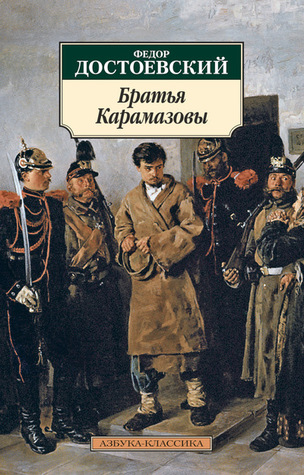
Dostoevsky, Fyodor "The Brothers Karamazov"

Dostoevsky, Fyodor "The Brothers Karamazov" (Russian: Братья Карамазовы/Brat'ya Karamazovy) - 1879-80

I have always loved reading Russian authors. Dostoevsky is no exception. And this novel had more than 1,200 pages, so the right book for me.

This is not the first book I read from this author and he has not disappointed me so far. Brilliant writing, the setting is always exceptional, the way the story unfolds, the many different characters he describes in detail. Everything is so well done. You get caught from page one until you are finished. What a book!

And the book is packed full with philosophical and religious questions, questions about human existence. The three brothers Karamazov all represent a different side, all have different answers. Dmitri or Mitya is most like the farther Fyodor, He is a soldier and leads an unrestrained life. Ivan has visited the university and is more an enlightened, mind-oriented, atheist intellectual. Alexei or Alyosha, the protagonist, is a religious man, he is a novice in a monastery.

Then there is a fourth, illegitimate brother who is a servant in the father's house.

We discover the Russian society through these different men and their miseries. The story is spellbinding, not the easiest of reads but certainly one of the most deserving. It is a philosophical as well as a spiritual drama, an account of a country that is about to change into modern times and what that does to its inhabitants. A story that stays with us for a long long time.

After "Crime and Punishment", "The Gambler" and "The Adolescent", this is my fourth novel by this fantastic author. I am sure it won't be the last.

From the back cover:

"In 1880 Dostoevsky completed The Brothers Karamazov, the literary effort for which he had been preparing all his life. Compelling, profound, complex, it is the story of a patricide and of the four sons who each had a motive for murder: Dmitry, the sensualist, Ivan, the intellectual; Alyosha, the mystic; and twisted, cunning Smerdyakov, the bastard child. Frequently lurid, nightmarish, always brilliant, the novel plunges the reader into a sordid love triangle, a pathological obsession, and a gripping courtroom drama. But throughout the whole, Dostoevsky searches for the truth - about man, about life, about the existence of God. A terrifying answer to man's eternal questions, this monumental work remains the crowning achievement of perhaps the finest novelist of all time."

Monday, 11 February 2019

Mistry, Rohinton "Such a Long Journey"

Mistry, Rohinton "Such a Long Journey" - 1991

This is my third book by Rohinton Mistry after "A Fine Balance" and "Family Matters".

Let me tell you right away, it didn't captivate me as much as the others did. I wouldn't say it was too gloomy, too political (although I loved that) or there wasn't enough material about India. I also wouldn't say it wasn't just as well written as the others. Maybe it was just the characters. I don't think I liked a single one of them. Except for the painter in the street who paints pictures of all the different Gods of all the different religions. That was nice.

I liked to see how even innocent people can be caught up in a political upheaval. But all in all, I disliked that there were too many stories, too many characters, none of them didn't really have a huge role, not even the main characters.

The author probably wanted to portray the hopelessness these people live in. He managed that but it wasn't something that touched me as much as it should have. Tough to describe but there we are.

I guess the book was too slow for me. However, this was his first book, so I know he is getting better with time.  It didn't put me off reading more novels by this author. And I did learn something about the politics of the time. That was worth reading it.

From the back cover:

"Gustad Noble is a hard-working bank clerk and a devoted family man who gradually sees his modest life unravelling. His young daughter falls ill; his promising son defies his father's ambitions for him. One day he receives a letter from an old friend, asking him to help in what at first seems like a heroic mission. But he soon finds himself unwittingly drawn into a dangerous network of fraud and betrayal. 

Compassionate, moving and rich in details of character and place, this unforgettable novel charts the journey of a moral heart in a turbulent world of change."

Monday, 17 September 2018

Briley, John "Cry Freedom"

Briley, John "Cry Freedom: The Legendary True Story of Steve Biko and the Friendship that Defied Apartheid" - 1987

I have never seen the movie "Cry Freedom" but it has been on my wishlist for ages. Now, I put it right on top. This is a book that was written after the film - quite a rarity. An interesting story about a man who tried to claim freedom for his people, equal treatment, no matter the colour of your skin, the end of apartheid. He wanted all that peacefully and paid the ultimate price. I don't think this is a spoiler because Steve Biko has been dead for over forty years.

But it is also the story of another man, one born into privilege in a country where it makes a huge difference who your ancestors are, born with that kind of attitude that makes them think they deserve this privilege for whatever weird reason. When Donald Woods meets Steve Biko, a friendship develops. John Briley, the author, describes this in a very subtle way, you can just imagine how the friendship evolved slowly but surely.

The life of Donald Woods is probably just as interesting as Steve Biko's. The story about their friendship describes the story of South Africa, the story of Apartheid. I have read quite a few books about the people from this country and it shocks me again and again how something like this could even happen, how people could accept this. I doubt that I will ever understand but I urge everyone to read about it and make sure this doesn't happen again, in your own country or elsewhere.

Brilliant story.

From the back cover:

"They said Steve Biko was a man of violence; then why did he talk of peace? They said he wanted revolution; so why did he talk of friendship? They said he died of hunger; why was his body broken and bruised? This is the story of a man's fight with the government of South Africa. It is the story of all people who prefer truth to lies. It is the story of all people who cry 'Freedom', and who are not afraid to die."

Tuesday, 29 August 2017

Solzhenitsyn, Alexander "His Great Stories"

Solschenizyn, Alexander (Александр Исаевич Солженицын/Aleksandr Solzhenitsyn) "Große Erzählungen: Iwan Denissowitsch; Zum Nutzen der Sache; Matrjonas Hof; Zwischenfall auf dem Bahnhof Kretschetowka" (His Great Stories: One Day in the Life of Ivan Denisovich - 1962; For the Good of the Cause - 1963; Matryona's House - 1963; An Incident at Krechetovka Station - 1963) (Russian: Оди́н день Ива́на Дени́совича Odin den' Ivana Denisovicha; Для пользы дела/ lja pol'zy dela; Матрёнин двор/Matrjonin dvor; Случай на станции Кречетовка/Sluchaj na stancii Krechetovka) - 1962/63

I am not a huge fan of short stories but I always wanted to read something by Solzhenitsyn. So, when I found this book that started with one of his greatest tales, "A Day in the Life of Ivan Denisovich", I thought I'd give it a go.

Since there isn't an English collection of the same stories available, I will just talk about every single part of the book individually, don't worry, there are only four stories.
"One Day in the Life of Ivan Denisovich" (Russian: Оди́н день Ива́на Дени́совича Odin den' Ivana Denisovicha) - 1962

We always hear about the Gulag, the prisoners who sent to Siberia and have to work there etc. But we never really know what is going on there, what the work is like, how the prisoners are kept.

Unless we read about the one day in the life of Ivan Denisovich Shukhov, starting the instant he opens his eyes in the morning until he closes them again in the evening.

And once we read it, we understand why this writer was awared the Nobel Prize for Literature. If he hadn't written anything else, he still would have been one of the greatest authors on earth. While reading this, you are standing next to Ivan, you suffer with him, you follow him. And he seems to be a born survivor, one who can deal with a lot of things, can get that extra ration of terrible soup they all yearn for.

This is a very moving novel by someone who experienced the Gulag. He spent eight years there and then was exiled for life to Kazakhstan.

Brilliant story, brilliant writing.

Description:
"First published in the Soviet journal Novy Mir in 1962, One Day in the Life of Ivan Denisovich stands as a classic of contemporary literature. The story of labor-camp inmate Ivan Denisovich Shukhov, it graphically describes his struggle to maintain his dignity in the face of communist oppression. An unforgettable portrait of the entire world of Stalin's forced work camps, One Day in the Life of Ivan Denisovich is one of the most extraordinary literary documents to have emerged from the Soviet Union and confirms Solzhenitsyn's stature as "a literary genius whose talent matches that of Dostoevsky, Turgenev, Tolstoy" - Harrison Salisbury"

"For the Good of the Cause" (Russian: Для пользы дела/Dlja pol'zy dela) - 1963

Another great story about the downsides of the Soviet Union. A story of bureaucrats who are overdoing it. Who don't look for the benefit of the people, just for their own benefit.

This is only a short novella with less than a hundred pages and I do n't want to give too much away but the language is just as brilliant as in "One Day in the Life of Ivan Denisovich" and the people are described just as well.

Description:
"In For the Good of the Cause, Solzhenitsyn presents a remarkable cross-section of Soviet life. He runs the whole gamut, from ordinary students, workers, and teachers to the omnipotent officials in Moscow, terrifying in their faceless, Kafkaesque anonymity.
Like his world famous novels One Day in the Life of Ivan Denisovich, The First Circle and Cancer Ward, For the Good of the Cause, set in a new provincial school, is a scathing indictment of the victimisation of ordinary, decent people by Soviet careerist bureaucrats. Solzhenitsyn presents the conflicts between right and wrong, between the freedom of the individual and the harshness of the system with absolute sincerity and conviction."
"Matryona's House" (Russian: Матрёнин двор/Matrjonin dvor) - 1963

Another great story where we get to know the "little man" or in this case the "little woman" who had to make do with what they were given or allowed to have. This story is based on Solzhenitsyn's own experiences while teaching after leaving the Gulag.

Description:
"In 1956, after leaving behind his ordeal in the gulag, Alexander Solzhenitsyn wanted to get lost in a quiet corner of the USSR, and applied for employment as a mathematics teacher. While looking for accommodations in the town that was sent, saw the hut of Matrona, an elderly widow who lived with a lame cat and a goat for company and decided to stay there.
'Matryona's House' is the tale of an old peasant woman, whose tenacious struggle against cold, hunger, and greedy relatives is described by a young man who only understands her after her death."
"An Incident at Krechetovka Station" aka "We Never Make Mistakes" (Russian: Случай на станции Кречетовка/Sluchaj na stancii Krechetovka) - 1963

Apparently, this story is also based on real life events, an accident that happened during World War II. I can only repeat myself by saying that the author is a great storyteller.

Description:
"In 'An Incident at Krechetovka Station' a Red Army lieutenant is confronted by a disturbing straggler soldier and must decide what to do with him."

I will certainly read more by this fantastic author.

Aleksandr Solzhenitsyn received the Nobel Prize for Literature in 1970
"for the ethical force with which he has pursued the indispensable traditions of Russian literature".

I contribute to this page: Read the Nobels and you can find all my blogs about Nobel Prize winning authors and their books here.

Wednesday, 28 June 2017

Herbert, Xavier "Capricornia"

Herbert, Xavier "Capricornia"  - 1938

This book was suggested to me by my Australian friends as a classic from their country. It was a tough read of sorts but not disappointing. In this novel, the author tells us of life in Australia's north at the beginning of the 20th century. The life of the white settlers as well as the Aborigines who had lived on this continent for whoever knows how long, the new life created by the two, the "half-breeds" called "yeller fellers", the "quadroons" and the problems that arise by them mixing together. I have never understood how you can believe one race to be better than another but to divide those that have both races in them into different kind of people again ... if you have an Asian parent in between your "white" and "black" ones, you are better than those that have more "black" but still worse than those with more "white" etc. Seems unbelievable and I don't even want to understand it.

A great view of a continent that I don't even know today, even less so a hundred years ago. I have a few friends in Australia and my son just spent six months there, but that doesn't teach me much about their history. However, this did. An informative story, a captivating story, a touching story.

It must have been quite a shocking book when it was published in 1938, so close still to the events, I guess a lot of people still thought that way. The author was even declared "Protect of Aborigines", I think that says it all.

A lot of the books I read about Australia covered more the convicts that were forced to immigrate to Australia, this is later and therefore tells the continuation of that tale.

Oh, and I also loved the names of the characters, almost like Charles Dickens, a lot of them are named after their occupation or some flaw in their character. The undertaker is called Joe Crowe, Mr. Bigtit is an important lawyer, O'Crimnell and O'Theef are police troopers etc. Quite funny. Which shows that the novel is also full of humour.

Good read. If you are interested in Australia, you should definitely try it. Apparently, it inspired Baz Luhrman to make his film "Australia" which I also highly recommend, although the background to the story is completely different. And placed a little later in history.

From the back cover:

"A saga of life in the Northern Territories and the clash of white and Aborigine cultures – one of Australia’s all-time best-selling novels and an inspiration for Baz Luhrmann’s lavish film 'AUSTRALIA'.
Capricornia has been described as one of Australia's 'great novels', a sharply observed chronicle about life in the Northern Territory of Australia and the inhumane treatment suffered by Aborigines at the hands of white men. The story is immense and rambling, laced with humour that is often as bitter and as harsh as the terrain in which it is set, and follows with irony the fortunes (and otherwise) of a range of Outback characters over a span of generations. Through their story is reflected the story of Australia, the clash of personalities and cultures that provide the substance on which today's society is founded. Above all, however, this is a novel of protest and of compassion - for the Aborigines and half-bloods of Australia's 'last frontier'.
Sprawling, explosive, thronged with characters, plots and sub-plots, Capricornia is without doubt one of the best known and widely read Australian novels of the last 70 years. When it was first published it was acclaimed as 'a turning point', an 'outstanding work of social protest'. Its message is as penetrating today as it was in the 1930s when Herbert himself was official 'Protector of Aborigines' at Darwin."

Thursday, 3 March 2016

Ulitzkaya, Lyudmila "Imago" or "The Big Green Tent"

Ulitzkaya, Lyudmila "Imago" or "The Big Green Tent" (Russian: Zelenyi shater/Зеленый шатер) - 2010

I love Russian literature. This is a new, modern author I discovered when I found the book. A brilliant book. The author describes life in the Soviet Union and begins with the death of Stalin and what it meant for the people and how their lives went on after that. I don't think it's a big spoiler if I tell you that it's not getting any better.

We learn about the lives of a group of friends, three boys who have a brilliant literature teacher and how he influences the rest of their lives, how they live or don't live with the inflictions put upon them by the regime of their country. The boys come from very different backgrounds but their lives in the Soviet Union all bring them the same kind of problems. And three girls, as well, their path crosses that of the boys later in life when they are older.

All of them love reading and there are many great books they mention in the novel (list follows at the end). I think most of them are really worth reading.

Whether you like big tomes (almost 600 pages) or short stories, this is a combination of both, although the short stories are linked to each other. A brilliant writer who explains life under the KGB to outsiders, us. A great storyline, carefully described characters, even any smaller character comes to life and brings in their own tragedy.

I am always on the lookout for new writers that I love and here I have found a real gem. A story you can't put down which will stay with you forever. A brilliant fiction book that explains history in a way no non-fiction book is able to.

I read the German translation "Das grüne Zelt" (The Green Tent).

See more comments on my ThrowbackThursday post in 2026.

From the back cover:

"The Big Green Tent is the kind of book the term 'Russian novel' was invented for. A sweeping saga, it tells the story of three school friends who meet in Moscow in the 1950s and go on to embody the heroism, folly, compromise, and hope of the Soviet dissident experience. These three boys - an orphaned poet; a gifted, fragile pianist; and a budding photographer with a talent for collecting secrets - struggle to reach adulthood in a society where their heroes have been censored and exiled. Rich with love stories, intrigue, and a cast of dissenters and spies, The Big Green Tent offers a panoramic survey of life after Stalin and a dramatic investigation into the prospects for integrity in a society defined by the KGB. Each of the central characters seeks to transcend an oppressive regime through art, a love of Russian literature, and activism. And each of them ends up face-to-face with a secret police that is highly skilled at fomenting paranoia, division, and self-betrayal. An artist is chased into the woods, where he remains in hiding for four years; a researcher is forced to deem a patient insane, damning him to torture in a psychiatric ward; a man and his wife each become collaborators, without the other knowing. Ludmila Ulitskaya’s big yet intimate novel belongs to the tradition of Dostoevsky, Tolstoy, and Pasternak: a work of politics, love, and belief that is a revelation of life in dark times."

She also mentions so many other books - some of which I've read, others I have put on my wishlist - and authors that are certainly worth looking at:

Aksakow, Sergei Timofejewitsch " Childhood Years of Bagrov Grandson" (Детские годы Багрова-внука/Detskie gody Bagrowa-wnuka)
Arzhak, Nikolay (real name: Yuli Markovich Danie) "Report from Moscow" (Говорит Москва)
Dostoevsky, Fyodor "Crime and Punishment"
Herzen, Alexander
Kropotkin, Pyotr "Memoirs of a Revolutionist" (Записки революционера)
Nabokov, Vladimir (called Sirin in the novel) "Glory" (Podvig)
Pasternak, Boris "Doctor Zhivago"
Tolstoy, Leo "Anna Karenina"
Tolstoy, Leo "Childhood", "Boyhood", and "Youth" (Детство, Отрочество, Юность)
Tolstoy, Leo "War and Peace"
Yerofeyev, Venedikt "Moscow-Petushki" (or Moscow to the End of the Line, Moscow Stations, and Moscow Circles) (Москва - Петушки)
Zamyatin, Yevgeny "We" (Мы/роман)

Monday, 20 July 2015

Dickens, Charles "Little Dorrit"

Dickens, Charles "Little Dorrit" - 1857

One day I hope to have read all books by Charles Dickens. This was the next step. And I am happy I read it. What a beautiful book, what a beautiful story, told in the typical Dickens manner where he describes even the tiniest detail. I love it. Makes you feel like you were there.

Apparently, Dickens' father spent some years in the Marshalsea prison which he used as the main setting for this novel. I think this fact and that he was forced to work for the family at a very young age, has made a huge impact on the author and we can all enjoy the outcome of that, many great books. There are certainly a lot of his own experiences in them.

We meet Arthur Clennam and Amy Dorrit, a devoted daughter who supports her father in prison. But these two are by no means the only major characters in the book, there are many different sub-plots and the story reaches from China via France to England,then Italy and back to England. Quite a distance for those times.

I do like that there is so much in Dickens' novels. He describes a location just as well as an emotion, he understands a lot about psychology and you can find it in all of his books.

This will certainly belong to one of my favourite books by Charles Dickens - if I will ever be able to sort some out as my non-favourites. Read it, even though it contains about a thousand pages, you will not regret it. I promise.

See more comments on my ThrowbackThursday post in 2025.
 
From the back cover:

"When Arthur Clennam returns to England after many years abroad, he takes a kindly interest in Amy Dorrit, his mother's seamstress, and in the affairs of Amy's father, William Dorrit, a man of shabby grandeur, long imprisoned for debt in the Marshalsea. As Arthur soon discovers, the dark shadow of the prison stretches far beyond its walls to affect the lives of many, from the kindly Mr. Pancks, the reluctant rent-collector of Bleeding Heart Yard, and the tipsily garrulous Flora Finching, to Merdle, an unscrupulous financier, and the bureaucratic Barnacles in the Circumlocution Office. A masterly evocation of the state and psychology of imprisonment, Little Dorrit is one of the supreme works of Dickens's maturity."

Tuesday, 31 March 2015

Lamb, Wally "We are Water"

Lamb, Wally "We are Water" - 2013

I have only read four books by Wally Lamb so far but I can honestly say that he belongs to one of my favourite authors. He is not just a good writer, a writer who can only be admired for his talent, he manages to put so many different subjects into his stories, every single one could be a whole series. A friend mentioned that she has the feeling that he is talking to you rather than her reading his story. I think that is an excellently accurate description of the author and his writing. I also love how he goes back and forth between characters and time, thereby building up the suspension until you can hardly bare it anymore. Still, he does not confuse you with his writing, he makes it easy to follow the story. And it feels real, you feel included. That's why I love Wally Lamb. And he is one of the successful authors I've read from the beginning of his career.

This is a highly interesting story of a family full of secrets. Old secrets and new secrets. Secrets outside of the family and secrets inside. This is a very intense novel that brings up all kinds of emotions and fears. It is written from many aspects, most of the main characters have a possibility to describe their view of the story. We can see both sides of alcoholism, for example, of child abuse (not that anyone wants to defend the "other" side but it's interesting to see how these stories develop), of almost any negative side of our society, racism, prisons, drugs, anything you can imagine, it's in there. A family, mother, father, three children, all mostly successful in their jobs, looks nice from the outside. But Wally Lamb shows us the inside. Intriguing.

Now I only have one question: Mr. Lamb, when are you going to write your next book?

See more comments on my ThrowbackThursday post in 2025.

From the back cover:

"Anna Oh, mother of three and successful artist, is picking out her wedding dress for the second time in her life. In the pretty, rustic town of Three Rivers Connecticut, where she raised her kids, Anna is preparing to marry Viveca, who is the opposite of her ex-husband in almost every way. But the wedding provokes very mixed reactions, opening a Pandora’s Box of toxic secrets – dark and painful truths which will change the family dynamic forever.
We are Water is a brilliant portrait of modern America, written by a beloved and bestselling author who tackles life's complex issues with his trademark humour, wisdom and compassion."

While looking up this book, I have learned that there is another fiction novel by Wally Lamb that I have not read (Wishin' and Hopin': A Christmas Story) as well as two non-fiction books about women prisoners that I have not yet read. Will have to put them on my wishlist.

My reviews to his other books are here.

Monday, 9 February 2015

Faulkner, William "Light in August"

Faulkner, William "Light in August" - 1932

What a book. This could be a follow-up to "Gone With the Wind" seventy years later. A book about the Deep South, about country life, families, hard work, racism, crime, religion, morale, everything a story about this region and time should have.

Faulkner has a brilliant way of writing, I like his style, even though he jumps around from time to time, he still follows his path and you can follow it well without any confusion. There are a few major stories with several subplots but William Faulkner manages to tell them all in a way that it's not difficult to follow. An accessible story with both likeable and non-likeable characters.

I'm not surprised he received the Pulitzer Prize for two of his works, "A Fable" and "The Reivers", both of which have gone on my wishlist.

See more comments on my ThrowbackThursday post in 2025.

From the back cover:
https://momobookblog.blogspot.com/2025/11/faulkner-william-sound-and-fury.html
"One of William Faulkner’s most admired and accessible novels, Light in August reveals the great American author at the height of his powers. Lena Grove’s resolute search for the father of her unborn child begets a rich, poignant, and ultimately hopeful story of perseverance in the face of mortality. It also acquaints us with several of Faulkner’s most unforgettable characters, including the Reverend Gail Hightower, plagued by visions of Confederate horsemen, and Joe Christmas, a ragged, itinerant soul obsessed with his mixed-race ancestry. Powerfully entwining these characters’ stories, Light in August brings to life Faulkner’s imaginary South, one of literature’s great invented landscapes, in all of its unerringly fascinating glory."

William Faulkner received the Nobel Prize for Literature in 1949 "for his powerful and artistically unique contribution to the modern American novel."

I contribute to this page: Read the Nobels and you can find all my blogs about Nobel Prize winning authors and their books here.

Thursday, 27 March 2014

Ruiz Zafón, Carlos "The Midnight Palace"

Ruiz Zafón, Carlos "The Midnight Palace" (Spanish: El Palacio de la Medianoche) - 1994 (Niebla 2)

Another youth book by Carlos Ruiz Zafón that also deserves being read by adults.

After having read quite a few books by this author about his beloved home city Barcelona, I was surprised to find that this story takes place in India. However, once I started reading, I think I understood why he chose this place. A lot of the story would not have been as plausible in Europe. Not that the story itself was plausible but the real life story was more credible in India than in Spain.

Anyway, as usual, Carlos Ruiz Zafón wrote a wonderful story which kept me in suspension for the whole duration of the book. It reminded me more of a fairy tale than fantasy, maybe that's why I like his writing even though I am not a fan of fantasy in itself. He keeps more in line with the South American writers and their magic realism even though this is time he is quite stretching it.

The beauty of this story is not just the tale itself, no it's the characters, eight young people who are the best of friends, each one of them a hero or heroine in itself, some adults who are also very "good". Lots of twists add to the suspension and if you start reading this book, you might not want to put it down before you have finished it.

Don't tell me I haven't warned you.

See more comments on my ThrowbackThursday post in 2023.

From the back cover:

"1916, Calcutta. A man pauses for breath outside the ruins of Jheeter's Gate station knowing he has only hours to live. Pursued by assassins, he must ensure the safety of two newborn twins, before disappearing into the night to meet his fate. 

1932. Ben and his friends are due to leave the orphanage which has been their home for sixteen years. Tonight will be the final meeting of their secret club, in the old ruin they christened The Midnight Palace. Then Ben discovers he has a sister - and together they learn the tragic story of their past, as a shadowy figures lures them to a terrifying showdown in the ruins of Jheeter's Gate station."

Read about his other books here.

Tuesday, 31 December 2013

Ruiz Zafón, Carlos "The Prisoner of Heaven"

Ruiz Zafón, Carlos "The Prisoner of Heaven" (Spanish: El Prisionero del Cielo) - 2011
(El cementerio de los libros olvidados #3)  

The third book in the series of stories around the Cemetery of Forgotten Books and the Sempere & Sons bookshop after "The Shadow of the Wind" and "The Angel's Game". We see some familiar faces again and go further back in time but also further forward. We meet Daniel Sempere from the former and David Martín from the latter but also their mutual friend Fermín Romero de Torres who is the main character of this novel and whose story before meeting Daniel is told.

Like the two other books, this is a fantastic story. It brings together the characters from the two previous ones, creates the link from one to the other. I really liked that.

I would have liked more visits to the Cemetery of Forgotten Books, though. I can't wait for his next book. Get writing, Señor Ruiz Zafón. Please.

From the back cover:

"Barcelona, 1957. It is Christmas, and Daniel Sempere and his wife, Bea, have much to celebrate. They have a beautiful new baby son named Julián, and their close friend Fermín Romero de Torres is about to be wed. But their joy is eclipsed when a mysterious stranger visits the Sempere bookshop and threatens to divulge a terrible secret that has been buried for two decades in the city’s dark past.

His appearance plunges Fermín and Daniel into a dangerous adventure that will take them back to the 1940s and the early days of Franco’s dictatorship. The terrifying events of that time launch them on a search for the truth that will put into peril everything they love, and will ultimately transform their lives.
"

Within just a few years, Carlos Ruiz Zafón has become one of my favourite authors. Read more about his other books here.

Must learn better Spanish so I can read his books in the original. And I'd love to go to Barcelona and visit all the places. One day I will and then I'll report about it. Watch this space. ;-)

See more comments on my ThrowbackThursday post in 2022.