Tuesday, 21 February 2012

Schlink, Bernhard "The Reader"

Schlink, Bernhard "The Reader" (German: Der Vorleser) - 1994

I read this with my former book club a couple of years ago. I have read other literature/novels on the Holocaust and I don't think this belongs to the better ones. It is interesting at some point but at some point it really starts to be boring, at least that was my impression. The description of the characters and their feelings just aren't described deep enough to get a good perspective other than on the facts itself. Maybe the reason that the author usually writes detective novels (which I don't like) adds to that.

I read this book in the original German.

From the book cover:

"A powerful and intense tale of secrets and a hidden past, The Reader is a thrilling book. As a 15-year-old boy in postwar Germany, Michael Berg had a passionate affair with a mysterious, guarded woman twice his age that ended suddenly when she disappeared. Years later, Michael sees her again -- when she is on trial for a terrible crime."

Monday, 20 February 2012

Clarkson, Jeremy "The World According to Clarkson"

Clarkson, Jeremy "The World According to Clarkson" - 2004

Jeremy Clarkson is hilarious. Not just in "Top Gear", but overall. He can talk about anything and make it sound funny. If you enjoy his shows, you will enjoy his books. And that's all that needs to be said about this collection of rantings à la Jeremy. Just one hint: He doesn't talk cars here.

In the meantime I also read his second collection "The World According to Clarkson, Vol. 2. And Another Thing". I didn't enjoy that one as much.

From the back cover:

"The world is an exciting and confusing place for Jeremy Clarkson - a man who can find the overgrown schoolboy in us all. In 'The World According to Clarkson"', one of the country's funniest comic writers has free reign to expose absurdity, celebrate eccentricity and entertain richly in the process. And the net is cast wide: from the chronic unsuitablity of men to look after children for long periods or as operators of 'white goods', Nimbyism, cricket and PlayStations, to astronomy, David Beckham, 70's rock, the demise of Concorde, the burden of an Eton education and the shocking failure of Tom Clancy to make it on to the Booker shortlist, 'The World According to Clarkson' is a hilarious snapshot of the life in the 21st century that will have readers wincing with embarrassed recognition and crying with laughter. It's not about the cars."

Saturday, 18 February 2012

Allende, Isabel "Island Beneath the Sea"

Allende, Isabel "Island Beneath the Sea" (Spanish: La isla bajo el mar) - 2010

Another beautiful Allende novel.  I love everything by her, her trilogy "The House of the Spirits", "Daughter of Fortune" and "Portrait in Sepia" is fantastic. If you liked those novels, you'll love this one, as well.

The setting reminded me of "Wide Sargasso Sea", even part of the story (at least at the beginning) but not too much to make it weird. A great description of life on a plantation, first in the Caribbean, later in Louisiana, the life of the slaves and the free, lots of history, an incredibly rich account of the lives people had to lead. Like any book on slavery, this made me so mad at times, too. I don't like the words "mulatto", "quadroon", etc. Sounds very Nazi-esque, like "half-Jew". It doesn't really matter where on the scale of being a "negro" or a "Jew" those poor people are, they are doomed anyway.

I loved Zarité aka Tété, the main character, but there were a lot of other loveable characters in the book, too. And some not so loveable ones. Isabel Allende always manages to describe them so lively.

I usually have a bit of a problem with the magic realism part of these kind of stories, although I really enjoy the magic realism novels. However, this time I really had no second thoughts, I could accept the voodooisms and Tété's belief in Erzulie, the mother Loa, and her z'étoile very well. It just worked all around, a complete story.

From the back cover:

"From the sugar plantations of Saint-Domingue to the lavish parlors of New Orleans at the turn of the 19th century, Isabel Allende's latest novel tells the story of a mulatta woman, a slave and concubine, determined to take control of her own destiny in a society where that would seem impossible.

Born a slave on the island of Saint-Domingue – now known as Haiti –Tété is the product of violent union between an African mother she never knew and one of the white sailors who brought her into bondage.


When twenty-year-old Toulouse Valmorain arrives on the island in 1770, it's with powdered wigs in his trunks and dreams of financial success in his mind. But running his father's plantation, Saint Lazare, is neither glamorous nor easy.


Against the merciless backdrop of sugar cane fields, the lives of Tété and Valmorain grow ever more intertwined. When bloody revolution arrives at the gates of Saint Lazare, they flee the island for the decadence and opportunity of New Orleans. There, Tété finally forges a new life – but her connection to Valmorain is deeper than anyone knows and not so easily severed.


Spanning four decades, ‘
Island Beneath the Sea’ is the moving story of one woman's determination to find love amid loss, to offer humanity though her own has been so battered, and to forge her own identity in the cruellest of circumstances."

Find more reviews of Isabel Allende's books here.

Friday, 17 February 2012

Pessl, Marisha "Special Topics in Calamity Physics"

Pessl, Marisha "Special Topics in Calamity Physics" - 2006

A modern book about teenagers. Granted, not the usual ones but there is a lot of usual stuff going on, the problems of growing up, of being in between childhood and adulthood, of not belonging anywhere, of trying to find a place in this world.

The teenager Blue moves constantly with her father, a college teacher, she finds a group of friends and a teacher who really cares about her. But somehow things still go wrong. A gripping tale about an extraordinary girl.

See more comments on my ThrowbackThursday post in 2025.

From the back cover:

"Special Topics in Calamity Physics is a darkly hilarious coming-of-age novel and a richly plotted suspense tale told through the distinctive voice of its heroine, Blue van Meer. After a childhood moving from one academic outpost to another with her father (a man prone to aphorisms and meteoric affairs), Blue is clever, deadpan, and possessed of a vast lexicon of literary, political, philosophical, and scientific knowledge - and is quite the cineaste to boot. In her final year of high school at the elite (and unusual) St. Gallway School in Stockton, North Carolina, Blue falls in with a charismatic group of friends and their captivating teacher, Hannah Schneider. But when the drowning of one of Hannah's friends and the shocking death of Hannah herself lead to a confluence of mysteries, Blue is left to make sense of it all with only her gimlet-eyed instincts and cultural references to guide - or misguide - her."

Thursday, 16 February 2012

Pausewang, Gudrun "The Last Children"

Pausewang, Gudrun "The Last Children" (German: Die letzten Kinder von Schewenborn oder … sieht so unsere Zukunft aus?) - 1983

A youth book from the early eighties. When we were in the middle of the Cold War. When our biggest fear was the nuclear bomb. This book shows the worst case scenario. Several bombs over several European cities. The first casualties. The aftermath.

I read this book a couple of decades ago but it is one that has remained with me for all this time. I don't think it's out of date, we have a lot of other problems and fears today but the nuclear threat is as alive now as it was back then.

See more comments on my ThrowbackThursday post in 2025.

From the back cover:

"Germany on Day X: an atomic bomb explodes. When the bomb falls, nobody is prepared for it. Fulda and Frankfurt no longer exist nor, as far as people know, anything in the vicinity of those cities. Roland, together with his parents and his two siblings, are at the moment on their way to spend vacations with their grandparents in the little town of Schewenborn.

The blinding flash of the explosion puts an end to those plans. There is no more connection to the world out there, no radio, no TV, no newspapers. The water is contaminated, the crops die in the fields, food gets scarce. The hospital in Schewenborn is overflowing with injured people. Those who don't die from burns and radiation perish from epidemics, starvation, and the cold. It is a time of slow, painful wasting away and waiting. Roland's family is no exception - all is uncertain and survival is a matter of fate.

Nonetheless, this dangerous existence finally turns into a kind of everyday life.
The last children of Schewenborn even have to go back to school. Roland is teaching them - at the age of seventeen. But what is he supposed to teach? To learn how to live without looting, stealing and killing? The children have to learn to talk with each other again, to feel responsible for one another, to like and love one another. Their world has to be made a world of peace, however shortlived it might be."

In 1984, Gudrun Pausewang received the Gustav-Heinemann Peace Prize for children and youth books.

Wednesday, 15 February 2012

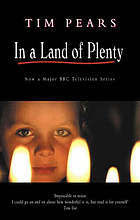
Pears, Tim "In a Land of Plenty"

Pears, Tim "In a Land of Plenty" - 1977

Somehow, I had imagined something else from this book. I thought it was going to tell about the life of a family after WWII. And it was. But not the way I expected it. Charles Freeman is a very selfish opportunist who looks at anything with money in his mind. Needless to say, he is rather a dictator than a family father or nice boss.

Nevertheless, I thought this book was interesting, mainly because the children were about my age and I always like to read about other people's lives in different circumstances.

From the back cover:

"Set in a small town in the middle of England in the aftermath of World War II, this tells the story of ambitious industrialist Charles Freeman, his wife Mary, and their three children. Each individual plays their part as Britain claws its way from the grey austerity of the war years."

Tuesday, 14 February 2012

Kleist, Heinrich von "The Prince of Homburg"


Kleist, Heinrich von "The Prince of Homburg" (German: Prinz Friedrich von Homburg oder die Schlacht bei Fehrbellin) - 1809/1810

Even though there was a real Prince of Homburg who fought at the Battle of Fehrbellin in 1675, the name is the only resemblance to the play.

As with any other written plays, I do prefer them performed as this is what they were made for. However, it is always quite interesting to read them once, as well.

This one definitely has to take into account that it was written at the beginning of the 19th century when winning a war was the most important subject most people talked about (although, times haven't changed THAT much!)

The play has it all, love and war. I found the historical background interesting and therefore am glad I read this.

From the back cover:
"'Tell me, please - is this a dream?' The night before he leads his troops into battle, the prince of Homburg strips off his uniform and goes sleepwalking. Moonstruck, his mind races with a young man's fantasies - love, ambition and victory. But when the morning comes, a single reckless act of disobediance sets in motion a chain of events that leads inexorable to the one thing he never dreamt would happen; his own death. 

Heinrich von Kleist is one of the most enigmatic figures in theatre history. Driven to suicide at the age of 34, he left behind him seven extraordinary plays. Unperformed during his own lifetime, The Prince of Homburg is now regarded as von Kleist's masterpiece and is one of the most mysterious and beautiful plays of the nineteenth century."

I also read "The Marquise of O-" (Die Marquise von O....), a novella which I liked a lot better.