Showing posts with label Asia. Show all posts

Monday, 8 June 2026

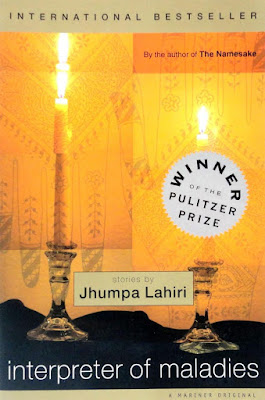
Lahiri, Jhumpa "Interpreter of Maladies"

Lahiri, Jhumpa "Interpreter of Maladies" - 1999

I have read this book in 2015. This was my review back then:

"As most of my friends know, I am not a big fan of short stories. However, I read 'The Namesake' by the same author and really loved it. And several of my friends had recommended 'Interpreter of Maladies' to me, one had even left a copy to me when she was moving, I just had to read it.

I was pleasantly surprised. What a lovely collection of short stories, some of them even interlink, so it doesn't seem like there are a hundred small stories that you forget right away. On the contrary, Jhumpa Lahiri has created some wonderful characters that you won't forget that easily. She incorporates all sorts of problems anyone might face who lives in a culture different from the one they or their parents grew up with. She describes some lovely people (and some not so lovely ones) who are all confronted with a life in two different parts of this world. Since the author is Indian herself and grew up in the United States, this is the background to almost all her stories. Having lived abroad (though not in such a different culture as the characters in the book) almost half of my life myself, I can certainly relate to a few of them.

Jhumpa Lahiri has a good, elegant style, her stories just flow, I will certainly read more of her writings."

A while ago, I joined an online group called Literary Wives/Marriage Plot and this was the next book on our list. So, I re-read the book because it was a while ago that I read it and we read it with a different topic in mind. What does the author say about the wives in his book?

Most of these stories take place in India and/or around Indian couples.

A Temporary Matter

We look at the end of a marriage. A couple suffers from the loss of a baby that was stillborn. They have nothing to say to each other even though they try hard.

When Mr. Pirzada Came to Dine

In this story, a woman remembes a man from East Pakistan/Bangladesh coming to visit her Indian family in the States while his family is back home. It is more a story about the man than about this particular wife but it still gives us an insight into the life of the Indian wives in the US.

Interpreter of Maladies

This is about an Indian American family visiting the country of their heritage. We learn even more about the life of such a wife, she is so lonely. I can relate because as a non-working wife abroad, you don't have the sort of social life your husband and children have and it is hard work to try and find your place.

A Real Durwan (doorkeeper)

This story is about an elderly woman who is a stairsweeper and lives on the roof ot the building she works in.

While this is less about the situation of a wife, it tells us about poverty and how you can be even poorer than all the others around you.

Sexy

We're back in the US. Again, not the story of a wife but of a mistress. And of a husband who is leaving his wife. A good reflection about this kind of situation from every point of view, the wife and the mistress. 

Mrs. Sen's

Her we have the story of an Indian woman living in the States who doesn't drive and doesn't have any contact outside the house. She looks after an eleven year old boy after school and teaches him about their food. Probably one of my favourite stories. I really felt for the lady.

This Blessed House

A yound married Indian couple in Connecticut who moves into their new house and find many Christian relics. The wife puts them on the mantel of the fireplace. A good story about how different people can have different opinions about what to keep and what not and what to embrace. And how they have to work on your marriage.

The Treatment of Bibi Haldar

A woman suffers from seizures and a doctor recommends to marry her off. But it costs money to get married and you have to find a suitor. So, her relatives rather let her live on the roof. This story focuses on the treatment of illness and of prejudices.

The Third and Final Continent

This guy has moved from India to London and then to the States where he rents a room from a 103-year-old lady. They develop a good connection until he gets married and moves out. We follow his and his wife's life and how they get to know each other.

As I mentioned in the stories, they are not all about the wives, some of them don't relate to their status at all, they are just there. But where they are mentioned, we learn a lot about the differences between Indian and (mainly) American wives, their rights and their duties.

I think it also helps to understand why immigrants so often stay among themselves. It is not just about the language, though that doesn't help if nobody teaches them the host language, it is more about the culture and understanding each other. Especially the wives are invisible, they disappear in the crowd. Especially if it has been an arranged marriage, the husband often doesn't understand his wife.

From the back cover:

"Navigating between the Indian traditions they've inherited and the baffling new world, the characters in Jhumpa Lahiri's elegant, touching stories seek love beyond the barriers of culture and generations. In 'A Temporary Matter,' published in The New Yorker, a young Indian-American couple faces the heartbreak of a stillborn birth while their Boston neighborhood copes with a nightly blackout. In the title story, an interpreter guides an American family through the India of their ancestors and hears an astonishing confession. Lahiri writes with deft cultural insight reminiscent of Anita Desai and a nuanced depth that recalls Mavis Gallant."

Jhumpa Lahiri received the Pulitzer Prize for "Interpreter of Maladies" in 2000.

And here are the reviews of the other literary wives:

Becky from Sydney of Aidanvale

Kate from Melbourne of booksaremyfavoriteandbest

Rebecca from Maryland, USA of Bookish Beck

Kay from Washington State, USA of What? Me Read?

Monday, 16 June 2025

Osman, Richard "We Solve Murders"

Osman, Richard "We Solve Murders" - 2024

I absolutely loved Richard Osman's first books because I do love him as a person and also got to love him as an author, So, I was quite happy, when my son gave me this for Christmas.

If this was a movie, this would be an action thriller rather than a murder mystery. I love watching murder mysteries (though I don't read them much) but I really don't like action movies. Far too loud for me.

I must say, this was almost the same with this book. I heard people complain about his first books that there were too many characters and that you did confused. Well, if you got confused with the first lot, this one will certainly not do for you. It took me quite a while to even understand who was who and what they were up to. My book has 464 pages and I think I got into the story at around page 200. Far too late and I would have given up if it weren't for the author.

There is some humour in this book but not the humour I am used to from Richard Osman. Such a pity.

From the back cover:

"Steve Wheeler is enjoying retired life. He does the odd bit of investigation work, but he prefers his familiar habits and routines: the pub quiz, his favorite bench, his cat waiting for him when he comes home. His days of adventure are over: adrenaline is daughter-in-law Amy’s business now.

Amy Wheeler thinks adrenaline is good for the soul. As a private security officer, she doesn’t stay still long enough for habits or routines. She’s currently on a remote island keeping world-famous author Rosie D’Antonio alive. Which was meant to be an easy job...

Then a dead body, a bag of money, and a killer with their sights on Amy have her sending an SOS to the only person she trusts. A breakneck race around the world begins, but can Amy and Steve stay one step ahead of a lethal enemy?"

Friday, 30 May 2025

Nguyễn, Phan Quế Mai "Dust Child"

Nguyễn, Phan Quế Mai "Dust Child" - 2023

An interesting topic. I've read books about soldiers' children before, and they weren't welcomed anywhere. In Germany, these were mostly children of black fathers during World War II; with the others, it wasn't so noticeable unless you lived in a village and everyone knew about it.

This is about the children of Vietnamese women and American soldiers. Regardless of whether the fathers were black or white, it was immediately noticeable. And the children suffered greatly. In this book, they not only grew up with the certainty of having a foreign father but also that their mother didn't want them and they had to grow up in an orphanage with no family to support them.

It was good to learn more about the topic, but I wasn't entirely thrilled with the book and the writing style. Again and again, she switches to Vietnamese, often translating it afterwards, but not always. And even in the former case, it disrupts the flow. Overall, the writing isn't very fluid; many things remain completely unclear. Sometimes you don't know what she's even talking about. It's nice to learn something about Vietnamese culture, but she assumes too much. Perhaps it's clear to people who speak Vietnamese or know Vietnam, but for others, it's still very confusing.

There are also several errors in the book that a native English speaker should have filtered out. A shame.

On Goodreads, someone recommends also reading Bao Ninh's book "The Sorrow of War" (Goodreads), the story of the war from the perspective of a Vietnamese soldier. And the author's first book "The Mountains Sing" (Goodreads) which takes place during the war.

Although I've often read that the first book is much better than this one, I'm not sure if I want to read another book by Phan Quế Mai Nguyễn anytime soon.

The quote she gives on page 267 is also not exactly correct:

"We are the unwilling
Led by the unqualified
Doing the unnecessary
For the ungrateful."

This is the correct one:

"We the unwilling 
Led by the unknowing
Are doing the impossible
For the ungrateful
We have done so much
For so long, with so little
We are now qualified to do
Anything with nothing,
Forever."
Konstantin Josef Jireček

However, most members of our book club enjoyed the book quite a bit, especially because they learned something about the people of Vietnam and the impact of the war on their lives. We also discussed the different perspectives held by people in Asia and Western Europe.

I read this with my German book club in May 2025

From the back cover:

"It is 1969, and sisters Trang and Quynh watch helplessly as their rural village is transformed by the outbreak of war. Desperate to help their impoverished parents, they head to the thronging city of Sai Gon and join the women working as 'bar girls', paid to flirt with American GIs. What follows will test their sisterhood in ways they could never have foreseen.

Decades later Viet Nam is thriving, successfully emerging out of the shadow of war. But Dan and Phong, two men whose lives were transformed by their experiences on different sides of the conflict, are struggling to leave the past behind.

But what happens when these four characters unexpectedly come together once more, and each is forced to grapple with the legacy of decisions made in the past – decisions that continue to reverberate through all their lives

Dust Child is their unforgettable story."

Monday, 17 February 2025

Takahashi, Yuta "The Chibineko Kitchen"

Takahashi, Yuta "The Chibineko Kitchen" (Japanese: ちびねこ亭の思い出ごはん 黒猫と初恋サンドイッチ/Chibinekoteino omoidegohan kuronekoto hatsukoisandoitchi) (Meals to Remember at the Chibineko Kitchen #1) - 2020

This is an interesting story. I am sure we all have wanted to have one last conversation with a deceased loved one. Now, the Chibineko Kitchen makes this possible. You go there and order a Remembrance Meal. Then, when it is served, the person in question appears and you can have one very last talk with them until the food gets cold.

Sounds desirable, right? The story is heartwarming, it might even help some of us to get over the loss of a loved one.

And there are quite a few nice Japanese recipies in the book.

From the back cover:

"Follow the bank of the Koitogawa river until you reach the beach. From there a path of white seashells will lead you to the Chibineko Kitchen. Step inside, they'll be expecting you.

These are the directions Kotoko has been given. She arrives at the tiny restaurant, perched right by the water, early in the morning. Still reeling from the sudden death of her brother, she's been promised that the food served there will bring him back to her, for one last time.

Taking a seat in the small, wood-panelled room, she waits as Kai, the restaurant's young chef, brings out steaming bowls of simmered fish, rice and miso soup. Though she hadn't ordered anything, Kai had somehow known the exact dish her brother always used to cook for her. And as she takes her first delicious bite, the gulls outside fall silent and the air grows hazy . . .

Soul-nourishing and comforting, The Chibineko Kitchen will help you remember what matters most in life."

Friday, 26 July 2024

Verghese, Abraham "The Covenant of Water"

Verghese, Abraham "The Covenant of Water" - 2023

A fantastic book. I always wanted to read "Cutting for Stone" but somehow never did. However, it has moved up on my wishlist and is at the top now.

"The Covenant of Water" is a wonderful story about a family over the length of most of a century. I have known quite a few priests from that area of India, Kerala, and this book is about the Catholics down there.

But that is only on the side. The most important part is the search of the family for the reason that so many of their members have drowned over the centuries. 

You can tell the author belongs to the medical profession because he reports about this quest in such detail that you can follow it so well, even if you have no medical training at all.

But we also get to learn about the society in that part of India. Part of it is like the rest of the country but since It is so large, it should be no surprise that it also has its differences.

Granted, this is a large book, over 700 pages, but I read this in no time, devoured it. I'm not surprised Oprah has picked it for her book club, she always choses great novels.

In any case, I can only recommend this.

From the back cover:

"From the New York Times-bestselling author of Cutting for Stone comes a stunning and magisterial epic of love, faith, and medicine, set in Kerala, South India, following three generations of a family seeking the answers to a strange secret

Spanning the years 1900 to 1977, The Covenant of Water is set in Kerala, on India’s Malabar Coast, and follows three generations of a family that suffers a peculiar affliction: in every generation, at least one person dies by drowning - and in Kerala, water is everywhere. At the turn of the century, a twelve-year-old girl from Kerala's Christian community, grieving the death of her father, is sent by boat to her wedding, where she will meet her forty-year-old husband for the first time. From this unforgettable new beginning, the young girl - and future matriarch, Big Ammachi - will witness unthinkable changes over the span of her extraordinary life, full of joy and triumph as well as hardship and loss, her faith and love the only constants.

A shimmering evocation of a bygone India and of the passage of time itself, The Covenant of Water is a hymn to progress in medicine and to human understanding, and a humbling testament to the hardships undergone by past generations for the sake of those alive today. Imbued with humor, deep emotion, and the essence of life, it is one of the most masterful literary novels published in recent years."

And then there is a great remark about reading:
"When I come to the end of a book and I look up, just four days have passed. But in that time I've lived though three generations and learned more about the world and about myself than I do during a year in school Ahab, Queequeg, Ophelia, and others die on the page so that we might live better lives."

Monday, 6 May 2024

Tsumura, Kikuko "There's No Such Thing as an Easy Job"

Tsumura, Kikuko "There's No Such Thing as an Easy Job" (Konoyoni tayasui shigoto wa na/この世にたやすい仕事はない) - 2015

This was our international online book club book for April 2024.

My first impression was, this is a weird book that talks about weird jobs. Some that I never heard about it. A young woman goes from one of them to the next. Jobs that don't seem to require any special experience or talents.

Or is that so? The more we get to know the protagonist, we get to recognize that she has a lot of talents and uses them well to go through her various tasks.

I doubt I would have picked up this novel if I had just come across it in a book shop. And even if I had, despite a pink cover, I don't think the description would have convinced me that this would be a book for me.

But, since it was a book club book, I started and finished it and I can honestly say, it was a nice read.

And - the title is correct, there is no such thing as an easy job.

Comments from members:
The focused on differences between Japanese and Western culture and attitudes to working life.
Only after listening to club members who are more familiar with Japanese culture did I understand the point of the book and why it became popular.
Participating in the discussion added a lot to the reading experience.

From the back cover:

"A young woman walks into an employment agency and requests a job that has the following traits: it is close to her home, and it requires no reading, no writing - and ideally, very little thinking.

She is sent to a nondescript office building where she is tasked with watching the hidden-camera feed of an author suspected of storing contraband goods. But observing someone for hours on end can be so inconvenient and tiresome. How will she stay awake? When can she take delivery of her favourite brand of tea? And, perhaps more importantly - how did she find herself in this situation in the first place?

As she moves from job to job, writing bus adverts for shops that mysteriously disappear, and composing advice for rice cracker wrappers that generate thousands of devoted followers, it becomes increasingly apparent that she's not searching for the easiest job at all, but something altogether more meaningful...
"

One of our members recommended this essay: "The Absurdity of Labor in There’s No Such Thing as an Easy Job"

Friday, 7 July 2023

Theroux, Paul "Riding the Iron Rooster"

Theroux, Paul "Riding the Iron Rooster" - 1988

The name Theroux is well known in the United Kingdom. Though not with the first name Paul but with that of his son, Louis. So, I had never read anything by the elder Theroux until I was given this book by one of our book club members.

I love travel books and this one doesn't make an exception. The author travelled through China in the 1980s, first with a travel group, then on his own. The members or the travel group are described the way that I would probably see them, as well. I have always preferred to travel with family or some good friends rather than some strangers that might turn out to be real bores or terribly annoying. But also when he carries on on his own, he is hardly ever alone as the Chinese like to give him a babysitter.

In any case, the descriptions of the voyage is interesting, the people he meets on the train, one is more weird than the other, the landscape is depicted to well that you can imagine seeing it yourself, the food seems to stand just in front of you.

I liked the interaction with the Chinese people and the exploring of areas where they hardly let any foreigner travel. A good book about a country still very unknown to us. I wonder what Paul Theroux would see today?

Some books, Paul Theroux was reading while "Riding the Iron Rooster":
Avedon, John "In Exile from the Land of Snows" - 1984 (Goodreads)
Balzac "Old Goriot" (FR: Le Père Goriot) - 1834 (Goodreads)
Lewis, Sinclair "Elmer Gantry" - 1927 (Nobel Prize in Literature 1930) (Goodreads)
Lewis, Sinclair "Main Street" - 1920 (Goodreads)
Morrison, Arthur "The Hole in the Wall" - 1902 (Goodreads)
Stevenson, Robert Louis "Kidnapped" - 1886 (Goodreads)

From the back cover:

"An eye-opening and entertaining account of travels in old and new China, by the author of The Great Railway Bazaar

Paul Theroux left Victoria Station on a rainy Saturday in April thinking that taking eight trains across Europe, Eastern Europe, the USSR and Mongolia would be the easy way to get to the Chinese border - the relaxing way, even. He would read a little, take notes, eat regular meals and gaze contentedly out of windows. The reality, of course, was very different. In fact, Theroux experienced a decidedly odd and unexpected trip to China that set the challenging tone for his epic year-long rail journey around that vast, inscrutable land - a journey which involved riding nearly every train in the country.
"

Tuesday, 9 May 2023

Hajaj, Claire "Ishmael's Oranges"

Hajaj, Claire "Ishmael's Oranges" - 2014

I had just finished another book on the Israeli-Palestinian conflict (Against the Loveless World by Susan Abulhawa) when this was suggested as the next one for our book club.

There is not much to be found about the author (she doesn't even have an entry on Wikipedia) except this on Goodreads:

"Claire Hajaj has spent her life building bridges between two worlds, sharing both Palestinian and Jewish heritage. She has lived on four continents and worked for the United Nations in war zones from Burma to Baghdad. A former contributor to the BBC World Service, Claire's writing has also appeared in Time Out and Literary Review. She lives in Beirut, Lebanon."

And this on the German site Lovelybooks:
"Claire Hajaj was born in London in 1973 and feels part of two cultures, Jewish and Palestinian, which she tries to reconcile..."

I would have liked to know how much this book is based on her own life or that of her parents. It always helps to understand a book if you know about the author's background.

I visited Israel in 1986 and remember a lovely time in Jaffa. So, reading about the Palestinian family who had lived there for generations and was expelled, made me incredibly sad. I don't think we can possibly imagine how that must have felt.

Like so many other books about the people of Palestine, the Jews that came to occupy their country, the British that helped them, it can only touch the surface of what is going on. Therefore, we need to read as many books about this as possible and pass them on. This is certainly not the best book I have read about the subject but it was interesting nevertheless. And is probably easier to read for people who don't want to get too many details. If you are interested, check out more of the books I read about this subject under my link Israel/Palestine.

In her acknowledgements, she mentions Adam LeBor and "the wonderful Jaffa, City of Oranges" which I also love.

We read this in our German Book Club in April 2023.

From the back cover:

"It's April 1948, and war hangs over Jaffa. One minute seven-year-old Salim is dreaming of taking his first harvest from the family’s orange tree; the next he is swept away into a life of exile and rage.

Seeking a new beginning in swinging-Sixties London, Salim finds an unexpected love with Jude, a troubled Jewish girl struggling with her own devastating family legacy. The bond between them flourishes in the freedom of the age, bringing the promise of thrilling new worlds. But before long, childhood conflicts and prejudices reawaken to infringe upon their life together, pulling them and their children inexorably back towards the Middle East and its battlegrounds.

From Russia's pogroms, to the Summer of Love and the Middle East’s restless cities,
'Ishmael’s Oranges' follows the journeys of men and women cast adrift by war - to tell the story of two families spanning the crossroad events of modern times, and of the legacy of hatred their children inherit."

Monday, 17 April 2023

Abulhawa, Susan "Against the Loveless World"


Abulhawa, Susan "Against the Loveless World" - 2020

I've read many books about the conflict in Israel/Palestine and the more I read about it, the more upset I get. I grew up with the story that the Palestinians were terrorists who were just out to destroy the Jews. Unfortunately, the story is not that easy.

This was probably one of the toughest books I read on the subject. A Palestinian woman, born outside of her country to refugee parents, who is imprisoned for fighting for her freedom and that of her people. I try to see both sides but that's not easy. Yes, the Jews had to flee Europe. But they did to the Palestinians exactly what had been done to them, chased them out of their houses, out of their country. Shouldn't they know better?

It's even worse for women - well, when is it ever better for women in any situation? Susan Abulhawa is a fantastic author, this is her third book I've been reading and it won't be the last.

Let's just hope that many people read this book who can change something. Although, I very much doubt it.

From the back cover:

"Nahr sits in an Israeli prison. Many in the world outside call her a terrorist; and just as many call her a revolutionary, a hero. But the truth is more complicated …

She was named for the river her mother crossed when she fled Israel's invasion of Palestine, and grew up into a girl who carried in her bone the desperation of being a refugee.

She was a woman who went to Palestine, and found books, friends, politics - and a purpose.

Nahr sits in her cell, and tells her story.
"

Other books by her that I read:
"Mornings in Jenin" (aka The Scar of David) - 2010
"The Blue Between Sky and Water" - 2015

Monday, 6 February 2023

Buck, Pearl S. "The Patriot"

Buck, Pearl S. "The Patriot" - 1939

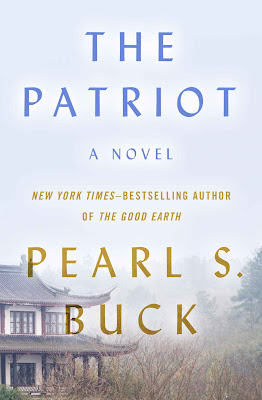
Pearl S. Buck was always a great writer of historical fiction. Here, she talks about the problems between China and Japan during Chiang Kai-Chek's time and the Sino-Japanese war.

A mixed marriage brings two families together, and nobody can tell the story of two cultures clashing better than the Nobel Prize winning author.

The history intermingles with the lives of the protagonists - it would, of course, and we can see how politics influence the family and how their reactions influence their lives.

As all books by Pearl S. Buck, a great tale of different cultures.

From the back cover:

"A Chinese dissident is torn between love and country in this novel from the New York Times–bestselling author of The Good Earth.

When Wu I-wan starts taking an interest in revolution, trouble follows: Winding up in prison, he becomes friends with fellow dissident En-lan. Later, his name is put on a death list and he’s shipped off to Japan. Thankfully, his father, a wealthy Shanghai banker, has made arrangements for his exile, putting him in touch with a business associate named Mr. Muraki. Absorbed in his new life, I-wan falls in love with Mr. Muraki’s daughter, and must prove he is worthy of her hand. As news spreads of what the Japanese army is doing back in China, I-wan realizes he must go back and fight for the country that banished him.
"

Find other books by Pearl S. Book that I read here.

Pearl S. Buck received the Nobel Prize for Literature in 1938 "for her rich and truly epic descriptions of peasant life in China and for her biographical masterpieces".

I contribute to this page: Read the Nobels and you can find all my blogs about Nobel Prize winning authors and their books here.

Wednesday, 11 January 2023

Buck, Pearl S. "A Bridge for Passing"

Buck, Pearl S. "A Bridge for Passing" - 1961

This is arguably one of the author's most personal books. She talks not only about her stay in Japan to witness the shooting of "The Big Wave", but above all about the death of her husband and how she is trying to come to terms with it.

Ultimately, she finds solace in Japan, the people and country are very helpful.

But the story of the film adaptation of her book is also very interesting and probably offered the author some distraction in these difficult times.

From the back cover:

"While in Japan to observe the filming of one of her novels, Pearl Buck was informed that her husband had died. This book is the deeply affecting story of the period that immediately followed - the grief, fears, doubts, and readjustments that a woman must make before crossing the bridge that spans marriage and widowhood."

Find other books by Pearl S. Book that I read here.

Pearl S. Buck received the Nobel Prize for Literature in 1938 "for her rich and truly epic descriptions of peasant life in China and for her biographical masterpieces".

I contribute to this page: Read the Nobels and you can find all my blogs about Nobel Prize winning authors and their books here.

Tuesday, 13 December 2022

Buck, Pearl S. "Kinfolk"

Buck, Pearl S. "Kinfolk" - 1949

A story that tells us about the question everyone who has lived in a different country asks themselves, especially those that are born in another world than their parents or who moved there when they were little. Do I belong to the country where I live or to the country that my passport shows.

This is a story about a Chinese family in New York who moves "back" to China. My children have lived in different countries all their lives, the youngest wasn't even born in Germany. And while the difference between several European countries is probably not as large as that between countries from different continents, I know they don't exactly feel as belonging to a certain country, they are simply "European".

This is not so easy for the chldren of Dr. Liang, they are American but their ancestors are Asian, and they have to discover the difference between those two countries.

As any of Pearl S. Buck's books, this is a highly interesting book about a culture that is quite foreign to us. But she has depicted it so well, as always. The characters are so alive and every single one of them shows us their life.

From the back cover:

"Kinfolk is the story of a Chinese family. Dr. Liang moves to America in search of a better life, but his children long to return to China. Each responds to their new life in China differently, providing rich insight into the struggles between Eastern and Western culture, and the differences between generations.

A tale of four Chinese-American siblings in New York, and their bewildering return to their roots
In Kinfolk, a sharp dissection of the expatriate experience, Pearl S. Buck unfurls the story of a Chinese family living in New York. Dr. Liang is a comfortably well-off professor of Confucian philosophy, who spreads the notion of a pure and unchanging homeland. Under his influence, his four grown children decide to move to China, despite having spent their whole lives in America. As the siblings try in various ways to adjust to a new place and culture, they learn that the definition of home is far different from what they expected.
"

Find other books by Pearl S. Book that I read here.

Pearl S. Buck received the Nobel Prize for Literature in 1938 "for her rich and truly epic descriptions of peasant life in China and for her biographical masterpieces".

I contribute to this page: Read the Nobels and you can find all my blogs about Nobel Prize winning authors and their books here.

Friday, 2 December 2022

Shin, Kyung-sook "Please Look After Mom"

Shin, Kyung-sook "Please Look After Mom" (Korean: 엄마를 부탁해 Ch'angbi) - 2008

We read this in our international online book club in November 2022.

I wouldn't be able to say whether I liked this book or not. The first half was not too bad. We learn about the family who lost their mother. She just disappeared in a busy train station in a large city, Seoul, though that could have happened anywhere since the mother seems to suffer from Alzheimer's.

The story is told by the various family members and that's how we get to know them, though, at times, you are not a hundred percent sure who is talking. We get to know the life in a small village in South Korea as well as in the capital, the traditions and the changes in society. That was quite interesting.

However, I couldn't relate as much to the second part. It was too much magic realism for me, too "Asian" for my European thinking. And a little too muddled up. We get to like the father even less than in the first part, he's just like all the other machos in this world who believe they own everything just because they are male and the women are their slaves.

However, other members didn't agree with that:

"I absolutely loved this book. It spoke about an unknown culture, country and time in history for me, reminded me of my visit to the Vatican, and spoke about relationships in a family and the path through life to death.

The main character reminded me of my grandmother about the same age (minus the dementia) who grew up as a farm-wife, lived through WWII and never complained about having to do what needs to be done. The perspective of the story's narrator was in the second form which made it feel very personal, and it told the story from many of the characters' perspectives. It felt like real people, a real unperfect family with real thoughts and issues. And the main character got to observe all the other characters and think about her feelings towards them. Wonderful and really moving at the end.

And I would not be surprised at all if the author receives a Nobel Prize in Literature in about 20-30 years from now."

From the back cover:

"An international sensation and a bestseller that has sold over 1.5 million copies [...], Please Look After Mom is a stunning, deeply moving story of a family's search for their missing mother - and their discovery of the desires, heartaches and secrets they never realized she harbored within.

When sixty-nine year old So-nyo is separated from her husband among the crowds of the Seoul subway station, and vanishes, their children are consumed with loud recriminations, and are awash in sorrow and guilt. As they argue over the 'Missing' flyers they are posting throughout the city - how large of a reward to offer, the best way to phrase the text - they realize that none of them have a recent photograph of Mom. Soon a larger question emerges: do they really know the woman they called Mom?

Told by the alternating voices of Mom's daughter, son, her husband and, in the shattering conclusion, by Mom herself, the novel pieces together, Rashomon-style, a life that appears ordinary but is anything but.

This is a mystery of one mother that reveals itself to be the mystery of all our mothers: about her triumphs and disappointments and about who she is on her own terms, separate from who she is to her family. If you have ever been a daughter, a son, a husband or a mother,
Please Look After Mom is a revelation - one that will bring tears to your eyes."

Wednesday, 30 November 2022

Buck, Pearl S. "My several worlds"

Buck, Pearl S. "My several worlds: A Personal Exile" - 1954

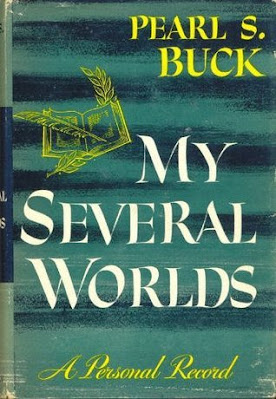
I read this book ages ago and don't know why I never reviewed it. It left a vivid memory about Pearl S. Buck and her life. She belongs to my list of favourite authors, she was actually the first grown-up author I read and therefore occupies a special place in my heart.

In her autobiography, she writes just as well as in her novels where she manages to show us Chinese life as if we lived there ourselves. And here she becomes a close acquaintance of us, if not even a friend.

I know there was a controversy about her award of the Nobel Prize for Literature but that might have been because many men couldn't see a woman getting the award. So they had to find a reason why this was wrong. But her biographies are truly masterpieces and her descriptions of peasant life in China truly epic and rich. There certainly have been laureates who didn't deserve the prize, Pearl S. Buck isn't one of them.

She was a remarkable woman and writer.

From the back cover:

"Autobiography of Pearl S Buck. A memoir of the life of the first female Nobel Laureate for Literature, who was also a world citizen and a major humanitarian, Pearl (Sydenstricker) Buck (1892-1973) three quarters of the way through her life. Published by the John Day Company to whose president, Richard John Walsh (1886-1960), she was then married, the book was successful and temporarily revived her waning reputation. The China oriented writer Helen Foster Snow described her partnership with John Day and Walsh as 'the most successful writing and publishing partnership in the history of American letters.' The firm had published everything she'd written since their marriage in 1935. Her biographer, Professor Peter Conn, describes the book as 'a thickly textured representation of the Chinese and American societies in which she had lived.' Friend of Eleanor Roosevelt, cultural ambassador between China and America, tireless advocate for racial democracy and women's rights and founder of the first international adoption agency, this is a book by and about a special American citizen of the twentieth century."

Pearl S. Buck received the Nobel Prize for Literature in 1938 "for her rich and truly epic descriptions of peasant life in China and for her biographical masterpieces."

I contribute to this page: Read the Nobels and you can find all my blogs about Nobel Prize winning authors and their books here.

Monday, 28 November 2022

Sendker, Jan-Philipp "A Well-Tempered Heart"

Sendker, Jan-Philipp "A Well-Tempered Heart" (Burma Trilogy #2) (German: Herzenstimmen) - 2012

After reading "The Art of Hearing Heartbeats" (Das Herzenhören), the first part of the Burma Trilogy, I naturally had to know how the story continues.

Julia Win, whom we already know from the first book, suddenly hears a voice inside her. She is advised to go back to Burma to find out what the voice is trying to tell her. I don't believe in such mystical experiences, but Julia's story on her return visit is very interesting. She learns the history of Burma, meets new people, finds a new love, sees her life with different eyes. And the reader learns a lot about the differences between East and West.

As always, Jan-Philipp Sendker has written a wonderful story about Asia. His language is captivating and this is a very good sequel to a wonderful book.

From the back cover:

"Almost ten years have passed since Julia Win came back from Burma, her father’s native country. Though she is a successful Manhattan lawyer, her private life is at a crossroads; her boyfriend recently left her, she has suffered a miscarriage, and she is, despite her wealth, unhappy with her professional life. Julia is lost and exhausted.

One day, in the middle of an important business meeting, she hears a stranger’s voice in her head that causes her to leave the office without explanation. In the following days, her crisis only deepens. Not only does the female voice refuse to disappear, but it starts to ask questions Julia has been trying to avoid. Why do you live alone? To whom do you feel close? What do you want in life?

Interwoven with Julia’s story is that of a Burmese woman named Nu Nu who finds her world turned upside down when Burma goes to war and calls on her two young sons to be child soldiers. This spirited sequel, like The Art of Hearing Heartbeats, explores the most inspiring and passionate terrain: the human heart."

Tuesday, 18 October 2022

Bruckner, Karl "The Day of the Bomb"

Bruckner, Karl "The Day of the Bomb" (German: Sadako will leben) - 1961

I read this story as a child and it made a big impression on me. I learned a lot about the war from my parents, but this is definitely one of the books that contributed to me being anti-war and anti-nuclear power throughout my life.

The book should be on every school reading list. We get to know Sadako and her life and her will to live so well, we can put ourselves in her shoes and experience her drama up close.

No wonder the author received the Austrian Children's and Youth Book Prize for it.


From the back cover:

"First published in 1961 under the German title Sadako Will Leben (meaning Sadako Wants to Live), this non-fiction book by renowned Austrian children’s writer Karl Bruckner is considered his most famous work.

Telling the vivid story about a Japanese girl named Sadako Sasaki, who lived in Hiroshima and died of illnesses caused by radiation exposure following the horrific atomic bombing of the city in August 1945, the book has been translated into most major languages and has been used as material for peace education in schools around the world.
"

"The day of the bomb was a day which was to change the lives of all mankind, not just Sadako.

Sadako is a little girl who lives with he parents and elder brother in wartime Hiroshima. She is a thin little girl because she doesn't get enough to eat, but she has a chubby face because she is still very young.

On August 6th, 1945, Sadako and her brother go to join the queue for food outside the Ministry. But Sadako is too weak to wait for their ration and her brother decides to carry her home. On the way he stops to bathe while Sadako sleeps on the lakeside.

Just as he dives into the lake the atom-bomb explodes over the town.

Sadako and her family survive the dropping of the bomb and the subsequent rigours of life in a post-war world - the black market, the shortages, the bitter competition. The pleasures and the tragedy of life in Japan at this time are seen here through the eyes of the young girl who wins local fame for her prowess in a bicycle relay race, only to find that even she cannot cycle fast to escape the events of the past.

Her story - and through it the story of mankind - is told with the vivid detail of a colour film and the sensitivity of a human documentary. It is an account without bitterness and without horror of an event that changed the course of history.
"

There is also another children's book about Sadako and her ordeal:
Coerr, Eleanor "Sadako and the Thousand Paper Cranes" - 1977

Monday, 4 July 2022

Lim, Catherine "The Teardrop Story Woman"

Lim, Catherine "The Teardrop Story Woman" - 1998

I read this book in November 1999 with my British book club.

For some reason, I never published my review but because I always keep my notes and lists of everything, I stumbled upon them by some coincidence.

I have always remembered this book as one I really liked and my notes tell me the same. Mei Kwei is a Chinese Woman who lives in Malaya (now Malaysia) during the Japanese occupation. She is beautiful but has a mole under her eye that resembles a teardrop and therefore is considered unlucky. She gets engaged but then falls in love with a Catholic priest.

A sad story not only about what women had to endure (and still have in many parts of the world) when they were not considered equal to men.

The book contained lots of details about life at the time, the difference between our cultures, I think that is my main reason for liking it.

From the back cover:

"The Teardrop Story Woman is Mei Kwei, born in Malaya in 1934 and doubly cursed - not only is she female, but she also has a tiny teardrop mole in the corner of one eye: a sign of bad luck that presages disaster. Fate proves kinder to Mei Kwei who inherits her grandmother's extraordinary good looks and gift for storytelling. As she grows up, Mei Kwei must cope with the attention of the men who begin to encircle her, attracted by the intensity of her beauty and by her spirit. She runs from these men to a man who cannot love her back - the charismatic Father Martin, a French Catholic missionary - and the demands of the flesh and the spirit come into fearful collision. Set in Malaya in turbulent 1950s, this is an irresistible story of passion and obligation where no one is safe, least of all those watched by jealous men or exacting gods."

Monday, 30 May 2022

Rutherfurd, Edward "China"

Rutherfurd, Edward "China" - 2021

I was really looking forward to this book that I received for Christmas (thanks, Zach) because I love anything written by Edward Rutherfurd. And I was not disappointed. He delivered what he promised with his other books.

There is only a slight change. In most of his books, he tells stories of families over throughout the centuries, often starting way before our calendar. This one starts in 1839 and ends in the early 1900s, long enough to see the lifetime of all the protagonists. And that is the only criticism I have about this book. I would have liked a list at the end or the beginning about all the different characters, as he has done in all his former historic novels. That way you know where you are in history. Granted, this spans not even a century but the Chinese names make it a little more difficult to remember who is who, especially since sometimes there are several others who tell their story before we return to a certain one. It was still alright to remember who was who but it would have been easier otherwise.

As in all his other books, we learn a lot about China's history. I have read many books about it but this one is very detailed and gives us so much information about the opium wars and the rebellions that more or less formed the new China, and when we complain about something the Chinese are doing today, our countries were responsible for a lot of it. Not mine in this case but we have enough other skeletons in our closet, so I won't even go further into who was there and who wasn't.

I can understand that Edward Rutherfurd didn't want to go through all of China's history, it is so vast and the country is so huge, the book would have been a lot longer than the 784 pages of my edition. I think concentrating on this part was an excellent idea because many of us know our history from that time and can compare.

I wouldn't say I prefer this way of writing the story of a country to the other one, I probably still like the whole story better, but there is so much to learn from this book, I can only highly recommend it. Reading his books is better than any history lesson I remember from school.

I do hope, he'll write many, many more.

From the back cover:

"China in the Nineteenth Century is a proud and ancient empire forbidden to foreigners. Western merchants desires Chinese tea above all other things and resort to smuggling opium in exchange.
The Qing Emperor will not allow this trade to continue. The Opium Wars begin - heralding a period of bloody military defeats, reparations, and one-sided treaties which will become known as the Century of Humiliation.

From Hong Kong to Beijing to the Great Wall, from the exotic wonders of the Summer Palace and the Forbidden City, to squalid village huts, the great clash between East and West rages across the Celestial Kingdom. We meet a young village wife struggling with the rigid traditions of her people, Manchu empresses and warriors, powerful eunuchs, fanatical Taiping and Boxer Rebels, savvy Chinese pirates, artists, concubines, scoundrels and heroes, well-intentioned missionaries and the rapacious merchants, diplomats and soldiers of the West. Fortunes will rise and fall, loves will be gained and lost.

China is a feat of the imagination that will enthrall, instruct and excite, and show us how the turmoil of the nineteenth century led to modern China’s revolution and rebirth."

Find a link to all my reviews on his other novels here.

I have been told by a lot of people that Edward Rutherfurd writes like James Michener. If anyone here has read books by both of them, would you agree? And which book by Michener should I start with?

Monday, 7 March 2022

Abe, Kōbō "Inter Ice Age 4"

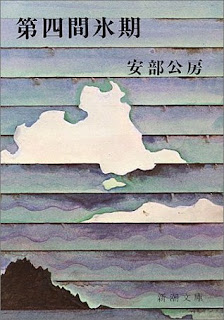
Abe, Kōbō (安部 公房 Abe Kōbō) "Inter Ice Age 4" (Japanese: 第四間氷期 Dai yon kan pyouki) - 1959

This was our international online book club book for February 2022.

Before I start talking about the book, I must point out that I never liked science fiction. I don't mind dystopian literature, if it is something that could really happen or that would have happened, had a certain even not taken place or succeeded or whatever.

This is none of that. It really is more a fantasy of someone who would love science to do things that aren't possible. Maybe they will be in future. But a lot of times, we wouldn't even want that to happen.

Sometimes, a science fiction novel has interesting characters or a good plot. This one had neither. I couldn't warm to any of the figures, you hardly got to know them at all. And the plot, well, this was a very predictable novel, you could tell what was going to happen and it happened exactly as I thought it might. Strange and weird might be the most positive remarks I might give it.

I doubt that I will ever read a book by this author again.

Comment by another reader:
"For me the read was not very easy right now. It reminded me of the cold war while watching real war on the news ... so I ended up finishing the reading some days too late. The author was all new to me, but what really opened up the book for me was the afterword where he wrote about his intention to make people think."

From the back cover:

"A Novel of the Future

This is yet another of Mr. Abe's ominous configurations (Woman in the Dunes etc.) this time staking out its uncertain ideological imperatives in a grave new world submerged under water. In the beginning, however, Professor Katsumi who has a computer capable of making predictions, has no idea of the work undertaken in a still more dehumanized laboratory. But a double murder, an analysis of one of the bodies & some anonymous phone calls (this is all quite exciting) alert him to a traffic in human fetuses corroborated by his wife's enforced curettage. Witnessing the works in progress - growing rooms for human submarine colonies which will make human survival possible - he is also threatened with his own extinction betrayed by his own machine & he's made to consider various ethical conjectures & priorities: should one deny one's self - should the present be expendable in the interest of the future? While not everybody's book, Abe's conceptual startler has a chilly precision which makes the unthinkable only too threateningly possible. Kirkus
"

Thursday, 16 December 2021

Orth, Stephan "Couchsurfing in Iran"

Orth, Stephan "Couchsurfing in Iran: Revealing a Hidden World" (German: Couchsurfing im Iran - Meine Reise hinter verschlossene Türen) - 2015

After reading Stephan Orth's book about Couchsurfing in Russia, I decided I really wanted to read his other books on this subject. He has been travelling through China, Iran and Saudi Arabia (Saudi-Arabien) so far. I still need to get his next book but the others have all been just as great as the first one.

What I love about his book is that we can take a little glimpse into the life of normal people in countries where most of us couldn't even travel as tourists. And he gets to know the "ordinary" people there. Well, as far as you can call those people "normal" who open up their homes to total strangers even though it is forbidden by their regime.

The author has a great way of describing his hosts and their friends and family, their lives, their dreams, just everything. You almost have the feeling you've been there yourself. I have read books about the Iran before and heard a lot about it through various eyes, this is yet another one who gives me an insight into this interesting people.

I have read a few reviews by Iranians who said how accurate his telling about their country is. That's very promising.

Thank you, Stephan Orth, for giving us the insight into a country that is a mystery for most of us and that we definitely can't see at the moment, especially due to all the Covid restrictions.

From the back cover:

"In Couchsurfing in Iran, award-winning author Stephan Orth spends sixty-two days on the road in this mysterious Islamic republic to provide a revealing, behind-the-scenes look at life in one of the world’s most closed societies. Experiencing daily the 'two Irans' that coexist side by side - the 'theocracy, where people mourn their martyrs' in mausoleums, and the 'hide-and-seekocracy, where people hold secret parties and seek worldly thrills instead of spiritual bliss' - he learns that Iranians have become experts in navigating around their country’s strict laws. Getting up close and personal with locals, he covers more than 5,000 kilometers, peering behind closed doors to uncover the inner workings of a country where public show and private reality are strikingly opposed."