Showing posts with label Communism. Show all posts

Monday, 13 April 2026

Krasznahorkai, László "Satantango"

Krasznahorkai, László "Satantango" (Hungarian: Sátántangó) - 1985

Whoever knows me, is aware that I love Nobel Prize laureates and that I try to read at least one book of every new recipient (plus a few more of some former ones).

This year, it was a Hungarian author that I had never heard of. But that is often the case. This was his first novel for which he received a lot of praise. Qutie a few of his books (including this one) were also turned into films.

But, as I said, for me he was completely new, probably for most Westerners. I had no idea what I was going to read. The story tells us about an almost abandoned village somewhere in the middle of nowhere. People have lost all hope that anything good will still come to them.

We get to know them one by one. First you have the feeling that these are short stories that have nothing to do with each other. But, gradually, the pieces fit togethers and we get to know the whole dilemna.

The story reads almost like dystopia. But you have to make yourself clear that this was the reality for many people behind the Iron curtain. And that there are still people there who want them to go back to that. They should read this book and see where all this leads.

Book Description:

"In the darkening embers of a Communist utopia, life in a desolate Hungarian town has come to a virtual standstill. Flies buzz, spiders weave, water drips and animals root desultorily in the barnyard of a collective farm. But when the charismatic Irimias – long-thought dead – returns to the commune, the villagers fall under his spell. The Devil has arrived in their midst."

László Krasznahorkai received the Nobel Prize for Literature in 2025 "for his compelling and visionary oeuvre that, in the midst of apocalyptic terror, reaffirms the power of art".

I contribute to this page: Read the Nobels and you can find all my blogs about Nobel Prize winning authors and their books here.

Tuesday, 30 May 2023

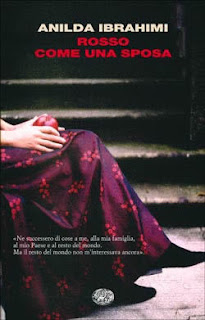
Ibrahimi, Anilda "Red Like a Bride"


Ibrahimi, Anilda "Red Like a Bride" (Italian: Rosso come una sposa) - 2008

This Italian book has not been translated into English but because it is available in other languages (Finnish, French, German, Serbian), some of us read it in our international online book club. I read the German translation: Rot wie eine Braut.

For a long time, we hardly heard anything about Albania. You knew the country was secluded, no one came in, even fewer less came out.

In this book we are told about life behind the curtain. We get to know four generations of women, starting with Saba, who was married to her sister's widower at the age of 15 and had nine children by him, five girls and four boys.

The war changes the position of women, they get an education and become more independent, also in the countryside. We live through the different generations up to Dora who is telling the story.

The title alludes to the tradition that in Albania a bride would be dressed all in red.

An interesting story about life in a country we still don't know much about. Well written, easy to read. I liked it very much.

This was discussed in our international online book club in May 2023.

The group had a really good discussion about it, it was very well liked among everyone, both from the interesting perspective of Albanian history and culture, and the different stories moving along the book along the lives of the women the story told about towards modern times, how life goes on and is connected. The group thought it was a high quality read, and warmly would recommend it and gave it 5 out of 5 points.

Book description (translated):

"Four generations of women, a chest full of memories, the start of a new life Young Dora left her native Albania to start a better life in Italy. In the distance, the memories of her family, who have lived a simple life in the small mountain village of Kaltra for generations, determined by archaic traditions, suddenly seem like they are from another time. But whenever she opens the chest that was left to her by Saba, the grandmother, takes Saba's red wedding veil in her hands and smells the familiar smell of quince, the past comes to life before her eyes..."

Monday, 6 February 2023

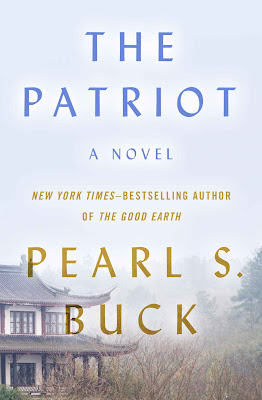
Buck, Pearl S. "The Patriot"

Buck, Pearl S. "The Patriot" - 1939

Pearl S. Buck was always a great writer of historical fiction. Here, she talks about the problems between China and Japan during Chiang Kai-Chek's time and the Sino-Japanese war.

A mixed marriage brings two families together, and nobody can tell the story of two cultures clashing better than the Nobel Prize winning author.

The history intermingles with the lives of the protagonists - it would, of course, and we can see how politics influence the family and how their reactions influence their lives.

As all books by Pearl S. Buck, a great tale of different cultures.

From the back cover:

"A Chinese dissident is torn between love and country in this novel from the New York Times–bestselling author of The Good Earth.

When Wu I-wan starts taking an interest in revolution, trouble follows: Winding up in prison, he becomes friends with fellow dissident En-lan. Later, his name is put on a death list and he’s shipped off to Japan. Thankfully, his father, a wealthy Shanghai banker, has made arrangements for his exile, putting him in touch with a business associate named Mr. Muraki. Absorbed in his new life, I-wan falls in love with Mr. Muraki’s daughter, and must prove he is worthy of her hand. As news spreads of what the Japanese army is doing back in China, I-wan realizes he must go back and fight for the country that banished him.
"

Find other books by Pearl S. Book that I read here.

Pearl S. Buck received the Nobel Prize for Literature in 1938 "for her rich and truly epic descriptions of peasant life in China and for her biographical masterpieces".

I contribute to this page: Read the Nobels and you can find all my blogs about Nobel Prize winning authors and their books here.

Monday, 6 December 2021

Towles, Amor "A Gentleman in Moscow"

Towles, Amor "A Gentleman in Moscow" - 2016

I love Russian authors and stories about Russia. And I've heard a lot about this novel by American author Amor Towles. Both praise and not so much praise. So, when I came across this copy, I knew I'd have to give it a try.

And I'm glad I did. This novel is not just a great story which vivid characters and an unusual plot, it is a mystery and history, a love story and a political report, a story of friendship and kindness, a fairy tale and a psychological essay. I know I read a review about the book and I was told to better read it in one go otherwise I'd lose the connections but I didn't find it as challenging. I kept the link to that post in order to go there again and see what the blogger had written but it looks like it has been removed because I get referred to the main page of it and the post about the "Gentleman in Moscow" isn't there.

The characters in this book are all beautifully described and very much "alive". A completely different take on Stalinism, Russia and communism in general. I loved how all the people, especially the women he met, enabled the Count to have a halfway normal life and not despair. For those of you who have read it, I found the ending not too surprising, yet, wonderful.

There are so many layers in this novel. We can also see the way people react to the old hierarchy and the new way of life after Stalin. Whilst some embrace it, others just live in the past and can't let go of whatever happened during that era. I have seen this everywhere in real life. Guess who are the happier of the people?

One of my favourite quotes from this book: "If a man does not master his circumstances then he is bound to be mastered by them." If only I could follow that advice all the time.

I think this is also a great introduction to Russian reading. Other than the Russian authors I love so much, this one doesn't jump from one name of a person to the next. They always ae mentioned by the one name they are given from the beginning. Something not too unimportant because I have heard a lot of people complain about that when reading or attempting to read Russian authors. There are also footnotes to explain the background of Russian history, where necessary. And a great explanation why Russians have three different kind of names (on page 100 in my paperback edition).

The story sounds so true, I had to check at the beginning whether the Count was real or not. Nope, he's not, totally fictional yet so alive that you would love to meet him.

I was told that Kenneth Branagh has bought the film rights for the story and will play Count Rostov himself. While I don't often like films made from books I loved, I am really looking forward to it because I think Kenneth Branagh is one of the best actor-directors of all time and totally love his work.

And I'd love to read his first book, "Rules of Civility" and the next one he has written, "The Lincoln Highway".

From the back cover:

"On 21 June 1922 Count Alexander Rostov - recipient of the Order of Saint Andrew, member of the Jockey Club, Master of the Hunt - is escorted out of the Kremlin, across Red Square and through the elegant revolving doors of the Hotel Metropol.

Deemed an unrepentant aristocrat by a Bolshevik tribunal, the Count has been sentenced to house arrest indefinitely. But instead of his usual suite, he must now live in an attic room while Russia undergoes decades of tumultuous upheaval.

Can a life without luxury be the richest of all?
"

Thursday, 10 June 2021

Lahiri, Jhumpa "The Lowland"

Lahiri, Jhumpa "The Lowland" - 2013

I've read a few books by Jhumpa Lahiri and I've had this on my TBR pile for a while. I have no idea why it took me so long to start it. Oh, wait a minute, must be those hundreds of other books on that shelf. LOL

Whilst I have read many books about India, and quite a few about the independence (e.g. Midnight's Children by Salman Rushdie) and the fight for it, I didn't know much about the Naxalites, just a general knowledge that they existed. In this book, we get acquainted with the organisation and its followers. And the story also touches the reason why Indians would leave their country plus the role of women in society back then, both in India as well as in the USA.

I knew it was a violent time but it's different when you hear about individuals and how they fared under certain circumstances, even if they are fictitious. Since I always like to research the background of my books, especially if they are historical ones, I learned that the group still exists and there are still many conflicts with them and numerous people are killed every year. We hardly ever hear about that in the rest of the world. What a shame!

And then there is also a "next generation" in the book and all the implications that arise from growing up in a country where your parents weren't born.

I found this novel extremely interesting and well written.

From the back cover:

"The Lowland is an engrossing family saga steeped in history: the story of two very different brothers bound by tragedy; a fiercely brilliant woman haunted by her past; a country torn by revolution. A powerful new novel - set in both India and America - that explores the price of idealism and a love that can last long past death.

Growing up in Calcutta, born just fifteen months apart, Subhash and Udayan Mitra are inseparable brothers, one often mistaken for the other. But they are also opposites, with gravely different futures ahead of them.

From Subhash's earliest memories, at every point, his brother was there. In the suburban streets of Calcutta where they wandered before dusk and in the hyacinth-strewn ponds where they played for hours on end, Udayan was always in his older brother's sight. So close in age, they were inseparable in childhood and yet, as the years pass - as U.S tanks roll into Vietnam and riots sweep across India - their brotherly bond can do nothing to forestall the tragedy that will upend their lives.

Udayan - charismatic and impulsive - finds himself drawn to the Naxalite movement, a rebellion waged to eradicate inequity and poverty. He will give everything, risk all, for what he believes, and in doing so will transform the futures of those dearest to him: his newly married, pregnant wife, his brother and their parents. For all of them, the repercussions of his actions will reverberate across continents and seep through the generations that follow.

Epic in its canvas and intimate in its portrayal of lives undone and forged anew,
The Lowland is a deeply felt novel of family ties that entangle and fray in ways unforeseen and unrevealed, of ties that ineluctably define who we are. With all the hallmarks of Jhumpa Lahiri's achingly poignant, exquisitely empathetic story-telling, this is her most devastating work of fiction to date."

Thursday, 20 May 2021

Bulgakov, Michail "The Master and Margarita"

Bulgakow, Michail "The Master and Margarita" (Russian: Мастер и Маргарита/Master i Margarita) - 1929-39

When the last "classics spin" number was drawn, I got this book to read. One of my blogger friends (Emma from Words and Peace) recommended I read an edition with many annotations. Since I had the book already (I bought it a couple of years ago when Russia was the theme of a German book fair) and it had no annotations, I searched the net and there are some great sites that explain all the meanings of almost every sentence meticulously.


These pages were especially helpful:
Master & Margarita (in several languages)
Along with much information on the novel, you will also find on this site different films and TV-series based on The Master and Margarita, and subtitled in English by your webmaster.
LitCharts (including a study guide)
Get Abstract (in German)
Inhaltsangaben 24 (in German)

And then there are some good blog posts about the book (I happily include yours if you let me know the link):
Words and Peace, one of my favourite blogs, Emma has a very diverse page and always gives the greatest tips.
Resolute Reader
A Guy’s Moleskine Notebook who reviewed it even twice, first here and then here.

Those sites were very helpful to understand the background of the novel but I think I would have enjoyed it just by itself, as well. And I surely could see some of the links to the Soviet Union. However, being interested in all these subjects, history, politics, religion, it made it even more fascinating.

What a book. Of course, from authors like Bulgakov, you foresee criticism of the Soviet State, it's expected. Bureaucracy is just as much criticized as oppression and everything that deviates from Karl Marx' original idea of communism.

But this book has so many more layers. There is a novel within the novel about Pontius Pilate and Jesus' last days, his friends and foes. The way, the two stories come together, is quite fascinating. There is a huge amount of references to both literature and history.

The book definitely gives us a lot of food for thought. The devil comes visiting Moscow together with some ominous companions, one of them a big black cat. As a result, the whole city is upside down.

I don't think it is possible to explain the concept of the book to anyone. You have to read it yourself, and if you really want to get down to the nitty-gritty, definitely have to read it with explanations. It's part fairy tale, part mystic realism, definitely political criticism, part comedy, part tragedy. It's not the easiest of reads but definitely one of the most worthiest.

And it certainly is one of the books I will want to read again.

From the back cover:

"Surely, no stranger work exists in the annals of protest literature than The Master and Margarita. Written during the Soviet crackdown of the 1930s, when Mikhail Bulgakov's works were effectively banned, it wraps its anti-Stalinist message in a complex allegory of good and evil. Or would that be the other way around? The book's chief character is Satan, who appears in the guise of a foreigner and self-proclaimed black magician named Woland. Accompanied by a talking black tomcat and a "translator" wearing a jockey's cap and cracked pince-nez, Woland wreaks havoc throughout literary Moscow. First, he predicts that the head of noted editor Berlioz will be cut off; when it is, he appropriates Berlioz's apartment. (A puzzled relative receives the following telegram: "Have just been run over by streetcar at Patriarch's Ponds funeral Friday three afternoon come Berlioz.") Woland and his minions transport one bureaucrat to Yalta, make another one disappear entirely except for his suit, and frighten several others so badly that they end up in a psychiatric hospital. In fact, it seems half of Moscow shows up in the bin, demanding to be placed in a locked cell for protection.

Meanwhile, a few doors down in the hospital lives the true object of Woland's visit: the author of an unpublished novel about Pontius Pilate. This Master - as he calls himself - has been driven mad by rejection, broken not only by editors' harsh criticism of his novel but, Bulgakov suggests, by political persecution as well. Yet Pilate's story becomes a kind of parallel narrative, appearing in different forms throughout Bulgakov's novel: as a manuscript read by the Master's indefatigable love, Margarita, as a scene dreamed by the poet - and fellow lunatic - Ivan Homeless, and even as a story told by Woland himself. Since we see this narrative from so many different points of view, who is truly its author? Given that the Master's novel and this one end the same way, are they in fact the same book? These are only a few of the many questions Bulgakov provokes, in a novel that reads like a set of infinitely nested Russian dolls: inside one narrative there is another, and then another, and yet another. His devil is not only entertaining, he is necessary: "What would your good be doing if there were no evil, and what would the earth look like if shadows disappeared from it?"

Unsurprisingly - in view of its frequent, scarcely disguised references to interrogation and terror - Bulgakov's master work was not published until 1967, almost three decades after his death. Yet one wonders if the world was really ready for this book in the late 1930s, if, indeed, we are ready for it now. Shocking, touching, and scathingly funny, it is a novel like no other. Woland may re-attach heads or produce 10-ruble notes from the air, but Bulgakov proves to be the true magician here. The Master and Margarita is a different book each time it is opened. - Mary Park"

It's always interesting to see the different kind of covers from different countries or different times but this one has as many fascinating editions, I just had to put a few together. You can find them all on Goodreads. I think it shows the diversity of the book and how different people perceive it.

Monday, 28 December 2020

Camus, Albert "The Just Assassins"

Camus, Albert "The Just Assassins" (aka The Just) (French: Les Justes) - 1949

I'm not the biggest fan of reading plays but I love Albert Camus. And what should I say, this almost read like a novel. It probably helped that it was about a subject I am very interested in. Apparently, this is based on real social revolutionaries.

The big philosophical question of the play is: Can you kill for the sake of revolution? Is it just or is it still murder? Do you kill a few in order to save thousands or even more? It's for you to decide.

Not just with the location, also with the subject and the way he asks the questions, does he remind me of my favourite Russian authors, Dostoevsky and Tolstoy.

In any case, this book leaves us with a lot to ponder about. Perfect.

From the back cover:

"Camus’s The Just (Les Justes) is a five-act play based on the true story of a group of Russian revolutionaries who assassinated Grand Duke Sergei Alexandrovich in 1905. First produced in 1949, The Just is a significant, eerily resonant, moving, and highly theatrical work. With a humanist perspective, Camus delves into the hearts and minds of five idealists who each grapple with a heinous choice and ultimately commit murder, in the name of justice. Now, more than ever, the play provokes and reverberates with a troubling yet necessary line of inquiry. Do the ends justify the means? Is terrorism ever a viable choice? What is the true cost of resistance? What is the difference between a freedom fighter and a murderer?

What
The Just makes so compelling and haunting is the way Camus uses clearly drawn characters to tell such an intimate yet horrific story. He completely understands and sympathizes with his characters but never apologizes for their actions. And although it was written more than fifty years ago and set in another era, The Just feels entirely contemporary and vital. In this play, Camus attempts to understand what it would require to take violent action and assassinate someone in power yet somehow maintain a sense of justice and morality. Is this even possible?"


Albert Camus received the Nobel Prize for Literature in 1957 "for his important literary production, which with clear-sighted earnestness illuminates the problems of the human conscience in our times".

I contribute to this page: Read the Nobels and you can find all my blogs about Nobel Prize winning authors and their books here.

Monday, 7 December 2020

Fatland, Erika "Sovietistan"

Fatland, Erika "Sovietistan: Travels in Turkmenistan, Kazakhstan, Tajikistan, Kyrgyzstan, and Uzbekistan" (Norwegian: Sovjetistan. En reise gjennom Turkmenistan, Kasakhstan, Tadsjikistan, Kirgisistan og Usbekistan) - 2014

After reading "The Border" by this Norwegian author where she travels all around the Russian border and visits every adjoining country, I was eager to read her first book where she visited the Central Asian "Stans" who became independent after the break-up of the Soviet Union.

I was not disappointed. Erika Fatland seems like someone who really researches what she does. She speaks several languages, i.a. Russian which makes it easier but she still meets many people who don't speak any of the languages she knows. You can definitely tell she knows a lot about exploring other cultures. And it's interesting to read a woman's perspective about this part of the world, doesn't happen too often.

There is so much history in the part of the world, longer than the European one, definitely longer than any of the "new world" and this book makes us aware that we should always look at someone's history if we try to understand them. From the Mongolian invaders through the Russian Empire and then the Soviet Union, these countries have all had to endure a lot. It's not easy to go back to what we would call "normal democracy" in just one generation. Some of the countries seem to be on a better way than others but I'm sure it will still take a long time until all the inhabitants will be able to live a free life.

The author tells us about the Silk Road, the mountains and valleys, the rich cities of the past (like Samarkand, doesn't that name just conjure some dreamy 1001 night-like picture?). And the ethnic people who have inhabited this area for thousands of years. In telling her story where it fits in the historical parts she mentions, she gives us a good idea about how life in those countries seems to be. From old cultures like bride-stealing to the wealth brought through oil, there is a lot to take in

We hear about Genghis Khan and Amir Timur or Tamerlane, two Mongol conquerors, who influenced the region just as much as Stalin later on.

A while ago I read a book about the Hutterer (The Forgotten People) who came to Canada via this region and Erika Fatland also mentions the Mennonites who suffered the same fate, some of whom still occupy their area. It was interesting to compare these two religious' groups.

But those are not the only interesting people the traveller met. There are so many anecdotes about the people she met and how she often was welcomed with open arms.

There is this guy (Igor Savitsky, see here on Wikipedia) who founded a museum in the middle of nowhere, even in Uzbek standards, the State Art Museum of the Republic of Karakalpakstan, named after I.V. Savitsky, also known as Nukus Museum of Art or Savitsky Museum and the Desert of Forbidden Art.

Or she talks to human rights activists, people who live in the mountains without any electricity or anything else we all consider necessary to live a decent life. They don't and chose to live like that. Totally interesting.

As always, it was great to read about a part of the world we know so little about. Most Europeans would even be able to find the right countries on a map if questioned let alone name the capital cities. I've learned them now and hope to remember them:
Kazakhstan: Nur-Sultan, formerly Astana
Kyrgyzstan: Bishkek
Tajikistan: Dushanbe
Turkmenistan: Ashgabat
Uzbekistan: Tashkent

Granted, there are so many topics in this book, anthropology, communism, dictatorship, economy, ecology, human rights, politics, religion, sociology, you name it, everything that fits into human life is there, but it is still a highly pleasurable read.

I also really appreciated to see this world through the eyes of a woman. A woman who grew up in a free world and therefore would see more of the restrictions women in these countries have to live with than any man ever would. Well done, Erika!

This was our international online book club read in November 2020.

Some comments by the readers:

  • I had once read a travel book I didn't like, therefore didn't think I would like this one, but it absolutely gripped me and held my interest through all the many layers of history, politics, culture, travelling, etc.
  • At the meeting we talked a lot about how the USSR nostalgia seem to appear and how for example we in Finland reading this book might be reacting to that.
  • Personally, I really, really enjoyed this book. It definitely widened my knowledge of a lot of things and was really well written.

From the back cover:

"Turkmenistan, Kazakhstan, Tajikistan, Kyrgyzstan, and Uzbekistan became free of the Soviet Union in 1991. But though they are new to modern statehood, this is a region rich in ancient history, culture, and landscapes unlike anywhere else in the world.

Traveling alone, Erika Fatland is a true adventurer in every sense. In
Sovietistan, she takes the reader on a compassionate and insightful journey to explore how their Soviet heritage has influenced these countries, with governments experimenting with both democracy and dictatorships.

In Kyrgyzstani villages, she meets victims of the tradition of bride snatching; she visits the huge and desolate Polygon in Kazakhstan where the Soviet Union tested explosions of nuclear bombs; she meets shrimp gatherers on the banks of the dried out Aral Sea; she witnesses the fall of a dictator.

She travels incognito through Turkmenistan, a country that is closed to journalists. She meets exhausted human rights activists in Kazakhstan, survivors from the massacre in Osh in 2010, and German Mennonites that found paradise on the Kyrgyzstani plains 200 years ago. We learn how ancient customs clash with gas production and witness the underlying conflicts between ethnic Russians and the majority in a country that is slowly building its future in nationalist colors.

Once the frontier of the Soviet Union, life follows another pace of time. Amidst the treasures of Samarkand and the brutalist Soviet architecture,
Sovietistan is a rare and unforgettable adventure."

Monday, 7 September 2020

Hislop, Victoria "Those Who Are Loved"

Hislop, Victoria "Those Who Are Loved" - 2019

I have read a few books by Victoria Hislop and also quite a few about Greece. Next to those by the same author, "Modern Greece" by C.M. Woodhouse is probably the best if you want information about (especially the modern) the history of this interesting country. Victoria Hislop also recommends this book in her list of "Suggested Reading".

Victoria Hislop's stories about life in Greece are so informative and gripping, no wonder the Greek granted her honorary Greek citizenship for promoting modern Greek history and culture. Definitely deserved.

While we have learned i.a. about the history of Greece during the Ottoman Empire, this is a story about Greece during and after WWII. A lot of people always assume that with the end of that awful war, on VE Day, there was peace everywhere in the world except for the Pacific region. But it carried on in Europe in many areas. Like here in Greece where they felt the wounds of what was started during the occupation even more when it came to starting fresh. The country was just as divided as Germany, albeit in a different way.

In this book, we meet a normal family who has different opinions on politics. Sounds familiar? Yes, it happens all the time. There are people who are willing to fight for the freedom of their country, others who don't see a problem where there is a huge one. If this kind of different people are in one family, it can cause a lot of heartbreak and chaos.

As usual, Victoria Hislop manages to describe the different individuals, their feelings and their beliefs true to detail and possible to empathise with.

While searching for the places where this book takes place (mainly Athens and the prison islands Makronisos and Trikeri), I found an interesting website/blog about different books and their locations. Have a look here. I thought it might show some pictures but I quite liked that at least we can see where exactly the places are.

I can't wait for Victoria Hislop's next book.

From the back cover:

"Athens 1941. Nazi forces occupy Greece … and a nation falls apart.

Fifteen-year-old Themis comes from a family polarised in its political views. The Nazi occupation only deepens the faultlines between those she loves while it reduces Greece to destitution.

In the civil war that follows the end of the occupation, Themis joins the Communist army to fight for her beliefs. Ultimately imprisoned on the infamous islands of exile, Makronisos and then Trikeri, Themis encounters another prisoner whose life will entwine with her own in ways neither can foresee. And finds she must weigh her principles against her desire to escape and live.

As she looks back on her life, Themis realises how tightly the personal and political are entangled. While some wounds heal, others deepen.

Already a Number one bestseller, this gripping new novel sheds light on the complexity and trauma of Greece’s past and weaves it into the epic tale of an ordinary woman compelled to live an extraordinary life.
"

Wednesday, 19 August 2020

Gorky, Maxim "Mother"


Gorky, Maxim (Максима Горького) "Mother" (Russian: Мать/Matj) - 1906/07

I love Russian literature. Their style is quite unique. This book makes no difference. The author was not only active in the emerging Marxist communist movement, he founded this style, the socialist realism literary method. We meet Pelageya who is abused by her husband. After his death, her son Pavel starts fighting the Tsarist regime. His mother is at first hesitant and fearful, but then she supports the young people because she realizes that things cannot go on like this. She "adopts" all her son's friend and is a second mother to them, sometimes more a mother than their own one.

We learn how hard life is in a village in Russia at the turn into the 20th century and how difficult it is for the ordinary man to feed his family. They had nothing, not even hope that under this government anything would ever get better for them. I don't know what many of us would do in those circumstances nowadays.

The book is mainly about the revolutionists, the underground résistance and why they fought their tsars. We can all imagine but this puts it on paper for all to follow. It's also about the love of her mother to her son and how far she would go in supporting and defending him.

A great book.

Apparently, he was nominated five times for the Nobel Prize for Literature. What a shame he never received it. Would have been well deserved it.

From the back cover:

"Maksim Gorky was a Soviet author and founder of the socialist realism literary method. He was also a political activist who spent several lengthy stays in Capri and Italy. Gorky traveled throughout his native land and at one point became friends with Lenin. His travels overwhelmed him with the vastness and beauty of his country and they also made him sharply aware of the ignorance and poverty of its people. This novel tells the story of the common proletariat who protested against the czar and the capitalists which eventually led to the October Revolution. Pelageya is the wife of a factory worker who ignores the political upheaval in her country in favor of caring for her personal life. She represents hundreds of workers who are concerned with living their lives. Her son Pavel takes a different path and joins the revolution inspiring many Russians who were living under a capitalistic society in Russia. Gorky saw the 'mother country' as supporting her children as they fought for their rights.

Every day the factory whistle bellowed forth its shrill, roaring, trembling noises into the smoke-begrimed and greasy atmosphere of the workingmen's suburb; and obedient to the summons of the power of steam, people poured out of little gray houses into the street. With somber faces they hastened forward like frightened roaches, their muscles stiff from insufficient sleep. In the chill morning twilight they walked through the narrow, unpaved street to the tall stone cage that waited for them with cold assurance, illumining their muddy road with scores of greasy, yellow, square eyes."

Tuesday, 14 April 2020

Rand, Ayn "We the Living"

Rand, Ayn "We the Living" - 1936

I found this book on one of those shelves where you can leave books you don't want any longer and others can donate something for a charity. I always liked Russian authors but I wasn't aware Ayn Rand was one. Had she used her real name, Alisa Zinovyevna Rosenbaum, I might have guessed it earlier.

According to her own words, "We the Living" is as near to an autobiography as she would ever write. I can see how she pulled a lot of the background information from her own experience. Of course, she made it to the States, so there's already a hint that this is not a biography. But it must have been much easier for her writing this novel after leaving Russia or the whatever it was called then. (Russian Soviet Federative Socialist Republic first, then USSR or Soviet Union).

This book is so great, so informative. Russia post-revolution in its early days when you had a lot of enthusiastic young people who thought they might make the world a better place to live for everyone. I can understand their dreams, I probably would have belonged to that group because I always believed that everyone should have the same chances. I still do. And I admire countries that achieved at least a little of that, similar wages, health insurance for everyone etc.

But back to Russia at the beginning of the last century. They certainly did not get what they wanted and for a lot of the enthusiastic new communists, the dreams were shattered quite quickly. Ayn Rand describes very well how they felt, and also what happened to the rest of them. If you'd owned something or belonged to the richer part of the people before the revolution, you had no rights whatsoever, couldn't study, couldn't work to earn a living, they just turned the tables around and left those people with nothing who had run the factories or the large farms etc. Not really such a good idea.

If you're interested in this time-frame, I highly recommend this novel. I will certainly read more of her books.

From the back cover:

"Ayn Rand's first published novel, a timeless story that explores the struggles of the individual against the state in Soviet Russia.

First published in 1936, We the Living portrays the impact of the Russian Revolution on three human beings who demand the right to live their own lives and pursue their own happiness. It tells of a young woman’s passionate love, held like a fortress against the corrupting evil of a totalitarian state.

We the Living is not a story of politics, but of the men and women who have to struggle for existence behind the Red banners and slogans. It is a picture of what those slogans do to human beings. What happens to the defiant ones? What happens to those who succumb?

Against a vivid panorama of political revolution and personal revolt, Ayn Rand shows what the theory of socialism means in practice."

Monday, 6 April 2020

Tokarczuk, Olga "Primeval and other Times"

Tokarczuk, Olga "Primeval and other Times" (Polish: Prawiek i inne czasy) - 1996

When the name of the person who was awarded the Nobel Prize for Literature in 2019 was finally announced in 2020, I wanted to read one of her books right away. I had chosen "Primeval and Other Times" which is translated into German in "Ur und andere Zeiten". "Ur" really stands for a time in German, a time long, long ago. It is used as a prefix for great-grandparents etc., e.g. Ur-Ur-Urgroßmutter would be the great-great-great-grandmother. It is also a proposed supercontinent from about 3,000 million years ago.

But the book was sold out in German. I decided to wait a while. Then, our book club decided to put it on the reading list. And here I am, reading it in the English translation.

The book was interesting, something completely different from a lot of other reads. The elements of magic realism make them surreal, even though the setting during and after WWI as well as in and after pre-WWII is realistic enough. The characters were also quite lively, the families were described into every little detail, so you can imagine them and their lives very well. The author tried to describe the situation of both the German and the Russian soldiers and managed that very well, also.

Even though the story takes place in the first half of the 20th century, it seems a lot longer ago at times. The magic realism parts make it almost feel like a fairy-tale. It also helps understanding Polish culture and how it was influenced by the communism. We can live, laugh and die with these ordinary people from an extraordinary time and imagine how their lives might have been without the war.

The story is only about 250 pages long but that doesn’t' make it quick to read. It's not difficult, yet very complex. I would certainly recommend this book.

During our book club discussion, we touched many aspects of the book. I will try to add them in short. If you haven't read it, there might be some spoilers.

Spoiler:


We discussed this in our international online book club in April 2020. To our book club members who were present in the online discussion, should I have left out anything or misquoted something, please, let me know.

From the back cover:

"Set in the mythical Polish village of Primeval, a microcosm of the world populated by eccentric, archetypal characters and guarded by four archangels, the novel chronicles the lives of the inhabitants over the course of the feral 20th century in prose that is forceful, direct, and the stylistic cousin of the magic realism in Gabriel García Márquez's One Hundred Years of Solitude. Told in short bursts of 'Time,' the narrative takes the form of a stylized fable, an epic allegory about the inexorable grind of time and the clash between modernity (the masculine) and nature (the feminine) in which Poland's tortured political history from 1914 to the contemporary era and the episodic brutality visited on ordinary village life is played out. A novel of universal dimension that does not dwell on the parochial, Primeval and Other Times was awarded the Koscielski Foundation Prize in 1997, which established Tokarczuk as one of the leading voices in Polish letters, and it has been translated into many languages the world over.

Tokarczuk has said of the novel: 'I always wanted to write a book such as this. One that creates and describes a world. It is the story of a world that, like all things living, is born, develops, and then dies.' Kitchens, bedrooms, childhood memories, dreams and insomnia, reminiscences, and amnesia - these are part of the existential and acoustic spaces from which the voices of Tokarczuk's tale come, her 'boxes in boxes'."

Olka Tokarczuk received the Nobel Prize for Literature in 2018 "for her narrative imagination that with encyclopedic passion represents the crossing of boundaries as a form of life".

I contribute to this page: Read the Nobels and you can find all my blogs about Nobel Prize winning authors and their books here.

Tuesday, 13 August 2019

Yu, Hua "China in Ten Words"

Yu, Hua (余華/Yú Huá) "China in Ten Words" (Chinese: 十個詞彙裡的中國/Shi ge cihui li de Zhongguo) - 2012

Our latest book club suggestion. I am happy somebody thought of it because it is a remarkable book. I love to read about different cultures but I also love to read about language and find out what kind of words are used in which connection. To read about "disparity" or "copycat" and what the meaning of that is in modern day China is pretty interesting. Whether it's about Great Leap Forward or the Cultural Revolution, the ever present Little Red Book or just the ordinary Chinese person, the author has experienced it all first-hand.

My favourite chapter must have been "Reading", there are some fantastic quotes that recap my feelings brilliantly:

"I did once sum up my experience in the following way:
'every time I read one of the great books, I feel myself transported to another place, and like a timid child I hug them close and mimic their steps, slowly tracing the long river of time in a journey where warmth and emotion fuse. They carry me off with them, then let me make my own way back, and it's only on my return that I realize they will always be part of me.'
"

and

"If literature truly possesses a mysterious power, I think perhaps it is precisely this: that one can read a book by a writer of a different time, a different country, a different race, a different language, and a different culture  and there encounter a sensation that is one's very own. Heine put into words the feeling I had as a child when I lay napping in the morgue. And that, I tell myself, is literature."


The book teaches us a lot about life in China during the lifetime of the author (born 1960) so far as well as about the author himself. I thought it fascinating to learn about a life that could have been mine since I am about the same age as Hua Yu. Intriguing.

From the back cover:

"From one of China’s most acclaimed writers, his first work of nonfiction to appear in English: a unique, intimate look at the Chinese experience over the last several decades, told through personal stories and astute analysis that sharply illuminate the country’s meteoric economic and social transformation.

Framed by ten phrases common in the Chinese vernacular - 'people,' 'leader,' 'reading,' 'writing,' 'Lu Xun' (one of the most influential Chinese writers of the twentieth century), 'disparity,' 'revolution,' 'grassroots,' 'copycat,' and 'bamboozle' - China in Ten Words reveals as never before the world’s most populous yet oft-misunderstood nation. In 'Disparity,' for example, Yu Hua illustrates the mind-boggling economic gaps that separate citizens of the country. In 'Copycat,' he depicts the escalating trend of piracy and imitation as a creative new form of revolutionary action. And in 'Bamboozle,' he describes the increasingly brazen practices of trickery, fraud, and chicanery that are, he suggests, becoming a way of life at every level of society.

Characterized by Yu Hua’s trademark wit, insight, and courage, China in Ten Words is a refreshingly candid vision of the 'Chinese miracle' and all its consequences, from the singularly invaluable perspective of a writer living in China today."

We discussed this book in our international online book club in July 2019.

Monday, 29 July 2019

Solzhenitsyn, Alexander "August 1914"

Solzhenitsyn, Alexander (Солженицын, Александр Исаевич) "August 1914" ["The Red Wheel" cycle] (Russian: Узел I - «Август Четырнадцатого», Красное колесо/Avgust chetyrnadtsatogo) - 1971

What an epic work! A tale of the First World War - or the Great War as it was called before the Second World War happened - from the Russian side. I have read a lot of books about WWI by authors from various countries: Austria, Belgium, Bosnia-Herzegovina, Canada, Egypt, France, Germany, Greece, Italy, the Netherlands, Serbia, the UK, the USA and even Russia (Doctor Zhivago) but never this explicitly about Russia, or even about the war itself, with the exception of "All Quiet on the Western Front").

Solzhenitsyn starts and ends with stories about the ordinary people, those that are left behind and who have to send their loved ones into battle and then tells us what happened just in one month, August 1914. One month of more than fifty.

He only focuses on one particular part, a small area in East Prussia that has been left by the German inhabitants and is now fought over by the Russians and Germans. Many mistakes occur, and in the end, the Germans win. 153.000 Germans and 191.000 Russians lose their lives.

As in "One Day in the Life of Ivan Denisovich" and many other stories, Solzhenitsyn brings us close to the characters, lets us hope and despair with them, lets us get angry about generals who take wrong decisions and cost the lives of so many soldiers.

This is just an excellent book about the battle of Tannenberg which was called just that because it was a revenge a battle the Germans had lost 500 years earlier. It really was the battle of Allenstein.

Not an easy read but if you would like to know more about WWI or battles in general, this is a great story.

What I also really appreciated about the presentation of the story, there is a map at the beginning of the book and a list of all the characters. The ones from real life in capital letters, the fictional ones in lowercase. Helps a lot, especially with a book with so much detail and so many characters.

From the back cover:

"'The general concept of this novel,' the author has written, 'came to my mind in 1936, when I was just leaving secondary school. Since then I have never parted from it, regarding it as the chief artistic design of my life.' He has also said he considers the previous books he has published minor to this - 'a result of the oddities of my life story…'

August 1914, the first part of this major work, is set at the outbreak of the First World War, and its moral concern is to establish the responsibility for Russia’s defeat in the battle of Tannenberg. Limiting itself to the opening two weeks of the war, the novel describes the Russian offensive into East Prussia, which resulted in the encirclement and defeat of General Samsonov’s Second Army by Hindenburg. This disaster revealed the dry rot at the core of Tsarism and hastened its downfall.

The main theme is filled out by a great cross-section of characters, both fictitious and historic, from every walk of Russian life. The fictional character of Colonel Vorotyntsev, an enlightened and ironic young staff officer who mixes with the soldiers as much as with generals, provides a link between the various elements in the story. Solzhenitsyn gives a sympathetic portrait of Samsonov as the victim of staff blunders and personality clashes, and there is a moving description of his suicide in defeat.

August 1914 is a triumph of historical reconstruction as well as of the creative imagination. In the final chapter, it is clear that the guilty will escape through their influence at court, that Russia’s military humiliation is only a symptom of the deeper shame of the Tsarist system, and that a new Russia will somehow have to be born. The novel glows with the author’s love of his country and with his deep concern for ordinary men and women.

August 1914 is the first volume of Solzhenitsyn's epic, The Red Wheel; the second is November 1916. Each of the subsequent volumes will concentrate on another critical moment or 'knot,' in the history of the Revolution."

Aleksandr Solzhenitsyn received the Nobel Prize in Literature in 1970 "for the ethical force with which he has pursued the indispensable traditions of Russian literature".

I contribute to this page: Read the Nobels and you can find all my blogs about Nobel Prize winning authors and their books here.
Tuesday, 14 May 2019

Chukovskaya, Lydia "Going Under"

Chukovskaya, Lydia (Чуковская, Лидия Корнеевна) "Going Under" (Russian: Спуск под воду/Spusk pod vodu) - 1972

I found the translation of this book in a German bookshop. The reason I picked it up at first was the cover picture, a birch forest in winter. (see below). I love birches, they have a certain something.

And since I love Russian literature, I was curious about this author who was completely new to me.

"Going Under" takes place in a Russian sanatorium. The first-person narrator has lost her husband through the Soviet regime and tries to find out what happened to him.

The author must have been really courageous. As a fearless critic of the regime, she couldn't publish her autobiographical book in the USSR but it was done in a New York publishing house years later. This led to a professional ban. Very brave.

If you're interested in history, in Russia, in the Stalin regime, the USSR, this is a story that rings true.

From the back cover:

"In the winter of 1949, Nina Sergeyevna spends weeks in a sanatorium for artists on the countryside. Here everything is focused on forgetting. But she wants to know more about the past, about her own suffering, and that of her fellow human beings.

When she met Bilibin, who was in the same labor camp as her husband, she was looking for his closeness. There is a tender affection between the two, but disappointed, she turns away, as Bilibin seeks not the truth but repression and forgetfulness."

Monday, 30 April 2018

Bandi "The Accusation"

Bandi (반디) "The Accusation: Forbidden Stories from Inside North Korea" (Korean: 고발/Gobal) - 2014

Seven short stories tell us about the life in North Korea. Seven individual stories about seven people and their families. We can imagine that life in such a closed-off dictatorship cannot be easy but the author gives us a good view over people in different kind of situations. And the conditions are just horrible for everyone.

A very impressive book. A highly important book. I am not a fan of short stories usually but this is definitely worth reading. Both the author and the person who smuggled the notes out of the country risked their lives to bring it to us, we should not disappoint them.

From the back cover:

"In 1989, a North Korean dissident writer, known to us only by the pseudonym Bandi, began to write a series of stories about life under Kim Il-sung's totalitarian regime. Smuggled out of North Korea and set for publication around the world in 2017, The Accusation provides a unique and shocking window on this most secretive of countries. Bandi's profound, deeply moving, vividly characterised stories tell of ordinary men and women facing the terrible absurdity of daily life in North Korea: a factory supervisor caught between loyalty to an old friend and loyalty to the Party; a woman struggling to feed her husband through the great famine; the staunch Party man whose actor son reveals to him the absurd theatre of their reality; the mother raising her child in a world where the all-pervasive propaganda is the very stuff of childhood nightmare. The Accusation is a heartbreaking portrayal of the realities of life in North Korea. It is also a reminder that humanity can sustain hope even in the most desperate of circumstances - and that the courage of free thought has a power far beyond those seek to suppress it."

Tuesday, 29 August 2017

Solzhenitsyn, Alexander "His Great Stories"

Solschenizyn, Alexander (Александр Исаевич Солженицын/Aleksandr Solzhenitsyn) "Große Erzählungen: Iwan Denissowitsch; Zum Nutzen der Sache; Matrjonas Hof; Zwischenfall auf dem Bahnhof Kretschetowka" (His Great Stories: One Day in the Life of Ivan Denisovich - 1962; For the Good of the Cause - 1963; Matryona's House - 1963; An Incident at Krechetovka Station - 1963) (Russian: Оди́н день Ива́на Дени́совича Odin den' Ivana Denisovicha; Для пользы дела/ lja pol'zy dela; Матрёнин двор/Matrjonin dvor; Случай на станции Кречетовка/Sluchaj na stancii Krechetovka) - 1962/63

I am not a huge fan of short stories but I always wanted to read something by Solzhenitsyn. So, when I found this book that started with one of his greatest tales, "A Day in the Life of Ivan Denisovich", I thought I'd give it a go.

Since there isn't an English collection of the same stories available, I will just talk about every single part of the book individually, don't worry, there are only four stories.
"One Day in the Life of Ivan Denisovich" (Russian: Оди́н день Ива́на Дени́совича Odin den' Ivana Denisovicha) - 1962

We always hear about the Gulag, the prisoners who sent to Siberia and have to work there etc. But we never really know what is going on there, what the work is like, how the prisoners are kept.

Unless we read about the one day in the life of Ivan Denisovich Shukhov, starting the instant he opens his eyes in the morning until he closes them again in the evening.

And once we read it, we understand why this writer was awared the Nobel Prize for Literature. If he hadn't written anything else, he still would have been one of the greatest authors on earth. While reading this, you are standing next to Ivan, you suffer with him, you follow him. And he seems to be a born survivor, one who can deal with a lot of things, can get that extra ration of terrible soup they all yearn for.

This is a very moving novel by someone who experienced the Gulag. He spent eight years there and then was exiled for life to Kazakhstan.

Brilliant story, brilliant writing.

Description:
"First published in the Soviet journal Novy Mir in 1962, One Day in the Life of Ivan Denisovich stands as a classic of contemporary literature. The story of labor-camp inmate Ivan Denisovich Shukhov, it graphically describes his struggle to maintain his dignity in the face of communist oppression. An unforgettable portrait of the entire world of Stalin's forced work camps, One Day in the Life of Ivan Denisovich is one of the most extraordinary literary documents to have emerged from the Soviet Union and confirms Solzhenitsyn's stature as "a literary genius whose talent matches that of Dostoevsky, Turgenev, Tolstoy" - Harrison Salisbury"

"For the Good of the Cause" (Russian: Для пользы дела/Dlja pol'zy dela) - 1963

Another great story about the downsides of the Soviet Union. A story of bureaucrats who are overdoing it. Who don't look for the benefit of the people, just for their own benefit.

This is only a short novella with less than a hundred pages and I do n't want to give too much away but the language is just as brilliant as in "One Day in the Life of Ivan Denisovich" and the people are described just as well.

Description:
"In For the Good of the Cause, Solzhenitsyn presents a remarkable cross-section of Soviet life. He runs the whole gamut, from ordinary students, workers, and teachers to the omnipotent officials in Moscow, terrifying in their faceless, Kafkaesque anonymity.
Like his world famous novels One Day in the Life of Ivan Denisovich, The First Circle and Cancer Ward, For the Good of the Cause, set in a new provincial school, is a scathing indictment of the victimisation of ordinary, decent people by Soviet careerist bureaucrats. Solzhenitsyn presents the conflicts between right and wrong, between the freedom of the individual and the harshness of the system with absolute sincerity and conviction."
"Matryona's House" (Russian: Матрёнин двор/Matrjonin dvor) - 1963

Another great story where we get to know the "little man" or in this case the "little woman" who had to make do with what they were given or allowed to have. This story is based on Solzhenitsyn's own experiences while teaching after leaving the Gulag.

Description:
"In 1956, after leaving behind his ordeal in the gulag, Alexander Solzhenitsyn wanted to get lost in a quiet corner of the USSR, and applied for employment as a mathematics teacher. While looking for accommodations in the town that was sent, saw the hut of Matrona, an elderly widow who lived with a lame cat and a goat for company and decided to stay there.
'Matryona's House' is the tale of an old peasant woman, whose tenacious struggle against cold, hunger, and greedy relatives is described by a young man who only understands her after her death."
"An Incident at Krechetovka Station" aka "We Never Make Mistakes" (Russian: Случай на станции Кречетовка/Sluchaj na stancii Krechetovka) - 1963

Apparently, this story is also based on real life events, an accident that happened during World War II. I can only repeat myself by saying that the author is a great storyteller.

Description:
"In 'An Incident at Krechetovka Station' a Red Army lieutenant is confronted by a disturbing straggler soldier and must decide what to do with him."

I will certainly read more by this fantastic author.

Aleksandr Solzhenitsyn received the Nobel Prize for Literature in 1970
"for the ethical force with which he has pursued the indispensable traditions of Russian literature".

I contribute to this page: Read the Nobels and you can find all my blogs about Nobel Prize winning authors and their books here.
Monday, 23 January 2017

Nguyen, Viet Thanh (Việt Thanh Nguyễn) "The Sympathizer"

Nguyen, Viet Thanh (Việt Thanh Nguyễn) "The Sympathizer" - 2015

Not my first book about the Vietnam War. Not my first Pulitzer Prize winning novel. But certainly also not my last in both cases. A great description by a promising writer, I am sure we will read more by this talented guy.

Going through the "confessions" of "The Sympathizer", one comes to realize how difficult it is to stay loyal to any side in a war. And that there are no different kind of wars. Wars are horrible. For everyone involved. Wars don't just kill people, wars kill cultures, wars kill the goodness in human beings. Việt Thanh Nguyễn manages to portray that in a way not many others have so far.

It should instill in us all a wish for a better world, a wish for the end of all wars - if we don't have that already. And it certainly should push us to looking at refugees in a different way. They are not people who only come because we live in richer countries, they come because their only choice is between going to another country and being treated as dirt and death, humiliation, terror to them and their families.

I'm not surprised the book received the Pulitzer Prize. Totally deserved

Some of my favourite quotes:
"No matter how badly you might feel, take comfort in knowing there's someone who feels much worse."

"All wars are fought twice, the first time on the battlefield, the second time in memory."
(From Nothing Ever Dies: Vietnam and the Memory of War, Vieth Thanh Nguyen)

From the back cover:

"It is April 1975 and Saigon is in chaos. At his villa a general of the South Vietnamese army is drinking whiskey and with the help of his trusted captain drawing up a list of those who will be given passage aboard the last flights out of the country. The general and his compatriots start anew life in Los Angeles unaware that one among their number the captain is secretly observing and reporting on the group to a higher-up in the Viet Cong. The Sympathizer is the story of this captain a man brought up by an absent French father and a poor Vietnamese mother a man who went to university in America but returned to Vietnam to fight for the Communist cause. A gripping spy novel an astute exploration of extreme politics and a moving love story The Sympathizer explores a life between two worlds and examines the legacy of the Vietnam War in literature film and the wars we fight today. About the Author Viet Thanh Nguyen was born in Vietnam and raised in America. His stories have appeared in Best New American Voices TriQuarterly Narrative and the Chicago Tribune and he is the author of the academic book Race and Resistance. He teaches English and American Studies at the University of Southern California and lives in Los Angeles."

Việt Thanh Nguyễn received the Pulitzer Prize for "The Sympathizer" in 2016.

Friday, 12 August 2016

Alexievich, Svetlana "Second Hand Time. The Last of the Sovjets"

Alexievich, Svetlana "Second Hand Time. The Last of the Sovjets" (Russian: Время секонд хэнд = Vremja sekond khend) - 2013

"Born in the USSR - that's a diagnosis." This is what one of the people interviewed by the author said and it would have been a great title for this book, as well.

I discovered Svetlana Alexievich three years ago when she received the Peace Prize of the German Book Trade (Friedenspreis) and then decided to read "Voices from Chernobyl: The Oral History of a Nuclear Disaster". After she received the Nobel Prize for Literature last year, I found many more of her books and "Second Hand Time" sounded like a great read. The author wrote down her interviews with former citizens of the Soviet Union, people who liked the new system, people who disliked it, people who loved it, people who hated it. She wrote down their life stories and you can understand every single one of them. This is what makes politics so hard, trying to please everyone is not possible, there is always someone who disagrees with a certain decision.

I love how understanding she is with everyone, how she manages to report their feelings, their stories as if we are there with the storytellers. I also could relate to many of the stories. Having grown up during a different time, we probably went through a lot that the former Soviets had to go through after their state broke apart. Not exactly the same but our lives were still closer to that than to our children's nowadays. Maybe that is one of the reasons why I always loved Russian literature.

And then there are the stories she tells that get you closer to her interviewees. I liked how they said "For us, the kitchen is not just where we cook, it's a dining room, a guest room, an office, a soapbox." and "We like to have a chat in the kitchen, read a book. 'Reader' is our primary occupation." Or the way they joke about politics, the best jokes always are from oppressed people. "How do you tell a communist? It's someone who reads Marx. And how do you tell an anti-Communist? It's someone who understands him." But one of my favourites is: "In five years, everything can change in Russia, but in two hundred - nothing."

With her work, the author has put together a vivid history of the USSR, of its failures and its positive sides. Yes, there were a lot of people who saw something positive in their oppression and partly, I even understand them. The above joke aside, communism is a good idea, if only it was invented for other species than men. Because men are greedy, they will never want to share and Karl Marx had a dream that this might be possible. He shared that dream with so many people, same as many people still believe in the American Dream and that they might be millionaires one day.

Svetlana Alexievich gets us to think like a Russian, to follow their tragic lives and imagine it might have been us. I read somewhere that her subject is the "history of the Russian-Soviet soul". Not a bad description. I have never read such a good and concise description of other people's lives. She asked her fellow citizens what they thought "freedom" meant and got different answers from those who remembered the USSR and those who didn't. They did grow up in different countries. I can relate to that in that way that our country was divided into East and West probably the same way the USSR/Russians are divided into Before and After. We speak the same language but have many different memories.

The author does what Tolstoy and Dostoevsky did one and a half centuries ago, she puts Russia on the literature map again.

This book makes quite an impression. The tragedies these people went through and are still going through should be known to the whole world. Reading this book is the first step.

And if I hadn't known it already, the Russians are a people of readers. The amount of authors and books mentioned is enormous. Here are just some of them:

Authors:
Belov, Vasily Ivanovich (Васи́лий Ива́нович Бело́в)
Berdyaev, Nikolai Alexandrovich (Никола́й Алекса́ндрович Бердя́ев
Chernyshevsky, Nikolay Gavrilovich (Никола́й Гаври́лович Черныше́вский)
Dobrolyubov, Nikolay Alexandrovich (Никола́й Алекса́ндрович Добролю́бов)
Dovlatov-Mechik, Sergei Donatovich (Серге́й Дона́тович Довла́тов)
Fyodorov, Nikolai Fyodorovich (икола́й Фёдорович Фёдоров)
Galaktionovich, Vladimir (Влади́мир Галактио́нович Короле́нк)
Grinevsky, Aleksandr Stepanovich (better known by his pen name, Aleksandr Grin, Александр Грин)
Grossman, Vasily Semyonovich (Васи́лий Семёнович Гро́ссман)
Herzen, Aleksandr Ivanovich (Алекса́ндр Ива́нович Ге́рцен)
Iskander, Fazil Abdulovich (Фази́ль Абду́лович Исканде́р)
Kollontai, Alexandra Mikhailovna (Алекса́ндра Миха́йловна Коллонта́й - née Korolenko, Domontovich, Домонто́вич)
Lermontov, Mikhail Yuryevich (Михаи́л Ю́рьевич Ле́рмонтов)
Nekrassow, Nikolai Alexejewitsch (Николай Алексеевич Некрасов)
Ogarev, Nikolay Platonovich (Никола́й Плато́нович Огарёв)
Okudzhava, Bulat Shalvovich (Була́т Ша́лвович Окуджа́ва)
Platonov, Andrei (Андре́й Плато́нов)
Pushkin, Alexander Sergeyevich (Алекса́ндр Серге́евич Пу́шкин)
Rasputin, Grigori Jefimowitsch (Григорий Ефимович Распутин)
Saltykov-Shchedrin, Mikhail Yevgrafovich (Михаи́л Евгра́фович Салтыко́в-Щедри́н)
Shalamov, Varlam Tikhonovich (Варла́м Ти́хонович Шала́мов)
Uspensky, Gleb Ivanovich (Глеб Ива́нович Успе́нский)

Books:
Belyaev, Alexander Romanovich (Беляев, Александр Романович) "Человек-амфибия=Chelovek-Amfibiya" (Amphibian Man/Der Amphibienmensch) - 1927
Brezhnev, Leonid Ilyich (Бре́жнев, Леони́д Ильи́) "Малая земля=Malaja semlja" (Little Land/Das kleine Land) - 1978
Brezhnev, Leonid Ilyich (Бре́жнев, Леони́д Ильи́) "Возрождение=Vozrozhdenie" (Rebirth/Wiedergeburt) - 1978
Brezhnev, Leonid Ilyich (Бре́жнев, Леони́д Ильи́) "Целина=Celina" (The Virgin Lands/Neuland) - 1979
Bulgakov, Mikhail (Булгаков, Михаил Афанасьевич) "Ма́стер и Маргари́та=Master i Margarita"  (The Master and Margarita/Der Meister und Margarita) - 1967
Bunin, Ivan Alekseyevich (Бунин, Иван Алексеевич) "Okajannyje dni=Окаянные дни" (Cursed Days/Verfluchte Tage) (Nobel) - 1926
Chekhov, Anton Pavlovich (Чехов, Антон Павлович) "Сапожник и нечистая сила= Sapozhnik i nechistaja sila" (The Cobbler and the Devil aka The Shoemaker and the Devil/Der Schuster und das Böse) - 1888
Chernyshevsky, Nikolay Gavrilovich (Чернышевский, Николай Гаврилович) "Что делать?=Chto delat?" (What is to be done?/Was tun?) - 1863
Dostoevsky, Fyodor Mikhailovich (Фёдор Миха́йлович Достое́вский) "Братья Карамазовы/Brat'ya Karamazovy" (The Brothers Karamazov/Die Brüder Karamasow) - 1879-80
Fadejew, Alexander Alexandrowitsch (Александр Александрович Фадеев) "Molodaia gvardia=Молодая гвардия" (The Young Guard/Die junge Garde) - 1946
Gogol, Nikolai Vasilievich (Никола́й Васи́льевич Го́голь) "Шинель=Shinel" (The Overcoat/Der Mantel) - 1842
Marx, Karl "Das Kapital" (Capital: Critique of Political Economy) - 1867
Ostrovsky, Nikolai Alexeevich (Николай Алексеевич Островский) "Как закалялась сталь=Kak zakalyalas' sta" (How the Steel Was Temperered/Wie der Stahl gehärtet wurde) - 1832-34
Pasternak, Boris Leonidovich (Пастернак, Борис Леонидович) "Доктор Живаго=Doktor Živago" (Doctor Zhivago/ Doktor Schiwago) - 1957
Polevoy, Boris Nikolaewich (Борис Николаевич Полевой) "Повесть о настоящем человеке= Povest' o nastojashhem cheloveke" (The Story of a Real Man/Der wahre Mensch) - 1947
Rybakov, Anatoly Naumovich (Рыбаков, Анатолий Наумович) "Дети Арбата=Deti Arbata" (Children of the Arbat/Kinder des Arbat) - 1987
Sholokhov, Mikhail Aleksandrovich (Шолохов, Михаил Александрович) "Они сражались за Родину=Oni srazhalis' za Rodinu" (They Fought for Their Country/Sie kämpften für ihre Heimat) - 1959 Nobel Prize
Solzhenitsyn, Aleksandr Aleksandr Isayevich (Солженицын, Александр Исаевич) "Архипелаг ГУЛАГ=Archipelag GULAG" (The Gulag Archipelago/Der Archipel Gulag) - 1973
Solzhenitsyn, Aleksandr Isayevich (Солженицын, Александр Исаевич) дин день Ивана Денисовича=Odin den' Ivana Denisovicha" (One Day in the Life of Ivan Denisovich/Ein Tag im Leben des Iwan Denissowitsch) - 1962
Tolstoy, Lew Nikolajewitsch (Толстой, Лев Николаевич) "Война и мир=Woina I Mir" (War and Peace/Krieg und Frieden) - 1868/69
Turgenev, Ivan Sergeyevich (Тургенев, Иван Сергеевич) "Zapiski Okhotnika=Записки охотника" (A Sportsman's Sketches aka The Hunting Sketches/Aufzeichnungen eines Jägers) - 1852

From the back cover:

"From the 2015 winner of the Nobel Prize in Literature, Svetlana Alexievich, comes the first English translation of her latest work, an oral history of the disintegration of the Soviet Union and the emergence of a new Russia.

Bringing together dozens of voices in her distinctive documentary style, Secondhand Time is a monument to the collapse of the USSR, charting the decline of Soviet culture and speculating on what will rise from the ashes of Communism.


As in all her books, Alexievich gives voice to women and men whose stories are lost in the official narratives of nation-states, creating a powerful alternative history from the personal and private stories of individuals.


Svetlana Alexievich was born in the Ukraine in 1948 and grew up in Belarus. As a newspaper journalist, she spent her early career in Minsk compiling first-hand accounts of World War II, the Soviet-Afghan War, the fall of the Berlin Wall and the Chernobyl meltdown. Her unflinching work - 'the whole of our history…is a huge common grave and a bloodbath' - earned her persecution from the Lukashenko regime and she was forced to emigrate. She lived in Paris, Gothenburg and Berlin before returning to Minsk in 2011. She has won a number of prizes, including the National Book Critics Circle Award, the Prix Médicis, and the Oxfam Novib/PEN Award. In 2015, she was awarded the Nobel Prize for Literature.
"

The Russians/USSR/former USSR states had quite a few winners for the Nobel Prize for Literature. Svetlana Alexievich is the latest.

Nobel Prize Winners for Literature:
Ivan Bunin - 1933
Boris Pasternak - 1958
Michail Sholokhov - 1965
Aleksandr Solzhenitsyn - 1970
Joseph Brodsky - 1987
Alexievich, Svetlana - 2015 (Belarus but born in the USSR)

Svetlana Alexievich received the Nobel Prize for Literature in 2015 "for her polyphonic writings, a monument to suffering and courage in our time" and the Peace Prize of the German Book Trade (Friedenspreis) in 2013.

I contribute to this page: Read the Nobels and you can find all my blogs about Nobel Prize winning authors and their books here.