Showing posts with label Central America. Show all posts

Monday, 28 October 2024

Rulfo, Juan "Pedro Páramo"

Rulfo, Juan "Pedro Páramo" (Spanish: Pedro Páramo) - 1955

This was our international online book club book for October 2024.

I really like South American and Central American authors, they are always interesting, they are different from our European or the North American ones,.

Juan Rulfo is not that different from the other authors of that genre. Gabriel García Márquez and Jorge Luis Borges had nothing but praise for him.

The book was interesting though quite confusing at times. You think you are at the beginning of November celebrating Dia de los Muertos (All Souls Day) because we accompany a young man into a village where his parents grew up but it is a ghost town.

It is an unusual kind of writing, so the story is hard to follow, you don't know whether you are in this world or the next, whether someone is dead or alive. The narrative is non-linear, so it jumps around all the time. But the novel is definitely worth reading.

Some comments from members at the meeting:

  • The book was strongly magical realism, we did not get a good grasp of the plot, but found it poetic.
  • It was quite eerily ghostly, at first it not being clear where the story is going, who is alive and who is dead and what is going on. Then the horrors started creeping up on what was going on in the town becoming just worse and worse. The lawlessness, the enabling of violence and murder and rich and powerful dominating the poorer people and women. It was a really interesting book to read, but not one I would pick up to read again.
  • As we had read 2 other Latin-American authors, Jorge Luis Borges and Gabriel García Márquez , who had been said to have been deeply influenced by Rulfo, I could definitely see the connection, but found Rulfo to be more subtle in his approach to describing evil. At moments the writing was beautifully poetic giving a lot of feeling and nuance to the story.

Book Description:

"The highly influential masterpiece of Latin American literature, now published in a new, authoritative translation, and featuring a foreword by Gabriel García Márquez

A masterpiece of the surreal that influenced a generation of writers in Latin America,
Pedro Páramo is the otherworldly tale of one man’s quest for his lost father. That man swears to his dying mother that he will find the father he has never met - Pedro Páramo - but when he reaches the town of Comala, he finds it haunted by memories and hallucinations. There emerges the tragic tale of Páramo himself, and the town whose every corner holds the taint of his rotten soul. Although initially published to a quiet reception, Pedro Páramo was soon recognized as a major novel that has served as a touchstone text for writers including Mario Vargas Llosa and José Donoso.

Now published in a new translation from the definitive Spanish edition by celebrated Rulfo scholar Douglas J. Weatherford, and featuring a foreword by Gabriel García Márquez, this new edition of the novel cements its place as one of the seminal literary texts of the twentieth century."

Monday, 6 June 2022

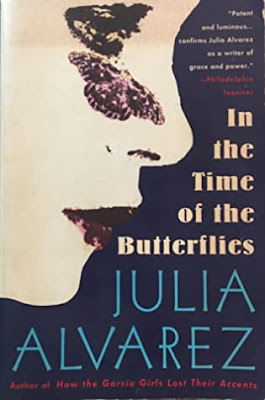
Alvarez, Julia "In the Time of the Butterflies"

Alvarez, Julia "In the Time of the Butterflies" - 1994

This was my first novel taking place in the Dominican Republic. I wanted to read "In the Time of the Butterflies" for ages, somehow I never got to it. The story breaks your heart. As we live in a time of war at our doorstep again, this might be even more important than it was ten years ago, at least in our part of the world. There have always been wars, there have always been dictators. Julia Alvarez tells us about a family that was giving it all, fighting for a free and better life of their compatriots and who paid the highest price possible.

What is amazing in this book is that there are very little things how you can become an enemy of a dictator without even wanting to get involved in the first place. Revolutionaries, or so-called revolutionaries are not always some weird people who stand up and say, hey, I don't like that guy, let's do something about it. Often, there is not much you can do about being on the blacklist. I have read many books about wars or slavery, other dictatorships, and often have found that I probably would have ended up just the same as the protagonists. However, here I am sure I would have, although, having said that, I am not as pretty as the Mirabal sisters were, so I might have gone unnoticed.

What I liked about the style of the book, there are four sisters and they all tell their stories, mostly in a kind of diary. They all get their say and you can see how each one of them thought about the dictator, the country, how each of them was affected in a different way. A little like "The Poisonwood Bible" by Barbara Kingsolver where the four sisters tell their stories.

There is no page that doesn't captivate you. From the beginning, you are right there, in the middle of the family, living with them, fearing with them.

While this is not a non-fiction book, the novel is based on the life of these courageous women. We need more like them.

Julia Alvarez mentions that she "believes in the power of stories to change the world". I think she contributes to this and we must read more by this brilliant storyteller. We need authors like her to make us aware of what is going on in this world and that we should fight for a better one.

One quote I loved a lot:
"I am pro whoever is right at any moment in time." We all should be.

From the back cover:

"They were the four Mirabal sisters - symbols of defiant hope in a country shadowed by dictatorship and despair. They sacrificed their safe and comfortable lives in the name of freedom. They were Las Mariposas, 'The butterflies,' and in this extraordinary novel Patria, Minerva, Maria Teresa, and Dedé speak across the decades to tell their own stories - from tales of hair ribbons and secret crushes to gunrunning to prison torture - and describe the everyday horrors of life under the Dominican dictator Trujillo. Now through the art and magic of Julia Alvarez's imagination, the martyred Butterflies live again in a warm, brilliant, and heartbreaking novel that makes a haunting statement about the human cost of political oppression."

If you don't have the time, yet, to read this fantastic account of some wonderful women, read their story here on Wikipedia.

I read another book on the subject, this time about the dictator Rafael Trujillo:
Vargas Llosa, Mario "The Feast of the Goat" (Spanish: La fiesta del chivo) - 2000

Monday, 8 June 2020

Higham, John "360 Degrees Longitude"

Higham, John "360 Degrees Longitude" - 2009

A family takes a trip around the world. On their bikes. And with a tent. Well, at least that was the plan.

The couple September and David planned it even before they had kids. Now the children are eight and eleven, so it's time to go. They visit the USA, Iceland, England, UK, France, Switzerland, Czechia, Poland, Sweden, Denmark, Germany, Switzerland, Italy, Greece, Turkey, UAE, Tanzania, Mauritius, Japan, China, Thailand, Cambodia, Costa Rica, Panama, Bolivia, Chile, Argentina, Peru, Belize in that order (although they do return to a couple of the countries in between). Quite a challenge.

Even with the utmost planning, there is always something that comes along that way that is not as easy as envisaged.

Spoiler:


The kids love reading, so that's a plus, especially when they have to spend some time a little less active. They grow together as a family and they all love that.

I greatly admire the family for what they have achieved.

Quite an interesting book, especially for people, I would think, who never travel themselves. We never took a trip like that around the world but we lived in four different countries and travelled a lot with our kids. And they always read half a library during the journey, just as Katrina and Jordan, the Higham kids. So, sometimes I found it a little tedious, a tad lengthy and slightly naïve at times, but still a nice read.

Quote:
"... 'What makes us different?' is a question that lately keeps me up at night. Why are the street kids in Cambodia such whizzes at arithmetic and the clerks behind the cash registers in Costa Rica so abysmal? Why are stores in France open 30 hours a week while the stores in Turkey are open 18-plus hours a day? Why are Germans so fanatical about punctuality, and the Italians so ... late all the time? And last, but not least, why does the entire world, other than the United States, speak more than one language and Americans just expect that one of those is English?"

He then goes on saying that we are all the same, want to raise our kids and have some comforts in life. I think if we concentrate on that, we see that we have a lot more in common with anyone from another country than what separates us.

From the back cover:

"Much more than a travel narrative 360 Degrees Longitude: One Family’s Journey Around the World is a glimpse at what it means to be a 'global citizen' - a progressively changing view of the world as seen through the eyes of an American family of four.

After more than a decade of planning, John Higham and his wife September bid their high-tech jobs and suburban lives good-bye, packed up their home and set out with two children, ages eight and eleven, to travel around the world. In the course of the next 52 weeks they crossed 24 time zones, visited 28 countries and experienced a lifetime of adventures.

Making their way across the world, the Highams discovered more than just different foods and cultures; they also learned such diverse things as a Chilean mall isn’t the best place to get your ears pierced, and that elephants appreciate flowers just as much as the next person. But most importantly, they learned about each other, and just how much a family can weather if they do it together.

360 Degrees Longitude employs Google’s wildly popular Google Earth as a compliment to the narrative. Using your computer you can spin the digital globe to join the adventure cycling through Europe, feeling the cold stare of a pride of lions in Africa, and breaking down in the Andes. Packed with photos, video and text, the online Google Earth companion adds a dimension not possible with mere paper and ink. Fly over the terrain of the Inca Trail or drill down to see the majesty of the Swiss Alps - without leaving the comfort of your chair.

John Higham is an aerospace engineer with an expertise in satellites. He is also an avid traveler, frequently writing and lecturing on his own experience traversing the globe. The Highams live in the San Francisco Bay Area. Visit him online at www.360DegreesLongitude.com.

The Voyages of Tim Vetter interviews 360 author John Higham about what it is like to travel with children, his bucket list and what he and his family have been up to since traveling around the world. Available at http://bit.ly/podcast360 or on search for "360 Degrees Longitude" on your favorite podcast store."

Monday, 10 April 2017

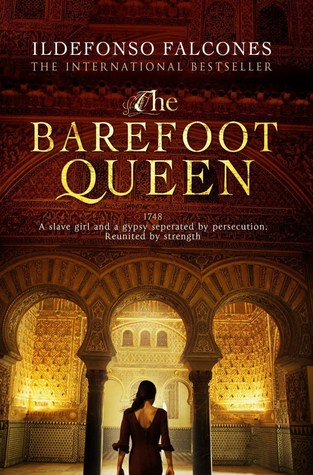
Falcones, Ildefonso "The Barefoot Queen"

Falcones, Ildefonso "The Barefoot Queen" (Spanish: La Reina Descalza) - 2013

As with his former books "Cathedral of the Sea" and "The Hand of Fatima", Ildefonso Falcones does not disappoint with his newest novel. Whether he talks about Barcelona in the 14th century, Muslims in the 16th century or gypsies in the 18th, he seems to know all the characters personally and introduces us to their lives and struggles. This time, it's the gypsies and their problems in a country where they are not welcome, well, where are they ever? They can't make a living by staying somewhere because they are not allowed to work in many many jobs but they also can't travel. And when the Spanish crown decides to lock them all up in order to conduct the perfect genocide. Well, luckily, there is no perfect genocide, there are always members of a race that are willing to fight until the very end.

Ildefonso Falcones is a great storyteller, he can make you love the characters and feel with them through their dramatic lives. And in addition to that, it's also a fantastic history lesson. We don't just learn about Spain in the 18th century, we also learn about slaves in Cuba, tobacco planting and and working, trading and smuggling. There is so much in this story. Even though Caridad, a former slave, is supposed to be the protagonist, her friend Milagros with her grandfather Melchor and their family are also quite important to the story.

Can't wait until his newest book "Los herederos de la tierra" (2016), the follow-up to "Cathedral of the Sea" is translated.

From the back cover:

"A historical epic full of bravery and romance that follows two women as they make a life for themselves in 18th-century Spain.

It's January of 1748. Caridad is a recently freed Cuban slave wondering the streets of Seville. Her master is dead and she has nowhere to go. When her path crosses with Milagros Carmona's-a young, rebellious gypsy-the two women are instantly inseparable. Milagros introduces Caridad to the gypsy community, an exotic fringe society that will soon change her life forever. Over time they each fall in love with men who are fiercely loyal and ready to fight to the death for their rights as a free people. When all gypsies are declared outlaws by royal mandate, life in their community becomes perilous. They soon find themselves in Madrid-a city of passion and dancing, but also a treacherous one full of smugglers and thieves. Caridad and Milagros must help in the gypsy's struggle against society and its laws in order to stay together; it's a dangerous battle that cannot, and will not, be easily won. From the tumultuous bustle of Seville to the theatres of Madrid, The Barefoot Queen is a historical fresco filled with characters that live, love, suffer, and fight for what they believe."

Wednesday, 2 April 2014

NDiaye, Marie "Rosie Carpe"

NDiaye, Marie "Rosie Carpe" (French: Rosie Carpe) - 2001

I like reading a French book from time to time in order to use and improve my French. Unfortunately, I rarely enjoy them because they are always so weird. Not any different with this one.

The story starts easy enough but then there are so many sub stories thrown in without any rhyme or reason. The story is very sad but it gets really weird towards the end. And it's just not the disturbing story that annoyed me, there wasn't a single loveable or even likeable character in the whole novel. No, not really my cup of tea.

From the back cover:

"When pregnant Rosie Carpe, her fatherless five-year-old son in tow, arrives in Guadeloupe looking for her elusive brother, Lazare, the world already seems a plenty confusing place. Could the man who comes to meet her, an elegant black man calling himself Lagrand, actually be her disheveled white brother? Are her parents, who abandoned her in Paris, rediscovering themselves in an outrageous second youth of outlandish affairs, or have they simply lost their minds? And does Rosie have a hope of slipping the sticky grasp of her former employer and seducer, who moonlights as a video pornographer? If it seems unlikely that the feckless Lazare, missing for five years as he followed his own twisted path, might help, or that carnivalesque Guadeloupe, where murder and mayhem are the natural outcomes of “business ventures,” might be the place for Rosie to find peace, then Marie NDiaye may have a few surprises in store for her reader. Amid the blurring boundaries and shifting values, the indistinct realities and confusing certainties of Rosie Carpe, a love story unfolds, and all that is ambiguous and tenuous – in short, all of Rosie’s world – is underpinned with a measure of tenderness."

Monday, 28 November 2011

Hemingway, Ernest "The Old Man and the Sea"

Hemingway, Ernest "The Old Man and the Sea" - 1952

"The Old Man and the Sea", always sounds a little exotic, a little adventurous, a little romantic, I love that title.

An ageing fisherman who hits a stroke of bad luck, doesn't catch anything for ages, goes out to sea and catches the probably largest fish he has ever set eyes on. What follows is his struggle to bring the fish home. Alone. The description of his efforts, of his problems, are just fantastic. A great book, I'm not surprised about the success. Wonderful writing, you can imagine being there with Santiago, the fisherman, in his boat. Although, he'd probably make you work and help him get the fish back home. …

Apparently, this was one of the main reasons, Hemingway was awarded the Nobel Prize for Literature. I can understand that. Such beauty!

See more comments on my ThrowbackThursday post in 2024.

From the back cover:

"The Old Man and the Sea is one of Hemingway's most enduring works. Told in language of great simplicity and power, it is the story of an old Cuban fisherman, down on his luck, and his supreme ordeal; a relentless, agonizing battle with a giant marlin far out in the Gulf Stream. Here Hemingway recasts, in strikingly contemporary style, the classic theme of courage in the face of defeat, of personal triumph won from loss. Written in 1952, this hugely successful novella confirmed his power and presence in the literary world and played a large part in his winning the 1954 Nobel Prize for Literature."

Ernest Hemingway received the Nobel Prize for Literature in 1954 "for his mastery of the art of narrative, most recently demonstrated in 'The Old Man and the Sea' and for the influence that he has exerted on contemporary style" and the Pulitzer Prize for "The Old Man and the Sea" in 1953. 

I contribute to this page: Read the Nobels and you can find all my blogs about Nobel Prize winning authors and their books here.

Tuesday, 15 November 2011

Rosner, Elizabeth "The Speed of Light"

Rosner, Elizabeth "The Speed of Light" - 2001

I read this quite a while ago but this is one of those stories that stay with you forever. All three characters are struggling with either their own or their parents' past, with a story they could not change, they were completely innocent in. The author manages to describe their feelings so delicately as if they were her own. That makes the novel even more fascinating. I would love to read more of her works.

However, I have never found anyone who read this book. How sad. I definitely highly recommend it.

See more comments on my ThrowbackThursday post in 2024.

From the back cover:

"Every family has a story. Every story, eventually, must be told. For most of their lives, Julian Perel and his sister, Paula, lived in a house cast in silence, witnesses to a father struggling with a devastating secret too painful to share. Though their father took his demons to the grave, his past refuses to rest.

As adults, brother and sister struggle to find their voices. A scientist governed by numbers and logic, Julian now lives an ordered life of routine and seclusion. In contrast, Paula has entered the world as eagerly as Julian retracts from it. An aspiring opera singer, she is always moving, buoyant with sound.


Yet both their lives begin to change on a Wednesday, miercoles, the day that sounds like miracles. Before embarking on a European opera tour, Paula asks her housekeeper, Sola, to stay at her place--and to look after Julian in the apartment above. Yet Sola, too, has a story.
" (From the Publisher)

Sunday, 22 May 2011

Lewis, Oscar "The Children of Sánchez"

Lewis, Oscar "The Children of Sánchez: Autobiography of a Mexican Family" - 1961

As so often with our book club readings, this was suggested by one of our members who knew a little more about the background than we did, a member who grew up in Mexcio herself.

This is not a novel but an anthropological documentary about a family from a slum in Mexico City, a father and his four children who grow up in poverty. An interesting study that tells you so much about the way a lot of people have to live - and not just in Mexico.

As I always like books that teach me something, I did like this one a lot.

We discussed this in our international book club in June 2005.

From the back cover:

"A pioneering work from a visionary anthropologist, The Children of Sánchez is hailed around the world as a watershed achievement in the study of poverty a uniquely intimate investigation, as poignant today as when it was first published.

It is the epic story of the Sánchez family, told entirely by its members Jesús, the 50-year-old patriarch, and his four adult children as their lives unfold in the México City slum they call home. Weaving together their extraordinary personal narratives, Oscar Lewis creates a sympathetic but ultimately tragic portrait that is at once harrowing and humane, mystifying and moving.

An invaluable document, full of verve and pathos,
The Children of Sánchez reads like the best of fiction, with the added impact that it is all, undeniably, true."

See more comments on my ThrowbackThursday post in 2024.

Wednesday, 11 May 2011

Şafak, Elif "Araf"

Şafak, Elif "Araf aka The Saint of Incipient Insanities" (Turkish: Araf) - 2004

A suggestion by one of our Turkish members, a book about foreigners living in the United States. We wanted to read this, alas the original English edition was sold out. We could only get the novel in Turkish, German or Dutch. I was lucky to find a used German copy and started reading.

An interesting book. Three roommates from Turkey, Morocco and Spain in Boston, one has  a Mexican-American, another an American girlfriend. All of them have to fit into the society they are in, they struggle in their own different ways. The author managed to describe these diverse characters in such a way that you could feel with them. I loved the way the various stereotypes and prejudices were dealt with, or not.

Anyway, great read, quite humorous at times but definitely a good way of describing the way someone wants to fit into their surroundings, belong somewhere. A wonderful story about friendship, as well. I am glad I read it, even though we had to strike it from our reading list.

From the back cover:

"The Saint of Incipient Insanities is the comic and heartbreaking story of a group of twenty-something friends, and their never-ending quest for fulfillment.

Omer, Abed and Piyu are roommates, foreigners all recently arrived in the United States. Omer, from Istanbul, is a Ph.D. student in political science who adapts quickly to his new home, and falls in love with the bisexual, suicidal, intellectual chocolate maker Gail. Gail is American yet feels utterly displaced in her homeland and moves from one obsession to another in an effort to find solid ground. Abed pursues a degree in biotechnology, worries about Omer's unruly ways, his mother's unexpected visit, and stereotypes of Arabs in America; he struggles to maintain a connection with his girlfriend back home in Morocco. Piyu is a Spaniard, who is studying to be a dentist in spite of his fear of sharp objects, and is baffled by the many relatives of his Mexican-American girlfriend, Algre, and in many ways by Algre herself.

Keenly insightful and sharply humorous,
The Saint of Incipient Insanities is a vibrant exploration of love, friendship, culture, nationality, exile and belonging."

See more comments on my ThrowbackThursday post in 2024.

In Feburary 2011, we also read "The Forty Rules of Love: A Novel of Rumi" by Elif Şafak.

Thursday, 17 February 2011

Mulisch, Harry "The Discovery of Heaven"

Mulisch, Harry "The Discovery of Heaven" (Dutch: De ontdekking van de hemel) - 1992

An extraordinary book that touches many different subjects. Science, technology, war, religion, philosophy, social values, politics, intelligence, adolescence, family life.

The story of two men and a woman, a child, a quest for the meaning of life.

An almost epic tale. Not exactly an easy read but well worth it.

Some quotes I really liked (my translations will probably not be the same as in the book, therefore I add the original Dutch text in brackets):

When the extraordinary becomes the everyday norm, a revolution is going on. (Wanneer het onmogelijke het dagelijkse wordt, is er een revolutie aan de gang.)

On political parties
In Cuba, you could learn the meaning of radicalism. In the United States, the left wing of the Democratic Party was still more right than a right-wing party in the Netherlands, and a party as right as the Republican Party, let alone its right wing, didn't exist here in a serious way, but in Cuba the regime was considerably more left-wing than even the Communist Party in the Netherlands. (Op Cuba kon je de betekenis van het woord radicaliteit leren. In de Verenigde Staten was de linkervleugel van de Democratische Partij altijd nog rechtser dan een rechtse partij in Nederland, en een partij zo rechts als de Republikeinse Partij, laat staan haar rechtervleugel, bestond hier helemaal niet op een serieuze manier; maar op Cuba was het bewind nog aanzienlijk linkser dan in Nederland zelfs de communistische partij.)

On people in different seasons
The people looked sullen and unhappy ... Can you think of Chopin or Stravinsky in such a climate? They would not have existed in any case, and further, there was never anything important imagined or invented ... (De mensen keken nors en ontevreden … Waren Chopin of Strawinsky denkbaar in zo'n klimaat?  Ze waren er in elk geval niet verschenen, en ook verder was er nooit iets belangrijks bedacht of uitgevonden … )

On the meaning of life
Why was there actually something rather than nothing? If everything still came to an end, what sense did it make that there had ever been anything? Had there actually been anything? If one day there would be no more people, no one who could remember anything, could you say that anything ever had happened? ... (Waarom was er eigenlijk iets, en niet niets? Als alles toch voorbij ging, wat had het dan voor zin dat her er ooit was geweest?  Was het er dan eigenlijk wel geweest? Als er op een dag geen mensen meer zouden zijn, niemand meer die zich nog iets kon herinneren, kon je dan zeggen dat er ooit iets was gebeurd? …)

From the back cover:

"This magnificent epic has been compared to works by Umberto Eco, Thomas Mann, and Dostoyevsky. Harry Mulisch's magnum opus is a rich mosaic of twentieth-century trauma in which many themes -- friendship, loyalty, family, art, technology, religion, fate, good, and evil -- suffuse a suspenseful and resplendent narrative.

The story begins with the meeting of Onno and Max, two complicated individuals whom fate has mysteriously and magically brought together. They share responsibility for the birth of a remarkable and radiant boy who embarks on a mandated quest that takes the reader all over Europe and to the land where all such quests begin and end. Abounding in philosophical, psychological and theological inquiries, yet laced with humor that is as infectious as it is willful,
The Discovery of Heaven lingers in the mind long after it has been read. It not only tells an accessible story, but also convinces one that it just might be possible to bring order into the chaos of the world through a story."

This novel was voted best Dutch book ever.

We discussed this in our international book club in February 2004.

See more comments on my ThrowbackThursday post in 2022.