Showing posts with label Racism. Show all posts

Tuesday, 27 January 2026

Larsen, Nella "Passing"

Larsen, Nella "Passing" - 1929

I had never heard the expression "passing" in this sense. A "black" woman who is white enough to be considered "white" and "passes" as "white". While I totally understand that in such a racist world, a women (or a man) would do that, I don't see the need why they should have to. First of all, to me it really shouldn't matter what skin colour someone has. But, if you distinguish between "black" and "white", shouldn't someone who looks "white" be considered "white". There is something I don't get. Or rather, that I really don't want to get. In what kind of world are we living???

Anyway, I found this book because it was mentioned in "The Vanishing Half" by Britt Bennett where a similar situation is described.

As we can read in the book description, the novel is about two different women, both light-skinned, both considered "black". But, whereas one of the women lives officially as a black woman, the other one didn't even tell her husband about her ancestry. He is extremely racist. Which is another thing, why do you marry someone like that? Oh, right, some people marry for money. And, as most characters, who do that, they have to pay the price at some point.

The author has used a lot of material from her own life, apparently.

This rather short novella could have been longer for my taste but we have been given a lot of food for thought here. Great book.

From the book cover:

"This Signet Classics edition of Passing includes an Introduction by Brit Bennett, the bestselling author of The Vanishing Half.

Irene Redfield is a Black woman living an affluent, comfortable life with her husband and children in the thriving neighborhood of Harlem in the 1920s. When she reconnects with her childhood friend Clare Kendry, who is similarly light-skinned, Irene discovers that Clare has been passing for a white woman after severing ties to her past--even hiding the truth from her racist husband.

Clare finds herself drawn to Irene's sense of ease and security with her Black identity and longs for the community (and, increasingly, the woman) she lost. Irene is both riveted and repulsed by Clare and her dangerous secret, as Clare begins to insert herself--and her deception--into every part of Irene's stable existence. First published in 1929, Larsen's brilliant examination of the various ways in which we all seek to 'pass,' is as timely as ever."

Monday, 29 December 2025

Bennett, Brit "The Vanishing Half" - 2020

Bennett, Brit "The Vanishing Half" - 2020 

"You can escape a town, but you cannot escape blood …"

I wasn't too sure about this book when I first saw it. It was a present by one of my sons and they usually know what I would like. This one won the Women's Prize for Fiction in 2021 (and several other book prizes), and they are usually quite good. But the cover. Too pink, too "sweet" for my usual liking. And then the mentioned hymns of praise by authors whose books I haven't enjoyed much. Not a good outlook.

And the beginning was a little like that. Too many stereotypes. But the story keeps growing until, in the end, we get a pretty decent book about the life or women, the problems with racism, bringing up children, etc.

Is this going to be my favourite book of the year or even the month. No.

Will I read another book by the author? Probably also not. There are far better authors around. I saw her compared to Toni Morrison. In my opinion, the only things they have in common is that they are women, their skin colour and they published books.

From the back cover:

"Stella and Desiree are identical twins, growing up together in a small, Southern black community. Until, at age sixteen, they run away…

Years later, everything about their lives is different: their families, communities and racial identities. One sister lives with her black daughter in the same Southern town she once tried to escape. The other secretly passes for white, and her husband knows nothing of her past. Still, separated by many miles and just as many lies, the fates of the twins remain intertwined. What will happen in the next generation, when their own daughters’ storylines intersect?"

Monday, 24 November 2025

Harris, Kamala "107 Days"

Harris, Kamala "107 Days" - 2025

This is one of the great women of our time, the great people of our time. If she were a man, she would have won, I am sure of that.

Whenever I see an article of Kamala Harris or see her on TV or on the internet, she always has something important to say. She is so smart and caring.

What a shame she came against such an ignoramus, someone who isn't just uneducated and, well, everything but smart. He said it himself, he loves the uneducated. And he does everything so that the rest of the nation stays like that so they will carry on voting for him.

Obviously, you can get really mad when you learn about the tactics with which he convinced uninformed people.

Well, enough about that guy. Let's get on to the subject of this book, Kamala Harris.

I just imagine what this world would have looked like if they had real elections in the States and nothing of this gerrymandering and "popular" votes etc. If she had won fair and square.

One thing is sure: this world would be such a better place if there were more Kamalas and fewer Donalds. I hope many young women will read this and find encouragement and inspiration in her doings.

Book Description:

"For the first time, and with surprising and revealing insights, Kamala Harris tells the story of one of the wildest and most consequential presidential campaigns in American history.

Your Secret Service code name is Pioneer.

You are the first woman in history to be elected vice president of the United States.

On July 21, 2024, your running mate, Joe Biden, announces that he will not be seeking reelection.

The presidential election will occur on November 5, 2024.

You have 107 days.

Written with candor, a unique perspective, and the pace of a page-turning novel, 107 Days takes you inside the race for the presidency as no one has ever done before."

This was a present from my son who knows how much I love her.

Monday, 21 October 2024

Morrison, Toni "The Bluest Eye"

Morrison, Toni "The Bluest Eye" - 1970

I read this for the "1970s Club".

As always, Toni Morrison has written a fantastic story about the troubles of people who suffer from racism. This is not my favourite book by her (that would be "Beloved") but it is still a great story. We follow the family Breedlove and their friends backwards, to see what they have all been through.

The main character is the little girl that would love blue eyes. While I understand that wish, she wants to be accepted and thinks this is the way to get there, I thought the rest of the story was much more important.

From the back cover:

"Pecola Breedlove, a young black girl, prays every day for beauty. Mocked by other children for the dark skin, curly hair, and brown eyes that set her apart, she yearns
for normalcy, for the blond hair and blue eyes that she believes will allow her to finally fit in. Yet as her dream grows more fervent, her life slowly starts to disintegrate in the face of adversity and strife.
"

Toni Morrison "who in novels characterized by visionary force and poetic import, gives life to an essential aspect of American realityreceived the Nobel Prize for Literature in 1993.

I contribute to this page: Read the Nobels and you can find all my blogs about Nobel Prize winning authors and their books here.

Read more about other books by the author here.

Monday, 23 September 2024

Evaristo, Bernhardine "Girl, Woman, Other"

Evaristo, Bernhardine "Girl, Woman, Other" - 2019

This was recommended by a member of our book club but it wasn't chosen.

I must admit, the novel wasn't what I thought it would be. I probably didn't read the description well enough but somehow I thought this was mainly about immigrants and racism in the UK. And it was, partly. But that was not the main topic, at least it didn't look like it. The first couple of women that the author talks about, are all lesbians, later we also have non-binary people. But there are so many people. Every chapter brings new characters that might or might not turn up again in later chapters. So it feels like a collection of short stories (which I don't really like). Only toward the end you get a feeling who belongs to who, where the links are between the chapters. It was all a tad confusing.

I've said this before and will say it again, I'm not a fan of Booker Prize winners, there's always something that doesn't go well with me. And often I can't even say what it is. I definitely would have liked more about the racism topic.

From the back cover:

"This is Britain as you've never read it.

This is Britain as it has never been told.

From the top of the country to the bottom, across more than a century of change and growth and struggle and life, Girl, Woman, Other follows twelve very different characters on an entwined journey of discovery.

It is future, it is past. It is fiction, it is history.

It is a novel about who we are now."

Tuesday, 27 February 2024

Lessing, Doris "The Grass is Singing"


Lessing, Doris "The Grass is Singing" - 1950

This was our international online book club book for February 2024.

Doris Lessing's first novel. It received a lot of praise and she was an author of whom much was excepted. She fulfilled it all, her Nobel Prize is a great testimony.

The story takes place in Zimbabwe when it was still called Rhodesia. I guess it could have been any other colony where the white rulers made the black natives their subservients. As we all know, that didn't last forever, it couldn't last forever.

We can see the trouble by looking at some settlers and their problems. Not only did they not know the land and its very own specifics, they were not meant for a climate and a country like this. It had to lead to disaster, one way or another.

Doris Lessing describes the problems very well by looking at Mary, married to a poor farmer, unhappy with her life, not knowing how to improve it. You can tell that she lived in the country herself.

Comments by other members:
We had a really good discussion about this book and it was scored 4/5 or 5/5 by all.
The writing was excellent in making one see and feel the location and climate. We discussed many topics: the main characters, their psychology and motivations, the time and history and societal pressure for marriage and being the "right kind of white" and pressure to conform to the status quo. Gender roles. Mental health. The different ways of farming the land in the story. The slow gradual changes from outright slavery but not yet really an equal society. And obviously the obsessive and very inappropriate thoughts and behaviour that led to the gruesome end.
I probably forget a lot of aspects, but very interesting.
I again feel older and wiser for having read this book. I might even add some other of her works to my TBR pile.

Read also the excellent review of another book club member here.

I have read "The Golden Notebook" years ago. It was a completely different book but just as great. I think I should read more by this remarkable author.

Book Description:

"Set in South Africa under white rule, Doris Lessing's first novel is both a riveting chronicle of human disintegration and a beautifully understated social critique. Mary Turner is a self-confident, independent young woman who becomes the depressed, frustrated wife of an ineffectual, unsuccessful farmer. Little by little the ennui of years on the farm work their slow poison, and Mary's despair progresses until the fateful arrival of an enigmatic and virile black servant, Moses. Locked in anguish, Mary and Moses - master and slave - are trapped in a web of mounting attraction and repulsion. Their psychic tension explodes in an electrifying scene that ends this disturbing tale of racial strife in colonial South Africa.

'The Grass Is Singing' blends Lessing's imaginative vision with her own vividly remembered early childhood to recreate the quiet horror of a woman's struggle against a ruthless fate."

Doris Lessing "that epicist of the female experience, who with scepticism, fire and visionary power has subjected a divided civilisation to scrutiny" received the Nobel Prize for Literature in 2007.

I contribute to this page: Read the Nobels and you can find all my blogs about Nobel Prize winning authors and their books here.

Tuesday, 7 February 2023

Obama, Michelle "The Light We Carry"

Obama, Michelle "The Light We Carry: Overcoming in Uncertain Times" - 2022

I already read Michelle Obama's first book "Becoming" and really loved it. So, there was no question that I also wanted to read her second one.

Such a wonderful woman, such a strong personality. We need more women like her who tell us how they lead their successful lives without pointing a finger, without letting the book be a "self-help book" (I loathe them).

It's a huge privilege to be let into the thoughts of Michelle Obama, she shares so much that can be helpful to all of us. We can always learn from each other but especially from successful people.

Unlike many other presidents' wives, her life was not an easy one, she wasn't born with a silver spoon in her mouth, she had to fight her way up. But she worked hard and got there, despite many obstacles. But she doesn't judge others who didn't get as far, she knows how hard it is.

I know many would want her to be president (including myself) and I'm sure she'd be great at it but I also know that she doesn't want to and I totally understand when she says that eight years in the White House are enough.

In any case, should she write a third book, I'll be first in line to purchase it.

She introduces the book in her own words:
"I've learned it's okay to recognize that self-worth comes wrapped in vulnerability, and that what we share as humans on this earth is the impulse to strive for better, always and no matter what. We become bolder in brightness. If you know your light, you know yourself. You know your own story in an honest way. In my experience, this type of self-knowledge builds confidence, which in turn breeds calmness and an ability to maintain perspective, which leads, finally, to being able to connect meaningfully with others - and this to me is the bedrock of all things. One light feeds another. One strong family lends strength to more. One engaged community can ignite those around it. This is the power of the light we carry."

Book Description:

"In an inspiring follow-up to her critically acclaimed, #1 bestselling memoir Becoming, former First Lady Michelle Obama shares practical wisdom and powerful strategies for staying hopeful and balanced in today's highly uncertain world.

There may be no tidy solutions or pithy answers to life's big challenges, but Michelle Obama believes that we can all locate and lean on a set of tools to help us better navigate change and remain steady within flux.
In The Light We Carry, she opens a frank and honest dialogue with readers, considering the questions many of us wrestle with: How do we build enduring and honest relationships? How can we discover strength and community inside our differences? What tools do we use to address feelings of self-doubt or helplessness? What do we do when it all starts to feel like too much?

Michelle Obama offers readers a series of fresh stories and insightful reflections on change, challenge, and power, including her belief that when we light up for others, we can illuminate the richness and potential of the world around us, discovering deeper truths and new pathways for progress. Drawing from her experiences as a mother, daughter, spouse, friend, and First Lady, she shares the habits and principles she has developed to successfully adapt to change and overcome various obstacles - the earned wisdom that helps her continue to 'become.' She details her most valuable practices, like 'starting kind,' 'going high,' and assembling a 'kitchen table' of trusted friends and mentors. With trademark humor, candor, and compassion, she also explores issues connected to race, gender, and visibility, encouraging readers to work through fear, find strength in community, and live with boldness.


'When we are able to recognize our own light, we become empowered to use it,' writes Michelle Obama. A rewarding blend of powerful stories and profound advice that will ignite conversation, The Light We Carry inspires readers to examine their own lives, identify their sources of gladness, and connect meaningfully in a turbulent world."

Monday, 14 November 2022

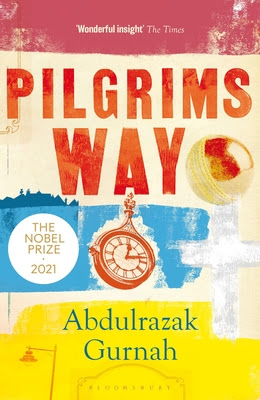
Gurnah, Abdulrazak "Pilgrims Way"

Gurnah, Abdulrazak "Pilgrims Way" - 1988

Daud is a Muslim from Tanzania who goes to England in the 70s. He works as an orderly in a hospital, does what thousands of immigrants do, cleans up after the white people. He meets prejudice and racism, the promised land is not what he expected it to be but a return into his home country is impossible.

In this situation he shares his thoughts, his fears, his hopes with us. And that of other immigrants but also the "hosts" which are not always that hospitable, so we better call them the natives.

The author describes an England shortly after the colonial period when they still had to get used to not being the "master race" anymore. I don't just speak about the British Isles, there are people all over the world who still don't understand that.

But, even more, he describes the problems of an immigrant. If you really want to know, read this books.

Oh, one thing he talks about a lot is cricket. I still don't understand it any better.

Book description:

"By the winner of the 2021 Nobel Prize in Literature An extraordinary depiction of the life of an immigrant, as he struggles to come to terms with the horror of his past and the meaning of his pilgrimage to England. Dear Catherine, he began. Here I sit, making a meal out of asking you to dinner. I don't really know how to do it. To have cultural integrity, I would have to send my aunt to speak, discreetly, to your aunt, who would then speak to your mother, who would speak to my mother, who would speak to my father, who would speak to me and then approach your mother, who would then approach you. Demoralised by small persecutions and the squalor and poverty of his life, Daud takes refuge in his imagination. He composes wry, sardonic letters hectoring friends and enemies, and invents a lurid colonial past for every old man he encounters. His greatest solace is cricket and the symbolic defeat of the empire at the hands of the mighty West Indies.Although subject to attacks of bitterness and remorse, his captivating sense of humour never deserts him as he struggles to come to terms with the horror of his past and the meaning of his pilgrimage to England."

Abdulrazak Gurnah received the Nobel Prize for Literature in 2021 "for his uncompromising and compassionate penetration of the effects of colonialism and the fate of the refugee in the gulf between cultures and continents".

I contribute to this page: Read the Nobels and you can find all my blogs about Nobel Prize winning authors and their books here.

Wednesday, 29 June 2022

Chevalier, Tracy "The Last Runaway"

Chevalier, Tracy "The Last Runaway" - 2013

I have liked Tracy Chevalier, ever since my first novel written by her, "Girl with a Pearl Earring". I have since read more of her books but not enough, as it looks like.

Her story of an English Quaker girl who emigrates to the United States in the middle of the 19th century is absolutely fantastic. I think with today's background, we can all follow the feelings and thoughts of Honor Bright, we can sympathize with her actions. She was pretty brave to leave her home country to accompany her sister who was going to get married there. Even with the whole family, some would not have done that given the choice.

I think the author researched the background pretty well. None of us has lived at the time but I have read quite a few books about slavery, the Underground Railroad, Quakers, all important topics in this book. We get a long list of books that Tracy Chevalier used for background information which makes me believe that we can trust that it's true what she writes in her story. This is definitely a well written and believable book.

I liked Honor Bright but I liked Belle Mills and Mrs. Reed just as much, if not even more. I could even forgive some of the other characters for what they did. Today, this would be unacceptable but back then, this was how it was.

I also loved that they included a map. I mean, I know where Ohio is but I wouldn't have known where the towns mentioned are supposed to be.

At the end of the book, Tracy Chevalier mentions that it gives hope to us still, that in extreme circumstances we too would still do the right thing. Yes, let's hope that, at least for us, because we can see every day that many, many people don't do the right thing and applaud even those who don't.

At the end of the novel, the author gives some recommendations about further readings. I have read two of the four books mentioned and can only second that opinion.

On the Civil War:
Frazier, Charles "Cold Mountain" - 1997
Jiles, Paulette "Enemy Women" - 2002
Olmstead, Robert "Coal Black Horse" - 2007

On the Effect of Slavery:
Morrison, Toni "Beloved"

From the back cover:

"Honor Bright is a sheltered Quaker who has rarely ventured out of 1850s Dorset when she impulsively emigrates to America. Opposed to the slavery that defines and divides the country, she finds her principles tested to the limit when a runaway slave appears at the farm of her new family. In this tough, unsentimental place, where whisky bottles sit alongside quilts, Honor befriends two spirited women who will teach her how to turn ideas into actions."

Thursday, 23 September 2021

Douglass, Frederick "Narrative of the Life of Frederick Douglass"

Douglass, Frederick "Narrative of the Life of Frederick Douglass, an American Slave" - 1845

After reading Harriet Jacobs' story "Incidents in the Life of a Slave Girl" earlier this year, I had this next on my list of books for one of my challenges. I thought the story of Harriet Jacobs was extraordinary but this one was even better. Probably, because it was told by the person who experienced this life himself. Frederick Douglass didn't learn reading and writing like we do, at school, he had to do it secretly. And what a writer he became.

I guess, freedom is something we all would wish for if it were denied to us. And not having experienced it, it would be impossible to understand how it is if you can't just choose where you want to live and what you want to do but also with whom you want to live. Families got ripped apart and you never knew what happened to your loved ones, probably nothing good.

The author understands all this very well. He has lived it. If you want to read about how a slave truly feels, this narrative is probably one of the best you can find. If you read this book, you will definitely join in with all the anti-racist people and organizations and say: Never again!

This is a very important book!

One of his quotes is:
"Once you learn to read you will forever be free."
But the best one is probably: "I know of no rights of race superior to the rights of humanity."

From the back cover:

"Born a slave circa 1818 (slaves weren't told when they were born) on a plantation in Maryland, Douglass taught himself to read and write. In 1845, seven years after escaping to the North, he published Narrative, the first of three autobiographies. This book calmly but dramatically recounts the horrors and the accomplishments of his early years - the daily, casual brutality of the white masters; his painful efforts to educate himself; his decision to find freedom or die; and his harrowing but successful escape.

An astonishing orator and a skillful writer, Douglass became a newspaper editor, a political activist, and an eloquent spokesperson for the civil rights of African Americans. He lived through the Civil War, the end of slavery, and the beginning of segregation. He was celebrated internationally as the leading black intellectual of his day, and his story still resonates in ours.
"

Thursday, 15 April 2021

Lee, Min Jin "Pachinko"

Lee, Min Jin "Pachinko" - 2017

I was drawn to this book because of its Asian appearance. These lovely drawings can only come from the Far East. The title didn't tell me anything. Pachinko? Who or what is Pachinko? I had to find out. The description convinced me further.

Now, if - like me - you don't know what Pachinko is, let me tell you. It's a Japanese mechanical game that is mainly situated in game arcades. I have never set foot in any of those slot machine places, so even if it is also known in Europe, this is not my world.

And there isn't much about the world inside those parlours, more about the life of Koreans in Japan. If you don't know anything about that, there is a lot to learn. I know there have been animosities toward foreigners no matter when and where. Always. I have lived abroad most of my life. Being German, I have experienced much the same hatred towards me and my family as the Koreans in this story had to endure in Japan.

Maybe that's why I liked this book so much, I could identify with their feelings. Unlucky for the family here, they couldn't go back to Korea since they came from the Northern part. And that is the case with many immigrants. Even if the first generation still would love to, the second and further generations are even less inclined to because for them, their new country is home, not the one where their ancestors come from.

The Koreans in this book are hard-working, honest people and, yet, they have no chance to ever get accepted. Sound familiar? This book could go onto any list of books about racism. The characters are loveable and unforgettable.

In any case, this is such a great tale about a family through several generations. If you like this kind of literature, you should read this book.

Min Jin Lee includes a a quote by Benedict Anderson, author of "Imagined Communities: Reflections on the Origin and Spread of Nationalism". I absolutely love this:

"I propose the following definition of the nation: it is an imagined political community - and imagined as both inherently limited and sovereign.

It is imagined because the members of even the smallest nation will never know most of their fellow-members, meet them, or even hear of them, yet in the minds of each lives the image of their communion…

The nation is imagined as limited because even the largest of them, encompassing perhaps a billion living human beings, has finite, if elastic, boundaries, beyond which lie other nations. No nation imagines itself coterminous with mankind…

It is imagined as
sovereign because the concept was born in an age in which the Enlightenment and Revolution were destroying the legitimacy of the divinely-ordained, hierarchical dynastic realm…

Finally, it is imagined as a
community because, regardless of the actual inequality and exploitation that may prevail in each, the nation is always conceived as a deep horizontal comradeship.

Ultimately it is this fraternity that makes it possible, over the past two centuries, for so many millions of people, not so much to kill, as willingly die for such limited imaginings.
"

Could anyone explain it better? I have to read that book!

From the back cover:

"Yeongdo, Korea 1911. A club-footed, cleft-lipped man marries a fifteen-year-old girl. The couple have one child, their beloved daughter Sunja. When Sunja falls pregnant by a married yakuza, the family face ruin. But then a Christian minister offers a chance of salvation: a new life in Japan as his wife.

Following a man she barely knows to a hostile country in which she has no friends, no home, Sunja's salvation is just the beginning of her story.

Through eight decades and four generations,
Pachinko is an epic tale of family, identity, love, death and survival."

Monday, 22 March 2021

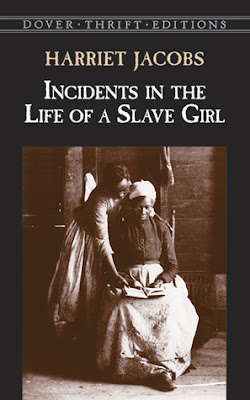
Jacobs, Harriet Ann "Incidents in the Life of a Slave Girl"

Jacobs, Harriet Ann (Linda Brent) "Incidents in the Life of a Slave Girl" - 1861

I never understood how someone could feel comfortable with "owning" another human being. You would think that we know better by now but this is still going on in this world and we have not changed much. Even if someone doesn't hold slaves, the way we treat others is not much further from that.

In this story, written by a real slave from the 19th century, we learn all the disadvantages of being a slave. The girls who get raped by their masters, the boys (and the girls) who get tortured, the children who are taken from their parents and sold separately, never to see their families again. Awful, terrible, unbelievable. Harriet Jacobs (who first published this book under the name Linda Brent) lived through it all, either herself or her family. As we can see, even if you have a "good" mistress (whatever that means, she owned a slave and didn't even take care that she was set free after her death, don't know what's good about that), this can end from one day to the next.

Since the North didn't really help the slaves, they even sent them back to their "rightful" owners if they caught them, this book was mainly written to open their eyes. Did it help? I doubt it. Maybe some learned from it but many, far too many … haven't learned even today.

A brilliant book written with so much understanding and force. It should be read by everyone at a very early age so that we hopefully will learn from it today.

From the back cover:

"The true story of an individual's struggle for self-identity, self-preservation, and freedom, Incidents in the Life of a Slave Girl remains among the few extant slave narratives written by a woman. This autobiographical account chronicles the remarkable odyssey of Harriet Jacobs (1813–1897) whose dauntless spirit and faith carried her from a life of servitude and degradation in North Carolina to liberty and reunion with her children in the North.

Written and published in 1861 after Jacobs' harrowing escape from a vile and predatory master, the memoir delivers a powerful and unflinching portrayal of the abuses and hypocrisy of the master-slave relationship. Jacobs writes frankly of the horrors she suffered as a slave, her eventual escape after several unsuccessful attempts, and her seven years in self-imposed exile, hiding in a coffin-like "garret" attached to her grandmother's porch.

A rare firsthand account of a courageous woman's determination and endurance, this inspirational story also represents a valuable historical record of the continuing battle for freedom and the preservation of family.
"

See my other reviews about anti-racism here.

Monday, 25 January 2021

Harris, Kamala "The Truths We Hold"


Harris, Kamala "The Truths We Hold. An American Journey" - 2019

I just finished this, on the day of her inauguration. I am so happy to have read it. I didn't really know much about the new US vice president and this was a great way to get to know her. What a woman!

If you've been following my blog for a while, you will have heard this already. When I first joined Facebook, I used to take part in some of their "games" and found that I am very liberal (not a surprise), "as far left as can be before heading into Stalin's backyard". That was a US American test, of course. (Compared to their Republicans, that is certainly true.)

Anyway, I believe in peace to this world, human rights and social justice for all, equal opportunity, a good healthcare, free education for everyone and anything that makes life easier for all of us, not just for the richest of the riches.

Kamala Harris represents all that. In her book, she tells us the story of her parents who came from India and Jamaica, how they started from scratch, how her mother brought up her daughters alone, how Kamala and her sister got through their education and into their jobs, how they keep fighting for the underprivileged, how she climbed the ladder in a system that seems to be very much inclined towards other goals. I'm not surprised, Joe Biden chose her as his VP. She believes in books and education and hard work, she believes in family values, loves her family and friends with all her heart and cares deeply for her "neighbour". I know many people believe that foreigners shouldn't care for who the US president is but the influence that country has on the world is still very big and, therefore, we should care. Kamala Harris gives us new hope.

I believe that we should trust in science. Yes, the world is round and climate change/global warming exists. And the earlier we do something against it, the better. It might already be too late.

She has taken something her mother always used to say as a guideline:
"You may be the first. Don't be the last."
She has tried to pass on the help she received from people before her to young people everywhere. We should all take her as an example.

One of my favourite lines:
"Freedom must be fought for and won by every generation. It is the very nature of this fight for civil rights and justice and equality that whatever gains we make, they will not be permanent. So we must be vigilant. Understanding that, do not despair. Do not be overwhelmed. Do not throw up our hands when it is time to roll up our sleeves and fight for who we are."

So, even if you don't trust the media and don't like the democrats, I think everyone would enjoy this book and maybe change their mind about the author a little bit. She truly is inspirational.

From the back cover:

"The extraordinary life story of one of America's most inspiring political leaders.

The daughter of immigrants and civil rights activists, Vice President Elect Kamala Harris was raised in a California community that cared deeply about social justice. As she rose to prominence as a political leader, her experiences would become her guiding light as she grappled with an array of complex issues and learned to bring a voice to the voiceless.

Now, in
The Truths We Hold, Harris reckons with the big challenges we face together. Drawing on the hard-won wisdom and insight from her own career and the work of those who have most inspired her, she communicates a vision of shared struggle, shared purpose, and shared values as we confront the great work of our day."

Thursday, 10 December 2020

Morrison, Toni "A Mercy"

Morrison, Toni "A Mercy" - 2008

In my post about Anti-Racism, I listed many, many books that tell us a lot about the lives of black people past and present. This is another one from the past that I will add to that list.

In this day and age, nobody should have to suffer from being "different" (no matter what that entails) and, yet, so many still do. When I see all the accusations made against former US President Barack Obama, it shows that even when you have worked your way up and are an excellent, qualified person, it doesn't help you if people don't like the colour of your skin. You still get no respect.

In this story, Toni Morrison tells us all about a little girl called Florens. She is lucky in a way that she gets into this family. Her "master" is not abusive. That doesn't say she is to envy. If you can't decide where you want to live, whether you want to stay with your family (and which eight-year-old wouldn't?) or what kind of work you would like to do, you are never to be envied.

Having said that, I'm just reading another book ("Capital" by Karl Marx) and from what we can learn there, poor people in Europe were not in a much better position, either. However, that's not an excuse.

Coming back to this story. It's not just a story of Florens but of all the female members of that family, the Native American Lina, Sorrow who was shipwrecked and Rebecca, the owner's wife who was sent over from England and didn't know her husband before she got married. They all have a different kind of fate but are all in this together.

Toni Morrison knows well how to describe the feelings of her characters, you can follow her stories as if you were a member of the family, as if you were one of the characters in her book.

Her books should become a required reading in all the schools. Maybe, just maybe, we would all understand racism a little better. Her Nobel Prize is well-deserved.

Florens' mother describes her arrival in Barbados after her capture in Africa and a long sea voyage:
"It was there I learned how I was not a person from my country, nor from my families. I was negrita. Everything. Language, dress, gods, dance, habits, decoration, song– all of it cooked together in the colour of my skin."

I think this says it all. What is it that defines us? Certainly not the colour of our skin. You might as well say someone with dark (or light hair) is worth less than someone with light (or dark). What's the difference? The difference is only what some of us make of it.

From the back cover:

"On the day that Jacob agrees to accept a slave in lieu of payment of a debt, little Florens' life changes. With her intelligence and passion for wearing the cast-off shoes of her mistress Florens has never blended into the background and now, aged eight, she is taken from her family to begin a new life. She ends up part of Jacob's household, along with his wife Rebekka, their Native American servant Lina and the enigmatic Sorrow, who was rescued from a shipwreck. Together these women face the trials of their harsh environment as Jacob attempts to carve out a place for himself in the brutal landscape of the north of America in the seventeenth century."

See more comments on my ThrowbackThursday post in 2022.

Toni Morrison "who in novels characterized by visionary force and poetic import, gives life to an essential aspect of American reality" received the Nobel Prize for Literature in 1993.

I contribute to this page: Read the Nobels and you can find all my blogs about Nobel Prize winning authors and their books here.

Read more about other books by the author here.

Wednesday, 25 November 2020

Metalious, Grace "Peyton Place"

Metalious, Grace "Peyton Place" - 1957

If you are looking for any topic in a book, this one probably has it. It tells us about the life in a small place in New Hampshire, starting in 1937, following its characters up until 1944.

The name of the town is fictional. The author herself said: "Peyton Place. Peyton Place, New Hampshire. Peyton Place, New England. Peyton Place, USA. Truly a composite of all small towns where ugliness rears its head, and where the people try to hide all the skeletons in their closets."

She's right there. If you have lived in a small town or village, you will recognize a lot of the characters. And if you have never lived in a small town or village, you can learn a lot about life in such a place. We always say, the disadvantage of living in a small town is "everybody knows everyone" and the advantage is "everybody knows everyone". Everybody knows all of your business but you are also never left alone in times of troubles.

Even though the story takes place a long, long time ago, I believe not that much has changed. I know a lot of Americans who still agree with the kind of double-sided morale shown in this book that was considered controversial, most notorious but also one of the best-selling novels of the 1950s.

The book was made into a movie (which won the Golden Globe and was nominated for 9 Academy Awards) and a television series.

The author was very philosophical and ahead of her time. Some of the quotes from her book could have been current ones:

"If every man … ceased to hate and blame every other man for his own failures and shortcomings, we would see the end of every evil in the world, from war to backbiting."

"Did it ever occur to you … that tolerance can reach a point where it is no more tolerance? When that happens, the noble-sounding attitude which most of us pride ourselves degenerates into weakness and acquiescence."

A great novel that deserves even more respect considering when it was written.

From the back cover:

"When it first appeared in 1956, Grace Metalious's Peyton Place unbottened the straitlaced New England of the popular imagination, transformed the publishing industry, and made its young author one of the most talked-about people in America. Metalious's debut novel - which topped the bestseller lists for more than a year and spawned a feature film and long-running television series - reveals the intricate social anatomy of a small New England town. This new paperback edition, which celebrates the seventy-fifth anniversary of Grace Metalious's birth, will reintroduce readers to a landmark of American popular culture. An introduction by Ardis Cameron explores Peyton Place's influential role in American literary and cultural history."

Thursday, 15 October 2020

Whitehead, Colson "The Nickel Boys"

Whitehead, Colson "The Nickel Boys" - 2019

After having read his first Pulitzer Prize win "Underground Railroad", I was thrilled to hear that Colson Whitehead received this award for the second time. Deservedly, very deservedly.

Since I really enjoyed his last book, I knew I'd have to read this one, as well. It certainly was worth it. This is not only a story of a young black boy growing up in the sixties or a book about what happens to young delinquents when they get caught. No, this is the story about how you have no chance in life if you are born with the wrong colour. You get condemned for something you have not done and from there on it goes downhill. And nobody will help you to get up again.

I have read a lot of books about racism (see in my list "Anti-Racism") and prejudices and a lot of time you can experience what those who are condemned suffer. But Colin Whitehead has made it a lot clearer, almost as if you are in Elwood Curtis' position yourself. The details are so well written, you are there with the protagonist.

The judges called the novel "a spare and devastating exploration of abuse at a reform school in Jim Crow-era Florida that is ultimately a powerful tale of human perseverance, dignity and redemption." Well said, very precise. Such a painful account of the life so many people still have to endure

A deep story that will leave nobody who has read it.

Colson Whitehead received the Pulitzer Prize for "The Nickel Boys" in 2020. He is one of only four recipients who were awarded the prize twice.

From the back cover:

"Elwood Curtis knows he is as good as anyone - growing up in 1960s Florida, he has taken the words of Dr Martin Luther King to heart. He is about to enrol in the local black college, determined to make something of himself.  But given the time and the place, one innocent mistake is all it takes to destroy his future.  Instead of embarking on a college education, Elwood arrive at the Nickel Academy, a segregated reform school claiming to provide an education which will equip its inmates to become 'honourable and honest men'.

In reality, the Nickel Academy is a nightmarish upside-down world, where any boy who resists the corrupt depravity of the authorities is likely to disappear 'out back'.  Elwood tries to hold on to Dr King's ringing assertion: 'Throw us in jail, and we will still love you.' But Elwood's fellow inmate and new friend Turner thinks Elwood naïve and worse; the world is crooked, and the only way to survive is to emulate the cruelty and cynicism of their oppressors.

When Elwood's idealism and Turner's scepticism collide, the result has decades-long repercussions. 
The Nickel Boys is a devastating, driven novel by a great American writer whose clear-sighted and humane storytelling continues to illuminate our current reality."

Thursday, 17 September 2020

Crafts, Hannah "The Bondwoman’s Narrative"

Crafts, Hannah "The Bondwoman’s Narrative" - 1855-69

This narrative was published by Professor Henry Louis Gates Jr. who is a US American literary critic. Apparently, he found the manuscript to this book at an auction. They don't know when exactly it was written but (according to Wikipedia), it must have been written between 1855 and 1869 because the author mentions Bleak House which was written in 1852/53. And it must have been written before the civil war because the author is quite meticulous in menitioning other major events, she certainly would not have omitted that one.

A while ago, I posted a list of anti-racism books as part of our Top Ten Tuesday challenge. It was "Books on my summer TBR list" and I thought, there are definitely going to be a few books about anti-racism in there and compiled a list of all those books I have read or still want to read. This was the next one.

Hannah Crafts was a real-life slave who describes her life. Her conditions might have been different than those of other slaves but I doubt that it matters how often you get sold and how many "masters" treat you kindly, you still live in the constant fear that your current situation might end and you will be separated from loved ones and/or get a really cruel person to "look after you". As happened to Hannah several times in her life. How people can endure such a treatment is almost unbelievable but I guess we all try to do that in any circumstances.

This novel certainly proves, if that wasn't clear already, that slaves were human beings with the same feelings and the same capabilities than anyone else. They could learn anything and express anything that their "masters" could. Definitely a book to read.

From the back cover:

"When Professor Henry Louis Gates, Jr., saw a modest auction catalogue listing for an 'Unpublished Original Manuscript,' he knew he could be on the verge of a major literary find. After exhaustive research, he found that the handwritten manuscript he had purchased was the only known novel by a female African American slave and possibly the first novel written by a black woman anywhere. The Bondwoman's Narrative tells of a self-educated young house slave who knows all too well slavery's brutal limitations, but never suspects that the freedom of her beautiful new mistress is also at risk - or that a devastating secret will force them both to flee the South and make a desperate bid for freedom."

Monday, 6 July 2020

Northup, Solomon "Twelve Years a Slave"

 https://www.goodreads.com/book/show/30126160-twelve-years-a-slave

Northup, Solomon "Twelve Years a Slave. Narrative of Solomon Northup, a citizen of New-York, kidnapped in Washington city in 1841, and rescued in 1853, from a cotton plantation near the Red River in Louisiana" - 1853

On the back cover, it says this is perhaps the best written of all the slave narratives. I have to agree with that. Probably because it was written by a well-educated slave himself. Who could relate all the horrible deeds done to those poor people better than someone who has had to endure it himself?

Solomon Northup was born in the State of New York. He was a free man and as such, could get an education, work, get married, have children, all without having to fear that would be taken away from him one day. But it was. He was kidnapped and sold into slavery. He was free but he also was black, so it was easy to just let him disappear somewhere in the deep south, on one of those plantations that nobody ever goes to. He ended up in Louisiana and had to live a life that is as unhuman as none of us can even imagine. He was treated worse than anybody would treat an animal.

Because of his education, he managed to get some information out and was freed after twelve years of torture, twelve years of hell. How he survived, I don't know. But he describes it all in this book and it is well worth a read, especially with all the shocking, abhorrent, dreadful, repugnant, outrageous, hideous, repulsive news we hear daily. How can people in this day and age still look down on someone? It is beyond my understanding.

A while ago, I published a list with anti-racism books. If you are looking for more books in that category, have a look here.

From the back cover:

"Perhaps the best written of all the slave narratives, Twelve Years a Slave is a harrowing memoir about one of the darkest periods in American history. It recounts how Solomon Northup, born a free man in New York, was lured to Washington, D.C., in 1841 with the promise of fast money, then drugged and beaten and sold into slavery. He spent the next twelve years of his life in captivity on a Louisiana cotton plantation.

After his rescue, Northup published this exceptionally vivid and detailed account of slave life. It became an immediate bestseller and today is recognized for its unusual insight and eloquence as one of the very few portraits of American slavery produced by someone as educated as Solomon Northup, or by someone with the dual perspective of having been both a free man and a slave."

Tuesday, 16 June 2020

Top Ten Tuesday ~ Top Ten Anti-Racism Books


"Top Ten Tuesday" is an original feature/weekly meme created on the blog "The Broke and the Bookish". This feature was created because they are particularly fond of lists at "The Broke and the Bookish".

It is now hosted by That Artsy Reader Girl.

Since I am just as fond of them as they are, I jump at the chance to share my lists with them! Have a look at their page, there are lots of other bloggers who share their lists here.

This week, the topic is:

Top Ten Books on My Summer 2020 TBR 

I hardly ever put together a reading list, I just read different subjects at any time, some new books, some from my TBR, some book club books. etc.

* * * 

However, Carol from the Reading Ladies Book Club has just published a list of Nonfiction/Fiction books and Racial Injustice (see here) and I wanted to do my own list about this, as well. Therefore, this is my proposed summer reading list. Wouldn't it be nice if everyone could read at least one book about racism this summer? There's so much to learn, let's give it a try.

Angelou, Maya "I Know Why The Caged Bird Sings" - 1969
- "Mom & Me & Mom" - 2013
Chapman, Abraham "Black Voices. An Anthology of Afro-American Literature" - 1968
Coates, Ta-Nehisi "Between the World and Me" - 2015
Crafts, Hannah "The Bondwoman’s Narrative" - 1855-69
Daniel Tatum, Beverly "Why are all the black kids sitting together in the cafeteria? A Psychologist Explains the Development of Racial Identity" - 1997
Douglass, Frederick "Narrative of the Life of Frederick Douglass, an American Slave" - 1848
Du Bois, W. E. B. "The Souls of Black Folk" - 1903
Evaristo, Bernhardine "Girl, Woman, Other" - 2019
Faulkner, William "Light in August" - 1932
Griffin, John Howard "Black like me" - 1961
Harris, Kamala "107 Days" - 2025
Hill, Lawrence "The Book of Negroes" - 2007
Jacobs, Harriet Ann "Incidents in the Life of a Slave Girl" - 1861
Kidd, Sue Monk "The Invention of Wings" - 2014
Lee, Harper "To Kill a Mockingbird" - 1960
Lessing, Doris "The Grass is Singing" - 1950
Mathis, Ayana "The Twelve Tribes of Hattie" - 2013
McCullers, Carson "The Heart is a Lonely Hunter" - 1940
McLeod, Cynthia "The Cost of Sugar" (Dutch: Hoe duur was de suiker) - 1987
Morrison, Toni "The Bluest Eye" - 1970
- "Home" - 2012
- "A Mercy" - 2008
Northup, Solomon "Twelve Years a Slave. Narrative of Solomon Northup, a citizen of New-York, kidnapped in Washington city in 1841, and rescued in 1853, from a cotton plantation near the Red River in Louisiana" - 1853
Oates, Joyce Carol "Black Girl/White Girl" - 2006
- "The Sacrifice" - 2015
Obama, Barack "The Audacity of Hope: Thoughts on Reclaiming the American Dream" - 2006
- "Dreams from My Father: A Story of Race and Inheritance" - 1995
Obama, Michelle "Becoming" - 2018
Stockett, Kathryn "The Help" - 2009
Stowe, Harriet Beecher "Uncle Tom’s Cabin" - 1852
Tademy, Lalita "Cane River" - 2001
- "Red River" - 2007
Tobin, Jacquelin L. and Dobard, Raymond G. "Hidden in Plain View" - 1999
Turner, Nancy E. "The Water and the Blood" - 2001
Walker, Alice "The Color Purple" - 1982
- "In Search of Our Mothers' Gardens" - 1983
- "The Way Forward is with a Broken Heart" - 2000
Whitehead, Colson "The Nickel Boys" - 2019
- "Underground Railroad" - 2016

These are all the books I read (or have on my TBR pile) that will fit into the "Black Lives Matter" topic. There are so many different kinds of racism in this world. My other books about racism are here.

* * *

Just now, Barack Obama shared another list by writer Jen Gray and encourages us all, to add these to our summer reading list. I have searched all the authors and dates of the books published. Sinc ei Had mainly the titles, I hope I found the right editions. You can see the pictures of some of the books here and here. My list is in alphabetical order.

Alexander, Michelle "The New Jim Crow: Mass Incarceration in the Age of Colorblindness" - 2010
Baldwin, James "The Fire Next Time" - 1963
Blackmon, Douglas A. "Slavery by Another Name: The Re-Enslavement of Black Americans from the Civil War to World War II" - 2008
Candelario, Ginetta E.B. "Black behind the Ears: Dominican Racial Identity from Museums to Beauty Shops" - 2007
Coates, Ta-Nehisi "Between the World and Me" - 2015
- "The Case for Reparations" - 2014
Cooper, Brittney "Eloquent Rage: A Black Feminist Discovers Her Superpower" - 2018
Diangelo, Robin "White Fragility. Why it's so hard for white people to talk about Racism" - 2018
Forman Jr., James "Locking Up Our Own: Crime and Punishment in Black America" - 2017
Gomez, Laura E. "Inventing Latinos: A New Story of American Racism" - 2020
Kendi, Ibram X "How to be an Antiracist" - 2019
- ". Stamped from the Beginning: The Definitive History of Racist Ideas in America" - 2016
Lowery, Wesley "They Can't Kill Us All: Ferguson, Baltimore, and a New Era in America’s Racial Justice Movement" - 2016
Maxwell, Zerlina "The End of White Politics: How to Heal Our Liberal Divide" - 2020
Moore, Darnell L. "No Ashes in the Fire: Coming of Age Black and Free in America" - 2018
Oluo, Ijeoma "So you Want to Talk about Race" - 2018
Ortiz, Paul "An African American and Latinx History of the United States" - 2018
Pollock, Mica "Everyday Antiracism: Getting Real About Race in School" - 2008
Reynolds, Jason; Kendi, Ibram X. "Stamped: Racism, Antiracism, and You" - 2020
Saad, Layla F. "Me and White Supremacy: Combat Racism, Change the World, and Become a Good Ancestor" - 2020
Stevenson, Bryan "Just Mercy: A Story of Justice and Redemption" - 2014
Tatum, Beverly Daniel " 'Why Are All the Black Kids Sitting Together in the Cafeteria?': A Psychologist Explains the Development of Racial Identity" - 2003
Theoharis, Jeanne "A More Beautiful and Terrible History: The Uses and Misuses of Civil Rights History" - 2018
Ward, Jesmyn; Jones, Kima; Cadogan, Garnette; Rankine, Claudia; Raboteau, Emily; Jackson, Mitchell S.; Trethewey, Natasha; Older, Daniel José "The Fire This Time: A New Generation Speaks About Race" - 2016
Wilkerson, Isabel "Caste. The Origins of our Discontents" - 2020
- The Warmth of Other Suns: The Epic Story of America's Great Migration" - 2010
Zamalin, Alex "Antiracism: An Introduction" - 2019

* * * 

And then there is, of course, Emma Watson and her list of anti-Racism books on Our Shared Shelf:
Bay, Mia (ed.); Gates Jr., Henry Louis (Ed.) Wells-Barnett, Ida B. "The Light of Truth: Writings of an Anti-lynching Crusader" - 2014
Brown, Austin Channing "I'm Still Here: Black Dignity in a World Made for Whiteness" - 2018
Kendall, Mikki "Hood Feminism: Notes from the Women That a Movement Forgot" - 2020
Khan-Cullors, Patrisse; Bandele, Asha; Davis, Angela "When They Call You a Terrorist: A Black Lives Matter Memoir" - 2018
Love, Bettina L. "We Want to Do More Than Survive: Abolitionist Teaching and the Pursuit of Educational Freedom" - 2019
Oluo, Ijeoma "So you Want to Talk about Race" - 2018
Richie, Andrea J. "Invisible No More: Police Violence Against Black Women and Women of Color" - 2017
Saad, Layla F. "Me and White Supremacy: Combat Racism, Change the World, and Become a Good Ancestor" - 2020

A big shoutout goes to one of my blogger friends Sarah from All the Book Blog Names Are Taken who created a great list against racism:
Alexander, Michelle "The New Jim Crow"
Bennett, Michael "Things That Make White People Uncomfortable"
Butler, Paul "Chokehold: Policing Black Men"
DiAngelo, Robin "White Fragility: Why It’s So Hard for White People to Talk About Racism"
Dyson, Michael Eric "Tears We Can Not Stop: A Sermon to White America"
- "What Truth Sounds Like: Robert F. Kennedy, James Baldwin, and Our Unfinished Conversation About Race in America"
Eddo-Lodge, Reni "Why I’m No Longer Talking to White People About Race"
Ewing, Eve L. "Ghosts in the Schoolyard: Racism and School Closings on Chicago’s South Side"
Gormann, Elliot J. "Let the People See: The Story of Emmett Till"
Hawes, Jennifer Berry "Grace Will Lead Us Home: The Charleston Church Massacre and the Hard, Inspiring Journey to Forgiveness"
Hinton, Anthony Ray "The Sun Does Shine: How I Found Life and Freedom on Death Row"
Johnson, Ronald "13 Days in Ferguson"
Kendi, Ibram X "Stamped From the Beginning: The Definitive History of Racist Ideas in America"
- "How to be an Antiracist" Ibram X Kendi
Khan-Cullors, Patrisse "When They Call You a Terrorist: A Black Lives Matter Memoir"
Lewis, John "Walking With the Wind: A Memoir of the Movement"
Lowery, Wesley "They Can’t Kill Us All: Ferguson, Baltimore, and a New Era in America’s Racial Justice Movement"
Mitchell, Jerry "Race Against Time: A Reporter Reopens the Unsolved Murder Cases of the Civil Rights Era"
Morrison, Melanie S. "Murder on Shades Mountain: The Legal Lynching of Willie Peterson and the Struggle for Justice in Jim Crow Birmingham"
Oluo, Ijeoma "So You Want to Talk About Race"
Rothstein, Richard "The Color of Law: A Forgotten History of How Our Government Segregated America"
Saad, Layla F. "Me and White Supremacy: Combat Racism, Change the World, and Become a Good Ancestor"
Solomon, Akiba, Rankin, Kenrya "How We Fight White Supremacy"
Taibbi, Matt "I Can’t Breathe: A Killing on Bay Street"
Tisby, Jemar "The Color of Compromise: The Truth About the American Church's Complicity in Racism"
Tolan, Robbie "No Justice: One White Police Officer, One Black Family, and How One Bullet Ripped Us Apart"
Watkins, D. "The Beast Side: Living (and Dying) While Black in America"
- "We Speak For Ourselves: A Word From Forgotten Black America"
Wilkerson, Isabel "The Warmth of Other Suns: The Epic Story of America's Great Migration"

* * * 

Last but not least, there is Oprah. I have all her book club books in my blogpost here that also includes a link to her page with lots more suggestions. Unfortunately, there is not a list on any of her pages, just pages to click through to get to the next book. Maybe I will be able to do a list one day but I doubt it.

* * *

Another of my blogfriends (Stuck in a Book) just published a list of the Virago Modern Classics by Black Authors courtesy of Juliana Brina from The Blank Garden.

* * *

I hope you'll forgive me that there are way more than ten books this week but I just couldn't delete any of them. They are all important.

Wednesday, 20 May 2020

H., A. "My Struggle"

H., A. "My Struggle" (Notes by some megalomanic who thought he could rule the world) (German: M.K.) - 1925/26

I am not going to mention the name of the author or the original (German) title of this book, you will certainly guess who I am talking about and can see it from the cover of the book and from the goodreads page where you get when you click on the book. I don't want to make it too easy to find this post for the new fans of him and his ways. And I will delete any comments of those so inclined.

As mentioned on the book cover, he was described as a madman, a tyrant, the devil incarnate, any evil word you can imagine. And none of them is bad enough.

This was certainly one of the worst books I ever read, both in the way it was written and in the content. Even though it is supposedly an autobiography, it is more a propaganda and combat pamphlet and full of conspiracy theories. It was meant as a counter-proposal to Marxism.

I read these rantings because my grandfather had read the book before the war and then warned everyone not to vote for the guy. His words had been "He only wants war". From then on, my grandfather was known as "the communist" and had to go into hiding during some time of the war. That, and because he helped some Jews.

I always wanted to read the book but it was not for sale in Germany for a long, long time. I had foreign friends who read it but they read translations, of course. I always prefer to read the original, especially in such an important case. So, when a friend said she "inherited" it from her in-laws, I took it as a sign that I should read it now. Also, with so many people resurrecting his idea nowadays, I thought it was a good idea to get further into the subject. I knew I would never change my mind about him and anyone who has similar ideas. I am more inclined to the other side.

Winston Churchill had said that Allied politicians and the military should have studied this book very carefully. He was right, of course. If my grandfather with his 8 years of general school understood what was behind it, the learned men certainly would have. In 1945, it was shown in the news that an American soldier puts the lead set of this book into the fire in a symbolic act. Probably should have left it there.

This book is just racist. I was expecting that. But if someone honestly believes that there are people who are worth more because they are born with a certain colour of their skin or a certain religion or whatever and even thinks that is a scientific fact, you can only call him stupid.

Unfortunately, he wasn't that stupid. He knew exactly what he was planning and what he was doing. Apparently, he was a good speaker though all I can ever see or hear from him are rantings, ramblings, shoutings, blustering, fulminations (almost as a certain president of our time). And him being "always right".

I always thought it was funny how he was such a fan of the "Arian race" tall and with their blond hair and blue eyes. He was everything but. Also, he was so keen on the German people. He wasn't even German, he was Austrian.

I was always curious to find out why people would have fascist ideas, why they would have racist thoughts. Maybe the biggest racist of them all could at least shine some light on it and we'd find a way to convince the new generation who has got some big racists amongst them that they are wrong. Of course, I didn't expect to find a solution in this book and there was none.

My father used to tell me that whoever was one of the lowest workers in his village all of a sudden was a member of the party in some of the highest positions. I think that explains a lot.

I see young people nowadays who claim that foreigners take up their jobs. This is exactly what people were saying in Germany in the twenties and thirties. The extremists take advantage of any situation and always blame someone else, foreigners, other religions (Jews then, Muslims now), whatever. It's never them, it's always the others.

Oh, and one last remark. If you do intend to read this book, don't expect high literature. It is really, really badly written. I had to look a long time for a neutral book cover without the picture of the author or the emblem of his party because, as I said above, I don't want to "promote" this book or anything that stands with it. As said on the cover, this is "... a glimpse into the mind of a man who destabilized world peace and pursued the genocide now known as the Holocaust." True. Let's not ever allow anything like this happen again.

From the back cover:

"Madman, tyrant, animal - history has given A.H. many names. 

In M.K. (My Struggle), often called the N. bible, H. describes his life, frustrations, ideals, and dreams. Born to an impoverished couple in a small town in Austria, the young A. grew up with the fervent desire to become a painter. The death of his parents and outright rejection from art schools in Vienna forced him into underpaid work as a laborer. 

During the First World War, H. served in the infantry and was decorated for bravery. After the war, he became actively involved with socialist political groups and quickly rose to power, establishing himself as Chairman of the National Socialist German Worker's party.

In 1924, H. led a coalition of nationalist groups in a bid to overthrow the Bavarian government in Munich. The infamous Munich "Beer-hall putsch" was unsuccessful, and H. was arrested. During the nine months he was in prison, an embittered and frustrated H. dictated a personal manifesto to his loyal follower Rudolph Hess. 

He vented his sentiments against communism and the Jewish people in this document, which was to become M.K., the controversial book that is seen as the blue-print for H.'s political and military campaign. In M.K., H. describes his strategy for rebuilding Germany and conquering Europe. 

It is a glimpse into the mind of a man who destabilized world peace and pursued the genocide now known as the Holocaust."