Showing posts with label USA. Show all posts

Monday, 7 September 2026

Frankel, Laurie "Family Family"

Frankel, Laurie "Family Family" - 2024

The other members:
Becky from Sydney of Aidanvale
Kate from Melbourne of booksaremyfavoriteandbest - Family Family 
Naomi from Canada of Consumed By Ink
Rebecca from Maryland, USA of Bookish Beck - Family Family 
Kay from Washington State, USA of What? Me Read? - Family Family 

The first I read with the online group "literary Wives" that we re-named "The Marriage Plot"  since not all the books we plan to read are about wives.

As in this case. The topic is adoption.

I was wondering about the title at first. But then I got it. You have families that are just a family on paper. Then you have family that are even not an official family but the people there belong together. And that is a family family. And I think that is a good description. You certainly know families who hardly get on, who don't see each other anymore once the children moved out, but even before, they don't relate to the others. That is not a family family, that's just a bunch of people who seem to live in the same house and (sometimes) carry the same name).

In this case we have a really weird family. A woman who gets two children without being married and gives them up for adoption, to two different kind of parents, a single mother and a gay married couple. But she also adopts two kids who have been abandoned by their mother. So, we have all sorts of relationships.

The woman is an actress and plays in a film about adoption. She claims that not all adoptions are sad and that the film is not a good one. That leads to a big scandal and her adopted kids try to get the whole family together.

I think this is a good book about showing a different side of adoption, one you don't read about that often. And I know families where it worked perfectly.

There are so many different kind of characters in this book, starting with the ten year old adopted daughter up to the grandmother. Every person is so different, as they should be. And they all have a point.

You can tell that the author has experienced this in her own family. A good quote by her (in the Seattle Times):

"Adoption is always offered as this last-resort, second-best thing that you have settled for, ... there are lots of ways to make good families and lots of ways to make crappy ones ... and they are not necessarily dictated by blood and genetics." So true.

From the back cover:

''Not all stories of adoption are stories of pain and regret. Not even most of them. Why don’t we ever get that movie?'

India Allwood grew up wanting to be an actor. Armed with a stack of index cards (for research/line memorization/make-shift confetti), she goes from awkward sixteen-year-old to Broadway ingenue to TV superhero.

Her new movie is a prestige picture about adoption, but its spin is the same old tired story of tragedy. India is an adoptive mom in real life though. She wants everyone to know there’s more to her family than pain and regret. So she does something you should never do—she tells a journalist the truth: it’s a bad movie.

Soon she’s at the center of a media storm, battling accusations from the press and the paparazzi, from protesters on the right and advocates on the left. Her twin ten-year-olds know they need help–and who better to call than family? But that’s where it gets really messy because India’s not just an adoptive mother…

The one thing she knows for sure is what makes a family isn’t blood. And it isn’t love. No matter how they’re formed, the truth about family is this: it's complicated."

And here is the list of all our books.

Wednesday, 26 August 2026

Evans, Virginia "The Correspondent"

Evans, Virginia "The Correspondent" - 2025

This book has been on the wishlist for our German book club for ages but we first had to wait until it was published as a paperback. In August 2026, we finally managed to put it on our reading list.

I have been writing letters my whole life, I've had penfriends all over the world and when I started to learn Esperanto, it got even more. So, I expected this book to be perfect for me.

I read somewhere that It takes a little while to get settled into Sybil’s life and I totally agree. I couldn't say that the story gripped me from the first page.

However, I was never such an organized letter writer as Sybil. I don't sit down every morning, I write answers to letters I received whenever I feel like I am in the mood to respond. I think the recipient gets a better answer as if I "have to" write now and then. And I have never written to an author, maybe I should do that one day.

However, I do not neglect those people around me, I try to meet them as often as I can. Sybil seems to be more a "letters only" kind of person. What would I have to tell my friends from far away if I didn't have a "real life"?

I did enjoy the book in the end but not in the way I thought I might.

We did have a nice discussion about this novel. We are all senior citizens and thought that was probably one of the reasons why we did enjoy this book. One of our members mentioned that her daughter couldn't get into it. Maybe there is something to it.

In any case, we all agreed that we needed some time to get into all the characters. And yes, there are a lot. The German had a list at the end with all of her correspondents, a little "Who's Who?". That was not included in our English version. I wonder why? As you all know, I love lists.

I found one online though @ The Book Companion
and @ SuperSummary.

And while looking for that, I discovered that a film adaptation is planned starring Jane Fonda as Sybil Van Antwerp.

Lots and lots of books get mentioned in the novel. I will list only those that I have read myself, find the rest here on Goodreads.

Austen, Jane "Pride & Prejudice" - 1813 (The Motherhood and Jane Austen
Brontë, Emily "Wuthering Heights" - 1887
Du Maurier, Daphne "
Rebecca" - 1938
Gabaldon, Diana "Outlander" (UK: Cross Stich) - 1991
Hanff, Helene "84 Charing Cross Road" - 1970
Ishiguro, Kazuo "The Remains of the Day" - 1989
Johnson, Adam "The Orphan Master's Son" - 2012
Joyce, James "Ulysses" - 1922
Rushdie, Salman "The Satanic Verses"  - 1988
Steinbeck, John "Travels with Charley" - 1962
Woolf, Virginia "To the Lighthouse" - 1927

So, eleven of forty books. But I might get to more in future.

And a quote that I agree with 100%:

"... I like president Obama. He's a wonderful speaker, I could listen to him read the phone book."

From the back cover:

"Sybil Van Antwerp has throughout her life used letters to make sense of the world and her place in it. Most mornings, around half past ten, Sybil sits down to write letters—to her brother, to her best friend, to the president of the university who will not allow her to audit a class she desperately wants to take, to Joan Didion and Larry McMurtry to tell them what she thinks of their latest books, and to one person to whom she writes often yet never sends the letter.

Sybil expects her world to go on as it always has—a mother, grandmother, wife, divorcee, distinguished lawyer, she has lived a very full life. But when letters from someone in her past force her to examine one of the most painful periods of her life, she realizes that the letter she has been writing over the years needs to be read and that she cannot move forward until she finds it in her heart to offer forgiveness.

The Correspondent is a gem of a novel about the power of finding solace in literature and connection with people we might never meet in person. Sybil Van Antwerp’s life of letters might be 'a very small thing,' but she also might be one of the most memorable characters you will ever read."

Tuesday, 18 August 2026

Oates, Joyce Carol "Cardiff by the Sea"

Oates, Joyce Carol "Cardiff by the Sea" - 2020

A while ago, one of my blogger friends (Lisa from Captivated Reader) had started a buddy read (Daddy Love by Joyce Carol Oates). I was late to the party but still managed to join in the conversation. We enjoyed that so much that we decided to start a new one by the same author, one of our favourites (I read 18 of her so far, with this one 19, see here).

Since Lisa had this one on her TBR pile, it was an easy decision and we both embarked on this journey.

Like most of JCO's books, this is a dark and sad one but highly recommendable.

Before I start with my own review, I want to alert you to Lisa's post. I don't want to repeat everything she wrote, so if you want the full view, have a look on her page.

Unlike most of her other books, this is not one novel but four short stories and I will describe them one by one:

1. Cardiff, by the Sea
Lisa said this was a splendid piece of writing and I totally agree with her. I absolutely loved the first story. JCO makes everythings so suspenseful and you really get under the skin of the protagonists.
Clare is an adopted child who finds out things about her past that leaves her totally totally shocked and confused. I would have been so mad if things like that had been withheld from me.
I think it is good that the author didn't give an explanation about the characters and let us build up our own meaning.  
As to the characters. OMG, there were two aunts whom I could have slapped them. Actually, if I had been Clare, I would have turned back, if not right away on the first day, then definitely when I found out more.
I'm not very keen on ambiguous or open endings. Or maybe I do, as I love JCO so much. I would have liked a more clear ending. Any talks between Clare and her adoptive parents? How much did they know? 

I do believe the Gerard was the killer and would have liked that explained at the end but … it's JCO.


I do agree with a character's explanation about God, though. No, I can't believe he is loving. And even though it says so in the bible (which I have read lots of times), it also shows a lot of instances where they just declare the opposite. Still, I do believe we should be good to each other and try to make this life a little easier for our human beings. Religion makes that sometimes impossible by declaring we will get our reward in heaven.
An individual like Clare does not have much hope of escaping the family's dark gravity. The best thing she can do is leave and start her old life again. Another question that was asked "… why did a loving God allow such horrors to happen to innocent people in this house?" Not just in that house. I ask myself that all the time. Wars are fought, children and innocent people are killed and a lot of them in God's name‽ That can't be right.
I think JCO shares these thoughts.

2. Miao Dao
Another totally interesting story. Mia is eleven years old and her parents are divorced. Lisa describes this best, so I quote her: "It’s an unsettling look at how young girls are forced to navigate terrifying environments far too early."
We loved the wordplay on Meow and Mia. 
I also found a YouTube interview with JCO but haven't had the time to listen to it, yet.
I googled and found that Miao Dao is  a traditional two-handed Chinese saber.
This one ended more like I expected it. I didn't trust the baddie from the beginning, certain remarks told me exactly what was going to happen. 

I mean, I didn't think he would get killed.

But, as always, a very exciting to read.

I have learned that the story is one of seven in the Dark Corners collection of which I hadn't heard before. I found a list:
1. Hannah-Beast (2018) Stephen Graham Jones
2. The Sleep Tight Motel (2018) Lisa Unger
3. There's a Giant Trapdoor Spider Under Your Bed (2018) Edgar Cantero
4. Miao Dao (2018) Joyce Carol Oates
5. The Tangled Woods (2018) Emily Raboteau
6. The Remedy (2018) Adam Hasler
7. Oak Avenue (2018) Brandi Reeds
However, when googling for the German titles for my German friends, I found that only Miao Dao is by JCO. I added the other authors later.

3. Phantomwise: 1972
But still, we are stuck with the body we are given. We can only do so much in order to improve it. At least we can try and control it ourselves.
I am not a huge fan of Alice in Wonderland, neither the animated film nor the book. Therefore, I did not know about the word phantom-wise. But it is very apt.
I know I mentioned pro-life. I used to be very active on Facebook but quite a few people deleted me when I congratulated the Americans to their new president (Barack Obama). Also some told me about the awful Democrats who killed babies (meaning abortion). I told her that I also don't like abortion but as long as we don't help women who get pregnant, there will be abortions, and illegal ones are very dangerous. And that rather than praying for the unborn babies they should pray for their mothers for whom it was the last resort, the only way out. And for those kids who get killed in the schools and on the streets through the gun laws. Educate kids better, give everyone access to healthcare, help single mothers that they don't end up in total poverty, those are the things that avoid abortions, making them illegal only makes it worse. The United States has 3 times as many abortions as Germany (and certainly also other countries). They also have one of the highest known rates of adolescent pregnancy and births in developed regions. Being pro-birth and not pro-life increases abortions. So, pray for the poor girls who are pushed into a situation where they see only one way out and for those who have their children and end up in poverty because of it. And also that those who make the laws will make it better for those girls who do get pregnant and can't help themselves. 
So, let's hope the situation will improve again. 
This novella was ver short but I was glad it wasn't longer. I don't think I could have held out much longer. I am not particularly squeamish but this story really took its toll on me. Poor Alyce. Poor girls.
I understood the ending better than Cardiff, for example. There was an end. Not a good one but an end. Nobody writes like JCO.

4. The Surviving Child
I can see why "The Surviving Child" is Lisa's least favourite. I wouldn't know in which order I'd place them because they were all just as fantastic as they were traumatic. My goodness, what do women have to go through?!
What I liked about the story: It developed slowly. First it's just a woman meeting a widower. Happens a lot and often this leads to a good relationship.
All the female protagonists go through a hard time here, a nightmare, whatever, caused by the men in their lives.
Would I have put up with any of them? Maybe not. But I am strong, I grew up with three younger brothers, I learned to defend myself pretty early.
I have thought about Sylvia Plath while reading the last novel, just because she was an author who was deeply troubled, like the first wife of the protagonist Alexander. I did understand, that Elizabeth, his second wife, wanted to read her predecessor's writings, I'm sure I would have wanted to in her case. I like that Alexander is described as an "Oatesian villain". I have never heard JCO's name used as an adjective but she totally deserves one. And yes, while Alexander doesn't physically abuse his family (all of them), he is one of the biggest bullies you can imagine. Poor Stefan, who grew up with him, has nothing to counter to that.
We often read about cruel stepmothers in fairy tales. That's because there were so many at the time. Many women died in childbirth and the men had to marry again in order to have someone to raise the children he already had. They would have new children whom they liked better. So, it was not unusual to have stepmothers that were not so nice. Elisabeth is a different kind, as I think/hope most stepmothers today are. 
I hope that Elisabeth finds a way to get out of Alexander's claws. And takes Stefan with her. At least the hope is there at the end.

When searching for some answers, Lisa found this question online:
Has Joyce Carol Oates ever written a truly happy, lighthearted scene?
I couldn't say but that is not the reason I read her. Nor it is her reason to write, I believe. She wants to emphasize the problems this world has, either by pointing out true or almost true stories or by making them up.

 Book Description:

"From one of the most important contemporary American writers, Cardiff, by the Sea is a bold, haunting collection of four previously unpublished novellas. In the titular novella, an academic in Pennsylvania discovers a terrifying trauma from her past after inheriting a house in Cardiff, Maine from someone she has never heard of. Mia, the protagonist of 'Miao Dao,' is a pubescent girl overcome with loneliness, who befriends a feral cat that becomes her protector from the increasingly aggressive males that surround her.

A brilliant but shy college sophomore realizes that she is pregnant in 'Phan-tomwise: 1972.' Distraught, she allows a distinguished visiting professor to take her under his wing, though it quickly becomes evident that he is interested in more than an academic mentorship. Lastly, 'The Surviving Child' is Stefan, who was spared when his mother, a famous poet, killed his sister and herself. Stefan's father remarries, but his young wife is haunted by dead poet's voice dancing in the wind, an inexplicably befouled well, and a compulsive draw to the same gar-age that took two lives.

In these psychologically daring, chillingly suspenseful pieces, Joyce Carol Oates writes about women facing threats past and present."

In October/November, we intend to read "The Accursed" (Goodreads). Let us know if you are interested in joining.

Tuesday, 4 August 2026

Weir, Andy "Project Hail Mary"

Weir, Andy "Project Hail Mary" - 2021

I learned with this book that there is such a thing as hard science fiction. *) I am not a sci-fi fan but I do like this kind of description. And it is true, this one definitely falls under that category. All his descriptions are logical. The author even manages to describe physical explanations in a way that I understand it. Physics was not my favourite subject at school and I have not expanded the knowledge I gained there, so I learned a lot from this book.

But even if you're not into those explanations at all, you can just enjoy the story as it is.

And enjoy I did it. 

I had loved The Martian and therefore bought this novel a while ago. But with my large TBR pile, it took me a while to tackle this. I had talked to my son about The Martian and given my copy to him. He liked it and then mentioned that he would like this one for his upcoming birthday. Since I already had it, I told him not to worry, I'd read this one and then he would get my copy.

I am glad I did. I thoroughly enjoyed the excursion, the attempt to save the Earth. But this book is also full of humour and compassion. 

I can't tell too much about the content because it would involve too many spoilers but ask me, if you have any questions.

*) Hard science fiction is a category of science fiction characterized by concern for scientific accuracy and logic. (Wikipedia)

Book Description:

"Ryland Grace is the sole survivor on a desperate, last-chance mission—and if he fails, humanity and the earth itself will perish.

Except that right now, he doesn’t know that. He can’t even remember his own name, let alone the nature of his assignment or how to complete it.

All he knows is that he’s been asleep for a very, very long time. And he’s just been awakened to find himself millions of miles from home, with nothing but two corpses for company.

His crewmates dead, his memories fuzzily returning, Ryland realizes that an impossible task now confronts him. Hurtling through space on this tiny ship, it’s up to him to puzzle out an impossible scientific mystery—and conquer an extinction-level threat to our species.

And with the clock ticking down and the nearest human being light-years away, he’s got to do it all alone.

Or does he?"

Monday, 27 July 2026

Lehane, Dennis "Shutter Island" - 2003

Lehane, Dennis "Shutter Island" - 2003

I didn't think I would like this book because I'm not a huge fan of crime stories. So I was pleasantly surprised to find that this is not the usual thriller or action movie plot, i.e. there is a plot here.

A gripping story that plays games with your mind. And the twist at the end totally left me flabbergasted. Contrary to many other participants, I had not seen the film

However, I don't think this is a great book for a book club, like most stories like this, what are we going to talk about??? Yes, we can talk about mental illness, PTSD, hospital situations, etc. But it all diverges from the story.

Still, a good read.

Quote on page 279 of my edition, something I ask myself often:

"God gives us earthquakes, hurricanes, tornadoes. He gives us mountains that spew fire onto our heads. Oceans that swallow ships. He gives us nature, and nature is a smiling killer. He gives us disease so that in our death we believe. He gave us offices only so that we could feel our life bleed out of them. He gave us lust und fury and greed and our filthy hearts. So that we could wage violence in His honour. There is no moral order as pure as this storm we've just seen. There is no moral order at all. There is only this - can my violence conquer yours?"

Comments from the book club meeting:

  • "The book was very well received by the group, with everyone giving it either 4/5 or 5/5.
  • Many of us had not read the book before, but a large number had seen Martin Scorsese's film adaptation. This created an interesting situation because many readers already knew the main twist before opening the book. Despite this, there was broad agreement that the novel remained very engaging. Several members commented that knowing the ending made it easier to notice clues and details throughout the story, although some wondered whether the book would have been even better or perhaps not as effective without that prior knowledge.
  • One of the most frequently praised aspects of the novel was Lehane's writing style. Members repeatedly mentioned the vivid descriptive language and the atmosphere he creates throughout the book. The island, the weather, and the hospital all felt convincing and memorable. It was also noted that Lehane does an excellent job of bringing the reader back to the 1950s. The language, dialogue, and attitudes of the characters help create a strong sense of time and place.
  • Much of our discussion focused on how the novel is constructed. We talked about the unreliable narration, the clues hidden throughout the story, and the way Lehane guides the reader towards certain assumptions. We also discussed several of the characters and their roles in the story, particularly how differently they can be viewed once the reader knows the truth behind the mystery.
  • The themes of trauma, guilt, memory, and self-deception also generated discussion. We debated the hospital itself, its methods, and the ethical questions raised by the treatment of patients. The ending naturally became one of the main topics, with different opinions about Teddy's final decision and how it should be interpreted.
  • As we often do in our discussions, we looked for connections to other books we have read. This time the conversation brought up Fight Club and the Finnish novel Rikosetsivien vapaapäivä because of the way both encourage readers to re-evaluate earlier events and question their understanding of what has happened.
  • The discussion also touched on Dennis Lehane as an author more generally. Several members noted that a number of his novels have been adapted into highly regarded films, and that Shutter Island is not the only example of his work translating successfully to the screen. The book also inspired a few members to add more of Lehane's work to their reading lists."

"Shutter Island was a satisfyingly chilling tale to read during the discomfort of the most recent heat wave in Ontario, Canada. Smokescreen after smokescreen arose. I enjoyed the layering of circumstances and personalities and clues and interpretations. This is not at all similar to my usual gentler reading and I feel gratefully stretched."

Again, many thanks to our leader Karin who put together a great review.

This was our international online book club read for July 2026.

Book Description:

"An arresting psychological thriller in which two US Marshals hunting for an escaped mental patient unveil a nightmare world of CIA drug trials, Nazi inspired eugenic work, and repressive mind control.

In the year 1954, U.S. Marshal Teddy Daniels and his new partner, Chuck Aule, come to Shutter Island, home of Ashecliffe Hospital for the Criminally Insane, to investigate an unexplained disappearance. Multiple murderess Rachel Solando is loose somewhere on this barren island, despite having been kept under constant surveillance in a locked, guarded cell. As a killer hurricane bears relentlessly down on the island, hints of radical experimentation and covert government machinations add darker, more sinister shades to an already bizarre case. Because nothing at Ashecliffe Hospital is remotely what it seems."

Tuesday, 21 July 2026

Kishon, Ephraim "The Seasick Whale: An Israeli Abroad"

Kishon, Ephraim "The Seasick Whale: An Israeli Abroad. Book of Travels" (Hebrew: ספר המסעות/Sefer ha'masot) -  1995 

Ephraim Kishon is always worth picking up. In this volume, he recounts his travels to various European countries and the United States. Like few others, he manages to portray the quirks of the locals in such a way that even they have to laugh at them. And, in reality, his observations actually serve as a form of praise.

So, for anyone who wants to know how to get rid of a banana peel in Switzerland, why one should never take a gondola in Venice, and why it is advisable not to visit Las Vegas without having already booked and paid for the return journey, this book is worth its weight in gold.

Book Description:

"Every person dreams of travel in the world; Anyone going crazy to see the Niagara Falls outdated and disappointed them, or to flock to the picture of the Mona Lisa and find out the size of A4. The average Israeli is not a dream and we do not go crazy. He drives - especially in summer and winter, or the two seasons, going at all costs and at every opportunity. Citizen look in the mirror and say to 'I'm starting to resemble my passport photo, so it was time to go.

Ephraim Kishon's journeys proves his wonderful humor is independent of geography, is entertaining and hilarious in each country to which he invites the reader."

Thursday, 18 June 2026

Frazier, Charles "The Trackers" - 2023

Frazier, Charles "The Trackers" - 2023

I love Charles Frazier. I have read four of his books, "Cold Mountain" is still one of my favourite books ever, I've read it several times. But if I had to list his stories, this one would come last. It was an alright read because he is a good writer but the story is nothing compared to his other books. You can always imagine being right there with the characters. Only, I didn't really like any of them. That makes it harder to connect to them, harder to like the book. And it didn't really grab my attention, the story was too slow.

Just one quote that I really liked and by which I live (my friends will certainly back me up there): "First rule of hosting, excess is always preferable to shortage."

From the back cover:

"Hurtling past the downtrodden communities of Depression-era America, painter Val Welch travels westward to the rural town of Dawes, Wyoming. Through a stroke of luck, he's landed a New Deal assignment to create a mural representing the region for their new Post Office.

A wealthy art lover named John Long and his wife Eve have agreed to host Val at their sprawling ranch. Rumors and intrigue surround the couple: Eve left behind an itinerant life riding the rails and singing in a western swing band. Long holds shady political aspirations, but was once a WWI sniper--and his right hand is a mysterious elder cowboy, a vestige of the violent old west. Val quickly finds himself entranced by their lives.

One day, Eve flees home with a valuable painting in tow, and Long recruits Val to hit the road with a mission of tracking her down. Journeying from ramshackle Hoovervilles to San Francisco nightclubs to the swamps of Florida, Val's search for Eve narrows, and he soon turns up secrets that could spark formidable changes for all of them.

In The Trackers, singular American writer Charles Frazier conjures up the lives of everyday people during an extraordinary period of history that bears uncanny resemblance to our own. With the keen perceptions of humanity and transcendent storytelling that have made him beloved for decades, Frazier has created a powerful and timeless new classic."

Monday, 15 June 2026

Jeffers, Honorée Fanonne "The Love Songs of W.E.B. Du Bois"

Jeffers, Honorée Fanonne "The Love Songs of W.E.B. Du Bois" - 2021

This is such a beautiful book. Don't let yourself get scared by the 800+ pages, they are totally worth it. Barack Obama has it on his reading list. It's an Oprah book and it has been chosen by various other reading lists/awards. Definitely a good recommendation on all accounts.

W.E.B. Du Bois, the guy in the tile, was an American sociologist, writer, historian, and Pan-Africanist civil rights activist who lived from 1868 to 1963 and was the first African American to earn a doctorate at Harvard University. This book mentions him a lot. I have read his book "The Souls of Black Folk" which is a very thorough study of black culture in the United States. This novel adds to that subject.

The story circles around Ailey Pearl Garfield, a black girl born in 1973, and all her ancestors, going back to the first known ones in the 1740s. She has both black and Native American ancestors and there is a lot about their history. She has to struggle through all the problems many women but especially black women have to overcome. She is a strong woman but many obstacles are thrown in her way. And we learn how her ancestors, especially the women managed.

The only criticism I have has nothing to do with the story or the book. There is a family tree at the beginning but it is sometimes quite confusing. Either a diagram or some numbers as to who belongs to whom would have been helpful. The way it is presented, there is too much searching involved if you want to know more. If you are still reading it, there is a diagram on Wikipedia.

But other than that, book was just fantastic, epic.

From the back cover:

"A magisterial epic—an intimate yet sweeping novel with all the luminescence and force of Homegoing; Sing, Unburied, Sing; and The Water Dancer—that chronicles the journey of one American family, from the centuries of the colonial slave trade through the Civil War to our own tumultuous era.

The great scholar, W. E. B. Du Bois, once wrote about the Problem of race in America, and what he called 'Double Consciousness,' a sensitivity that every African American possesses in order to survive. Since childhood, Ailey Pearl Garfield has understood Du Bois’s words all too well. Bearing the names of two formidable Black Americans—the revered choreographer Alvin Ailey and her great grandmother Pearl, the descendant of enslaved Georgians and tenant farmers—Ailey carries Du Bois’s Problem on her shoulders.

Ailey is reared in the north in the City but spends summers in the small Georgia town of Chicasetta, where her mother’s family has lived since their ancestors arrived from Africa in bondage. From an early age, Ailey fights a battle for belonging that’s made all the more difficult by a hovering trauma, as well as the whispers of women—her mother, Belle, her sister, Lydia, and a maternal line reaching back two centuries—that urge Ailey to succeed in their stead.

To come to terms with her own identity, Ailey embarks on a journey through her family’s past, uncovering the shocking tales of generations of ancestors—Indigenous, Black, and white—in the deep South. In doing so Ailey must learn to embrace her full heritage, a legacy of oppression and resistance, bondage and independence, cruelty and resilience that is the story—and the song—of America itself."

Monday, 8 June 2026

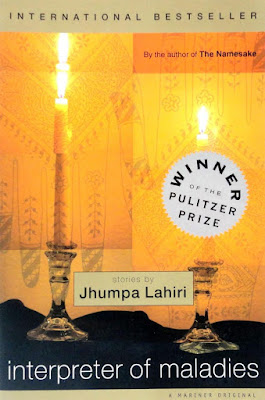
Lahiri, Jhumpa "Interpreter of Maladies"

Lahiri, Jhumpa "Interpreter of Maladies" - 1999

I have read this book in 2015. This was my review back then:

"As most of my friends know, I am not a big fan of short stories. However, I read 'The Namesake' by the same author and really loved it. And several of my friends had recommended 'Interpreter of Maladies' to me, one had even left a copy to me when she was moving, I just had to read it.

I was pleasantly surprised. What a lovely collection of short stories, some of them even interlink, so it doesn't seem like there are a hundred small stories that you forget right away. On the contrary, Jhumpa Lahiri has created some wonderful characters that you won't forget that easily. She incorporates all sorts of problems anyone might face who lives in a culture different from the one they or their parents grew up with. She describes some lovely people (and some not so lovely ones) who are all confronted with a life in two different parts of this world. Since the author is Indian herself and grew up in the United States, this is the background to almost all her stories. Having lived abroad (though not in such a different culture as the characters in the book) almost half of my life myself, I can certainly relate to a few of them.

Jhumpa Lahiri has a good, elegant style, her stories just flow, I will certainly read more of her writings."

A while ago, I joined an online group called Literary Wives/Marriage Plot and this was the next book on our list. So, I re-read the book because it was a while ago that I read it and we read it with a different topic in mind. What does the author say about the wives in his book?

Most of these stories take place in India and/or around Indian couples.

A Temporary Matter

We look at the end of a marriage. A couple suffers from the loss of a baby that was stillborn. They have nothing to say to each other even though they try hard.

When Mr. Pirzada Came to Dine

In this story, a woman remembes a man from East Pakistan/Bangladesh coming to visit her Indian family in the States while his family is back home. It is more a story about the man than about this particular wife but it still gives us an insight into the life of the Indian wives in the US.

Interpreter of Maladies

This is about an Indian American family visiting the country of their heritage. We learn even more about the life of such a wife, she is so lonely. I can relate because as a non-working wife abroad, you don't have the sort of social life your husband and children have and it is hard work to try and find your place.

A Real Durwan (doorkeeper)

This story is about an elderly woman who is a stairsweeper and lives on the roof ot the building she works in.

While this is less about the situation of a wife, it tells us about poverty and how you can be even poorer than all the others around you.

Sexy

We're back in the US. Again, not the story of a wife but of a mistress. And of a husband who is leaving his wife. A good reflection about this kind of situation from every point of view, the wife and the mistress. 

Mrs. Sen's

Her we have the story of an Indian woman living in the States who doesn't drive and doesn't have any contact outside the house. She looks after an eleven year old boy after school and teaches him about their food. Probably one of my favourite stories. I really felt for the lady.

This Blessed House

A yound married Indian couple in Connecticut who moves into their new house and find many Christian relics. The wife puts them on the mantel of the fireplace. A good story about how different people can have different opinions about what to keep and what not and what to embrace. And how they have to work on your marriage.

The Treatment of Bibi Haldar

A woman suffers from seizures and a doctor recommends to marry her off. But it costs money to get married and you have to find a suitor. So, her relatives rather let her live on the roof. This story focuses on the treatment of illness and of prejudices.

The Third and Final Continent

This guy has moved from India to London and then to the States where he rents a room from a 103-year-old lady. They develop a good connection until he gets married and moves out. We follow his and his wife's life and how they get to know each other.

As I mentioned in the stories, they are not all about the wives, some of them don't relate to their status at all, they are just there. But where they are mentioned, we learn a lot about the differences between Indian and (mainly) American wives, their rights and their duties.

I think it also helps to understand why immigrants so often stay among themselves. It is not just about the language, though that doesn't help if nobody teaches them the host language, it is more about the culture and understanding each other. Especially the wives are invisible, they disappear in the crowd. Especially if it has been an arranged marriage, the husband often doesn't understand his wife.

From the back cover:

"Navigating between the Indian traditions they've inherited and the baffling new world, the characters in Jhumpa Lahiri's elegant, touching stories seek love beyond the barriers of culture and generations. In 'A Temporary Matter,' published in The New Yorker, a young Indian-American couple faces the heartbreak of a stillborn birth while their Boston neighborhood copes with a nightly blackout. In the title story, an interpreter guides an American family through the India of their ancestors and hears an astonishing confession. Lahiri writes with deft cultural insight reminiscent of Anita Desai and a nuanced depth that recalls Mavis Gallant."

Jhumpa Lahiri received the Pulitzer Prize for "Interpreter of Maladies" in 2000.

And here are the reviews of the other literary wives:

Becky from Sydney of Aidanvale

Kate from Melbourne of booksaremyfavoriteandbest

Rebecca from Maryland, USA of Bookish Beck

Kay from Washington State, USA of What? Me Read?

Friday, 8 May 2026

Rawls, Wilson "Where the Red Fern Grows"

Rawls, Wilson "Where the Red Fern Grows" - 1961

My youngest son read this in 3rd grade and it was his favourite book for ages.

So, when the 1961 Club read somehow went wrong for me (see here, my book was published in 1962), I decided to pick another one from that year. So this is my official book for our 1961 challenge.


I asked my son whether he could remember why he loved this book so much. We are neither American nor big animal lovers nor did we live in the middle of nowhere. He said that it's a long time since he read it (of course, it must have been more than 20 years ago) and that he just remembers it being a nice story.

I guess you have to be an eight to ten year old boy to really love that story. It was well written but I think I was a little too old for that.

But it deserves to be a classic children's book, emphasis on children.

Book Description:

"For fans of Old Yeller and Shiloh, Where the Red Fern Grows is a beloved classic that captures the powerful bond between man and man’s best friend. This special edition includes new material, including a note to readers from Newbery Medal winner and Printz Honor winner Clare Vanderpool, a letter from Wilson Rawls to aspiring writers, original jacket artwork, and more.

Billy has long dreamt of owning not one, but two dogs. So when he’s finally able to save up enough money for two pups to call his own—Old Dan and Little Ann—he’s ecstatic. It’s true that times are tough, but together they’ll roam the hills of the Ozarks.

Soon Billy and his hounds become the finest hunting team in the valley. Stories of their great achievements spread throughout the region, and the combination of Old Dan’s brawn, Little Ann’s brains, and Billy’s sheer will seems unbeatable. But tragedy awaits these determined hunters—now friends—and Billy learns that hope can grow out of despair."

See my other reads for this challenge here.

Monday, 27 April 2026

Kingsolver, Barbara "Animal, Vegetable, Miracle"

Kingsolver, Barbara, Steven L. Hopp, Camille Kingsolver "Animal, Vegetable, Miracle: A Year of Food Life" - 1990

Live the year with Barbara Kingsolver and her family on their farm.

I grew up like this. My parents didn't own a farm but they rented a house with a large garden, quite normal at the time in the countryside. We would grow everything, really everything the family need during the year. Except for the potatoes, the garden was not large enough, especially since we hardly ever had rice or pasta. But my uncle was a farmer and he would come by once a year and fill half of our little cellar room with potatoes. The other half would be harvested in a nearby apple orchard. We also had chickens, rabbits (which I still refuse to eat to this day) and even a pig from time to time. Fresh milk would be fetched from the next farmer, the one who also owned our house.

So, I read this book with a laughing and a crying eye. Too many memories of a hard childhood. But also so much that sounded familiar. Not just the planting and harvesting of the veggies, the washing of the preserving jars and then the processing and the cooking. A lot of work. In the end, I was happy I don't have to do that anymore.

What I liked about the book was the togetherness of the family, the will to stick together and live off the land for a whole year. Of course, not everyone would be able to do that. We all have to go out and earn a living, there is not that much time left to grow everything we want to eat. Also, most people don't have the money to have land so large that they can live from the proceeds any longer.

Mind you, a lot of her findings about food you can buy and probably shouldn't, are about the US American market but we all have to find what is good food and what isn't

So, I understand people who didn't like the book because of that. But we can all learn from the author and buy more local food, buy more stuff that is in season and didn't have to be shipped all over the world until we get it.

I also loved her remark to lactose intolerance. I belong to the (large) group of people inflicted with it and often have to hear snide remarks. I should take an excerpt from her book along with me in future:

"This is not an allergy or even, technically, a disorder. Physical anthropologists tell us that age four, when lactose intolerance typically starts, is about when nature intended for our kind to be wholly weaned onto solid food; in other words, a gradual cessation of milk digestions is norma. In all other mammals, the milk-digesting enzyme shuts down soon after weaning. So, when people refer to this as an illness, I'm inclined to point out we L.I's can very well digest the sugar in grown-up human foods like fruits and vegetables, thank, we just can't nurse. From a cow. Okay?"

As a big fan of gatherings by family and friends, I also loved her accounts of those. She obviously has more space than we do but even in our smaller apartments, we often had several dozens of visitors to our parties.

There are also contributions by her husband and her daughter Camille who includes a lot of recipes that you can download here: AnimalVegetableMiracle.

Does Barbara Kingsolver still belong to my favourite authors? But, of course. All her books are great!

Book Description:

"Author Barbara Kingsolver and her family abandoned the industrial-food pipeline to live a rural life—vowing that, for one year, they'd only buy food raised in their own neighbourhood, grow it themselves, or learn to live without it. Part memoir, part journalistic investigation, Animal, Vegetable, Miracle is an enthralling narrative that will open your eyes in a hundred new ways to an old truth: You are what you eat."

Monday, 20 April 2026

Ephron, Nora "Scribble Scribble"

Ephron, Nora "Scribble Scribble. Notes on the Media" - 1978 

I love Nora Ephron and must have read every novel she ever wrote. And some of her non-fiction publications. A while ago, I read "Crazy salad. Some things about women" which was written in the Seventies, at a time where we had no internet and not as much information about what was going on across the pond as it is now.

Same as in that book, we find articles she wrote for a magazine, this time Esquire. I have never seen that publication and I didn't know many of the celebrities or newspapers or events she writes about. But she has such a lovely way of writing, you want to dig into all those stories and find out what the background was, though she does give quite some information about that already.

So, if you like Nora Ephron, you might want to pick up this book. If you haven't read anything by her, I suggest you start with one of her wonderful novels (see here).

There would be a lot of quotes I could put here, but I just leave it with three:

About "People" magazine:
"A celebrity is anyone People writes about; I know the magazine is filling some nameless, bottomless pit of need for gossip and names but I haven't got room in my life for so many lights."
Nothing seems to have changed here.

About two of my least favourite authors (Capote and Kerouac)
"Russell Baker: Capote's famous comment on Kerouac - that's not writing, it's typing."
I could say that for both of them but I will remember this quote the next time I come across a book like this.

About "Gourmet" magazine:
"I don't actually read it. I sort of look at it in a fairly ritualistc manner.
I love cook books and cooking and baking magazines. And I think it's that same for me, I just love looking at the recipes and imagine I would make them all. Mind you, I usually try a few of the recipes

Book Description:

"Twenty-five tussles with the American media and its various faults and glories reveal an incisive journalist's dislike of such episodes as Haldeman on CBS and the New York Magazine takeover and her passion for such gifts as Upstairs, Downstairs and the Double-Crostic.

This volume is a collection of the columns the author wrote for Esquire magazine from 1975 to 1977. Her subject was the media, especially print journalism."

Saturday, 18 April 2026

Steinbeck, John "Travels with Charley"

Steinbeck, John "Travels with Charley. In Search of America" - 1962

I have always loved the books by John Steinbeck. Until I read "Cannery Row". But that didn't keep me from reading more books by him and when our 1961 Club came up and I found there was one book by him, I chose that immediately. Unfortunately, I had just finished it when I found out that this book was published in 1962 (although it was probably written in 1961). Well, I couldn't finish another one in a day or two, so this will have to do with my contribution to this challenge (but I will read another one later and put a link here).

But I am more than happy that I read this book because it brought back John Steinbeck to me and the way I have always loved his literature.

While I am not a big fan of campervans or camping as such, I enjoyed following the author and his dog Charley through the United States. I doubt I will ever get there but in a way, I have the feeling I have now. He says himself towards the end that "… I have not intended to present, nor think I have presented, any kind of cross-section so that a reader can say, 'He thinks he has presented a true picture …' I  don't. I've only told what a few people said to me and what I saw. I don't know whether they were typical or whether any conclusion can be drawn." I think that is the best anyone can try to do and I am glad we could accompany him on this trip.

He also mentions "I like weather rather than climate." That is one great quote and I couldn't agree more.

I thoroughly enjoyed this.

And if you think there are better books about travels through the USA, please, let me know.

Book Description:

"To hear the speech of the real America, to smell the grass and the trees, to see the colors and the light—these were John Steinbeck's goals as he set out, at the age of fifty-eight, to rediscover the country he had been writing about for so many years.

With Charley, his French poodle, Steinbeck drives the interstates and the country roads, dines with truckers, encounters bears at Yellowstone and old friends in San Francisco. Along the way he reflects on the American character, racial hostility, the particular form of American loneliness he finds almost everywhere, and the unexpected kindness of strangers."

John Steinbeck received the Nobel Prize for Literature in 1962 "for his realistic and imaginative writings, combining as they do sympathetic humour and keen social perception".

I contribute to this page: Read the Nobels and you can find all my blogs about Nobel Prize winning authors and their books here.

Monday, 30 March 2026

Dickey, James "Deliverance"

Dickey, James "Deliverance" - 1970

Apparently, this is one of the most important books of the last century. I read that somewhere but can't find that remark anymore. Still, it seems to have had a great success.

When I read the description, I was afraid this wasn't a book for me and I might not like it. But the description is a little different from the book itself. The story is not as much about the natives but about some criminals in the woods.

Still, the book is totally mesmerizing. And tense. There is so much going on, the trip the four men take is about one of the most horrifying stories I ever read.

Thanks to Karin for the minutes which I will include in the spoiler:

"The book club had a very positive discussion about Deliverance. Almost everyone rated the novel 4/5 or higher, and several readers felt it was close to a five-star book. One of the most praised aspects was the translation, which many felt captured the tone, tension, and atmosphere exceptionally well.

A big part of the conversation focused on how efficiently the novel is built. Compared to many large contemporary literary novels — where hundreds of pages may be spent on background — Deliverance manages to establish its characters, themes, and emotional stakes in about fifty pages. Readers appreciated how tightly the story is framed: first the buildup before the trip, then the intense three days on the river, and finally the aftermath. This clear structure made the story feel focused and impactful.

The characters were widely seen as believable and vividly drawn. We talked a lot about how people react differently in crisis situations: one person freezes while another unexpectedly finds strength, and even serious injury doesn’t necessarily stop someone from acting. The novel felt realistic because the characters make flawed and sometimes foolish decisions in recognizably human ways. Their journey begins partly out of boredom and a desire to escape everyday life, which makes what follows feel even more unsettling.

The discussion also touched on trauma and its aftermath. Rather than being neatly explained, the characters’ experiences linger in ambiguous ways — in memory, in the body, and even in sleep. This subtle psychological impact was something many readers found especially powerful. Several participants noted how the trauma seems disorganized and difficult to articulate, reflecting how real experiences often remain unresolved rather than clearly understood.

Moral questions sparked lively debate. Was it necessary for the characters to hide what happened? Would they have survived if they had trusted the authorities? Would justice have treated them fairly? The novel’s ambiguity — what exactly happened, who was responsible, and how events should be interpreted — kept the discussion open-ended and engaging.

Several readers noticed the careful use of foreshadowing and 'Chekhov’s gun,' where details introduced early gain importance later. The tight pacing and chapter structure were seen as key strengths: nothing feels unnecessary, yet the characters and world feel fully developed.

We also discussed broader themes, including human behavior under pressure, the thin boundary between civilization and survival, encounters with wilderness, and the portrayal of rural stereotypes. Many agreed that the book 'gets under your skin' — even for readers who wouldn’t normally choose this genre.

Notes on the Film Adaptation
Some members had seen the film adaptation and recommended it alongside the book. The movie was described as very effective in showing the physical danger and tension of the river journey. While the novel focuses more on the characters’ inner thoughts and moral uncertainty, the film emphasizes action and atmosphere with the actors even doing their own dangerous stunt work. The group felt the two versions work well together: the book offers psychological depth, and the film adds a strong visual and emotional experience".

Overall Takeaway
"Overall, the group agreed that Deliverance is a balanced, well-crafted novel that combines suspense with psychological depth. Even when it wasn’t stylistically everyone’s personal favorite, it left a strong and lasting impression and proved to be an excellent choice for discussion — a book that continues to provoke thought long after finishing it." 

This was our read in our international online book club in March 2026.

Book Description:

"The heart-stopping classic 1970 novel--an unforgettable tale of violent adventure and profound inner discovery.

Four middle-class men from suburban Altana decide to embark on a three-day canoe trip down a particularly wild section of a river in Georgia. For them the trip represents a break in the domestic routine, a chance for adventure with few real risks, and the last occasion to see a beautiful valley before the river is dammed up. Their leader, an enthusiastic outdoorsman and champion archer, is obsessed by the desire to pit himself against nature.

When two of the group are attacked viciously by sinister mountain men, a mildly adventurous canoe trip explodes into a nightmare of horror and murder. Men stalk and are stalked by other men, the treacherous river becomes a graveyard for those without the strength or the luck to survive, and one man, forced to assume the leadership of the group, must call up his resources to try to achieve deliverance."

Wednesday, 18 February 2026

Garmus, Bonnie "Lessons in Chemistry"

Garmus, Bonnie "Lessons in Chemistry" - 2022

A member of my German book club had suggested this book  but despite everyone agreeing to it at first, it wasn't chosen in the end. But I had already ordered the book, so I wanted to read it.

It certainly would have been a good choice to discuss. I doubt I would have chosen it, had I only seen the cover. On the other hand, I suppose those people who are looking for a romantic chick lit, might be disappointed.

It's hard to describe this book. I would probably declare it as chick-lit though it has some deeper meanings. However, I did like the protagonist a lot, I wish I would have had an Elizabeth Zott in my life when growing up. Even though I am certainly about a decade younger than her, all those obstacles that were placed in the way of women were still around. And there was nobody, absolutely nobody who supported me in my education, not my parents and definitely not my teachers (except for the one in elementary school but he wasn't there anymore later). On the contrary, all I heard was "you will get married and don't need a job". And my boss got a guy in from outside instead of promoting me. For the same reason.

Same as Elizabeth, I had the feeling my whole life that I worked for men less intelligent than me.

The books is described as humorous and there are certain aspects of humour in it, but overal, the sadness is more important and stays more in our memories.

Maybe this story speaks more to a younger audience, it just brought too many bad memories for me. (Although that speaks in favour of the book.) I wouldn't say I disliked the book completly, but it brought me back to a time I'd rather forget. I would have loved to discuss it with my book club and hear what the other women have to say about it.

And last, but not least, some things have changed but not enough. What do you think???

From the back cover:

"Chemist Elizabeth Zott is not your average woman. In fact, Elizabeth Zott would be the first to point out that there is no such thing.

But it's the early 1960s and her all-male team at Hastings Research Institute take a very unscientific view of equality. Forced to resign, she reluctantly signs on as the host of a cooking show, Supper at Six. But her revolutionary approach to cooking, fuelled by scientific and rational commentary, grabs the attention of a nation. Soon, a legion of overlooked housewives find themselves daring to change the status quo. One molecule at a time."

"Lessons in Chemistry" has been chosen favourite book of the year 2022 by the German Indepent Book Shops.

Tuesday, 27 January 2026

Larsen, Nella "Passing"

Larsen, Nella "Passing" - 1929

I had never heard the expression "passing" in this sense. A "black" woman who is white enough to be considered "white" and "passes" as "white". While I totally understand that in such a racist world, a women (or a man) would do that, I don't see the need why they should have to. First of all, to me it really shouldn't matter what skin colour someone has. But, if you distinguish between "black" and "white", shouldn't someone who looks "white" be considered "white". There is something I don't get. Or rather, that I really don't want to get. In what kind of world are we living???

Anyway, I found this book because it was mentioned in "The Vanishing Half" by Britt Bennett where a similar situation is described.

As we can read in the book description, the novel is about two different women, both light-skinned, both considered "black". But, whereas one of the women lives officially as a black woman, the other one didn't even tell her husband about her ancestry. He is extremely racist. Which is another thing, why do you marry someone like that? Oh, right, some people marry for money. And, as most characters, who do that, they have to pay the price at some point.

The author has used a lot of material from her own life, apparently.

This rather short novella could have been longer for my taste but we have been given a lot of food for thought here. Great book.

From the book cover:

"This Signet Classics edition of Passing includes an Introduction by Brit Bennett, the bestselling author of The Vanishing Half.

Irene Redfield is a Black woman living an affluent, comfortable life with her husband and children in the thriving neighborhood of Harlem in the 1920s. When she reconnects with her childhood friend Clare Kendry, who is similarly light-skinned, Irene discovers that Clare has been passing for a white woman after severing ties to her past--even hiding the truth from her racist husband.

Clare finds herself drawn to Irene's sense of ease and security with her Black identity and longs for the community (and, increasingly, the woman) she lost. Irene is both riveted and repulsed by Clare and her dangerous secret, as Clare begins to insert herself--and her deception--into every part of Irene's stable existence. First published in 1929, Larsen's brilliant examination of the various ways in which we all seek to 'pass,' is as timely as ever."

Monday, 29 December 2025

Bennett, Brit "The Vanishing Half" - 2020

Bennett, Brit "The Vanishing Half" - 2020 

"You can escape a town, but you cannot escape blood …"

I wasn't too sure about this book when I first saw it. It was a present by one of my sons and they usually know what I would like. This one won the Women's Prize for Fiction in 2021 (and several other book prizes), and they are usually quite good. But the cover. Too pink, too "sweet" for my usual liking. And then the mentioned hymns of praise by authors whose books I haven't enjoyed much. Not a good outlook.

And the beginning was a little like that. Too many stereotypes. But the story keeps growing until, in the end, we get a pretty decent book about the life or women, the problems with racism, bringing up children, etc.

Is this going to be my favourite book of the year or even the month. No.

Will I read another book by the author? Probably also not. There are far better authors around. I saw her compared to Toni Morrison. In my opinion, the only things they have in common is that they are women, their skin colour and they published books.

From the back cover:

"Stella and Desiree are identical twins, growing up together in a small, Southern black community. Until, at age sixteen, they run away…

Years later, everything about their lives is different: their families, communities and racial identities. One sister lives with her black daughter in the same Southern town she once tried to escape. The other secretly passes for white, and her husband knows nothing of her past. Still, separated by many miles and just as many lies, the fates of the twins remain intertwined. What will happen in the next generation, when their own daughters’ storylines intersect?"

Wednesday, 17 December 2025

Mason, Daniel "North Woods"

Mason, Daniel "North Woods" - 2023

A book found by a friend who was nice enough to lend it to me. She wasn't a hundred percent sure whether I would love it but she thought I might like it. And she was right, a great and interesting book.

What I didn't realize at first was that I read a book by the same author years ago and I really liked that one: "The Piano Tuner".

The description on the back of this book was useless as it was interspersed with critics' laudations. But here it is (better version from Goodreads at the end):

"Over four centuries,
A single house dep in the woods of New England
Is the Home to runaways and visionairies, inseparable twins, a lovelorn painer, a desperat mother and a ruthless con man.
Each of them has a story to tell.
Prepare to be changed."

The set-up reminded me of another book I really loved where the author describes the life or a painting:
Vreeland, Susan "Girl in Hyacinth Blue" - 1999

And that again had reminded me of a film about the life of a violin: "The Red Violin" - 1998

All these stories go over centuries and we get to know the owners or, in this case, inhabitants of the house. Here, we see all kinds of different people (or, in one case, even an animal) live in the house in the woods. For a long time, they grow the best apples that ever exist. How would I have loved to taste one of those Wonder apples. 

In any case, I can highly recommend this novel.

The book received the JCO Award in 2020. I had not heard about this prize even though I am a huge Joyce Carol Oates fan. They have given out awards since 2017. I might have to read more of the winners.

Book Description:

"When two young lovers abscond from a Puritan colony, little do they know that their humble cabin in the woods will become the home of an extraordinary succession of human and nonhuman characters alike. An English soldier, destined for glory, abandons the battlefields of the New World to devote himself to growing apples. A pair of spinster twins navigate war and famine, envy and desire. A crime reporter unearths an ancient mass grave—only to discover that the earth refuse to give up their secrets. A lovelorn painter, a sinister con man, a stalking panther, a lusty beetle: As the inhabitants confront the wonder and mystery around them, they begin to realize that the dark, raucous, beautiful past is very much alive.

This magisterial and highly inventive novel from Pulitzer Prize finalist Daniel Mason brims with love and madness, humor and hope. Following the cycles of history, nature, and even language, North Woods shows the myriad, magical ways in which we’re connected to our environment, to history, and to one another. It is not just an unforgettable novel about secrets and destinies, but a way of looking at the world that asks the timeless question: How do we live on, even after we’re gone?"

Monday, 24 November 2025

Harris, Kamala "107 Days"

Harris, Kamala "107 Days" - 2025

This is one of the great women of our time, the great people of our time. If she were a man, she would have won, I am sure of that.

Whenever I see an article of Kamala Harris or see her on TV or on the internet, she always has something important to say. She is so smart and caring.

What a shame she came against such an ignoramus, someone who isn't just uneducated and, well, everything but smart. He said it himself, he loves the uneducated. And he does everything so that the rest of the nation stays like that so they will carry on voting for him.

Obviously, you can get really mad when you learn about the tactics with which he convinced uninformed people.

Well, enough about that guy. Let's get on to the subject of this book, Kamala Harris.

I just imagine what this world would have looked like if they had real elections in the States and nothing of this gerrymandering and "popular" votes etc. If she had won fair and square.

One thing is sure: this world would be such a better place if there were more Kamalas and fewer Donalds. I hope many young women will read this and find encouragement and inspiration in her doings.

Book Description:

"For the first time, and with surprising and revealing insights, Kamala Harris tells the story of one of the wildest and most consequential presidential campaigns in American history.

Your Secret Service code name is Pioneer.

You are the first woman in history to be elected vice president of the United States.

On July 21, 2024, your running mate, Joe Biden, announces that he will not be seeking reelection.

The presidential election will occur on November 5, 2024.

You have 107 days.

Written with candor, a unique perspective, and the pace of a page-turning novel, 107 Days takes you inside the race for the presidency as no one has ever done before."

This was a present from my son who knows how much I love her.

Monday, 17 November 2025

Faulkner, William "The Sound and the Fury"

Faulkner, William "The Sound and the Fury" - 1929

For the Classics Spin #42, we received #17 and this was my novel. When I revealed this to the other bloggers, I got a lot of comments that people did not like the book at all. But I was determined to like it. After all, I loved "Light in August" by the same author.

However, this is not comparable to the first of his books that I read. I think I agree with most of the other readers.

But let's get to the book.

In one of the reviews (see here), I read "I appreciated the writer's skill a lot more than I enjoyed reading the novel." I think that hits the nail on its head. Another one compared it with "Look Homeward, Angel" which I could also agree on. Another Southern US writer whom you might only want to follow, if you are a Southerner yourself.

I'm sure you guessed it, this wasn't my favourite book of the year. But I appreciated having read it.

They mention "Ulysses" in the description. As you can see, I read that and said at the time "this is the most difficult book I have ever read". It still belongs on that list but I understood that better than this one. I also said "the longer I distance myself from this novel, the more it makes sense and the bigger an impact does it have on me." I doubt this will ever happen here but one can always hope.

I did understand the actions in the book but really didn't like a single character and couldn't follow any of their decisions.

It is also says in the description that "... in the next two sections ... the novel begins to reveal itself."

Nope, not really, it was still as confusing as before. If you're not a huge fan of stream of consciousness books, I wouldn't recommend it.

From the back cover:

"Ever since the first furore was created on its publication in 1929, The Sound and the Fury has been considered one of the key novels of this century. Although it is difficult, in the same way that Ulysses is difficult, it is rewarding. Few readers can fail to become absorbed in this imaginative creation of the degenerate und disintegrating Compson family.

Faulkner does not use characters as pawns in a plot: he is interested in minds and emotions, in the interaction of characters and the way incidents and events affect individuals and their relationships. This is done by dividing the novel into four sections: the first is 'told by an idiot' - Benjy, for whom time does not exist. It is in the next two sections, when the reader hears the tale told by Benjy's two brothers, that the novel begins to reveal itself.

In essence this is a novel about lovelessness - 'only an idiot has no grief; only a fool would forget it. What else is there in this world sharp enough to stick to your guts?' It is a novel about intense and passionate family relationships wherein there is no love, only self-centredness.

The cover shows a detail from 'The Scarecrow' by Andrew Wyeth in the National Collection of Fine Arts, Washington."

William Faulkner received the Nobel Prize for Literature in 1949 "for his powerful and artistically unique contribution to the modern American novel."

I contribute to this page: Read the Nobels and you can find all my blogs about Nobel Prize winning authors and their books here.

Here are all the books on my original Classics Club list.
And here is a list of all the books I read with the Classics Spin.