Showing posts with label War: Others. Show all posts

Thursday, 26 February 2026

Chevalier, Tracy "The Glassmaker"

Chevalier, Tracy "The Glassmaker" - 2024

I have read quite a few novels by Tracy Chevalier and they were all highly interesting, always about different people in different areas at different times.

But this was special. From the descriptions, I first thought this was a little like the stories by Edward Rutherfurd who guides us through centuries by introducing several people from several families. Well, this was a little different. The story starts in 1494 Orsola Rossa, the protagonist, lives in Murano with her family of glassmakers. After 500 years, she is in her sixties and has lived through a plague, several wars, many changes in the lives of people, especially women.

While I was first a little dismayed by this way of telling the story, I really loved the people in Murano and Venice. Not all, but most of them. And the story of the family and how they got through all the upheavals, was also fantastic. 

You can tell, that Tracy Chevalier put a lot of time and effort into the research. I especially loved to learn about all the details of glassmaking. Well done.

I doubt I will ever get to see Venice but this is a good substitute.

From the back cover:

"Across the lagoon lies Murano. Time flows differently here – like the glass the island’s maestros spend their lives perfecting.

In secret, Orsola Rosso learns to craft glass. As a woman, she must flout convention to save her family from ruin. We follow her through hundreds of years of war and plague, tragedy and triumph, love and loss.

Skipping like a stone across the centuries, The Glassmaker is a virtuoso portrait of a woman, a family and a city that are as everlasting as glass."

Monday, 14 July 2025

Aristophanes "Lysistrata and Other Plays"

Aristophanes "Lysistrata and Other Plays" (Greek: Lysistrátē/Λυσιστράτη) - 411 BC

For the Classics Spin #41, we received #11 and this was my novel.

I had found this book a while ago in a used book sale. I am grateful for that because that way, I only paid €1 for it.

My edition included not just "Lysistrata" but also "The Acharnians" (Acharnes) and "The Clouds" (Nephelai).

As you can see in the description, they praise the author's "ribald humour". Ribald it was indeed but I couldn't find humour in that, it was far too rough, coarse and crude. Probably the times. I wouldn't be surprised if this book was on the banned book list in the States.

But the stories itself also weren't too interesting. I think one must see this and not read it. Someone told me that the play is indeed hilarious and that the costumes added a lot to that. Well, Aristophanes didn't explain that. LOL

Book Description:

"Writing at the time of political and social crisis in Athens, Aristophanes was an eloquent yet bawdy challenger to the demagogue and the sophist. The Achanians is a plea for peace set against the background of the long war with Sparta. In Lysistrata a band of women tap into the awesome power of sex in order to end a war. The darker comedy of The Clouds satirizes Athenian philosophers, Socrates in particular, and reflects the uncertainties of a generation in which all traditional religious and ethical beliefs were being challenged.

For this edition Alan Sommerstein has completely revised his translation of these three plays, bringing out the full nuances of Aristophanes’ ribald humour and intricate word play, with a new introduction explaining the historical and cultural background to the plays."

Here are all the books on my original Classics Club list.
And here is a list of all the books I read with the Classics Spin.

Friday, 30 May 2025

Nguyễn, Phan Quế Mai "Dust Child"

Nguyễn, Phan Quế Mai "Dust Child" - 2023

An interesting topic. I've read books about soldiers' children before, and they weren't welcomed anywhere. In Germany, these were mostly children of black fathers during World War II; with the others, it wasn't so noticeable unless you lived in a village and everyone knew about it.

This is about the children of Vietnamese women and American soldiers. Regardless of whether the fathers were black or white, it was immediately noticeable. And the children suffered greatly. In this book, they not only grew up with the certainty of having a foreign father but also that their mother didn't want them and they had to grow up in an orphanage with no family to support them.

It was good to learn more about the topic, but I wasn't entirely thrilled with the book and the writing style. Again and again, she switches to Vietnamese, often translating it afterwards, but not always. And even in the former case, it disrupts the flow. Overall, the writing isn't very fluid; many things remain completely unclear. Sometimes you don't know what she's even talking about. It's nice to learn something about Vietnamese culture, but she assumes too much. Perhaps it's clear to people who speak Vietnamese or know Vietnam, but for others, it's still very confusing.

There are also several errors in the book that a native English speaker should have filtered out. A shame.

On Goodreads, someone recommends also reading Bao Ninh's book "The Sorrow of War" (Goodreads), the story of the war from the perspective of a Vietnamese soldier. And the author's first book "The Mountains Sing" (Goodreads) which takes place during the war.

Although I've often read that the first book is much better than this one, I'm not sure if I want to read another book by Phan Quế Mai Nguyễn anytime soon.

The quote she gives on page 267 is also not exactly correct:

"We are the unwilling
Led by the unqualified
Doing the unnecessary
For the ungrateful."

This is the correct one:

"We the unwilling 
Led by the unknowing
Are doing the impossible
For the ungrateful
We have done so much
For so long, with so little
We are now qualified to do
Anything with nothing,
Forever."
Konstantin Josef Jireček

However, most members of our book club enjoyed the book quite a bit, especially because they learned something about the people of Vietnam and the impact of the war on their lives. We also discussed the different perspectives held by people in Asia and Western Europe.

I read this with my German book club in May 2025

From the back cover:

"It is 1969, and sisters Trang and Quynh watch helplessly as their rural village is transformed by the outbreak of war. Desperate to help their impoverished parents, they head to the thronging city of Sai Gon and join the women working as 'bar girls', paid to flirt with American GIs. What follows will test their sisterhood in ways they could never have foreseen.

Decades later Viet Nam is thriving, successfully emerging out of the shadow of war. But Dan and Phong, two men whose lives were transformed by their experiences on different sides of the conflict, are struggling to leave the past behind.

But what happens when these four characters unexpectedly come together once more, and each is forced to grapple with the legacy of decisions made in the past – decisions that continue to reverberate through all their lives

Dust Child is their unforgettable story."

Monday, 19 May 2025

Cornwell, Bernard "The Last Kingdom"

Cornwell, Bernard "The Last Kingdom" (The Saxon Stories #1) - 2004

I love historical fiction. And this one is based on the real history of England. So, someone suggested I should read a book by this author. My husband loves him and we had this book at home, so I gave it a try.

While I liked the story of Uthred and his contemporaries, there was too much about fighting in the story and less about the "real life". Maybe, because there were few women - and even fewer stories about them - in the book. But this was not for me. I doubt I will read more about "The Last Kingdom", at least not in this series.

From the back cover:

"Uhtred is an English boy, born into the aristocracy of ninth-century Northumbria. Orphaned at ten, he is captured and adopted by a Dane and taught the Viking ways. Yet Uhtred's fate is indissolubly bound up with Alfred, King of Wessex, who rules over the only English kingdom to survive the Danish assault.

The struggle between the English and the Danes and the strife between christianity and paganism is the background to Uhtred's growing up. He is left uncertain of his loyalties but a slaughter in a winter dawn propels him to the English side and he will become a man just as the Danes launch their fiercest attack yet on Alfred's kingdom. Marriage ties him further still to the West Saxon cause but when his wife and child vanish in the chaos of the Danish invasion, Uhtred is driven to face the greatest of the Viking chieftains in a battle beside the sea. There, in the horror of the shield-wall, he discovers his true allegiance."

Monday, 12 May 2025

Kishon, Ephraim "So sorry we won"

Kishon, Ephraim "So sorry we won" (Pardon, wir haben gewonnen. Vom Sechstagekrieg bis zur Siegesparade ein Jahr danach) - 1967

This book was written in 1967, shortly after the Six-Day War. What would Kishon say about the situation today? Much of it is no longer understandable from today's perspective.

In any case, this is not a typical Kishon book. There's no humour. He doesn't make fun of his fellow sufferers, compatriots, family, or anyone else. He tries to see his country from the perspective of a war won. If that interests you, read this book.

From the back cover:

"This book features the satires of Ephraim Kishon and the cartoons of Kariel Gardosh (Dosh), most of which were published in Ma'ariv as comments on the Six-Day war and under its influence. They are now collected in this anthology in their original form."

Monday, 11 November 2024

Barbal i Farré, Maria "Stone in a Landslide"

Barbal i Farré, Maria "Stone in a Landslide" (Catalan: Pedra de tartera) - 1985

I read another book by Maria Barbal before, "Campher" and when I saw this one, I just had to pick it up.

We have a great insight into the lives of the people in Catalonia at the beginning of the last century, how their lives were changed by the Spanish Civil War. Conxa tells us about her whole lifetime, from being a poor child given to relatives who didn't have any. I know this happened a lot in former times, people often had to many kids and then there were always those who didn't have any. Then one of the children from that family was given to relatives to "inherit" from them. I've heard this from my parents who knew quite a few examples in their youth.

While this is only a novella, the story is as rich as longer novels, there is so much in this. You almost have the feeling as if the author talks about her own life, even though she lived more than half a century later. But she must have heard a lot from her family, as we all did.

And it's not just about that part of our world or that time. War is awful at all times, and times were harsh anywhere (and still are for many, many people around the world). The author has a great eye for the people. And her style is extraordinary.

From the back cover:

"The beginning of the 20th century: 13-year-old Conxa has to leave her home village in the Pyrenees to work for her childless aunt. After years of hard labour, she finds love with Jaume - a love that will be thwarted by the Spanish Civil War. Approaching her own death, Conxa looks back on a life in which she has lost everything except her own indomitable spirit. This story presents a fascinating timeless voice, down to earth and full of human contradictory nuances. Its' the expression of someone who searches for understanding in a changing world but senses that ultimately there may be no such thing. The Catalan modern classic, first published in 1985, is now in its 50th edition, and has sold over 50 000 copies in the last two years in Germany alone."

Tuesday, 15 October 2024

Follett, Ken "The Armour of Light"

Follett, Ken "The Armour of Light" - 2023

"The grand master of gripping fiction is back. International No.1 bestseller Ken Follett returns to Kingsbridge with an epic tale of revolution and a cast of unforgettable characters."

Yes, he is a grand master indeed. After having written four books about Kingsbridge, their cathedral and the inhabitants, rich and poor from 997 until the 16th century, here is the follow-up for the Industrial Revolution.

With the story of  Kingsbridge, we also learn the story of England and the United Kingdom. Anytime we read about history and how people lived, we must be thankful to live today. Even though we also have political problems, we as "the little people" have a lot more rights than people ever had. And we owe this to people like those described here.

I hope the story of Kingsbridge will continue into modern times. Then we could just go on with the century trilogy.

In any case, this is THE series for lovers of historical fiction.

I missed a list of all the characters before and during the book. And, like I said before, I would have enjoyed a timeline of what happened at the time. Yes, I have the internet and plenty of other books where I can look this up but I find having it in the actual book I'm reading is actually very helpful.

From the back cover:

"Revolution is in the air

1792. A tyrannical government is determined to make England a mighty commercial empire. In France, Napoleon Bonaparte begins his rise to power, and with dissent rife, France’s neighbours are on high alert.

Kingsbridge is on the edge

Unprecedented industrial change sweeps the land, making the lives of the workers in Kingbridge’s prosperous cloth mills a misery. Rampant modernization and dangerous new machinery are rendering jobs obsolete and tearing families apart.

Tyranny is on the horizon

Now, as international conflict nears, a story of a small group of Kingsbridge people - including spinner Sal Clitheroe, weaver David Shoveller and Kit, Sal’s inventive and headstrong son - will come to define the struggle of a generation as they seek enlightenment and fight for a future free from oppression. . .

Taking the reader straight into the heart of history with the fifth novel in the ground-breaking Kingsbridge series, The Armour of Light is master storyteller Ken Follett’s most ambitious novel to date."

Wednesday, 24 May 2023

Kurkov, Andrey "Grey Bees"

Kurkov, Andrey "Grey Bees" (Russian: Серые пчелы/Seryye Pchely) - 2019

This is not a book about the current war in Ukraine, it's about the one in 2014. Russian paramilitary forces had violently seized control of some city governments, and self-proclaimed "people's republics".

The region around Donetsk and Luhansk became a gray area. And that's where our protagonist, Sergey Sergeyich, lives. Only one other man lives in his village, Pashka Chmelenko, all the others have fled. Sergey raises bees. In the first part we get to know life in the gray area, you hear shots and detonations, but you are not attacked yourself. All the houses are still standing except for the church. However, they have neither electricity nor are they supplied with food in any way, so they have to walk to the next inhabited village.

Then it's time to let the bees fly. Since Sergey is afraid that they won't be able to do their usual work because of all the noise, he takes his beehives to Ukraine, where we get to know life in the other part of the country. The network still works to some extent there. But he is not welcome, so he gets away a second time and goes to Crimea, where he knows another beekeeper. There we get to know life in the part occupied by Russia.

In addition, we have an insight into the life and work of a beekeeper.

All very interesting.
An unusual novel that says a lot about the current situation. There's a real feeling about how it would be.

I read on Wikipedia that his books are full of black humour, post-Soviet reality and elements of surrealism and I couldn't agree more.

From the back cover:

"49-year-old safety inspector-turned-beekeeper Sergey Sergeyich, wants little more than to help his bees collect their pollen in peace.

But Sergey lives in Ukraine, where a lukewarm war of sporadic violence and constant propaganda has been dragging on for years.

His simple mission on behalf of his bees leads him through some the hottest spots of the ongoing conflict, putting him in contact with combatants and civilians on both sides of the battle lines: loyalists, separatists, Russian occupiers, and Crimean Tatars.

Grey Bees is as timely as the author's Ukraine Diaries were in 2014, but treats the unfolding crisis in a more imaginative way, with a pinch of Kurkov's signature humour. Who better than Ukraine's most famous novelist - who writes in Russian - to illuminate and present a balanced portrait of this most bewildering of modern conflicts?"

Tuesday, 9 May 2023

Hajaj, Claire "Ishmael's Oranges"

Hajaj, Claire "Ishmael's Oranges" - 2014

I had just finished another book on the Israeli-Palestinian conflict (Against the Loveless World by Susan Abulhawa) when this was suggested as the next one for our book club.

There is not much to be found about the author (she doesn't even have an entry on Wikipedia) except this on Goodreads:

"Claire Hajaj has spent her life building bridges between two worlds, sharing both Palestinian and Jewish heritage. She has lived on four continents and worked for the United Nations in war zones from Burma to Baghdad. A former contributor to the BBC World Service, Claire's writing has also appeared in Time Out and Literary Review. She lives in Beirut, Lebanon."

And this on the German site Lovelybooks:
"Claire Hajaj was born in London in 1973 and feels part of two cultures, Jewish and Palestinian, which she tries to reconcile..."

I would have liked to know how much this book is based on her own life or that of her parents. It always helps to understand a book if you know about the author's background.

I visited Israel in 1986 and remember a lovely time in Jaffa. So, reading about the Palestinian family who had lived there for generations and was expelled, made me incredibly sad. I don't think we can possibly imagine how that must have felt.

Like so many other books about the people of Palestine, the Jews that came to occupy their country, the British that helped them, it can only touch the surface of what is going on. Therefore, we need to read as many books about this as possible and pass them on. This is certainly not the best book I have read about the subject but it was interesting nevertheless. And is probably easier to read for people who don't want to get too many details. If you are interested, check out more of the books I read about this subject under my link Israel/Palestine.

In her acknowledgements, she mentions Adam LeBor and "the wonderful Jaffa, City of Oranges" which I also love.

We read this in our German Book Club in April 2023.

From the back cover:

"It's April 1948, and war hangs over Jaffa. One minute seven-year-old Salim is dreaming of taking his first harvest from the family’s orange tree; the next he is swept away into a life of exile and rage.

Seeking a new beginning in swinging-Sixties London, Salim finds an unexpected love with Jude, a troubled Jewish girl struggling with her own devastating family legacy. The bond between them flourishes in the freedom of the age, bringing the promise of thrilling new worlds. But before long, childhood conflicts and prejudices reawaken to infringe upon their life together, pulling them and their children inexorably back towards the Middle East and its battlegrounds.

From Russia's pogroms, to the Summer of Love and the Middle East’s restless cities,
'Ishmael’s Oranges' follows the journeys of men and women cast adrift by war - to tell the story of two families spanning the crossroad events of modern times, and of the legacy of hatred their children inherit."

Monday, 17 April 2023

Abulhawa, Susan "Against the Loveless World"


Abulhawa, Susan "Against the Loveless World" - 2020

I've read many books about the conflict in Israel/Palestine and the more I read about it, the more upset I get. I grew up with the story that the Palestinians were terrorists who were just out to destroy the Jews. Unfortunately, the story is not that easy.

This was probably one of the toughest books I read on the subject. A Palestinian woman, born outside of her country to refugee parents, who is imprisoned for fighting for her freedom and that of her people. I try to see both sides but that's not easy. Yes, the Jews had to flee Europe. But they did to the Palestinians exactly what had been done to them, chased them out of their houses, out of their country. Shouldn't they know better?

It's even worse for women - well, when is it ever better for women in any situation? Susan Abulhawa is a fantastic author, this is her third book I've been reading and it won't be the last.

Let's just hope that many people read this book who can change something. Although, I very much doubt it.

From the back cover:

"Nahr sits in an Israeli prison. Many in the world outside call her a terrorist; and just as many call her a revolutionary, a hero. But the truth is more complicated …

She was named for the river her mother crossed when she fled Israel's invasion of Palestine, and grew up into a girl who carried in her bone the desperation of being a refugee.

She was a woman who went to Palestine, and found books, friends, politics - and a purpose.

Nahr sits in her cell, and tells her story.
"

Other books by her that I read:
"Mornings in Jenin" (aka The Scar of David) - 2010
"The Blue Between Sky and Water" - 2015

Monday, 6 February 2023

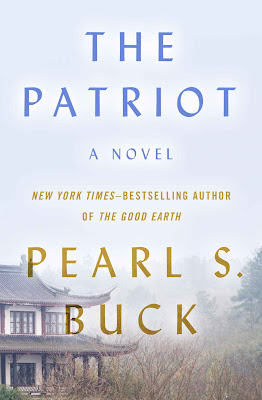
Buck, Pearl S. "The Patriot"

Buck, Pearl S. "The Patriot" - 1939

Pearl S. Buck was always a great writer of historical fiction. Here, she talks about the problems between China and Japan during Chiang Kai-Chek's time and the Sino-Japanese war.

A mixed marriage brings two families together, and nobody can tell the story of two cultures clashing better than the Nobel Prize winning author.

The history intermingles with the lives of the protagonists - it would, of course, and we can see how politics influence the family and how their reactions influence their lives.

As all books by Pearl S. Buck, a great tale of different cultures.

From the back cover:

"A Chinese dissident is torn between love and country in this novel from the New York Times–bestselling author of The Good Earth.

When Wu I-wan starts taking an interest in revolution, trouble follows: Winding up in prison, he becomes friends with fellow dissident En-lan. Later, his name is put on a death list and he’s shipped off to Japan. Thankfully, his father, a wealthy Shanghai banker, has made arrangements for his exile, putting him in touch with a business associate named Mr. Muraki. Absorbed in his new life, I-wan falls in love with Mr. Muraki’s daughter, and must prove he is worthy of her hand. As news spreads of what the Japanese army is doing back in China, I-wan realizes he must go back and fight for the country that banished him.
"

Find other books by Pearl S. Book that I read here.

Pearl S. Buck received the Nobel Prize for Literature in 1938 "for her rich and truly epic descriptions of peasant life in China and for her biographical masterpieces".

I contribute to this page: Read the Nobels and you can find all my blogs about Nobel Prize winning authors and their books here.

Monday, 23 January 2023

Suttner, Bertha von "Lay Down Your Arms"

Suttner, Bertha von "Lay Down Your Arms" or "Down with Weapons!" (German: Die Waffen nieder!) - 1889
This is my eleventh Classic Spin and we were given #6.

A present from a dear friend who knows what I appreciate. On the German cover, the description says: "Der Roman für den Frieden" - "The Novel for Peace."

And that's what it is. Bertha von Suttner inspired Alfred Nobel to add the Nobel Peace Prize to the different categories in 1901. Four years later, she was the first woman to receive it. And well deserved.

The name of the protagonist is different from the author, yet the book is always described as an auto-biography. Bertha von Suttner grew up in a similar environment as her Martha Althaus. And at the same time. She lived during a time where war was something people not just accepted but rejoiced about, a lot of the men in her surroundings, nobility like herself, were soldiers, many of the women wives of soldiers. And it was clear in the society, that children should be raised to become soldiers and fight for their country, as well.

Bertha von Suttner lived from 1843 to 1914, so she died just a month before the outbreak of WWI. It was probably good that she didn't live to see this anymore though I am sure she knew what was coming. I have only just read a book about 1913 (illies) and most people didn't have a clue though I am sure she did.

In her book, she writes about the horrors of war, not just what the soldiers have to go through but mainly what their loved ones have to suffer. Her book was a huge success, she didn't seem to be the only one who thought this world would be better off without wars. I totally agree with her but we still haven't learned.

Bertha von Suttner was probably one of the first pacifists. Leo Tolstoy compared of her novel to that of Uncle Tom’s Cabin, the same result to war than to slavery. I wish he had been right.

She also founded the German Peace Society.

From the back cover:

"Lay Down Your Arms! (novel), English title of the 1889 novel "Die Waffen Nieder!" by the Austrian pacifist activist Bertha von Suttner, who received the 1905 Nobel Peace Prize for it. 'We English-speaking people, whether in England, in the Colonies, or in the United States, being ourselves in no immediate danger of seeing our homes invaded, and our cities laid under contribution by hostile armies, are apt to forget how terribly the remembrance of such calamities, and the constant threat of their recurrence, haunt the lives of our Continental brethren.' - T. Holmes

Austrian novelist Bertha von Suttner was one of the first notable woman pacifists. She is credited with influencing Alfred Nobel in the establishment of the Nobel Prize for Peace, of which she was the recipient in 1905. Her major novel,
Die Waffen nieder! (1889; Lay Down Your Arms!), has been compared in popularity and influence with Harriet Beecher Stowe's Uncle Tom's Cabin.

The daughter of an impoverished Austrian field marshal, she was a governess to the wealthy Suttner family from 1873. She became engaged to Baron Arthur Gundaccar von Suttner (1850-1902), an engineer and novelist, seven years her junior. The opposition of his family to this match caused her, in 1876, to answer Nobel's advertisement for a secretary-housekeeper at his Paris residence. After only a week she returned to Vienna and secretly married Suttner.
"

Bertha von Suttner received the Nobel Peace Prize in 1905 "for her audacity to oppose the horrors of war."

I contribute to this page: Read the Nobels and you can find all my blogs about Nobel Prize winning authors and their books here.

Here are all the books on my original Classics Club list.
And here is a list of all the books I read with the Classics Spin.

Monday, 30 May 2022

Rutherfurd, Edward "China"

Rutherfurd, Edward "China" - 2021

I was really looking forward to this book that I received for Christmas (thanks, Zach) because I love anything written by Edward Rutherfurd. And I was not disappointed. He delivered what he promised with his other books.

There is only a slight change. In most of his books, he tells stories of families over throughout the centuries, often starting way before our calendar. This one starts in 1839 and ends in the early 1900s, long enough to see the lifetime of all the protagonists. And that is the only criticism I have about this book. I would have liked a list at the end or the beginning about all the different characters, as he has done in all his former historic novels. That way you know where you are in history. Granted, this spans not even a century but the Chinese names make it a little more difficult to remember who is who, especially since sometimes there are several others who tell their story before we return to a certain one. It was still alright to remember who was who but it would have been easier otherwise.

As in all his other books, we learn a lot about China's history. I have read many books about it but this one is very detailed and gives us so much information about the opium wars and the rebellions that more or less formed the new China, and when we complain about something the Chinese are doing today, our countries were responsible for a lot of it. Not mine in this case but we have enough other skeletons in our closet, so I won't even go further into who was there and who wasn't.

I can understand that Edward Rutherfurd didn't want to go through all of China's history, it is so vast and the country is so huge, the book would have been a lot longer than the 784 pages of my edition. I think concentrating on this part was an excellent idea because many of us know our history from that time and can compare.

I wouldn't say I prefer this way of writing the story of a country to the other one, I probably still like the whole story better, but there is so much to learn from this book, I can only highly recommend it. Reading his books is better than any history lesson I remember from school.

I do hope, he'll write many, many more.

From the back cover:

"China in the Nineteenth Century is a proud and ancient empire forbidden to foreigners. Western merchants desires Chinese tea above all other things and resort to smuggling opium in exchange.
The Qing Emperor will not allow this trade to continue. The Opium Wars begin - heralding a period of bloody military defeats, reparations, and one-sided treaties which will become known as the Century of Humiliation.

From Hong Kong to Beijing to the Great Wall, from the exotic wonders of the Summer Palace and the Forbidden City, to squalid village huts, the great clash between East and West rages across the Celestial Kingdom. We meet a young village wife struggling with the rigid traditions of her people, Manchu empresses and warriors, powerful eunuchs, fanatical Taiping and Boxer Rebels, savvy Chinese pirates, artists, concubines, scoundrels and heroes, well-intentioned missionaries and the rapacious merchants, diplomats and soldiers of the West. Fortunes will rise and fall, loves will be gained and lost.

China is a feat of the imagination that will enthrall, instruct and excite, and show us how the turmoil of the nineteenth century led to modern China’s revolution and rebirth."

Find a link to all my reviews on his other novels here.

I have been told by a lot of people that Edward Rutherfurd writes like James Michener. If anyone here has read books by both of them, would you agree? And which book by Michener should I start with?

Sunday, 27 February 2022

☮ Stand with the Ukraine ☮


I hardly ever blog on a Sunday but I think today it is necessary to send out a message into the void.

I saw this on a friend's page on Instagram who mentioned that Vicki from the antipodeanbookclub instigated this. For every yellow & blue stack which is labelled #solidaritystack Vicki will donate $2 to Médecins Sans Frontières (Doctors without Borders) in New Zealand up to the value of $150 for their work in the Ukraine.

Not just because of that but just because I want to express my support for the Ukraine and the Ukranians, I thought I will copy the idea and post my stack here. Don't worry about any of the books, there is no message in which ones I chose, it was just the colours of the spines that I needed.

Obviously, this is not a political blog and I'm not going to start writing too much about politics unless it is connected to a book I read but I know everyone knows my opinion. The main goal of everyone should be PEACE. I hope I will see many more yellow and blue stacks of books.

to 🇺🇦  to 🌍

Thursday, 11 March 2021

Elliot, Jason "An Unexpected Light"

Elliot, Jason "An Unexpected Light. Travels in Afghanistan" - 1999

I have read several books about Afghanistan, mostly about the war, some about ordinary people living in the country and/or especially the women. So far, my favourite one has been "The Sewing Circles of Herat: A Personal Voyage Through Afghanistan" by Christina Lamb but this one definitely comes close to pushing it of its podium.

This book was recommended to me by a friend who was taking a world trip with her husband at the same time as the author was in Afghanistan. They spent a while in Peshawar (Pakistan), very close to the Afghan border, and she mentioned that the first part of the book is just how they remember it from that time. Hardly any Westerners got into Afghanistan in those days, so it's a lovely virtual journey to take.

Jason Elliot is extraordinary. Not only did he go to Afghanistan for the first time when he was eighteen and then already explored the troubled country, no, he returned later and travelled everywhere, he even accompanied the Mujaheddin on one of their campaigns, he went into areas where even Afghans wouldn't want to go because it was too dangerous and told him it was worse for foreigners. Quite spectacular.

He has a mind for languages and is as enterprising as any hero in an adventure story. At the same time, he must be a very sympathetic character as he seems to fall in with any kind of person. His interest in other people and their troubles is enchanting and certainly brings many people to tell him about their problems and sorrows. In a war-ridden country, he manages to engage with all sides and report about them. Spectacular.

But even behind the scenes of fights and poverty, he can tell us about the beauty of this country and the kindness of its inhabitants.

A fascinating book. If you're only remotely interested in Afghanistan and its history, this is the book for you.

From the back cover:

"Part historical evocation, part travelogue, and part personal quest, An Unexpected Light is the account of Elliot's journey through Afghanistan, a country considered off-limits to travelers for twenty years. Aware of the risks involved, but determined to explore what he could of the Afghan people and culture, Elliot leaves the relative security of Kabul. He travels by foot and on horseback, and hitches rides on trucks that eventually lead him into the snowbound mountains of the North toward Uzbekistan, the former battlefields of the Soviet army's 'hidden war.' Here the Afghan landscape kindles a recollection of the author's life ten years earlier, when he fought with the anti-Soviet mujaheddin resistance during the Soviet occupation of Afghanistan.

Weaving different Afghan times and visits with revealing insights on matters ranging from antipersonnel mines to Sufism, Elliot has created a narrative mosaic of startling prose that captures perfectly the powerful allure of a seldom-glimpsed world.
"

Wednesday, 23 December 2020

Hubbard, Fra Elbert "A Message to Garcia"

Hubbard, Fra Elbert "A Message to Garcia" - 1899

Another book that has been on my TBR list for ages and came out of hiding due to the Classics Spin.

When I started reading this, I knew why I hadn't been too keen on it. It's one of those "self-help", "holier than though", "if only everyone would read this, it would solve all the problems in the world" books.

I do understand the message. We all should do what our tasks are without having to be guided for every little thing. And I agree. But this kind of book doesn't help anyone. In a nutshell, a man called Rowan was supposed to be the true hero of the Spanish-American war in Cuba, because he accepted with no questions the order to carry an important message to Garcia. He didn't know how to reach General Calixto García, but he brought him the message nevertheless.

This may all be good in the military, to follow a task without questioning but in any job I had, my employers expected me to think and also tell them if their order was wrong.

Anyway, I'm glad this was such a short book, I doubt I would have finished it. It read more like political propaganda than the trial to help. I think this is terribly outdated and should definitely not be reprinted.

Quote: "The greatest mistake you can make in life is to be continually fearing you will make one."

And then I found this on Wikipedia:
"The phrase "The graveyards are full of indispensable men" may have originated with Hubbard
He and his second wife, Alice Moore Hubbard, died aboard the RMS Lusitania when it was sunk by a German submarine off the coast of Ireland on May 7, 1915.
"

From the back cover:

"A Message to Garcia has carried its simple message of hard work, integrity, and dependability to readers around the world for over 100 years. As one of the keystones of American self-improvement literature, this short celebration of the diligence and loyalty shown by one man is truly a life-changing classic that demands to be read again and again.

A Message to Garcia is an inspirational essay written by Elbert Hubbard. It was originally published as a filler without a title in the March, 1899 issue of the Philistine magazine which he edited, but was quickly reprinted as a pamphlet and a book. It was wildly popular, selling over 40 million copies, and being translated into 37 languages. It also became a well-known allusion in American popular and business culture.

The essay celebrates the initiative of a soldier who is assigned and accomplishes a daunting mission. He asks no questions, makes no objections, requests no help, but accomplishes the mission. The essay exhorts the reader to apply this attitude to his own life as an avenue to success. Its wide popularity reflected the general appeal of self-reliance and energetic problem solving in American culture. Its 'don't ask questions, get the job done' message was often used by business leaders as a motivational message to their employees."

Wednesday, 17 June 2020

Tolstoy, A.K. "Prince Serebrenni"

Tolstoy, Aleksey Konstantinovich "Prince Serebrenni: An Historical Novel of the Times of Ivan the Terrible and of the Conquest of Siberia" (aka The Silver Knight or The Silver Prince) (Russian: Князь Серебряный/Knjaz' Sserebrjanyi) - 1882

I don't think I would have ever come across this novel, had it not been for a new reading club, started by an enthusiastic reader who wanted to talk about Esperanto literature. But, from time to time, we also want to read a translation that is otherwise not as widely known.

Not only had I never heard of the book (even though it has been translated into both English and German), I also hadn't the slightest idea about the author. Apparently, he was a second cousin of Leo Tolstoy, an author I do admire a lot.

I wouldn't compare this novel to those of Leo Tolstoy, they almost seem like a different generation, even though they were born only 11 years apart. Same as his cousin, this Tolstoy served in the Crimean War.

Probably a good thing that Ivan the Terrible was dead by the time this book was published, I doubt the author would have survived it. The main reason, this could be published at all was probably because people were more aware of justice and injustice at the time of its appearance.

Not an entirely easy read but highly interesting. I love reading about Russia and its vivid history but I had not really come across this timeframe.

Apparently, Tsar Ivan IV Vasilyevich aka "Ivan the Terrible", "Ivan the Formidable" or "Ivan the Fearsome" who reigned Russia for 28 years, was not regarded as terrible as he is always portrayed. He was highly intelligent and religious but also mentally instable. Still, in this novel we see mainly his bad side since the author did not want to describe the ruler in any way positive.

A lot is said about the life at court and the life of the poor people. The struggles they all have and how they try to get through them. As I already mentioned, highly interesting novel.

From the back cover:

"The novel begins in 1565, during the reign of Ivan the Terrible. The Czar had just instituted the ferocious policing force of social upstarts, the oprichnina, who wage Ivan's personal war of fear against the old boyar families of the Russian aristocracy. With virtues the quality of silver, the hero of this story, Prince Serebryany (which translates as 'silver'), returns to Russia from five years fighting at the Lithuanian front to find things quite changed. Ivan's paranoia is a perfect foil for Prince Serebryany's moral uprightness; never does he doubt the Czar's role, never does he step outside his moral code of honor, while Ivan irrationally calls for mass executions, sentencing to death anyone his advisors whisper to him about. Out of favor with the Czar after a conflict with the oprichnina, the prince flees Moscow and finds himself elected the leader of a band of outlaws.

The Silver Prince was Alexey Konstantinovich (commonly referred to as A. K.) Tolstoy's first full length novel. Best known as a poet and dramatist, Tolstoy (1817-1875) was a Romantic writer in the midst of the dominant Realist movement. However, the reading public in nineteenth century Russia, and still today, loved the novel for its dramatic scenes of outlaw and court life where greed and virtue collide, while contemporary writers, steeped in the tenets of Realist literature, disliked the very romance the public enjoyed. As a close confidant of the Empress Maria Alexandrovna, who shared his interest in mysticism, Tolstoy read parts of this novel to her while he wrote it; it is the only prose work he dedicated to her.

The first English translation appeared in 1892, under the title Prince Serebryany, then in 1927 as Prince of Outlaws. This translation was done for the sheer love of the story and its lively descriptions."

Monday, 17 February 2020

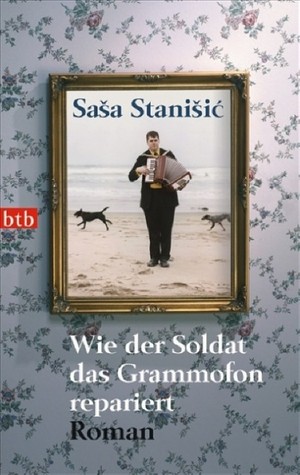
Stanišić, Saša "How the Soldier Repairs the Gramophone"

Stanišić, Saša "How the Soldier Repairs the Gramophone" (German: Wie der Soldat das Grammofon repariert) - 2006

I found this book a while ago and loved the title. Also, the story is taking place in Višegrad near the river Drina about which I read and loved the book "The Bridge on the Drina" by Ivo Andrić.

The author was born in Bosnia-Herzegovina, his family fled to Germany when he was a teenager. This story tells partly about his life before and after leaving his country. In the meantime, he has received several German book prizes for his literature which often reports about the war in Bosnia.

This novel is a semi-autobiographical one. The protagonist's life, Aleksandar Krsmanovic, mirrors that of the author, Saša Stanišić. The story is a little chaotic, jumps from one scene to a completely different one, sometimes comes back to it, sometimes just leaves it open. Thereby it shows how chaotic the life for a child in wartime has to be.

It wasn't an unpleasant read but I would have appreciated a little more consistency. I can see why the author is so acclaimed, though.

From the back cover:

"The hardcover publication of How the Soldier Repairs the Gramophone launched Stanisic as an exciting and important new voice in literary fiction and earned exuberant praise from readers and critics alike. Now in paperback, Stanisic’s debut about a boy who experiences the Bosnian War and finds the secret to survival in language and stories is bound to dazzle a whole new readership.

For Aleksandar Krsmanovic, Grandpa Slavko’s stories endow life in Višegrad with a kaleidoscopic brilliance. Neighbors, friends, and family past and present take on a mythic quality; the River Drina courses through town like the pulse of life itself. So when his grandfather dies suddenly, Aleksandar promises to carry on the tradition. But then soldiers invade Višegrad - a town previously unconscious of racial and religious divides - and it’s no longer important that Aleksandar is the best magician in the nonaligned states; suddenly it is important to have the right last name and to convince the soldiers that Asija, the Muslim girl who turns up in his apartment building, is his sister.

Alive with the magic of childhood, the surreality of war and exile, and the power of language, every page of this glittering novel thrums with the joy of storytelling."

Monday, 10 February 2020

Stachniak, Eva "The Winter Palace"

Stachniak, Eva "The Winter Palace. A Novel of Catherine the Great" - 2011

I love learning about history while reading about ordinary people living through different times. In this case, the story of Varvara also tells the story of Empress Catherine the Great, how she entered the Russian court, how she became empress, how all the intrigues and betrayals helped her to get to the throne. This is not just a story about the empress but also about mid-eighteenth-century Russia. A very intimate behind the scenes story with a lot of information about life at the time. Something I always enjoy.

I really liked the protagonist, Varvara. Coming with her poor parents to St. Petersburg from Poland, her father makes sure she is taken in by the Empress Elizabeth if anything should happen to him. We see the palace, the court, and the arrival of German princess Sophie Friederike Auguste von Anhalt-Zerbst-Dornburg who is to become Catherine the Great through her eyes. Very interesting.

I hope Eva Stachniak will write more historical novels like this.

From the back cover:

"When Varvara, a young Polish orphan, arrives at the glittering, dangerous court of the Empress Elizabeth in St Petersburg, she is schooled in skills ranging from lock-picking to love-making, learning above all else to stay silent - and listen.

Then Sophie, a vulnerable young princess, arrives from Prussia as a prospective bride for the Empress' heir. Set to spy on her, Vavara soon becomes her friend and confidante, and helps her navigate the illicit liaisons and the treacherous shifting allegiances of the court. But Sophie's destiny is to become the notorious Catherine the Great. Are her ambitions more lofty and far-reaching than anyone suspected, and will she stop at nothing to achieve absolute power?
"

Thursday, 25 April 2019

Bush, George W., Institute "We Are Afghan Women"


Bush, George W., Institute "We Are Afghan Women. Voices of Hope" - 2016

I have read a lot of books about Afghanistan, mostly about women in Afghanistan. And they are all heartbreaking.

In this edition, various women from Afghanistan raise their voices. There are teachers and doctors, girls (and even one guy) that come from the poorest areas in the country but were able to raise up and help their fellow countrywomen. They have a lot in common. Most of them had to flee the country either when the Russians occupied it or when the Taliban took over. Many of them stayed in Pakistan or Iran during a couple of years, some even went to the United States. They all found a job when coming back. Some weave carpets and support their families, others teach other women. They all have the hope that it will get better living in a country where women are regarded as the lowest of the lowest and have nothing to say.

But they have more in common than that. They are all incredibly strong and don't give up. Some had to stop their education three times but followed it up every time they had the chance to continue.

A brilliant account of how women in other parts of the world live. I might never get to a country like that but I will always try to understand what these women are going through and support them in any way I can, even if it's only by writing.

Reading a book like this makes me grateful that I am born and can live in Europe. We might have our own troubles but they are nothing compared to what these people are going through.

I didn't know much about the George W. Bush Institute before I read this book but they are certainly doing a good job in this part of the world.

A very deserving book. A quote that makes you think: "A person has two hands, left and right. In many societies the right is the man and the left hand is the woman. In Afghan society both right and left hand is the man." So true.

From the back cover:

"These are the voices of Afghanistan's women. Hear their inspiring, moving, courageous, and often heartbreaking stories. Discover a compelling portrait of the lives, struggles, and successes of these extraordinarily resilient women.

Afghanistan has been described as 'the worst nation in the world to be a woman'. More than fifty percent of girls who are forced into marriage are sixteen or younger. Too many women live in fear and in many areas, education and employment for women are still condemned. The women featured in We Are Afghan Women are fighting to change all that. From rug weavers to domestic violence counselors to business owners, educators, and activists, these courageous women are charting a new path for themselves, their families, their communities, and their nation. Told in their own voices, their stories vividly capture a country undone by decades of war and now struggling to build a lasting peace.

Meet Dr. Sakena Yacoobi, who ran underground schools for girls until the Taliban fell, and today has established educational centers across Afghanistan to teach women and girls basic literacy. Or Freshta Hazeq, who as a female business owner, has faced death threats, sabotage, and even kidnapping threats against her children. Naheed Farid is the youngest female member of Afghanistan’s parliament. During her campaign, opponents cut Naheed’s face out of campaign posters and her family risked complete ruin, but her husband and father-in-law never wavered, encouraging her to persevere. Here, too are compassionate women such as Masooma Jafari, who started a national midwives association. Her own mother was forced into marriage at age twelve and gave birth to her first child at age thirteen.

With an introduction by former First Lady Laura Bush, We Are Afghan Women chronicles the lives of young and old, daughters and mothers, educated, and those who are still learning. These determined women are defying the odds to lead Afghanistan to a better future. Their stories are a stark reminder that in some corners of the world the struggle continues and that women’s progress in society, business, and politics cannot be taken for granted. Their eloquent words challenge all of us to answer: What does it truly mean to be a woman in the twenty-first century?

Laura Bush is the Chair of the George W. Bush Institute’s Women’s Initiative, which strives to empower women through education, healthcare, and economic opportunity. Located in Dallas, Texas, at Southern Methodist University, the Bush Institute at the George W. Bush Presidential Center is a public-policy center dedicated to developing leaders, fostering policy debates and solutions, and taking action. She is a long-time supporter of women’s participation and education in Afghanistan and serves alongside Afghan First Lady Rula Ghani and Secretary Hillary R. Clinton as honorary co-chair of the US Afghan Women’s Council."