Showing posts with label Slavery. Show all posts

Monday, 15 June 2026

Jeffers, Honorée Fanonne "The Love Songs of W.E.B. Du Bois"

Jeffers, Honorée Fanonne "The Love Songs of W.E.B. Du Bois" - 2021

This is such a beautiful book. Don't let yourself get scared by the 800+ pages, they are totally worth it. Barack Obama has it on his reading list. It's an Oprah book and it has been chosen by various other reading lists/awards. Definitely a good recommendation on all accounts.

W.E.B. Du Bois, the guy in the tile, was an American sociologist, writer, historian, and Pan-Africanist civil rights activist who lived from 1868 to 1963 and was the first African American to earn a doctorate at Harvard University. This book mentions him a lot. I have read his book "The Souls of Black Folk" which is a very thorough study of black culture in the United States. This novel adds to that subject.

The story circles around Ailey Pearl Garfield, a black girl born in 1973, and all her ancestors, going back to the first known ones in the 1740s. She has both black and Native American ancestors and there is a lot about their history. She has to struggle through all the problems many women but especially black women have to overcome. She is a strong woman but many obstacles are thrown in her way. And we learn how her ancestors, especially the women managed.

The only criticism I have has nothing to do with the story or the book. There is a family tree at the beginning but it is sometimes quite confusing. Either a diagram or some numbers as to who belongs to whom would have been helpful. The way it is presented, there is too much searching involved if you want to know more. If you are still reading it, there is a diagram on Wikipedia.

But other than that, book was just fantastic, epic.

From the back cover:

"A magisterial epic—an intimate yet sweeping novel with all the luminescence and force of Homegoing; Sing, Unburied, Sing; and The Water Dancer—that chronicles the journey of one American family, from the centuries of the colonial slave trade through the Civil War to our own tumultuous era.

The great scholar, W. E. B. Du Bois, once wrote about the Problem of race in America, and what he called 'Double Consciousness,' a sensitivity that every African American possesses in order to survive. Since childhood, Ailey Pearl Garfield has understood Du Bois’s words all too well. Bearing the names of two formidable Black Americans—the revered choreographer Alvin Ailey and her great grandmother Pearl, the descendant of enslaved Georgians and tenant farmers—Ailey carries Du Bois’s Problem on her shoulders.

Ailey is reared in the north in the City but spends summers in the small Georgia town of Chicasetta, where her mother’s family has lived since their ancestors arrived from Africa in bondage. From an early age, Ailey fights a battle for belonging that’s made all the more difficult by a hovering trauma, as well as the whispers of women—her mother, Belle, her sister, Lydia, and a maternal line reaching back two centuries—that urge Ailey to succeed in their stead.

To come to terms with her own identity, Ailey embarks on a journey through her family’s past, uncovering the shocking tales of generations of ancestors—Indigenous, Black, and white—in the deep South. In doing so Ailey must learn to embrace her full heritage, a legacy of oppression and resistance, bondage and independence, cruelty and resilience that is the story—and the song—of America itself."

Monday, 28 July 2025

Gappah, Petina "Out of Darkness, Shining Light"

Gappah, Petina "Out of Darkness, Shining Light" - 2019

Of course, we all know about David Livingstone's search for the source of the river Nile. It is also widely known that his heart was buried in Africa and his body in Europe. This is the story, told by two slaves, how the body got from the middle of Africa to the sea so that he could be transferred to Great Britain.

Two different people tell the story, a women who is employed as a cook. Her story is pretty African, she uses far too many words that the average Europen will not understand. Granted, there is a small annex with explanations but you have to use that far too often and it destroys the enjoyment of any story. Then there is a guy who wants to become a priest. He is preaching already. All the time. Almost every second sentence starts or ends with "dear Lord" or something similar. He comes across as a religious fanatic. Reading the Bible is more wordly.

Have you guessed it already? I didn't like the book.

There was only about one sentence that made me smile. When someone told the other slaves about the meeting between Henry Morton Stanley and David Livingstone, he translated the first sentence (Dr. Livingstone, I presume?) into: "It can only be that you are Bwana Daudi."

We discussed this in our international online book club in July 2025.

Comments from the members:

The start of the book felt slow, and didn't feel pulled into it for the story so much until the murder plot unwound. It was a really nice read though in terms or history and culture. The discussion we had resulted into talking and thinking about African history, slavery, imperialist influences, death rites... The characters in the story were also really distinct. I feel a bit smarter about African history for having read it.

Many in the book club agreed that the language, particularly the religious tone and African dialects, made the beginning difficult to follow. However, as the story progresses, the plot becomes more engaging, especially with the focus on the African slaves who carried Livingstone’s body. Their journey is central to the book, and the contrast between their lives and Livingstone’s European legacy opens up important discussions about colonialism and the erasure of African voices in history. Some felt the religious elements were repetitive, but they were seen as integral to understanding the mindset of the time. Despite the slow start and challenging style, many found the novel’s exploration of historical and cultural themes thought-provoking.

Overall it was a really good discussion book, because we have read some books about African history and by African authors before, it always becomes an interesting part, looking at the books we have read, and how the new books align in with those. In that sense this felt like quite a good book to add to the list.

From the back cover:

"This is the story of the body of Bwana Daudi, the Doctor, the explorer David Livingstone - and the sixty-nine men and women who carried his remains for 1,500 miles so that he could be borne across the sea and buried in his own country.

This is the story of those in the shadows of history: the  dark companions who saved a white man's bones on an epic funeral march - little knowing his corps carried the maps that sowed the seeds of their continent's colonisation and enslavement.

This is the story of how human bravery, loyalty and love can triumph over darkness - and the result is Petina Gappah's radical masterpiece."

Tuesday, 2 May 2023

Rutherfurd, Edward "New York"

Rutherfurd, Edward "New York" - 2009

I am sad. Because this is the last book I got to read by Edward Rutherfurd. At least for the time being. I hope he will write more. And hope there is. On his official website (here) he has a category with interesting facts about the towns and countries he has written about so far and there are a few facts about Egypt. So maybe he is working on a new one about Egypt. Would be a nice theme. If you don't have any other ideas, Mr. Rutherfurd, there are a few subjects that would certainly go down well: Vikings, Romans, Ottomans, Germany/Prussia/Goths, South America, Japan, Arabia, Palestine/Israel … I could read books by you on any of the subjects. Or any subject of your choosing. Just write another book. Thank you!

New York is the melting pot of the world. People come from everywhere but at the beginning mainly from the Netherlands and England, then other nations follow, Italians, Germans, slaves from Africa, refugees from all areas, so that in the end you can't even guess that a completely different people lived here before the Europeans made it their second home. But also the Native Americans appear.

In 1664, the city is still called New Amsterdam and we get to know some of the first European inhabitants, the van Dyck family from the Netherlands, quickly joined by the Masters from England. And it is these two families that the book takes as examples for the New Yorkers. Other characters follow slowly, the slave Quash, the O'Donnells and the Kellers, the Whites and the Carusos, the Adlers and the Cohens and all their descendants. There is a family for every ethnic background of the Big Apple. We follow history through these characters but also get to meet the famous people of the centuries, starting with George Washington. From the beginnings of the city, when it was still a small settlement that belonged to the colonial province New Netherland, and hence to the Dutch Republic, through the years of an English colony, the War of Independence and all the other subsequent wars that had an impact on the city, their raise to an important trade center as well as their various crashes. And we see the devastation on September 11th as well as the aftermath.

Nobody can put history better into very readable novels as Edward Rutherfurd. But should you know of other great books like this, please let me know.

And here's a great quote that could be in any book:
"He who destroys a good book, kills reason itself."

From the back cover:

"New York: a city where dreams are born.

And now, the story of the world's most vibrant and exciting city is chronicled in a novel as unforgettable as the city itself, as international bestseller Edward Rutherfurd tells the epic story of the Master family.From the city's birth over three hundred years ago to the tragedy and the heroism of 9/11, Rutherfurd's gripping story takes us on a journey encompassing the War of Independence and the Civil War, the gangs of
New York and the Ellis Island immigrants. From the glittering wealth of Fifth Avenue society, to the devastation of the Wall Street Crash and the ghettos of the Lower East Side, it is a story as ambitious and dramatic as the city which inspired it.

But
NEW YORK is not just the story of a city. It's also the very human story of a family - their lives and loves, their triumphs and their failures - and so a spellbinding and moving story of the modern world."

And another one:

"New York is a sweeping, four-century tale set in the most exciting city on earth. Magnificently researched with the help of leading New York historians, this novel follows the fortunes of the Van Dyck and Master families, and the descendants of Quash the African slave, from the early days of Manhattan's Indian settlements and Dutch New Amsterdam, through the English takeover, the War of Independence, when New York was the British headquarters, and the nineteenth century, when New Yorkers created the canals and railroads that opened up the American West.

Along the way we meet the Kellers, German shopkeepers who produce a famous photographer, and the O'Donnell family, who emerge from the gangs of
New York, rise through Tammany Hall and marry into the English aristocracy. We discover how the city almost left the Union at the start of the Civil War, and experienced the terrible Draft Riots 1863 and the Great Blizzard of 1888. At the start of the twentieth century, the Carusos immigrate through Ellis Island, witness the great Crash of 1929, and help construct the Empire State Building. The Adlers of Brooklyn experience anti-semitism between the two World Wars, and the Masters, as bankers and lawyers, seek their fortunes through the greed of the eighties and nineties, and come through a life-changing crisis in the tragedy of 9/11.

Larger-than-life historical characters fill the background: Stuyvesant, the Dutchman, Lord Cornbury the transvestite English Governor, George Washington, Ben Franklin who tried to keep America British, Lincoln who made one of his greatest speeches in the city, the titanic JP Morgan, Tammany Hall's Fernando Wood and Boss Tweed, legendary socialites like Mrs. Astor, and memorable modern city figures like La Guardia, Robert Moses, and Mayor Koch.
"

Find a link to all my reviews on his other novels here.

Wednesday, 29 June 2022

Chevalier, Tracy "The Last Runaway"

Chevalier, Tracy "The Last Runaway" - 2013

I have liked Tracy Chevalier, ever since my first novel written by her, "Girl with a Pearl Earring". I have since read more of her books but not enough, as it looks like.

Her story of an English Quaker girl who emigrates to the United States in the middle of the 19th century is absolutely fantastic. I think with today's background, we can all follow the feelings and thoughts of Honor Bright, we can sympathize with her actions. She was pretty brave to leave her home country to accompany her sister who was going to get married there. Even with the whole family, some would not have done that given the choice.

I think the author researched the background pretty well. None of us has lived at the time but I have read quite a few books about slavery, the Underground Railroad, Quakers, all important topics in this book. We get a long list of books that Tracy Chevalier used for background information which makes me believe that we can trust that it's true what she writes in her story. This is definitely a well written and believable book.

I liked Honor Bright but I liked Belle Mills and Mrs. Reed just as much, if not even more. I could even forgive some of the other characters for what they did. Today, this would be unacceptable but back then, this was how it was.

I also loved that they included a map. I mean, I know where Ohio is but I wouldn't have known where the towns mentioned are supposed to be.

At the end of the book, Tracy Chevalier mentions that it gives hope to us still, that in extreme circumstances we too would still do the right thing. Yes, let's hope that, at least for us, because we can see every day that many, many people don't do the right thing and applaud even those who don't.

At the end of the novel, the author gives some recommendations about further readings. I have read two of the four books mentioned and can only second that opinion.

On the Civil War:
Frazier, Charles "Cold Mountain" - 1997
Jiles, Paulette "Enemy Women" - 2002
Olmstead, Robert "Coal Black Horse" - 2007

On the Effect of Slavery:
Morrison, Toni "Beloved"

From the back cover:

"Honor Bright is a sheltered Quaker who has rarely ventured out of 1850s Dorset when she impulsively emigrates to America. Opposed to the slavery that defines and divides the country, she finds her principles tested to the limit when a runaway slave appears at the farm of her new family. In this tough, unsentimental place, where whisky bottles sit alongside quilts, Honor befriends two spirited women who will teach her how to turn ideas into actions."

Thursday, 23 September 2021

Douglass, Frederick "Narrative of the Life of Frederick Douglass"

Douglass, Frederick "Narrative of the Life of Frederick Douglass, an American Slave" - 1845

After reading Harriet Jacobs' story "Incidents in the Life of a Slave Girl" earlier this year, I had this next on my list of books for one of my challenges. I thought the story of Harriet Jacobs was extraordinary but this one was even better. Probably, because it was told by the person who experienced this life himself. Frederick Douglass didn't learn reading and writing like we do, at school, he had to do it secretly. And what a writer he became.

I guess, freedom is something we all would wish for if it were denied to us. And not having experienced it, it would be impossible to understand how it is if you can't just choose where you want to live and what you want to do but also with whom you want to live. Families got ripped apart and you never knew what happened to your loved ones, probably nothing good.

The author understands all this very well. He has lived it. If you want to read about how a slave truly feels, this narrative is probably one of the best you can find. If you read this book, you will definitely join in with all the anti-racist people and organizations and say: Never again!

This is a very important book!

One of his quotes is:
"Once you learn to read you will forever be free."
But the best one is probably: "I know of no rights of race superior to the rights of humanity."

From the back cover:

"Born a slave circa 1818 (slaves weren't told when they were born) on a plantation in Maryland, Douglass taught himself to read and write. In 1845, seven years after escaping to the North, he published Narrative, the first of three autobiographies. This book calmly but dramatically recounts the horrors and the accomplishments of his early years - the daily, casual brutality of the white masters; his painful efforts to educate himself; his decision to find freedom or die; and his harrowing but successful escape.

An astonishing orator and a skillful writer, Douglass became a newspaper editor, a political activist, and an eloquent spokesperson for the civil rights of African Americans. He lived through the Civil War, the end of slavery, and the beginning of segregation. He was celebrated internationally as the leading black intellectual of his day, and his story still resonates in ours.
"

Thursday, 6 May 2021

Stroyar, J.N. "Becoming Them"

Stroyar, J.N. "Becoming Them" (The Children's War Book 3) - 2017

Ten years ago, I read "The Children's War" and "A Change of Regime", one of the best books I ever read and still my favourite. As a German, having to live with the consequences of one of the most terrible wars ever, I have always asked myself what would have happened if the Nazis had won the war. We all would have lost, that's for sure. J.N. Stroyar has brought these thoughts to paper and painted a very vivid picture in her first two books. Then, one day, I learned there was a third one. Wow! I couldn't believe it. I was lucky to find a copy. I have no idea why these books don't get reprinted, I know so many people who would love to read it.

So, I finally found a copy. It had been ten years since I read the first two books. Would I remember enough to jump right back in? Looks like I didn't even have to. The author was so clever to include a ten pages of summary in the front where she retells the story for those who want to review what was in the first books and it might even be enough for those who never read the first ones. I think this should be obligatory for any sequel to any book. Makes reading the follow-up so much easer.

They say on the back cover "the long awaited finale". I didn't even know there was to be a finale. I didn't even know there would be a third book. Mainly, I think, because so little is known about the author. All I know is that she's a US physisict who used to live in German (Frankfurt, I believe) and now lives partly in London and partly in the USA. And that she won the "Sidewise Award" in 2001, an annual award for "Alternate History". She doesn't even have a Wikipedia page. So, I haven't seen anywhere that she was writing a third story.

In this final book of the trilogy, we see how everything gets together in the end, how the long and arduous underground work finally leads to the end of the Nazi party. But not without many, many difficulties first. This third book is just as fascinating, exciting and thrilling as the first two. I hope many people will be able to read it.

I also hope that the author is going to write more books.

Quote from Wikipedia:
"The Bradenton Herald described The Children's War as 'a brutal look at what might have been and a reminder of the price of freedom.'"
So very exact and true.

From the back cover:

"The long awaited finale of The Children’s War is presented in Becoming Them. Drawn from genuine historical incidents and people, both from the past and the present, the story examines the psychology of war, torture, and resistance, of guilt and innocence.

Set in a world sixty years after the conquest of Europe by Nazi Germany, the resistance movement continues its struggle for freedom, passing their war on from generation to generation. Peter Halifax, one-time member of the English Underground, has just been released from prison and now works with his assassin wife Zosia Król in Berlin under the direction of her brother, Ryszard, who, as his alter-ego Colonel Richard Traugutt, is second in command of the Third Reich. Together they attempt to collapse the Nazi Party and reform the Reich from within.

The story begins in London where Peter has been sent to liaise with the English Underground as a member of the newly formed Nichtdeutsch Council, but instead he becomes the target of an assassination attempt. It is only one indication of the growing chaos and violence in the Reich as the population becomes disenchanted with the dithering leadership of their new Fuhrer, Josef Frauenfeld.

As a member of the Nichtdeutsch Council, Zosia attempts to organize the various opposition factions into a coherent movement while struggling to raise her family, carefully keeping her three children away from Berlin high society where Magdalena, who is Elspeth’s and Peter’s daughter, might be recognized. She also maintains contact with her base in the Carpathian mountains and undertakes jobs for them that lead her into ever more questionable actions.

Richard Traugutt, as special advisor to the Fuhrer, works to change the laws of the Reich to give more rights and freedoms to its subjects, but he is endlessly stymied by Frauenfeld who has fallen under the sway of Richard’s enemies, the Lederman brothers, who are staunch supporters of the racial categorizations of Reich law. In an attempt to shatter Frauenfeld’s illusions about the rigid class system, Richard maneuvers Peter, who is still classified as subhuman, into the highest tiers of Berlin society, into re-establishing his illicit relationship with Elspeth Vogel, and even into befriending the Fuhrer in the hopes of causing a cultural clash that will force Frauenfeld to re-evaluate his adherence to Nazi philosophy. Traugutt’s plan falls foul of all his directives, and his determination to follow his own personal agenda for reform, ruthlessly manipulating people and events to maximize their effectiveness – whatever the personal cost – results in constant conflict with his allies and a withdrawal of support from the Underground hierarchy.

As their plots unfold and the Resistance begins to tear itself apart, the past comes back to haunt them all, sowing distrust and fear among the conspirators. With each passing month they more and more come to resemble that which they hate. Their loyalties are frayed, their motives are questioned, trusted comrades turn traitor, and their enemies grow in power. Time is running out.

As background to the story, Becoming Them contains a complete summary of both
The Children’s War and A Change of Regime."

See more comments on my ThrowbackThursday post in 2021.

Monday, 22 March 2021

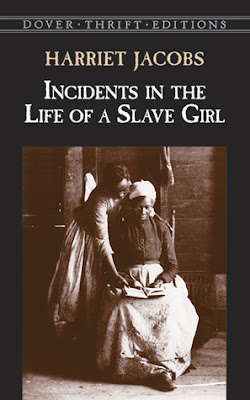
Jacobs, Harriet Ann "Incidents in the Life of a Slave Girl"

Jacobs, Harriet Ann (Linda Brent) "Incidents in the Life of a Slave Girl" - 1861

I never understood how someone could feel comfortable with "owning" another human being. You would think that we know better by now but this is still going on in this world and we have not changed much. Even if someone doesn't hold slaves, the way we treat others is not much further from that.

In this story, written by a real slave from the 19th century, we learn all the disadvantages of being a slave. The girls who get raped by their masters, the boys (and the girls) who get tortured, the children who are taken from their parents and sold separately, never to see their families again. Awful, terrible, unbelievable. Harriet Jacobs (who first published this book under the name Linda Brent) lived through it all, either herself or her family. As we can see, even if you have a "good" mistress (whatever that means, she owned a slave and didn't even take care that she was set free after her death, don't know what's good about that), this can end from one day to the next.

Since the North didn't really help the slaves, they even sent them back to their "rightful" owners if they caught them, this book was mainly written to open their eyes. Did it help? I doubt it. Maybe some learned from it but many, far too many … haven't learned even today.

A brilliant book written with so much understanding and force. It should be read by everyone at a very early age so that we hopefully will learn from it today.

From the back cover:

"The true story of an individual's struggle for self-identity, self-preservation, and freedom, Incidents in the Life of a Slave Girl remains among the few extant slave narratives written by a woman. This autobiographical account chronicles the remarkable odyssey of Harriet Jacobs (1813–1897) whose dauntless spirit and faith carried her from a life of servitude and degradation in North Carolina to liberty and reunion with her children in the North.

Written and published in 1861 after Jacobs' harrowing escape from a vile and predatory master, the memoir delivers a powerful and unflinching portrayal of the abuses and hypocrisy of the master-slave relationship. Jacobs writes frankly of the horrors she suffered as a slave, her eventual escape after several unsuccessful attempts, and her seven years in self-imposed exile, hiding in a coffin-like "garret" attached to her grandmother's porch.

A rare firsthand account of a courageous woman's determination and endurance, this inspirational story also represents a valuable historical record of the continuing battle for freedom and the preservation of family.
"

See my other reviews about anti-racism here.

Thursday, 17 September 2020

Crafts, Hannah "The Bondwoman’s Narrative"

Crafts, Hannah "The Bondwoman’s Narrative" - 1855-69

This narrative was published by Professor Henry Louis Gates Jr. who is a US American literary critic. Apparently, he found the manuscript to this book at an auction. They don't know when exactly it was written but (according to Wikipedia), it must have been written between 1855 and 1869 because the author mentions Bleak House which was written in 1852/53. And it must have been written before the civil war because the author is quite meticulous in menitioning other major events, she certainly would not have omitted that one.

A while ago, I posted a list of anti-racism books as part of our Top Ten Tuesday challenge. It was "Books on my summer TBR list" and I thought, there are definitely going to be a few books about anti-racism in there and compiled a list of all those books I have read or still want to read. This was the next one.

Hannah Crafts was a real-life slave who describes her life. Her conditions might have been different than those of other slaves but I doubt that it matters how often you get sold and how many "masters" treat you kindly, you still live in the constant fear that your current situation might end and you will be separated from loved ones and/or get a really cruel person to "look after you". As happened to Hannah several times in her life. How people can endure such a treatment is almost unbelievable but I guess we all try to do that in any circumstances.

This novel certainly proves, if that wasn't clear already, that slaves were human beings with the same feelings and the same capabilities than anyone else. They could learn anything and express anything that their "masters" could. Definitely a book to read.

From the back cover:

"When Professor Henry Louis Gates, Jr., saw a modest auction catalogue listing for an 'Unpublished Original Manuscript,' he knew he could be on the verge of a major literary find. After exhaustive research, he found that the handwritten manuscript he had purchased was the only known novel by a female African American slave and possibly the first novel written by a black woman anywhere. The Bondwoman's Narrative tells of a self-educated young house slave who knows all too well slavery's brutal limitations, but never suspects that the freedom of her beautiful new mistress is also at risk - or that a devastating secret will force them both to flee the South and make a desperate bid for freedom."

Monday, 6 July 2020

Northup, Solomon "Twelve Years a Slave"

 https://www.goodreads.com/book/show/30126160-twelve-years-a-slave

Northup, Solomon "Twelve Years a Slave. Narrative of Solomon Northup, a citizen of New-York, kidnapped in Washington city in 1841, and rescued in 1853, from a cotton plantation near the Red River in Louisiana" - 1853

On the back cover, it says this is perhaps the best written of all the slave narratives. I have to agree with that. Probably because it was written by a well-educated slave himself. Who could relate all the horrible deeds done to those poor people better than someone who has had to endure it himself?

Solomon Northup was born in the State of New York. He was a free man and as such, could get an education, work, get married, have children, all without having to fear that would be taken away from him one day. But it was. He was kidnapped and sold into slavery. He was free but he also was black, so it was easy to just let him disappear somewhere in the deep south, on one of those plantations that nobody ever goes to. He ended up in Louisiana and had to live a life that is as unhuman as none of us can even imagine. He was treated worse than anybody would treat an animal.

Because of his education, he managed to get some information out and was freed after twelve years of torture, twelve years of hell. How he survived, I don't know. But he describes it all in this book and it is well worth a read, especially with all the shocking, abhorrent, dreadful, repugnant, outrageous, hideous, repulsive news we hear daily. How can people in this day and age still look down on someone? It is beyond my understanding.

A while ago, I published a list with anti-racism books. If you are looking for more books in that category, have a look here.

From the back cover:

"Perhaps the best written of all the slave narratives, Twelve Years a Slave is a harrowing memoir about one of the darkest periods in American history. It recounts how Solomon Northup, born a free man in New York, was lured to Washington, D.C., in 1841 with the promise of fast money, then drugged and beaten and sold into slavery. He spent the next twelve years of his life in captivity on a Louisiana cotton plantation.

After his rescue, Northup published this exceptionally vivid and detailed account of slave life. It became an immediate bestseller and today is recognized for its unusual insight and eloquence as one of the very few portraits of American slavery produced by someone as educated as Solomon Northup, or by someone with the dual perspective of having been both a free man and a slave."

Tuesday, 8 October 2019

Gárdonyi, Géza "Slave of the Huns" aka "The Invisible Man"

Gárdonyi, Géza "Slave of the Huns" aka "The Invisible Man" (Hungarian: A láthatatlan ember) - 1901

The husband of a friend of mine translated this famous Hungarian book into Esperanto (La nevidebla homo) and I decided to read it. I haven't read many books about Hungary, let alone about the Huns. I think this is the first book I read about that people.

This story takes place in the early 5th century.

Zeta is Hungarian, his family is so poor that his father has to sell him as a slave. We follow him from one owner to the next until he comes to the household of a Byzantine diplomat named Priscis. Because he serves him well, he frees him and takes him to the court of Attila the Hun. He stays with the Huns, fights in the "Battle of the Catalaunian Plains" in the year 451 and doesn't leave until Attila dies in 453.

An interesting book not just about this nomadic people but also about Hungarian history and culture. I would like to read more about them.

From the back cover:

"The tale of a Byzantine slave of the Huns; based on the historical account of the Byzantine diplomat Priscus about his visit to the court of Attila the Hun."

Thursday, 4 April 2019

Kidd, Sue Monk "The Invention of Wings"

Kidd, Sue Monk "The Invention of Wings" - 2014

Until now, I only read "The Secret Life of Bees" by Sue Monk Kidd. That was a book club read and I enjoyed it very much.

Having said that, I enjoyed this book even more. The story is based on the real life of two sisters who, at the beginning of the 19th century, fought not only for the abolition of slavery but also for the equality of women. I had never heard of them but was very impressed with their work.

Growing up in the house of slave owners, growing up with slaves, Sarah and Nina/Angelina Grimké come to despise the way the slaves are treated. They both end up in the North and their story is very powerful. In addition, the author has added the story of Charlotte and Hetty "Handful", a slave woman and her daughter and that way woven all the stories in from the other side. Great combination. Taking turns, Sarah and Handful talk about their lives. It is very different from the life we lead nowadays though we know there are still a lot of women around who don't have the freedom and education we have.

For example, Sarah teaches Handful to read. This also happened in real life. They are both severely punished.

People who still believe that the colour of our skin is the main contributor what defines us, should definitely read this.

I'm not surprised Oprah chose this for her book club. It represents everything she stands for.

Just a brilliant novel.

From the back cover:

"Writing at the height of her narrative and imaginative gifts, Sue Monk Kidd presents a masterpiece of hope, daring, the quest for freedom, and the desire to have a voice in the world - and it is now the newest Oprah’s Book Club 2.0 selection.

Hetty “Handful” Grimke, an urban slave in early nineteenth century Charleston, yearns for life beyond the suffocating walls that enclose her within the wealthy Grimke household. The Grimke’s daughter, Sarah, has known from an early age she is meant to do something large in the world, but she is hemmed in by the limits imposed on women.

Kidd’s sweeping novel is set in motion on Sarah’s eleventh birthday, when she is given ownership of ten year old Handful, who is to be her handmaid. We follow their remarkable journeys over the next thirty five years, as both strive for a life of their own, dramatically shaping each other’s destinies and forming a complex relationship marked by guilt, defiance, estrangement and the uneasy ways of love.

As the stories build to a riveting climax, Handful will endure loss and sorrow, finding courage and a sense of self in the process. Sarah will experience crushed hopes, betrayal, unrequited love, and ostracism before leaving Charleston to find her place alongside her fearless younger sister, Angelina, as one of the early pioneers in the abolition and women’s rights movements.

Inspired by the historical figure of Sarah Grimke, Kidd goes beyond the record to flesh out the rich interior lives of all of her characters, both real and invented, including Handful’s cunning mother, Charlotte, who courts danger in her search for something better.

This exquisitely written novel is a triumph of storytelling that looks with unswerving eyes at a devastating wound in American history, through women whose struggles for liberation, empowerment, and expression will leave no reader unmoved."

Monday, 4 February 2019

Spufford, Francis "Golden Hill"

Spufford, Francis "Golden Hill: A Novel of Old New York" - 2016

I saw this book first in a German bookstore as a translation. I liked the title. "Neu-York", literally New York in German. The pictures looked more Dutch to me, no wonder, since the main settlers at the time of the novel came from the Netherlands.

Anyway, I was getting curious, so I decided to get the original and read it.

An interesting story. Manhattan in the 18th century. Manhattan in a Dutch style. A young man comes from the Netherlands to claim a high amount of money for a project he is not going to tell anyone anything about. He has to go through a lot of trials and tribulations before he can finally reveal the plan. And it's a good one!

The novel is full of surprises, the writing style is interesting, the setting also. It's an easy but certainly not a boring read. A nice historical novel. humorous as well as informative.

From the back cover:

"New York, a small town on the tip of Manhattan island, 1746.

One rainy evening in November, a handsome young stranger fresh off the boat pitches up at a counting-house door in Golden Hill Street: this is Mr Smith, amiable, charming, yet strangely determined to keep suspicion simmering. For in his pocket, he has what seems to be an order for a thousand pounds, a huge amount, and he won't explain why, or where he comes from, or what he can be planning to do in the colonies that requires so much money.

Should the New York merchants trust him? Should they risk their credit and refuse to pay? Should they befriend him, seduce him, arrest him; maybe even kill him?

As fast as a heist movie, as stuffed with incident as a whole shelf of conventional fiction, Golden Hill is both a novel about the 18th century, and itself a book cranked back to the novel's 18th century beginnings, when anything could happen on the page, and usually did, and a hero was not a hero unless he ran the frequent risk of being hanged.

This is Fielding's Tom Jones recast on Broadway - when Broadway was a tree-lined avenue two hundreds yards long, with a fort at one end flying the Union Jack and a common at the other, grazed by cows.

Rich in language and historical perception, yet compulsively readable, Golden Hill has a plot that twists every chapter, and a puzzle at its heart that won't let go till the last paragraph of the last page.

Set a generation before the American Revolution, it paints an irresistible picture of a New York provokingly different from its later self: but subtly shadowed by the great city to come, and already entirely a place where a young man with a fast tongue can invent himself afresh, fall in love - and find a world of trouble."

Tuesday, 27 February 2018

McLeod, Cynthia "The Cost of Sugar"

McLeod, Cynthia "The Cost of Sugar" (Dutch: Hoe duur was de suiker) - 1987

Cynthia McLeod is probably not much known internationally but her books have been translated into English. Being born in Paramaribo, Suriname, she writes in Dutch.

This story tells us all about life in that country in the 18th century. It starts with Elza and Sarith, two half-sisters who have grown up with all the comfort and convenience of slave holders from that time. But we don't just get to know the slave holders, we also get a good glimpse of the slaves and how they live together with their masters, some kind, others not so much. A lot of the plantation owners are Jewish and that is also causes problems. And then there are the Dutch who come to settle in the country.

The big question is not how much do people pay for the sugar in Europe, the question is how much did it cost to produce that sugar, how many lives are wasted in order for us to have sweet dishes. I think this is a question we still have to ask ourselves whenever we buy something cheap from other countries where workers are exploited so we can have a good life. And then there is the still existing question why some people think they are worth more or they are more intelligent because their skin is a little lighter than that of others. Those are the ones that are the less intelligent ones.

A lively, thrilling story, fascinating, sad and enthralling. I did enjoy reading this.

I read this book in the original Dutch language.

From the back cover:

"The Cost of Sugar is the historical story of Jewish family planters and their slaves in Suriname. Now a major motion picture, The Cost of Sugar gives an engrossing account of eighteenth century Suriname at the time when the country was ruled by the Dutch. The hypocrisies behind the veneer of a respectable colonial life are revealed through the eyes of two Jewish step sisters, Elza and Sarith, descendants of the settlers of New Jerusalem of the River' known today as Jodensavanne. Their pampered existences become intertwined with the fate of the plantations as the slaves decide to fight against the violent repression they have endured for too long... Cynthia McLeod presents a frank exposé of life in a Dutch colony when sugar was king and demanded the consummate allegiance of all - colonists and slaves - regardless of the tragic consequence."

Monday, 20 November 2017

Jones, Edward P. "The Known World"

Jones, Edward P. "The Known World" - 2004

The story about a black farmer and slave owner at the time of the civil war.

One of the few Pulitzer Prize winning books that I didn't enjoy very much. Not because I dislike the subject in general, on the contrary, I believe we need to know about it as much as possible. I have read many books about slaves and slave owners etc. and most of them were highly interesting. But this book is not a novel but it also isn't non-fiction, it is blobs of non-fiction - and nothing new really - thrown together in order to look like a novel.

It reads more like a history book where you have to learn a lot of dates that are not related to each other.

I would certainly not recommend it to anyone who wants an "easy read".

Honestly, I have no idea why this book received the Pulitzer Prize. Maybe a black author was "due" again and so they chose this one. If you want a good and unique book about slavery, read last year's Pulitzer Prize winner, Colson Whitehead. "Underground Railroad" is certainly better. A lot better.

From the back cover:
"In one of the most acclaimed novels in recent memory, Edward P. Jones, two-time National Book Award finalist, tells the story of Henry Townsend, a black farmer and former slave who falls under the tutelage of William Robbins, the most powerful man in Manchester County, Virginia. Making certain he never circumvents the law, Townsend runs his affairs with unusual discipline. But when death takes him unexpectedly, his widow, Caldonia, can't uphold the estate's order and chaos ensues. In a daring and ambitious novel, Jones has woven a footnote of history into an epic that takes an unflinching look at slavery in all of its moral complexities."

Edward P. Jones received the Pulitzer Prize for "The Known World" in 2004.

Wednesday, 21 June 2017

Whitehead, Colson "Underground Railroad"

Whitehead, Colson "The Underground Railroad" - 2016

I have read quite a few books about the Underground Railroad, the life of slaves and their slaveholders but never one that described the life of a fugitive as well as this one.

I have liked all the Pulitzer Prize winning books of the last years and this is no exception. A great story - Cora, a slave, who tries to run away from her abusive "master" - brilliant description of everyone involved, the slaves, their helpers, ordinary people who just think it's not right to own other human beings -  and their enemies - the slave holders, the slave catchers and just those people who think they are someone better because their skin is lighter. What can anything make you think the colour of your skin says anything about you other than that you get sunburnt so much easier the lighter your skin is.

Anyway, back to the book. The story is written from many perspectives, we even get to know the opponents well enough, not that it makes us more sympathetic towards them. None of the narratives is written in the first person. That way, we don't identify with any of them as we might have if it had been written like that but I still identified a lot more with Cora and the other slaves and victims than I did with the other side of the party. Always on the side of the underdog.

Before reading this book, I had never thought about the Underground Railroad as exactly that, a railroad underground, literally underground. But it makes a nice story background.

In any case, a brilliant book. I'd like to read more by this great author.

From the back cover:

"Cora is a slave on a cotton plantation in Georgia. Life is hell for all the slaves, but especially bad for Cora; an outcast even among her fellow Africans, she is coming into womanhood - where even greater pain awaits. When Caesar, a recent arrival from Virginia, tells her about the Underground Railroad, they decide to take a terrifying risk and escape. Matters do not go as planned - Cora kills a young white boy who tries to capture her. Though they manage to find a station and head north, they are being hunted.

In Whitehead’s ingenious conception, the
Underground Railroad is no mere metaphor - engineers and conductors operate a secret network of tracks and tunnels beneath the Southern soil. Cora and Caesar’s first stop is South Carolina, in a city that initially seems like a haven. But the city’s placid surface masks an insidious scheme designed for its black denizens. And even worse: Ridgeway, the relentless slave catcher, is close on their heels. Forced to flee again, Cora embarks on a harrowing flight, state by state, seeking true freedom.

Like the protagonist of Gulliver’s Travels, Cora encounters different worlds at each stage of her journey - hers is an odyssey through time as well as space. As Whitehead brilliantly re-creates the unique terrors for black people in the pre- Civil War era, his narrative seamlessly weaves the saga of America from the brutal importation of Africans to the unfulfilled promises of the present day. The
Underground Railroad is at once a kinetic adventure tale of one woman’s ferocious will to escape the horrors of bondage and a shattering, powerful meditation on the history we all share."

Colson Whitehead received the Pulitzer Prize for "Underground Railroad" in 2017.

Wednesday, 7 June 2017

Woodruff, Elvira "Dear Austin"


Woodruff, Elvira "Dear Austin: Letters from the Underground Railroad" - 1998

I never read "Dear Levi" which seems to be the other side of the correspondence. Therefore, I don't think we get as much information about the Unterground Railroad as there might be in the other book. But I still think this story is good for children if they want to know what was giong on and how black people lived during slavery time - and even afterwards.

Nice little children's book.

From the back cover: "In this companion novel to Dear Levi, told in letters,11-year-old Levi helps a young African American in a harrowing flight for freedom along the Underground Railroad."

Wednesday, 24 February 2016

Kristof, Nicholas; WuDunn, Sheryl "A Path Appears"

Kristof, Nicholas; WuDunn, Sheryl "A Path Appears: Transforming Lives, Creating Opportunity" - 2014

I read "Half the Sky. How to Change the World" by the same authors and couldn't wait for this book to appear. So, I bought the first copy I could get my hands on. Usually, I don't mind whether I get the US American or the British edition but in this case I wish I would have checked whether the British one would have been different. Or would have at least given some more European links.

Don't misunderstand me, this is a fabulous book, so many great causes that the couple draws our attention to and what we can do to help those unfortunate people either on the other side of the globe or even next door who only need a little money to change their life for the better. Unfortunately, most of the addresses given in the book are for Americans who give US Dollars.

But that is the only complaint I have. After all, it is a US American book, probably written mainly with US American readers in mind.

The authors have done some great research, as I had already experienced in their former book. What it comes down to, in a nutshell, if you want to donate money, find a cause that you consider is worthy and make sure you give it so that this money really makes a difference to someone. The authors make us understand that even a small donation can make a big change. Or if we don't have money that there are still things we can do, volunteer or write, for example.

So, even though the last part of the book is not very helpful for me, I still have learned a lot. How I can find an organization that I want to support, what I can do in order to help where I think help is needed most. They also underlined that any help is helpful, no matter how small.  So, research for the right charity, just as if you want to buy a new gadget, check what the charities do and whether you like what they are doing, don't just throw money at something and think you have done a good deal, if you know where your money goes to, it is so much better. And don't just look at how much money they spend on advertising, check how much money is raised and goes to the cause in the end.

An informative and inspirational book. Well done, Nicholas D. Kristof and Sheryl WuDunn.

See more comments on my ThrowbackThursday post in 2024 and in 2026.

From the back cover:

"With scrupulous research and on-the-ground reporting, Nicholas D. Kristof and Sheryl WuDunn explore how altruism affects us, what are the markers for success, and how to avoid the pitfalls. In their recounting of astonishing stories from the front lines of social progress, we see the compelling, inspiring truth of how real people have changed the world, underscoring that one person can make a difference.
A Path Appears offers practical, results-driven advice on how best each of us can give and reveals the lasting benefits we gain in return. Kristof and WuDunn know better than most how many urgent challenges communities around the world face today. Here they offer a timely beacon of hope for our collective future."

The authors won the Pulitzer Prize for their reports about China in the New York Times. They also have started a foundation, read more about it here: "Half the Sky Foundation"

Monday, 8 February 2016

Lalami, Laila "The Moors' Account"


Lalami, Laila "The Moors' Account" - 2014

What a fantastic way of retelling history. "The Moors' Account" tells us a story that has been told before - but by Spanish people, white people who came as conquerors to the new continent to be called America. This is told by one of their slaves, a guy from Morocco, who survives a lot of ordeals because of his determination to get back home again. Out of the 600 people who went on an expedition in 1527, only four survive and Mustafa, who was renamed Estebanico by the Spaniards, was one of them.

We don't just learn about the expedition and how life in America was before the Europeans arrived, we also learn about life in Morocco at the time.

Totally interesting story, told in alternating chapters, switching from Morocco to American and back. I also loved that we hear the history from another side.

It's interesting to learn that we only have one line about Mustafa in an account of one of the three others (Cabeza de Vaca): "The fourth [survivor] is Estevanico, an Arab Negro from Azamor." It's amazing, how Laila Lalami fashioned such a great story from it.

"The Moor's Account" was on both the Pulitzer Prize and Booker Prize longlist. Totally deserved it. I'm looking forward to more books by this author.

See more comments on my ThrowbackThursday post in 2026.

From the back cover:

"In 1527 the Spanish conquistador Pánfilo de Narváez arrived on the coast of modern-day Florida with hundreds of settlers, and claimed the region for Spain. Almost immediately, the expedition was decimated by a combination of navigational errors, disease, starvation and fierce resistance from indigenous tribes. Within a year, only four survivors remained: three noblemen and a Moroccan slave called “Estebanico”.

The official record, set down after a reunion with Spanish forces in 1536, contains only the three freemen’s accounts. The fourth, to which the title of Laila Lalami’s masterful novel alludes, is Estebanico’s own.

Lalami gives us Estebanico as history never did: as Mustafa, the vibrant merchant from Azemmur forced into slavery and a new name, and reborn as the first black explorer of the Americas, discovering and being discovered by various tribes both hostile and compassionate.

In Estebanico’s telling, the survivors’ journey across great swathes of the New World transforms would-be conquerors into humble servants and fearful outcasts into faith healers. He remains ever-observant, resourceful and hopeful that he might one day find his way back to his family, even as he experiences an unexpected (if ambiguous) camaraderie with his masters.

The Moor’s Account illuminates the ways in which stories can transmigrate into history, and how storytelling can offer a chance for redemption, reinvention and survival."
 
Laila Lalami was a finalist for the Pulitzer Prize for "The Moors Account" in 2014.

Monday, 6 July 2015

Butler, Octavia E. "Kindred"

Butler, Octavia E. "Kindred" - 1979

I am not a fan of pseudo-scientific magic mumbo-jumbo. I don't believe in time travel, no matter how any author likes to explain it and weave it into their stories.

However, I did like the part where Dana, the main character, goes back in time to the time before the Civil War. I like the description of that time. If Octavia E. Butler had kept to that time alone, this would have been a brilliant book. She knows how to write, she knows how to create a story, she should have stuck to that.

From the back cover:

"Dana, a modern black woman, is celebrating her twenty-sixth birthday with her new husband when she is snatched abruptly from her home in California and transported to the antebellum South. Rufus, the white son of a plantation owner, is drowning, and Dana has been summoned to save him. Dana is drawn back repeatedly through time to the slave quarters, and each time the stay grows longer, more arduous, and more dangerous until it is uncertain whether or not Dana's life will end, long before it has a chance to begin."

Thursday, 6 February 2014

Pamuk, Orhan "The White Castle"

Pamuk, Orhan "The White Castle" (Turkish: Beyaz Kale) - 1985 

Orhan Pamuk belongs to my favourite authors. I have read quite a few of his books already, my reviews you can find here.

This novel is as intriguing as "My Name is Red" which was the first Pamuk novel I read and which made me fall in love with his writing.

The author transports us back into the Venice and Istanbul/Constantinople of the 17th century. His tale is about two men who are as different and yet as similar as possible to each other who come from the two different parts of the world. We learn about the differences between the Orient and the Occident at the time but also about their common goals, about man's goals through the ages.

This is the story about a Venetian who gets captured and transported to Turkey where he becomes the slave of a man who could be his identical twin.

We discover a lot about the different characters of the two men as well as the different characters of men leading their lives in the two countries. The characters not only change knowledge but also memories and ideas. They fight together for the future.

If you are interested in Turkey and its Ottoman background, this novel is a must. If you like to read entertaining stories, this is also one of the greatest you might come across for quite a while. This novel was written quite a while before "My Name is Red" and there are similarities between the two. So, if you have read this one, carry on with the other.

What I like most about Pamuk's writings is that he doesn't just tell us about his part of the world, he also makes us think about ourselves and what our goals and meaning in life is. Perhaps that is what draws me most to the literature of this master.

See more comments on my ThrowbackThursday post in 2025.

From the back cover:

"From a Turkish writer who has been compared with Borges, Nabokov, and DeLillo comes a dazzling novel that is at once a captivating work of historical fiction and a sinuous treatise on the enigma of identity and the relations between East and West. In the 17th century, a young Italian scholar sailing from Venice to Naples is taken prisoner and delivered to Constantinople. There he falls into the custody of a scholar known as Hoja -- "master" -- a man who is his exact double. In the years that follow, the slave instructs his master in Western science and technology, from medicine to pyrotechnics. But Hoja wants to know more: why he and his captive are the persons they are and whether, given knowledge of each other's most intimate secrets, they could actually exchange identities. Set in a world of magnificent scholarship and terrifying savagery, The White Castle is a colorful and intricately patterned triumph of the imagination."

Orhan Pamuk "who in the quest for the melancholic soul of his native city has discovered new symbols for the clash and interlacing of cultures" received the Nobel Prize for Literature in 2006.

Orhan Pamuk received the Peace Prize of the German Book Trade (Friedenspreis) in 2005.

I contribute to this page: Read the Nobels and you can find all my blogs about Nobel Prize winning authors and their books here.