Showing posts with label Christianity. Show all posts

Monday, 22 May 2023

Kazantzakis, Nikos "The Last Temptation of Christ"

Kazantzakis, Nikos "The Last Temptation of Christ" (Greek: Ο τελευταίος πειρασμός/O telefteos pirasmos) - 1951


I have read a few books that describe the life of Jesus or his disciples or other contemporaries (most recently "Barabbas"). It's always quite interesting to see how much authors add to the stories and one can imagine that this also happened with the "original".

That doesn't usually bother me either, I think we can all learn from it. But this book didn't grab me at all. There's too much jumping back and forth. That doesn't bother me otherwise either, so it must be the writer (or the translator) who failed to pique my interest.

Boock Description:

"The internationally renowned novel about the life and death of Jesus Christ.

Hailed as a masterpiece by critics worldwide,
The Last Temptation of Christ is a monumental reinterpretation of the Gospels that brilliantly fleshes out Christ’s Passion. This literary rendering of the life of Jesus Christ has courted controversy since its publication by depicting a Christ far more human than the one seen in the Bible. He is a figure who is gloriously divine but earthy and human, a man like any other - subject to fear, doubt, and pain.

In elegant, thoughtful prose Nikos Kazantzakis, one of the greats of modern literature, follows this Jesus as he struggles to live out God’s will for him, powerfully suggesting that it was Christ’s ultimate triumph over his flawed humanity, when he gave up the temptation to run from the cross and willingly laid down his life for mankind, that truly made him the venerable redeemer of men
."

Wednesday, 15 March 2023

Buck, Pearl S. "Love and the Morning Calm"


Buck, Pearl S. "Love and the Morning Calm" - 1951

Like many of Pearl S. Buck's books, I read this many years ago. Although the story of the two sisters can be a bit dated, it shows what it's like when two different cultures meet, how people who grow up in one sometimes have a very difficult time fitting into another.

And that is a topic that is more current today than ever before.


From the back cover (re-translated by me):

"They grew up in Korea, the two sisters Deborah and Mary; the active Christianity of their missionary parents and the ancient wisdom teachings of the East formed their world view. When they, one seventeen, the other eighteen years old, arrive in New York,
they appear to their relatives like flowery creatures from another planet, bewildering and alienating - just as they themselves are bewildered and alienated by the strange mysteries that American life throws at them. It is an encounter portrayed with great grace and a humour almost mischievous between East and West, which Pearl S. Buck has made the subject of this little novel. But behind the grace and the mischievousness stands a very serious concern, because the quiet work of the two sisters, carried by selfless concern for the fate of their fellow human beings, in their new environment, like a pure, clear mirror, reveals all the hollow, meaningless nothingness of our own self-centeredness on existence. A story to think about, presented in the most entertaining form."

Pearl S. Buck received the Nobel Prize for Literature in 1938 "for her rich and truly epic descriptions of peasant life in China and for her biographical masterpieces".

I contribute to this page: Read the Nobels and you can find all my blogs about Nobel Prize winning authors and their books here.

Wednesday, 29 June 2022

Chevalier, Tracy "The Last Runaway"

Chevalier, Tracy "The Last Runaway" - 2013

I have liked Tracy Chevalier, ever since my first novel written by her, "Girl with a Pearl Earring". I have since read more of her books but not enough, as it looks like.

Her story of an English Quaker girl who emigrates to the United States in the middle of the 19th century is absolutely fantastic. I think with today's background, we can all follow the feelings and thoughts of Honor Bright, we can sympathize with her actions. She was pretty brave to leave her home country to accompany her sister who was going to get married there. Even with the whole family, some would not have done that given the choice.

I think the author researched the background pretty well. None of us has lived at the time but I have read quite a few books about slavery, the Underground Railroad, Quakers, all important topics in this book. We get a long list of books that Tracy Chevalier used for background information which makes me believe that we can trust that it's true what she writes in her story. This is definitely a well written and believable book.

I liked Honor Bright but I liked Belle Mills and Mrs. Reed just as much, if not even more. I could even forgive some of the other characters for what they did. Today, this would be unacceptable but back then, this was how it was.

I also loved that they included a map. I mean, I know where Ohio is but I wouldn't have known where the towns mentioned are supposed to be.

At the end of the book, Tracy Chevalier mentions that it gives hope to us still, that in extreme circumstances we too would still do the right thing. Yes, let's hope that, at least for us, because we can see every day that many, many people don't do the right thing and applaud even those who don't.

At the end of the novel, the author gives some recommendations about further readings. I have read two of the four books mentioned and can only second that opinion.

On the Civil War:
Frazier, Charles "Cold Mountain" - 1997
Jiles, Paulette "Enemy Women" - 2002
Olmstead, Robert "Coal Black Horse" - 2007

On the Effect of Slavery:
Morrison, Toni "Beloved"

From the back cover:

"Honor Bright is a sheltered Quaker who has rarely ventured out of 1850s Dorset when she impulsively emigrates to America. Opposed to the slavery that defines and divides the country, she finds her principles tested to the limit when a runaway slave appears at the farm of her new family. In this tough, unsentimental place, where whisky bottles sit alongside quilts, Honor befriends two spirited women who will teach her how to turn ideas into actions."

Wednesday, 13 April 2022

Robinson, Marilynne "Gilead"

Robinson, Marilynne "Gilead" - 2004

I like Pulitzer Prize winning novels. And I like Oprah books. This one is both and I'm not sure whether I did like it or not though I can say for sure that it could have been a tad faster, with a little more pace to it than it had. Granted, the story is supposedly told by an old man who writes to his son. He know he will not be around much longer and the son is still quite little, so he writes to his adult son in about twenty years.

Gilead is the name of the fictional small town in Iowa where the family Ames lives. John is a clergyman as well as his father and his grandfather were and he tells his son the story of their family and their town. It all flows from one event or even non-event into the next.

Given the profession of the protagonist who also functions as the narrator of the whole story, this novel is quite into religion. I am a Christian but not American and I have always felt there is a wide distance between the two beliefs, probably as wide as the ocean that separates us, especially between my Catholic Christianity and that of many American protestant denominations. I can follow a story that is based around religion, I can even read certain religious writings but reading about a whole life of a person who thinks he is better because he believes in the one and only way how to live your life and probably wanting to enforce it onto his son, well, it was a bit much.

The whole book sounded to me like the last sermon this guy was ever going to give and that his son was condemned to follow it letter by letter for the rest of his life.

The book was not what I usually experience with Pulitzer Prize winning novels. It happens rarely but it happens. Unfortunately. We can't always agree with everyone. And apart from the one author who didn't accept the Oprah nomination, I think this is also the first Oprah book I can't warm to.

Marilynne Robinson received the Pulitzer Prize for "Gilead" in 2005.

From the back cover:

"Winner of the Pulitzer Prize and National Book Critics Circle Award, Gilead is a hymn of praise and lamentation to the God-haunted existence that Reverend Ames loves passionately, and from which he will soon part.

In 1956, toward the end of Reverend John Ames's life, he begins a letter to his young son, an account of himself and his forebears. Ames is the son of an Iowan preacher and the grandson of a minister who, as a young man in Maine, saw a vision of Christ bound in chains and came west to Kansas to fight for abolition: He 'preached men into the Civil War,' then, at age fifty, became a chaplain in the Union Army, losing his right eye in battle.

Reverend Ames writes to his son about the tension between his father - an ardent pacifist - and his grandfather, whose pistol and bloody shirts, concealed in an army blanket, may be relics from the fight between the abolitionists and those settlers who wanted to vote Kansas into the union as a slave state. And he tells a story of the sacred bonds between fathers and sons, which are tested in his tender and strained relationship with his namesake, John Ames Boughton, his best friend's wayward son.

This is also the tale of another remarkable vision - not a corporeal vision of God but the vision of life as a wondrously strange creation. It tells how wisdom was forged in Ames's soul during his solitary life, and how history lives through generations, pervasively present even when betrayed and forgotten.
"

Monday, 14 February 2022

Cather, Willa "Shadows on the Rock"

Cather, Willa "Shadows on the Rock" - 1931

A couple of years ago, I read "My Ántonia" with my book club and loved it. It was a great description about new settlers in America. So, when I came across "Shadows on the Rock" which was about Quebec in the 17th century, I thought this will certainly be a great book to add to my list, something like her former book, just about Canada.

I suppose the author must not have had as much experience with Canada, not known as many settlers from there or whatever but this book didn't ring as true as her other one. It was an alright read but it didn't catch my interest in the story as did her other one.

What it did, though, it made me want to know more about the real-life people she mentions and I found a lot of information about them on the internet, so that was something.

I usually love historical fiction but this one was not for me.

From the back cover:

"Willa Cather wrote Shadows on the Rock immediately after her historical masterpiece, Death Comes for the Archbishop. Like its predecessor, this novel of seventeenth-century Quebec is a luminous evocation of North American origins, and of the men and women who struggled to adapt to that new world even as they clung to the artifacts and manners of one they left behind.

In 1697, Quebec is an island of French civilization perched on a bare gray rock amid a wilderness of trackless forests. For many of its settlers, Quebec is a place of exile, so remote that an entire winter passes without a word from home. But to twelve-year-old Cécile Auclair, the rock is home, where even the formidable Governor Frontenac entertains children in his palace and beavers lie beside the lambs in a Christmas créche. As Cather follows this devout and resourceful child over the course of a year, she re-creates the continent as it must have appeared to its first European inhabitants. And she gives us a spellbinding work of historical fiction in which great events occur first as rumors and then as legends - and in which even the most intimate domestic scenes are suffused with a sense of wonder.
"

Monday, 31 January 2022

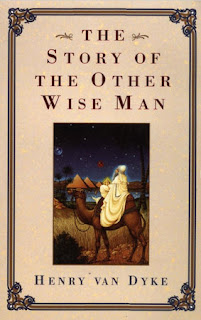
Van Dyke, Henry "The Story of the Other Wise Man"

Van Dyke, Henry "The Story of the Other Wise Man" - 1896

The title of this little story reminded me of "The Tale of Three Trees" which I used to read to my RE students every Easter.

It's not exactly like that story but comparable, a nice story to imagine what the wise men were up to, why they came to the stable where Jesus was born. Not just as nice story for kids but I would include it in my classes nowadays. A lovely little tale.

From the back cover:

"'I do not know where this little story came from - out of the air, perhaps. One thing is certain, it is not written in any other book, nor is it to be found among the ancient lore of the East. And yet I have never felt as if it were my own. It was a gift, and it seemed to me as if I knew the Giver.' Henry Van Dyke

Long, long ago, a wise man named Artaban, a priest of the Magi, discerned from heavenly signs that the time was at hand for the fulfillment of an ancient prophecy - the birth among the Hebrews of a holy Prince and Deliverer of Man. Hastening to join three fellow Magi for the long journey into Judaea, he paused to help a dying man and was left behind. And so Artaban began his pilgrimage alone, striking out not toward the realization of his life's deepest longing, as he hoped, but only toward misfortune and suffering. Or so he believed until one blessed, radiant moment.
"

Wednesday, 13 October 2021

Hesse, Hermann "Narcissus and Goldmund"

Hesse, Hermann "Narcissus and Goldmund" (German: Narziss und Goldmund) - 1930

A friend of mine was surprised that I never read this book. Well, we can't have read all the books available and I had read three other books by Hermann Hesse before. Still, she had a DVD of the film they made in 2020 (see here) and then she lent me her copy of the book. Thanks, Elisabeth.

They are both great works though, as so often with films, you cannot compare the two. The ending is pretty different and there are parts that are larger in the book than in the film and vice versa. Why do they always have to do that? I have no idea.

This is a much acclaimed book and supposedly one of Hesse's best. I can well understand that. It is a great novel with many layers and much information about life in the middle ages.

I have enjoyed the book very much though I find it hard to say why. Certainly, the writing is superb and the description not just of the two main characters but also all the other ones is fantastic. Maybe I just say it's magical and - like magic - not explainable.

Of course, I cannot vouch for any translations as I have read this book in the original German language.

From the back cover:

"Narcissus and Goldmund is the story of two diametrically opposite men: one, an ascetic monk firm in his religious commitment, and the other, a romantic youth hungry for worldly experience. Hesse was a great writer in precisely the modern sense: complex, subtle, allusive: alive to the importance of play. Narcissus and Goldmund is his very best. What makes this short book so limitlessly vast is the body-and-soul-shaking debate that runs through it, which it has the honesty and courage not to resolve: between the flesh and spirit, art and scientific or religious speculation, action and contemplation."

And another one:

"Narcissus is a teacher at Mariabronn, a monastery in medieval Germany, and Goldmund his favourite pupil. While Narcissus remains detached from the world in prayer and meditation, Goldmund runs away from the monstery in pursuit of love. Thereafter he lives a picaresque wanderer's life, his amatory adventures resulting in pain as well as ecstasy. His eventual reunion with Narcissus brings into focus the diversity between artist and thinker, Dionysian and Apollonian".

Hermann Hesse received the Nobel Prize for Literature in 1946 "for his inspired writings which, while growing in boldness and penetration, exemplify the classical humanitarian ideals and high qualities of style".

Hermann Hesse received the Peace Prize of the German Book Trade (Friedenspreis) in 1955.

I contribute to this page: Read the Nobels and you can find all my blogs about Nobel Prize winning authors and their books here.

Thursday, 20 May 2021

Bulgakov, Michail "The Master and Margarita"

Bulgakow, Michail "The Master and Margarita" (Russian: Мастер и Маргарита/Master i Margarita) - 1929-39

When the last "classics spin" number was drawn, I got this book to read. One of my blogger friends (Emma from Words and Peace) recommended I read an edition with many annotations. Since I had the book already (I bought it a couple of years ago when Russia was the theme of a German book fair) and it had no annotations, I searched the net and there are some great sites that explain all the meanings of almost every sentence meticulously.


These pages were especially helpful:
Master & Margarita (in several languages)
Along with much information on the novel, you will also find on this site different films and TV-series based on The Master and Margarita, and subtitled in English by your webmaster.
LitCharts (including a study guide)
Get Abstract (in German)
Inhaltsangaben 24 (in German)

And then there are some good blog posts about the book (I happily include yours if you let me know the link):
Words and Peace, one of my favourite blogs, Emma has a very diverse page and always gives the greatest tips.
Resolute Reader
A Guy’s Moleskine Notebook who reviewed it even twice, first here and then here.

Those sites were very helpful to understand the background of the novel but I think I would have enjoyed it just by itself, as well. And I surely could see some of the links to the Soviet Union. However, being interested in all these subjects, history, politics, religion, it made it even more fascinating.

What a book. Of course, from authors like Bulgakov, you foresee criticism of the Soviet State, it's expected. Bureaucracy is just as much criticized as oppression and everything that deviates from Karl Marx' original idea of communism.

But this book has so many more layers. There is a novel within the novel about Pontius Pilate and Jesus' last days, his friends and foes. The way, the two stories come together, is quite fascinating. There is a huge amount of references to both literature and history.

The book definitely gives us a lot of food for thought. The devil comes visiting Moscow together with some ominous companions, one of them a big black cat. As a result, the whole city is upside down.

I don't think it is possible to explain the concept of the book to anyone. You have to read it yourself, and if you really want to get down to the nitty-gritty, definitely have to read it with explanations. It's part fairy tale, part mystic realism, definitely political criticism, part comedy, part tragedy. It's not the easiest of reads but definitely one of the most worthiest.

And it certainly is one of the books I will want to read again.

From the back cover:

"Surely, no stranger work exists in the annals of protest literature than The Master and Margarita. Written during the Soviet crackdown of the 1930s, when Mikhail Bulgakov's works were effectively banned, it wraps its anti-Stalinist message in a complex allegory of good and evil. Or would that be the other way around? The book's chief character is Satan, who appears in the guise of a foreigner and self-proclaimed black magician named Woland. Accompanied by a talking black tomcat and a "translator" wearing a jockey's cap and cracked pince-nez, Woland wreaks havoc throughout literary Moscow. First, he predicts that the head of noted editor Berlioz will be cut off; when it is, he appropriates Berlioz's apartment. (A puzzled relative receives the following telegram: "Have just been run over by streetcar at Patriarch's Ponds funeral Friday three afternoon come Berlioz.") Woland and his minions transport one bureaucrat to Yalta, make another one disappear entirely except for his suit, and frighten several others so badly that they end up in a psychiatric hospital. In fact, it seems half of Moscow shows up in the bin, demanding to be placed in a locked cell for protection.

Meanwhile, a few doors down in the hospital lives the true object of Woland's visit: the author of an unpublished novel about Pontius Pilate. This Master - as he calls himself - has been driven mad by rejection, broken not only by editors' harsh criticism of his novel but, Bulgakov suggests, by political persecution as well. Yet Pilate's story becomes a kind of parallel narrative, appearing in different forms throughout Bulgakov's novel: as a manuscript read by the Master's indefatigable love, Margarita, as a scene dreamed by the poet - and fellow lunatic - Ivan Homeless, and even as a story told by Woland himself. Since we see this narrative from so many different points of view, who is truly its author? Given that the Master's novel and this one end the same way, are they in fact the same book? These are only a few of the many questions Bulgakov provokes, in a novel that reads like a set of infinitely nested Russian dolls: inside one narrative there is another, and then another, and yet another. His devil is not only entertaining, he is necessary: "What would your good be doing if there were no evil, and what would the earth look like if shadows disappeared from it?"

Unsurprisingly - in view of its frequent, scarcely disguised references to interrogation and terror - Bulgakov's master work was not published until 1967, almost three decades after his death. Yet one wonders if the world was really ready for this book in the late 1930s, if, indeed, we are ready for it now. Shocking, touching, and scathingly funny, it is a novel like no other. Woland may re-attach heads or produce 10-ruble notes from the air, but Bulgakov proves to be the true magician here. The Master and Margarita is a different book each time it is opened. - Mary Park"

It's always interesting to see the different kind of covers from different countries or different times but this one has as many fascinating editions, I just had to put a few together. You can find them all on Goodreads. I think it shows the diversity of the book and how different people perceive it.

Monday, 20 July 2020

Holzach, Michael "The Forgotten People"

Holzach, Michael "The Forgotten People: A Year Among the Hutterites" (German: Das vergessene Volk. Ein Jahr Bei den deutschen Hutterern In Kanada) - 1980 

A friend of mine found this book on her TBR pile. She told me about it and since I had read a book about the Amish ("Plain and Simple" by Sue Bender) before, I said it sounded interesting.

I don't know whether I can compare the different religious groups through these books since the report about the Hutterites is a little earlier and a lot might have changed even there in the last forty years.

Michael Holzach also tells us about the history of the Hutterites and how they came to live in Canada. But mainly, this is a report about his life among the brethren for a whole year. How they live, what they believe, how they try to adhere to their lifestyle. Their main life is founded on the "community of property based on the model of the original Jerusalem community", i.e. all property and proceeds belong to the community and is shared among everyone. You could call them a Christian communist group. Everyone has the same, everything is shared. "Everyone gives what he can and gets where he's in need."

Same as the Amish, they call the people "outside" the "English". They have their own school but get extra education from a Canadian teacher who comes to the farms. Among themselves, they speak a German dialect which is mainly based on Southern German/Austrian dialects mixed with English words (just like high German) but it is quite easy to understand if speak German.

It was a very interesting book to read. I have always thought it would be nice to live in a society where everyone thinks about everyone else, cares for everyone else, nobody feels better than the others … looks like this is what the Hutterites try to do, as well. I don't think I could live quite as restricted as they do but if you don't know any better, this is almost like paradise on earth.

I think I need to find myself a newer book about the Hutterites. While searching for more literature, I found two websites that give more information:
Hutterites
Hutterian Brethren Book Centre

Unfortunately, 15 years later, the author died from a fatal accident while trying to rescue his dog. I think he might have written some more interesting books in addition to this one and "Deutschland umsonst. Zu Fuß und ohne Geld durch ein Wohlstandsland" (Germany for free. On foot and without money through a prosperous country) (1982).

From the back cover (translated):

"The author spent the year 1978 with the German Hutterites in North America and wrote a book about his experiences.

Inspired by the reading of Erich Fromm, who described the Hutterites as 'radical humanists' in several of his books, Michael Holzach lived for a year in two brotherly communities in the Canadian province of Alberta at the foot of the Rocky Mountains - almost entirely cut off from the modern world. He worked, prayed and sang with them, the women sewed him the black uniform, the men taught him how to make shoes, castrate piglets, cook soap.

The mother tongue of these 'selected' people is German, but they have never seen Germany. 450 years ago, for the sake of their faith, their ancestors moved to Russia in a painful pilgrimage before emigrating to the United States in 1874. Today 25,000 Hutterites live in 250 settlements off the highways on the North American prairie. Their law book is the Bible. They are strict pacifists and reject any type of private property. Michael Holzach discovered a way of life without social injustice, without consumerism and without violence - primitive Christian communism. But how can a person of the 20th century cope with this leap into the 'Middle Ages'? Are there actually islands of the happy in the 'Sea of Sin'? This report provides answers to the questions of civilization that are pressing us today - found among the forgotten Hutterites."

Monday, 16 March 2020

Waltari, Mika "The Secret of the Kingdom"

Waltari, Mika "The Secret of the Kingdom" (Finnish: Valtakunnan salaisuus) (The Malinianus Duology) - 1959

This is my third book by Finnish author Mika Waltari, I read all of them in a book club, always suggested by a Finnish member as one of their most important authors.

And it's true, Mika Waltari has some important thoughts to convey, whether it's about religion, philosophy or life itself. You notice this guy knows what he is talking about.

In this book, he describes the life of a Roman citizen who witnesses Jesus' crucifixion and then gets drawn into his circle, meets the apostles and other friends whose lives have been affected by Jesus of Nazareth. He has a great way of describing the story, makes you believe you've been there yourself. Definitely makes you believe that this could be how it was.

Certainly, a great book if you want to explore your faith but also if you just want to delve into the history of Christianity from the outside. This is a very detailed and descriptive story about the passion and its aftermath, starting at Easter, finishing on Pentecost.

I'm not surprised I liked this book because I also liked the other ones I read (The Egyptian, The Dark Angel). A great author.

From the back cover:

"Against a background of the strife-torn land of Judea two thousand years ago, Mika Waltari has written what is certainly his most important novel.

Seeking the meaning to his life in the study of philosophy, the young Roman. Marcus Manilianus, discovers in an Alexandrian library a vast number of predictions, all tending to confirm his own feeling that the world is about to enter upon a new era. Two chance encounters with Jews who proclaim the coming of a world leader whom they call the Messiah or King, cause Marcus to resolve to make a visit to the Holy City of the Jews. He arrives outside Jerusalem in time to see crowds - some curious, some shocked - staring up at three crosses on a nearby mound. Above the center cross, an inscription had been fixed: JESUS OF NAZARETH, KING OF THE JEWS.

The quest that ensues leads Marcus through all parts of Jerusalem and into contact with men and women of all stations of life who had known this remarkable man. And by degrees, wonderful if strange things are revealed to him of Jesus’ teaching, and he experiences the odd sensation of almost believing in the destiny of this crucified Roman among the alien Jews, Stands alone on the borderline of two worlds, feelings he belongs to neither, and it becomes vital to him to find 'the way, the Kingdom,' to again knowledge and certainty, not merely belief.

What follows, as Marcus pursues his search for the promised secret of the Kingdom, bring to a climax as exciting and deeply moving a novel as Mika Waltari, certainly one of the world’s outstanding historical novelists, has ever written. It is a story of a time long past, yet it deals with a theme as modern as today: the dilemma of modern man and his culture in gaining and retaining a faith. And always present throughout the novel is the splendor, the irony and humor which have so delighted millions of readers of other Waltari novels from The Egyptian to The Etruscan."

We discussed this book in our international online book club in March 2020.

Wednesday, 5 June 2019

Alighieri, Dante "The Divine Comedy"

Alighieri, Dante "The Divine Comedy" (Italian: Divina Commedia) - 1308-20

I love classics. I love chunky books. So, those should be two points for this book.
I don't like reading plays. I don't like reading poetry. Those are two points against this book.
Which side wins? Hard to say. If you don't enjoy reading something, it doesn't get better when it gets longer, so the chunkiness played against the read.

I also didn't think this was a very funny book, not that I have anything against that but if a title is "comedy", you should have to smile at least from time to time. Hmmm, didn't happen. Maybe not my kind of humour (though that is usually slapstick and this is certainly not that kind, either).

I know how often this work is praised as highly intelligent, greatest work of art, etc. but for me, it was not something I could relate to very well. Let me put it like this, if you are a classic lover, this is probably a must read and I am glad I finished it.

This was our read in our international online book club in October 2025 and here are some comments from the group:
  • We had a lively and fascinating discussion. Several of us were impressed by how vivid and powerful the writing still feels, even after 700 years. The Swedish translation from 1983 was found to be excellent, while the older Finnish version seemed harder to follow.
    We rated the book between 4 and 5 of 5 stars. The many layers of hell led to a lot of discussion - whether Dante’s journey was real, dreamlike, or symbolic. Those with more background in ancient literature and history found it easier to follow all the references, while others were overwhelmed by the flood of Greek and Roman names and places. One member noted that Dante had even placed some of his real-life enemies in hell, adding a personal and political dimension to the story. One copy had a foreword by a translator that told that the author himself called the book only "Comedy", allegedly because it has a happy ending eventually, so the Divine part has been added hundreds of years later by history.
    We also looked at art inspired by Inferno, from paintings to illustrations, and one member had an edition with strikingly dark and vivid images that added to the experience.
    Overall, we agreed that Inferno has stood the test of time remarkably well, though modern translations make it far more accessible today. None of the other members had read the next parts, Purgatory and Paradiso, yet.

  • As my 11th-Grade English teacher told us, "it's a helluva book".

  • Dante's extraordinary intellect and imagination interwove Italian history, Church history, philosophy, theology, and his own life in mind-boggling ways. "The Figure of Beatrice" (Goodreads) by Charles Williams offers valuable insights. I was very moved to visit Dante's tomb in Ravenna (he died there of malaria while still in exile from Florence).
From the back cover:

"Long narrative poem originally titled Commedia (about 1555 printed as La divina commedia) written about 1310-14 by Dante. The work is divided into three major sections - Inferno, Purgatorio, and Paradiso - which trace the journey of a man from darkness and error to the revelation of the divine light, culminating in the beatific vision of God. It is usually held to be one of the world's greatest works of literature. 

The plot of The Divine Comedy is simple: a man is miraculously enabled to visit the souls in Hell, Purgatory, and Paradise. He has two guides: Virgil, who leads him through the Inferno and Purgatorio, and Beatrice, who introduces him to Paradiso. Through these fictional encounters taking place from Good Friday evening in 1300 through Easter Sunday and slightly beyond, Dante the character learns of the exile that is awaiting him (an actual exile that had already occurred at the time of writing). This device allowed Dante not only to create a story out of his exile but also to explain how he came to cope with personal calamity and to offer suggestions for the resolution of Italy's troubles as well."

Thursday, 14 June 2018

Hertmans, Stefan "War and Turpentine"

Hertmans, Stefan "War and Turpentine" (Dutch/Flemish: Oorlog en terpentijn) - 2013

I had not heard about this author before even though he probably should be known in the Netherlands since there are not so many countries that write in Dutch. When it was suggested in our book club, I thought this would be a good choice to read another Belgian author.

And it was. Stefan Hertmans tells about his grandfather's life according to the memoirs the latter hat written. It is a heartwarming tale about a young man who was 23 when World War I started and had to go into a war nobody wanted. His father had been a painter and so was he. We hear a lot about that part of his life but even more about his life in the trenches in the fields of Flanders.

The story is us about the life of the protagonist as a child, a young man, a married man and later, an old man, partly through his own diary. But its also a story about the author and how he grew up with his grandfather.

A nice story, well told, very picturesque.

I read this in the original Dutch language.

From the back cover:

"Shortly before his death in 1981, Stefan Hertmans' grandfather gave him a couple of filled exercise books. Stories he’d heard as a child had led Hertmans to suspect that their contents might be disturbing, and for years he didn’t dare to open them.

When he finally did, he discovered unexpected secrets. His grandfather’s life was marked by years of childhood poverty in late-nineteenth-century Belgium, by horrific experiences on the frontlines during the First World War and by the loss of the young love of his life. He sublimated his grief in the silence of painting.

Drawing on these diary entries, his childhood memories and the stories told within Urbain’s paintings, Hertmans has produced a poetic novelisation of his grandfather’s story, brought to life with great imaginative power and vivid detail.

War and Turpentine is an enthralling search for a life that coincided with the tragedy of a century - and a posthumous, almost mythical attempt to give that life a voice at last."

We read this in our international book club in May 2018.

Wednesday, 13 June 2018

Schami, Rafik "The Dark Side of Love"

Schami, Rafik "The Dark Side of Love" (German: Die dunkle Seite der Liebe) - 2004

Rafik Schami has managed to get on my list of all time favourite authors with just three of his books. Luckily, he has written a lot more so I am looking forward to more great novels.

Rafik Schami once said you cannot understand the history and present of the Arabs without the prohibition of love. And with this book he has shown us a great example and hopefully helps us to understand each other better. Apparently, it took him 30 years to write this book. 30 years well spent, even if this had been his only one.

His real name is Suheil Fadél, his pen-name means "friend of Damascus". He fled from his country in 1970 and settled in Germany where he still lives today. All his books are written in German. This book is slightly autobiographical.

This is the story of Farid Mushtak, born in Syria in 1940, into a Syriac-Christian family (like the author). His father is a baker - like the author's …

This is the story of Farid's love to Rana Shahin, a love that cannot be because their families are arch-enemies.

This is the story of the families Mushtak and Shahin who have been enemies for so long that hardly anyone remembers how it all started.

This is the story of Damascus, the capital city of Syria, a city that has lived through difficult times for a long long time.

And finally, this is the story of Syria and its history. Lots of information, especially if you have never read a book about this country.

The book has about 1,000 pages but at the end you think, this was far too short, could have been twice as long. It's just that brilliant!

I read this in the original German language.

Translation of the German back cover:

"In his opulent story mosaic, Rafik Schami tells of a love that must not be, of blood revenge, tribal feuds and family strife, and spans an oriental-colourful picture arc over a century of Syrian history."

Even though this is a lot shorter, it's much better than the blurb on the English back cover which only describes the beginning of the novel:

"A dead man hangs from the portal of St Pauls Chapel in Damascus. He was a Muslim officer and he was murdered. But when Detective Barudi sets out to interrogate the man's mysterious widow, the Secret Service takes the case away from him. Barudi continues to investigate clandestinely and discovers the murderers motive: it is a blood feud between the Mushtak and Shahin clans, reaching back to the beginnings of the 20th century. And, linked to it, a love story that can have no happy ending, for reconciliation has no place within the old tribal structures. Rafik Schamis dazzling novel spans a century of Syrian history in which politics and religions continue to torment an entire people. Simultaneously, his poetic stories from three generations tell of the courage of lovers who risk death sooner than deny their passions. He has also written a heartfelt tribute to his hometown Damascus and a great and moving hymn to the power of love."

Monday, 4 June 2018

Boom, Corrie "The Hiding Place"

Boom, Corrie ten with Sherrill, John and Elizabeth "The Hiding Place. The Triumphant Story of Corrie Ten Boom" (De Schuilplaats) - 1972

If you have read Anne Frank's "Diary of a Young Girl", you should also read this book. It's the story of a family who was hiding people like the Frank family and what happened to them.

How someone can watch these atrocities - both on the side of the enemy and of those of your own people - and still stay so positive, believe there is a meaning to all this ... that's beyond me. I am grateful that these kind of people exist and would hope that I'd react the same way when I would have to make the decision.

In any case, the ten Boom family was part of the Dutch Underground. They hid anyone who needed help, mostly Jews, and helped them leaving the country.

I especially liked the father who was such a model for his family. Here is a quote that shows it all:
"Father held the baby close, his white beard brushed its cheek, looking into the little face with eyes as blue and innocent as the baby's own. At last he looked up at the pastor. 'You say we could lose our lives for this child. I would consider that the greatest honor that could come to my family.'"

Another quote I would like to talk about:
"Strangely enough, it was not the Germans or the Japanese that people had most trouble forgiving; it was their fellow Dutchmen who had sided with the enemy."
I do understand that. A lot of the Germans or Japanese had no choice but these people had betrayed their own. Mind you, after having lived in the Netherlands for almost nineteen years now, I disagree that they were all so forgiving of the Germans, there are plenty around who still haven't forgotten.

It was quite interesting to see how they built the hiding place, how they managed to put another room into a house without anyone noticing.

Granted, the book is quite religious, Corrie ten Boom and her family were Calvinists and belonged to the Dutch Reformed Church which was very strict and very conservative. But that was part of their reason for doing what they did. In any case, the book is totally worth reading.

From the back cover:

"Corrie ten Boom stood naked with her older sister Betsie, watching a concentration camp matron beating a prisoner.' Oh, the poor woman,' Corrie cried. 'Yes. May God forgive her,' Betsie replied. And, once again, Corrie realized that it was for the souls of the brutal Nazi guards that her sister prayed. Here is a book aglow with the glory of God and the courage of a quiet Christian spinster whose life was transformed by it. A story of Christ's message and the courageous woman who listened and lived to pass it along -- with joy and triumph!"

Thursday, 26 April 2018

Schaik, Carel van & Michel, Kai "The Good Book of Human Nature"

Schaik, Carel van & Michel, Kai "The Good Book of Human Nature: An Evolutionary Reading of the Bible" (Dutch: Het oerboek von de mens) - 2016

When I started reading this book, I had a certain thought how it might be. Years ago, I read an explanation on why people had to live kosher, why certain food was "unclean" and others had to prepared differently. I thought this might be a book like that, explaining the meanings of parts of the bible.

And it is in a way. However, it turned out completely different than what I thought. It might be a great read for all those who think you can either believe in the bible or in science. The authors of this book show us that this is absolutely not the case. They draw certain lines between the stories of the Old Testament, the New Testaments and the findings since.

A lot of their explanations are so clear that you wonder why nobody else thought about it before. Probably because people just took the bible for granted the way it was written and didn't question anything or didn't want to find anything that might question something.

Anyway, one part of this book explains that the garden Eden might have been the life of the hunter-gatherers and that life changed quite enormously when the people settled down. More illnesses, fights, more rules. There was no private property before, people lived in small groups and life was ruled by "one for all and all for one". This had to change when everyone started farming their own land.

The authors also explain that we have a first, second and third nature, the first being in-born, probably comparable to an animal instinct. The second nature is given by religion and society, how we ought to behave. The third nature has to do with laws and rules, definitely a lot more than what the hunter-gatherers dealt with.

In any case, a great analysis of the history of the bible. It explains the evolution as well as the reason for religion.

A brilliant book, both fascinating and informative.

From the back cover:

"The Bible is the bestselling book of all time. It has been venerated or excoriated—as God’s word, but so far no one has read the Bible for what it is: humanity’s diary, chronicling our ancestors’ valiant attempts to cope with the trials and tribulations of life on Earth.

In The Good Book of Human Nature, evolutionary anthropologist Carel van Schaik and historian Kai Michel advance a new view of Homo sapiens’ cultural evolution. The Bible, they argue, was written to make sense of the single greatest change in history: the transition from egalitarian hunter-gatherer to agricultural societies. Religion arose as a strategy to cope with the unprecedented levels of epidemic disease, violence, inequality, and injustice that confronted us when we abandoned the bush - and which still confront us today.

Armed with the latest findings from cognitive science, evolutionary biology, archeology, and religious history, van Schaik and Michel take us on a journey through the Book of Books, from the Garden of Eden all the way to Golgotha. The Book of Genesis, they reveal, marked the emergence of private property - one can no longer take the fruit off any tree, as one could before agriculture. The Torah as a whole is the product of a surprisingly logical, even scientific, approach to society’s problems. This groundbreaking perspective allows van Schaik and Michel to coax unexpected secrets from the familiar stories of Adam and Eve, Cain and Able, Abraham and Moses, Jesus of Nazareth and Mary. The Bible may have a dark side, but in van Schaik and Michel’s hands, it proves to be a hallmark of human indefatigability.

Provocative and deeply original, The Good Book of Human Nature offers a radically new understanding of the Bible. It shows that the Bible is more than just a pillar for religious belief: it is a pioneering attempt at scientific inquiry."

Wednesday, 11 October 2017

Bunyan, John "The Pilgrim's Progress from This World to That Which Is to Come"

Bunyan, John "The Pilgrim's Progress from This World to That Which Is to Come" - 1678

A classic I wanted to read for a while. I generally love classics and usually enjoy them very much. However, I did struggle with this one, it reads more like a play than a novel and I am not the biggest fan of reading plays. At times, I found I had set out the same way as our Pilgrim on a voyage through this book and I wondered whether I'd ever reach salvation, i.e. the end.

I did manage and even though I am happy to have finished it, I think this is a classic that is better left in its time, I'm sure it was a lot more appreciated back then but seems to be a tad outdated now. And I speak from the perspective of a Christian who has read and knows her Bible.

From the back cover:

"In John Bunyan's classic allegory, Christian abandons his family and the City of Destruction and sets off to find salvation. His path is straight but not easy, and he is beset by trials, including the terrible violence of the destructive Apollyon and the Giant Despair, as he pursues his pilgrimage through the Slough of Despond, the Delectable Mountains and Vanity Fair towards the Celestial City. In the second part of the narrative his wife, Christiana, is escorted by Great-Heart through the same difficult terrain. Written with the urgency of persecuted faith and a fiery imagination, The Pilgrim's Progress is a spiritual as well as a literary classic. In his introduction, Roger Pooley discusses Bunyan's life and theology, as well as the text's biblical and historical backdrop, its success and critical history. This edition also includes accompanying seventeenth-century illustrations, a chronology, suggested further reading, notes and an index."

Monday, 10 April 2017

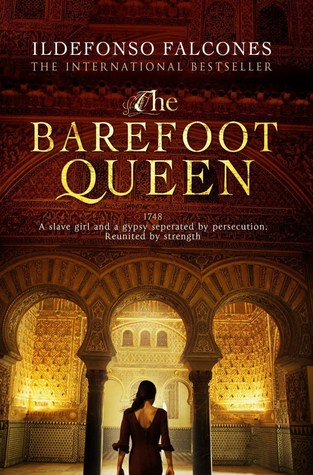
Falcones, Ildefonso "The Barefoot Queen"

Falcones, Ildefonso "The Barefoot Queen" (Spanish: La Reina Descalza) - 2013

As with his former books "Cathedral of the Sea" and "The Hand of Fatima", Ildefonso Falcones does not disappoint with his newest novel. Whether he talks about Barcelona in the 14th century, Muslims in the 16th century or gypsies in the 18th, he seems to know all the characters personally and introduces us to their lives and struggles. This time, it's the gypsies and their problems in a country where they are not welcome, well, where are they ever? They can't make a living by staying somewhere because they are not allowed to work in many many jobs but they also can't travel. And when the Spanish crown decides to lock them all up in order to conduct the perfect genocide. Well, luckily, there is no perfect genocide, there are always members of a race that are willing to fight until the very end.

Ildefonso Falcones is a great storyteller, he can make you love the characters and feel with them through their dramatic lives. And in addition to that, it's also a fantastic history lesson. We don't just learn about Spain in the 18th century, we also learn about slaves in Cuba, tobacco planting and and working, trading and smuggling. There is so much in this story. Even though Caridad, a former slave, is supposed to be the protagonist, her friend Milagros with her grandfather Melchor and their family are also quite important to the story.

Can't wait until his newest book "Los herederos de la tierra" (2016), the follow-up to "Cathedral of the Sea" is translated.

From the back cover:

"A historical epic full of bravery and romance that follows two women as they make a life for themselves in 18th-century Spain.

It's January of 1748. Caridad is a recently freed Cuban slave wondering the streets of Seville. Her master is dead and she has nowhere to go. When her path crosses with Milagros Carmona's-a young, rebellious gypsy-the two women are instantly inseparable. Milagros introduces Caridad to the gypsy community, an exotic fringe society that will soon change her life forever. Over time they each fall in love with men who are fiercely loyal and ready to fight to the death for their rights as a free people. When all gypsies are declared outlaws by royal mandate, life in their community becomes perilous. They soon find themselves in Madrid-a city of passion and dancing, but also a treacherous one full of smugglers and thieves. Caridad and Milagros must help in the gypsy's struggle against society and its laws in order to stay together; it's a dangerous battle that cannot, and will not, be easily won. From the tumultuous bustle of Seville to the theatres of Madrid, The Barefoot Queen is a historical fresco filled with characters that live, love, suffer, and fight for what they believe."

Wednesday, 8 June 2016

Joyce, James "A Portrait of the Artist as a Young Man"

Joyce, James "A Portrait of the Artist as a Young Man" - 1916

The story of a young man trying to find himself, a story about James Joyce himself, his character Stephen Dedalus is partly autobiographical. Stephen comes from a poor Irish family who goes to a religious boarding school which he has to leave for financial reasons. He then enters another religious school where they try to convince him to become a priest. This question is very important to the author and he tries to imagine himself as a priest. But he decides that life as it is is far more interesting for him and that he wants to live it in freedom. Between all this, he goes from all sorts of religious and social questions to the meaning of life and his first attempts of becoming a writer.

The book itself is highly philosophical and one could write a whole new book about Stephen Dedalus ... well, James Joyce did. "Ulysses" was first intended to be just a short story for the collection "Dubliners" but then was written as a sequel to "A Portrait of the Artist as a Young Man".

From the back cover:

"Published in 1916, James Joyce's semiautobiographical tale of his alter ego, Stephen Dedalus, is a coming-of-age story like no other. A bold, innovative experiment with both language and structure, the work has exerted a lasting influence on the contemporary novel.

'Joyce dissolved mechanism in literature as effectively as Einstein destroyed it in physics,' wrote Alfred Kazin. 'He showed that the material of fiction could rest upon as tense a distribution and as delicate a balance of its parts as any poem. Joyce's passion for form, in fact, is the secret of his progress as a novelist. He sought to bring the largest possible quantity of human life under the discipline of the observing mind, and the mark of his success is that he gave an epic form to what remains invisible to most novelists.... Joyce means many things to different people; for me his importance has always been primarily a moral one. He was, perhaps, the last man in Europe who wrote as if art were worth a human life.... By living for his art he may yet have given others a belief in art worth living for."

See more comments on my ThrowbackThursday post in 2026.

Monday, 29 February 2016

Schami, Rafik "A Hand Full of Stars"

Schami, Rafik "A Hand Full of Stars" (German: Eine Hand voller Sterne) - 1987

Rafik Schami is a Syrian author who has lived in Germany for almost 35 years. He writes in German but has never forgotten his native country and his stories are mainly about that. In this book he tells the story of the son of a baker, well, the young boy tells the story himself, about his problems of growing up but also about the political problems in his country and how he gets involved.

I think Rafik Schami has written part of his own life, he himself is the son of a baker and started writing at a very early age. The fact that the protagonist tells his own story, leads even more to this assumption.

In any case, this is a wonderful story about growing up as well as about the situation in Syria. If you read this, you will notice that the situation has only grown worse in the 25 years since its publication, and I think it would help a lot of people rethinking their opinion about the refugees that come to our countries because they have nowhere else to go anymore. We can learn of the situation in a country where democracy is a foreign word, where people can just get picked up by the police for no reason at all or for something that we all take for granted.

Great read.

I have read two of Rafik Schami's books, so far, but will add more, that I am sure of:
"The Calligrapher’s Secret" (Das Geheimnis des Kalligraphen) - 2008
"Eine deutsche Leidenschaft names Nudelsalat: und andere seltsame Geschichten" [A German passion called noodle salad: and other strange stories]. This one is only available in German, he talks about all the little things that only a foreigner would notice in a host country. I loved these stories just as much as those about Syria.

See more comments on my ThrowbackThursday post in 2026.

From the back cover:

"Amid the turmoil of modern Damascus, one teenage boy finds his political voice in a message of rebellion that echoes throughout Syria and as far away as Western Europe. Inspired by his dearest friend, old Uncle Salim, he begins a journal to record his thoughts and impressions of family, friends, life at school, and his growing feelings for his girlfriend, Nadia. Soon the hidden diary becomes more than just a way to remember his daily adventures; on its pages he explores his frustration with the government injustices he witnesses. His courage and ingenuity finally find an outlet when he and his friends begin a subversive underground newspaper. Warmed by a fine sense of humor, this novel is at once a moving love story and a passionate testimony to the difficult and committed actions being taken by young people around the world."

Wednesday, 5 August 2015

Schoemperlen, Diane "Our Lady of the Lost and Found"

Schoemperlen, Diane "Our Lady of the Lost and Found" - 2001

This was one of the books a friend left behind when she moved and said she thought I might like it. I don't think I would have picked it myself because it seemed to me like chick lit crossed with a religious theme. Breakfast with Mother Mary. Or something like that.

And it reads a little like that. I still couldn't say this was one of my favourite books but it had something. The information about the Virgin Mary, for example, the author puts together a list of Marian apparitions and other stories around her. That I found quite interesting.

From the back cover:

"On a Monday morning in April, a middle-aged writer finds a woman standing in front of the fig tree in her living room. The woman is wearing a navy blue trench coat and white Nikes, and is carrying a small black suitcase. She is the Virgin Mary and, she explains, after 2,000 years of petition, adoration and travel, she is in need of some R&R.

In Our Lady of the Lost and Found, Diane Schoemperlen has created a profound and original novel that captures the hearts and imagination of readers. Now available with a P.S. section featuring insightful background material, this captivating story is an exploration of our capacity for faith and of the miracles of daily life."

Two books are mentioned in the book, books the author supposedly reads before and during Mary's visit:
Allende, Isabel "The House of the Spirits"
Grunwald, Lisa "The Theory of Everything"

And there was  an interesting passage I would like to quote: "For those with a bookish bent, reading is a reflexive response to everything. This is how we deal with the world and anything new that comes our way. We have always known that there is a book for every occasion and every obsession. When in doubt, we are always looking things up."
I couldn't agree more!